
Welcome back to World Brief, where we’re looking at a United Nations report on sexual violence in conflict, continued efforts to secure a U.S.-Iran cease-fire extension, and a Russian drone incursion into Romania.
9,788 Verified Cases
An annual United Nations report detailing “patterns of sexual violence” in conflict on Friday sparked diplomatic backlash after the organization added two new state actors to its blacklist: Israel and Russia.
Welcome back to World Brief, where we’re looking at a United Nations report on sexual violence in conflict, continued efforts to secure a U.S.-Iran cease-fire extension, and a Russian drone incursion into Romania.
9,788 Verified Cases
An annual United Nations report detailing “patterns of sexual violence” in conflict on Friday sparked diplomatic backlash after the organization added two new state actors to its blacklist: Israel and Russia.
According to U.N. investigators, Israeli forces committed sexual violence since 2023 against Palestinians detained in Israel as well as Palestinians living in the occupied territories of Gaza and the West Bank. This included verified cases of sexual violence, including as a form of torture, on more than two dozen individuals, including at least 10 children.
U.N. authorities also verified 310 cases of Russian-perpetrated sexual violence against prisoners of war and civilian detainees in Russia as well as Russian-occupied areas of Ukraine since 2022.
Still, these numbers represent just a small portion of the 9,788 cases of sexual violence in conflict identified worldwide in 2025. “The figures contained in this report should be understood not as the full picture but as an indication of a much broader pattern of violations that remain largely unseen and underreported,” said Pramila Patten, the U.N. special representative on sexual violence. More than 75 government and nongovernment parties in 21 countries were on the U.N.’s blacklist.
Both Russia and Israel quickly denounced the U.N.’s report. “We will write a letter to the secretary-general saying that these are unsubstantiated lies and alleged things which again portray Russia as a villain, like they do all the time,” Russian Ambassador to the U.N. Vassily Nebenzia wrote, adding that Moscow plans to prepare its own report detailing Ukraine’s alleged mistreatment of Russian prisoners of war.
Israel also “comprehensively, thoroughly, and unequivocally refuted these allegations,” Israel’s foreign ministry wrote on X on Thursday, calling the report “yet another example of the UN’s long-standing, institutionalized hostility toward Israel.”
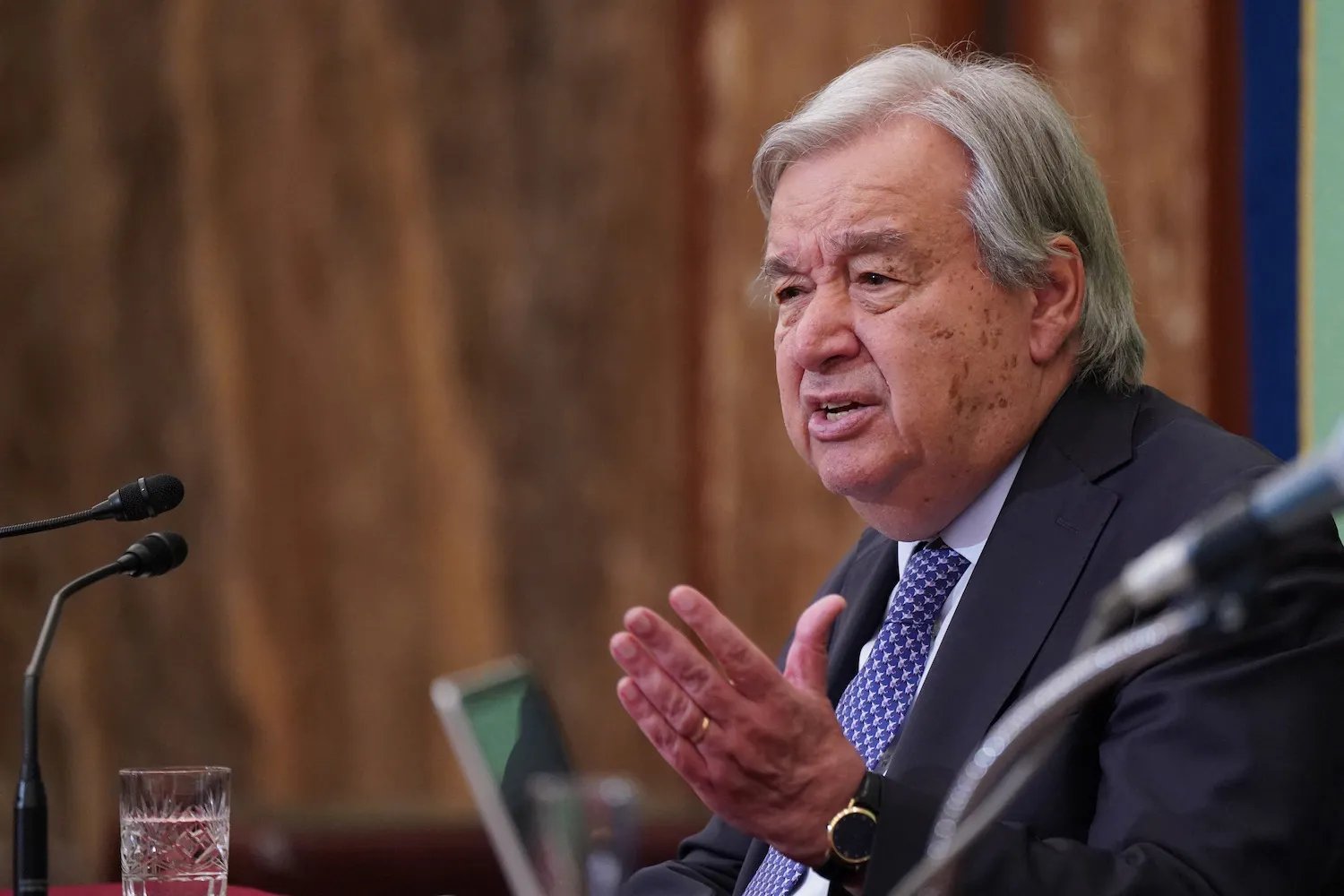
Israel has long accused the agency of anti-Israel bias. In 2024, Israeli Foreign Minister Israel Katz declared U.N. chief António Guterres persona non grata, and on Thursday, Israeli Ambassador to the U.N. Danny Danon said the country will cut off all ties with Guterres and his office over the report’s findings. Guterres’s term ends on Dec. 31.
“We are done with this U.N. secretary-general,” Danon said. “Guterres has put Israel on the same blacklist along with Hamas, ISIS, and the most depraved terrorist organizations in the world.” Mike Waltz, the U.S. ambassador to the U.N., similarly admonished the body for putting Israel “on the same level as terrorist organizations like Hamas & ISIS which DELIBERATELY target civilians for sexual violence as a weapon of terror.”
However, U.N. secretary-general spokesperson Stéphane Dujarric downplayed Danon’s threat on Friday, calling Israel’s announcement “more symbolic than anything” and unlikely to change U.N. operations. The organization will “continue to work with the Israeli mission,” Dujarric said.
Both Israel and Russia had already been “put on notice for potential listing in the next reporting period” last year.
Today’s Most Read
What We’re Following
No deal yet. U.S. Secretary of State Marco Rubio hosted Pakistani Foreign Minister Ishaq Dar in Washington on Friday to discuss the latest developments in negotiations to end the Iran war, among other issues. Islamabad has served as a key mediator between Washington and Tehran in the talks.
U.S. and Iranian negotiators on Thursday tentatively agreed, pending approval by the countries’ respective leaders, to a 60-day memorandum of understanding that would extend the current cease-fire, reopen the Strait of Hormuz, and kick-start nuclear talks.
U.S. President Donald Trump wrote on Truth Social late Friday morning local time that he was meeting in the White House Situation Room “now” to make a “final determination” on the deal. He did not specify what conditions would be included in the agreement. As of time of writing, neither Trump nor Iran’s leaders have announced the deal’s approval.
Moscow’s drone incursion. Bucharest accused a Russian drone on Friday of hitting an apartment building in eastern Romania. The overnight attack, which European officials claim was intended for Ukraine, damaged a building in the Danube port city of Galati and injured at least two people. The incursion sparked strong condemnation from NATO members and reignited concerns that the fighting could spread beyond Ukraine’s borders.
Since Russia’s full-scale invasion of Ukraine in 2022, Russian drones and other military equipment have entered NATO territory numerous times, often requiring the alliance to deploy fighter jets and other defensive measures to intercept the threats. Croatia, Denmark, Estonia, Lithuania, Poland, Romania, and non-NATO member Moldova have all recorded such incursions.
Romanian President Nicusor Dan stressed on Friday that Moscow’s latest incursion was “the worst incident to hit the national territory” since the war began. Dan convened his top defense officials on Friday to discuss “proportional measures” for the incident, and NATO chief Mark Rutte “affirmed that NATO stands ready to defend every inch of Allied territory,” adding that this will include enhancing “our readiness to deter and defend against any threat, including from drones.” Last year, European Union members gathered in Copenhagen to float the idea of constructing a drone wall to counter Russian incursions.
Shangri-La Dialogue. Senior diplomats and defense officials convened in Singapore on Friday for the first day of the Shangri-La Dialogue. The three-day defense summit is expected to focus on the biggest security matters in the Indo-Pacific, from the fallout of the Iran war to China’s military modernization.
U.S. Defense Secretary Pete Hegseth is due to give a speech on Saturday that the Defense Department said will highlight Washington’s “common-sense approach to safeguarding U.S. vital national interests in the Indo-Pacific.” His attendance at the event comes just two weeks after Trump traveled to Beijing to meet with Chinese President Xi Jinping, where questions about continued U.S. support for Taiwan were a hot topic. Hegseth is likely to face similar questions in his interactions with foreign officials in Singapore.
On Sunday, China is scheduled to deliver its side of the conversation. However, Beijing is sending a lower-level delegation composed of experts and scholars from the People’s Liberation Army rather than its defense minister. This is a missed opportunity for countries that seek greater “strategic reassurance” from China, Australian Defense Minister Richard Marles told Reuters on Friday.
What in the World?
The head of the World Health Organization on Wednesday called for a cease-fire in the eastern Democratic Republic of the Congo to help contain the outbreak of which disease?
A. Malaria
B. Ebola
C. Hantavirus
D. COVID-19
Odds and Ends
The Hague is the seat of global justice, the home of royal palaces, and (for a limited time) the site of a giant floating pot. Last Friday, the Dutch city kicked off the fifth edition of the BlowUp Jubilee, a citywide open-air exhibit featuring inflatable artwork from around the world. Visitors can spot the 24 installations—from coral reef-like shapes to mirrored spheres—in The Hague’s parks, lake, and even train station. The event runs through June 21.
And the Answer Is…
B. Ebola
Repeated disease outbreaks on the continent reveal the shortsightedness of wealthy countries that have failed to invest in health delivery infrastructure in Africa, FP’s Howard W. French wrote last week.
To take the rest of FP’s weekly international news quiz, click here, or sign up to be alerted when a new one is published.



