
Key events
The combined population of these two nations is around 4 million, with Uruguay having about 3.4 million and Cape Verde around 525,000.
That makes this the smallest population represented in any group-stage game. Only Curaçao (185,000) is smaller than Cape Verde, and their group-stage opponents (Germany, Côte d’Ivoire and Ecuador) are all considerably bigger than Uruguay.
Meanwhile, let’s check in on the top 10 countries in population to see how they’re doing:
India – did not qualify
China – did not qualify
United States – doing OK so far
Indonesia – did not qualify
Pakistan – did not qualify
Nigeria – did not qualify
Brazil – leading Group C
Bangladesh – did not qualify
Russia – suspended from competition
Ethiopia – did not qualify
The next few countries made it, at least.
Starting XIs
Uruguay
Muslera; Sanabria, Olivera, Caceres, Varela; Bentancur, Ugarte, Araújo, Valverde, Cano; Viñas
The single change from their lineup that started their 1-1 draw with Saudi Arabia: Agustin Cano (Fluminense) replaces Viña (River Plate). Defender Ronald Araújo has been battling injury and misses the starting XI again – that’s Maxi Araújo, the goal-scorer in the opener, in the starting midfield.
Cape Verde
Dias (“Vozinha”); Lopes Cabral, Borges (“Diney”), Lopes (“Pico”), Moreira; Pina, Rodrigues, Monteiro, Mendes, Arcanjo; Tavares (“Benchimol”)
Telmo Arcanjo cracks the starting lineup after a brief stint as a substitute against Spain. Gilson “Benchimol” Tavares also is in, along with 35-year-old midfielder Garry Rodrigues, neither of whom figured in the first game. Out: Jovane Cabral, Laros Duarte, Dailon Livramento.
Rodriguez was the first Dutch-born player to represent Cape Verde, starting in 2013. Benchimol had a hat trick against Liechtenstein in 2022.
Preamble
Paradoxically, this World Cup has been the year of high scores – the average number of goals per game is a little above 3.0, a number not seen since the 1950s – and the year of the goalkeeper.
Eloy Room of Curaçao wowed Cup-watchers with 15 saves, the most in a 90-minute match since modern record-keeping started (Tim Howard had 16 in an extra-time game to become the most meme-worthy person in the USA for a while).
Iranian goalkeeper Alireza Beiranvand posted a save that will rival the legendary Gordon Banks save against Pele in the just-concluded game against Belgium.
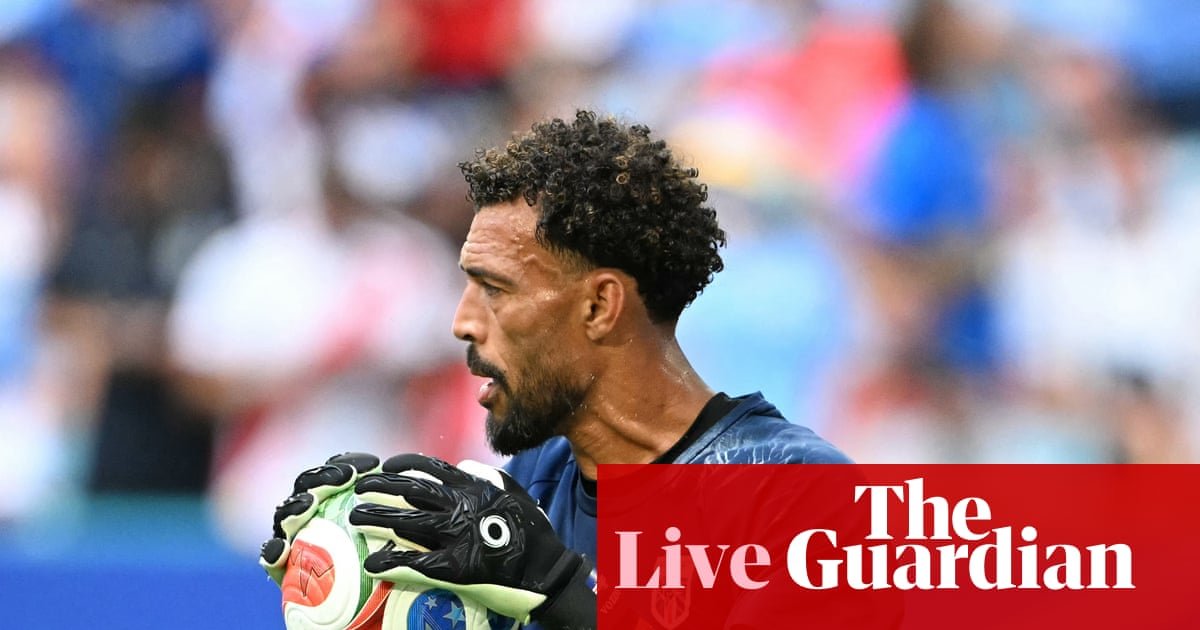
And Cape Verde goalkeeper Josimar Dias, better known as “Vozinha,” has become an international superstar after slamming the door on Spain.
Will Uruguay manage a way past Vozinha? Will Cape Verde manage a goal of their own? Did you expect to be contemplating such questions a month ago?
Contemplate for the next couple of hours right here …
Beau will be here shortly. In the meantime, here’s what to know about Uruguay and Cape Verde before they meet in a few hours in Miami.
Uruguay
Marcelo Bielsa has left his indelible mark on this Uruguay team. His 4-3-3 system is built for direct football, allowing his side to press their opponents high up the field and chase the ball at all times. There is no letup in attacking when Uruguay have possession.
Ignacio Alonso, the president of the Uruguayan Football Association, set the target: “Uruguay have to aspire to be in the world’s top 10 and therefore we have to reach the quarter-finals.” Alonso also addressed concerns over Uruguay’s form. “Bielsa is very excited for the World Cup,” he said. “He’s got his mind focused on the preparations. His objective is to have a great World Cup. It’s his aspiration, the result of all his work, research and preparation.”
Cape Verde
The Blue Sharks of Cape Verde are swimming in uncharted waters as they make their World Cup debut, but you wouldn’t want to bet against them. The tiny archipelago off the coast of west Africa played their first World Cup qualifier in 2000, but if any team can handle the pressure of a meteoric rise to the top of world football it is Cape Verde. After all, the country’s national slogan – morabeza – roughly translates to “no stress”. They will need that mentality as they take on Spain, Uruguay and Saudi Arabia in Group H.
It is an eclectic group of players assembled by Pedro Leitão Brito, known as Bubista. The 26-man squad represents 25 clubs from 14 countries and has more players born in Rotterdam (six) than in Cape Verde’s capital, Praia. But for a nation built on immigration, navigating complex identities and languages isn’t a challenge, it’s something to be embraced.



