
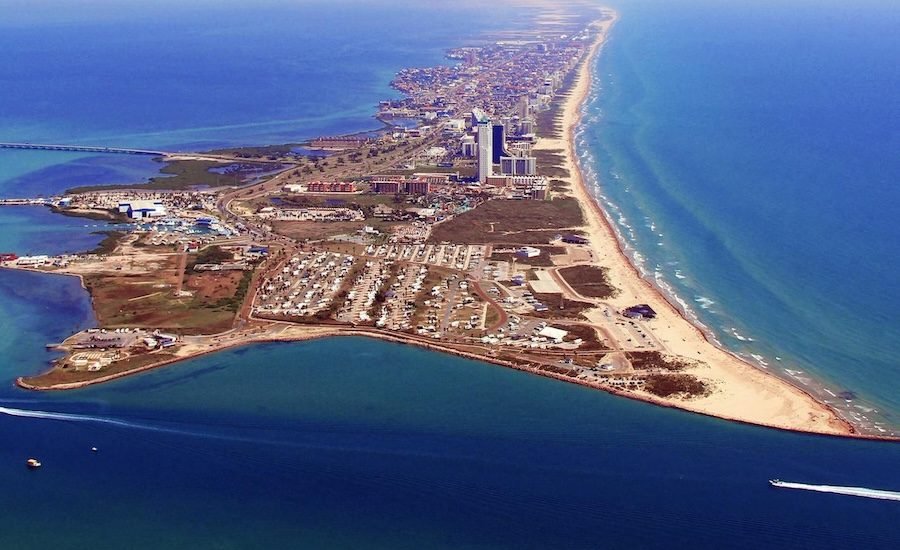
US Desalination LLC and IDE Technologies have formed a new joint venture—RGV‑Desal LLC—to advance a proposed seawater desalination plant in Texas’ Rio Grande Valley that would produce up to 50 million gallons per day.
Announced April 23, the venture would oversee design, financing and long‑term operation of the facility, which it describes as a major “drought‑proof” addition to municipal and industrial water supplies in the South Padre Island area.
IDE Technologies is a leading Israel‑based desalination developer with a long record of designing and operating large‑scale seawater treatment plants globally, including the record-size Carlsbad plant in southern California, opened in 2015 and now providing 10% of regional water supply. Its participation reflects its role as the technology provider and co‑developer, while Houston-based US Desalination LLC serves as the domestic partner.
The project is described as a roughly $1‑billion private investment, with early concept materials indicating it could be expanded to 100 million gallons per day in later phases, according to the Rio Grande Valley Business Journal. The outlet also reports that developers have secured land near the planned second causeway to South Padre Island and have discussed routing a conveyance pipeline along the new bridge structure.
The companies say the plant would rely on seawater reverse osmosis supported by energy‑recovery systems to reduce the facility’s substantial power demand. While developers have referenced a three‑ to five‑year development window, no permitting agencies have confirmed a schedule and no detailed milestones have been released beyond the initial announcement.
The proposal builds on decades of regional interest in desalination. The Texas Water Development Board has noted that the Laguna Madre Water District previously explored marine desalination as a strategy to address recurring hydrological volatility in the Lower Rio Grande region. County judges in Cameron and Hidalgo counties have publicly supported the project, citing long‑term water‑supply concerns and declining reliability of Rio Grande flows, according to The Monitor and the Valley Morning Star.
Despite the project scale, stakeholders say the lack of technical detail remains a central issue. No information has been released on intake design, brine management or site‑specific environmental impacts. Cyrus Reed of the Sierra Club said the absence of publicly available data makes it difficult to evaluate the proposal’s footprint, adding that “the devil is in the details.”
Looking for quick answers on construction and engineering topics?
Try Ask ENR, our new smart AI search tool.
Ask ENR →
Source: www.enr.com



