
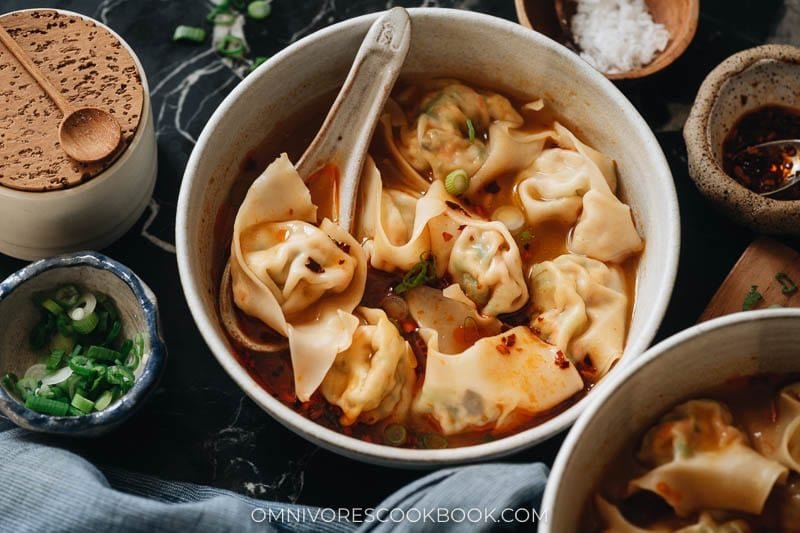
In Chinese cooking, vegan wontons are cousins to vegan dumplings with thinner wrappers and looser folds, meant to slide down the throat with the broth rather than sit on a plate. My vegan version keeps the same silhouette as a classic meaty wonton soup but rebuilds the filling around shiitake, napa cabbage, and firm tofu so the wontons have the same juicy chewy bite.
I first developed this recipe during one of my plant-based weeks in New York, when my body wanted a break from the heavier meat dishes I cook the rest of the time. The plant-based days are not about deprivation for me, they are about noticing how different a bowl of dinner tastes when the umami has to come from mushrooms and fermented seasonings instead of a pork bone. This vegan wonton soup was the recipe that convinced me a meat-free Chinese classic could match the same comfort as the original.
Something I really like about this recipe is that once the shiitakes are soaking in a bowl of hot water and the napa cabbage is curing under a spoonful of salt, the rest of the cooking is pretty quickly. I chop and mix the filling while the cabbage sits, wrap the wontons in a triangle-plus-corner fold that holds a bigger scoop of vegetable filling without breaking, and simmer the wontons directly in the broth so the soup and the wonton finish in the same pot. My recipe makes 30 to 34 wontons, and any extras can be frozen straight from the tray for a quick and comforting meal for your family on a busy weeknight.
Ingredients
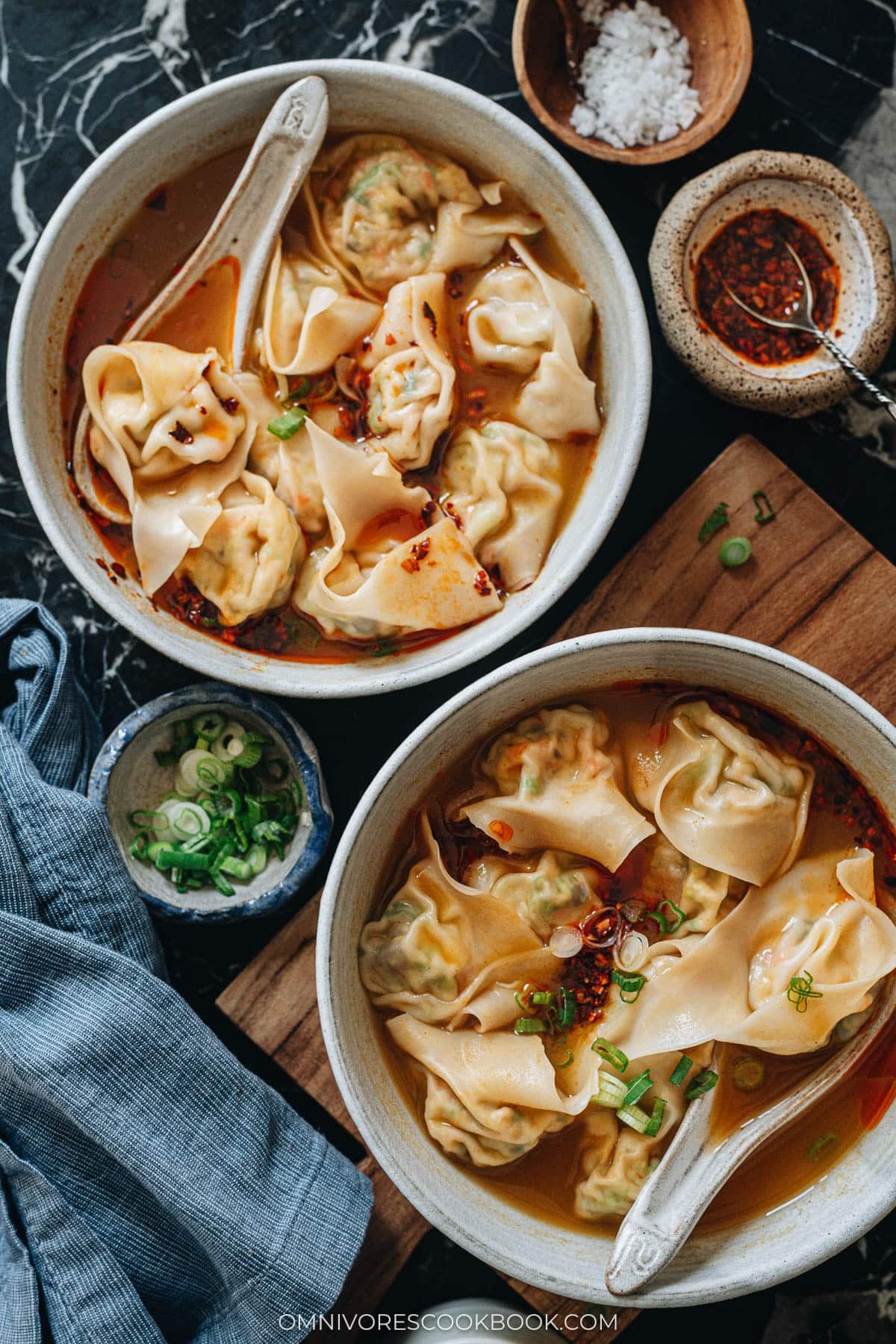
The ingredient list splits into 3 groups, one for the wonton filling, one for the seasonings that go into the filling, and one for the finishing broth. Almost every jar is a Chinese pantry staple I keep on the shelf year round.
Wrappers
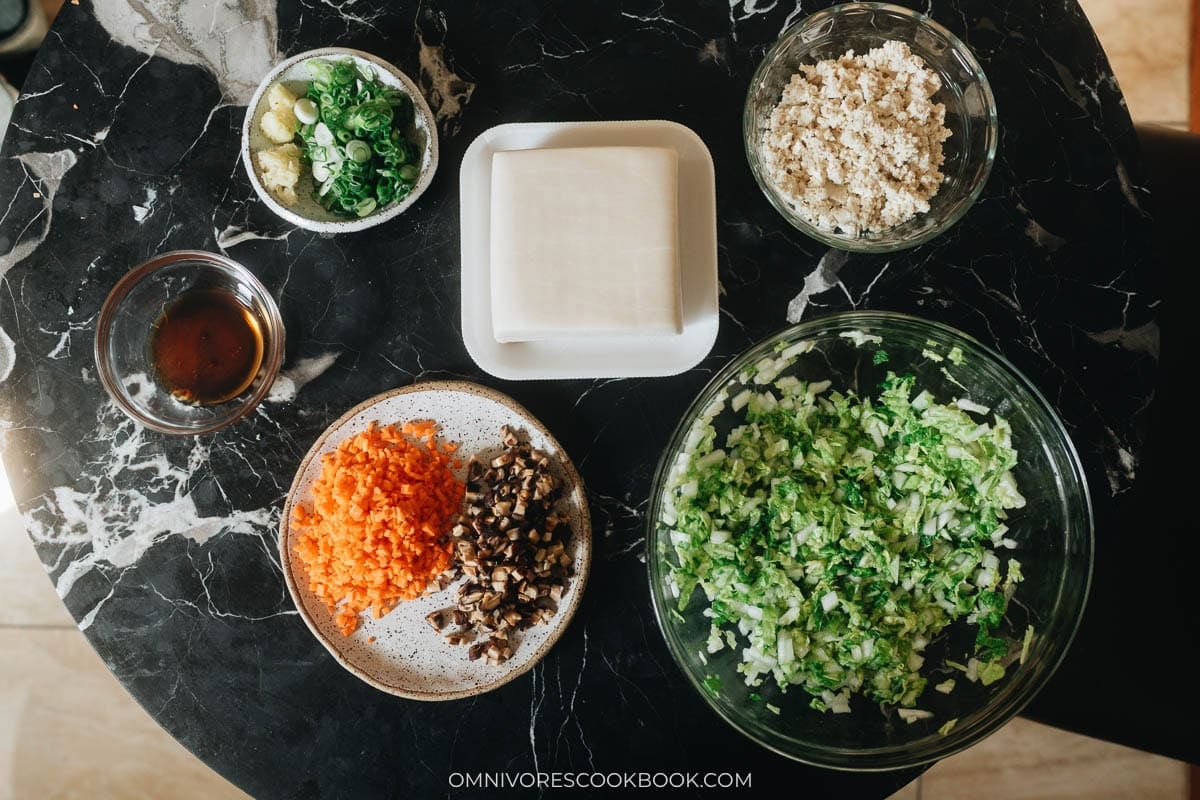
I use store-bought wonton wrappers in a square shape, and I look for a brand that is egg-free since the whole recipe is vegan. The wrappers on the larger side are easier to fold around a vegetable filling that does not compact the way a pork filling does, so I pick the largest square wrapper in the refrigerator case at the Asian market.
Filling
The base of the filling is finely chopped napa cabbage, rehydrated dried shiitake mushrooms, a small carrot for color, and crumbled firm tofu for the protein and juiciness. Green onion, grated ginger, and grated garlic are also ingredients I use for this recipe.

Filling seasoning
I season the filling with light soy sauce, sesame oil, a splash of rice vinegar, a pinch of sugar, and a small dose of mushroom powder for extra umami. Mushroom powder is a plant-based bouillon I keep in my pantry, and it is the ingredient that makes a vegan filling taste as savory as a meat one. If you do not have it, I add a little more soy sauce to compensate.
Broth
The broth is low-sodium vegetable broth, the reserved shiitake soaking liquid, a bigger amount of mushroom powder, light soy sauce, and a pinch of white pepper. The soaking liquid is the ingredient that pulls a store-bought vegetable broth closer to a Chinese wonton broth, so I never pour it down the sink. If you find your broth still tastes bland after adding these, tweak with more soy sauce and mushroom powder to taste, since vegetable broth varies a lot brand to brand.
How to Make
1. Soak the shiitakes: Place the dried shiitake mushrooms in a small bowl and pour over enough warm water to cover, about 1/2 cup. Soak for 20 minutes, or until the mushrooms turn tender all the way through. Reserve the soaking liquid for the broth and chop the mushrooms into 1/4 inch pieces.
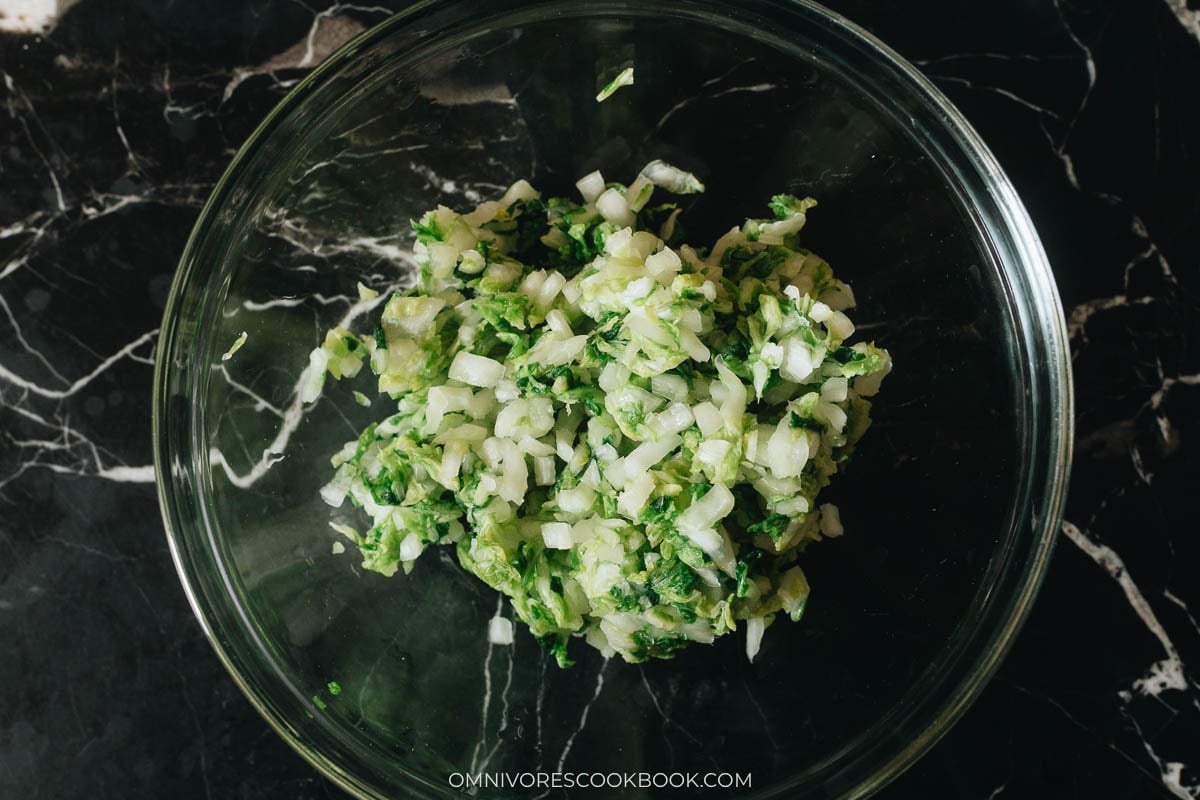
2. Salt the napa cabbage: Place the finely chopped napa cabbage in a large bowl and sprinkle with 1 teaspoon of salt. Toss a few times and let sit for 15 to 20 minutes. Squeeze out the excess water with your hands and discard the water, then transfer the drained cabbage to a large mixing bowl.
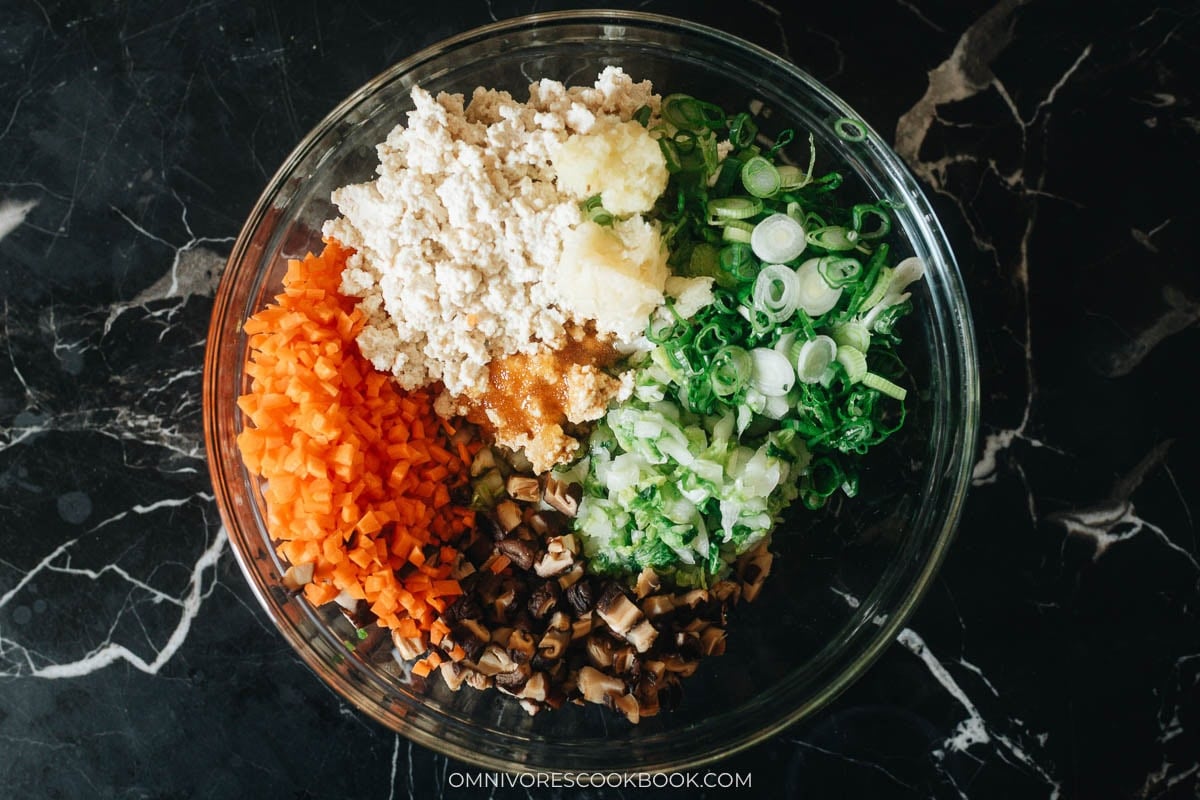
3. Mix the filling: Add the chopped shiitake, carrot, crumbled tofu, green onion, grated garlic, grated ginger, light soy sauce, sesame oil, rice vinegar, sugar, and mushroom powder to the cabbage. Stir well until the seasonings are worked all the way through and the mixture holds together when you press a spoonful.
4. Set up the wrapping station: Place the filling, the stack of wonton wrappers covered with a few layers of damp paper towel, a small bowl of water, and a tray for the wrapped wontons within arm’s reach. Cover the wrappers and any wrapped wontons at all times so they do not dry out.
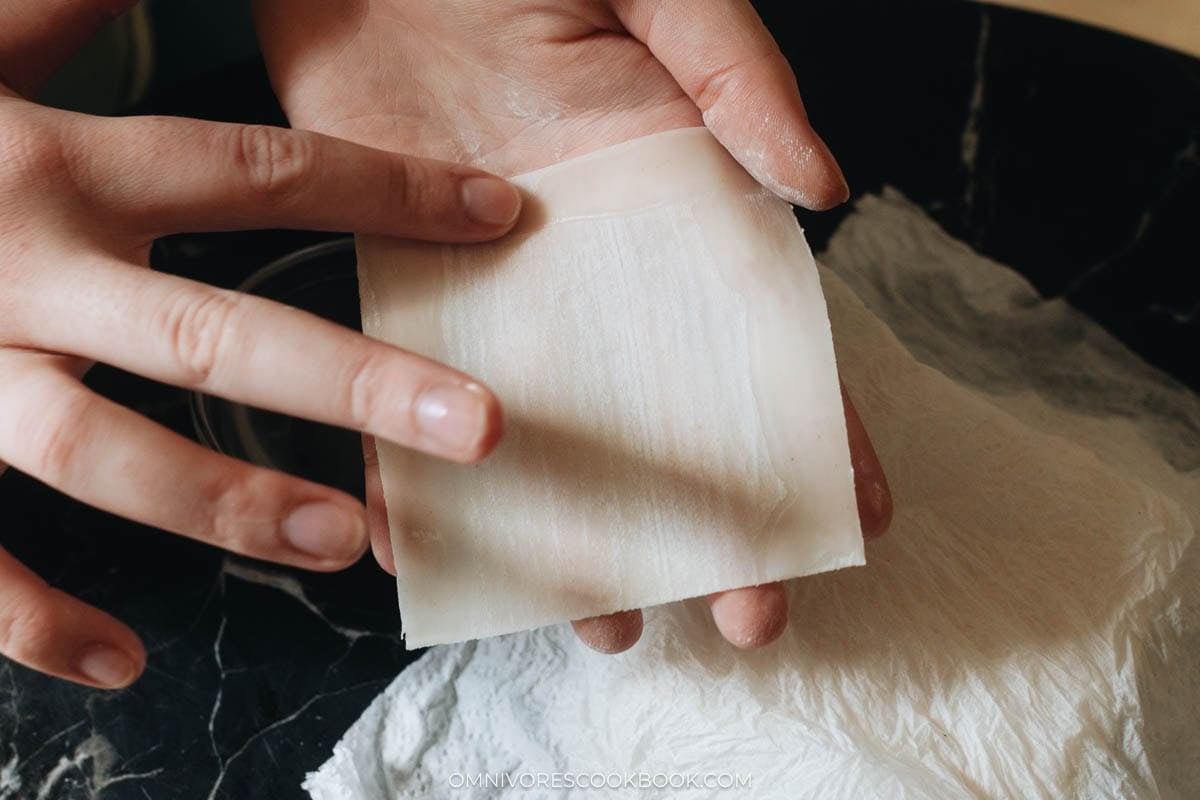
5. Wrap the wontons: Take a wrapper and set it pointed side up so it looks like a diamond, then wet the 2 top edges with your finger and place 1/2 tablespoon of filling in the middle.
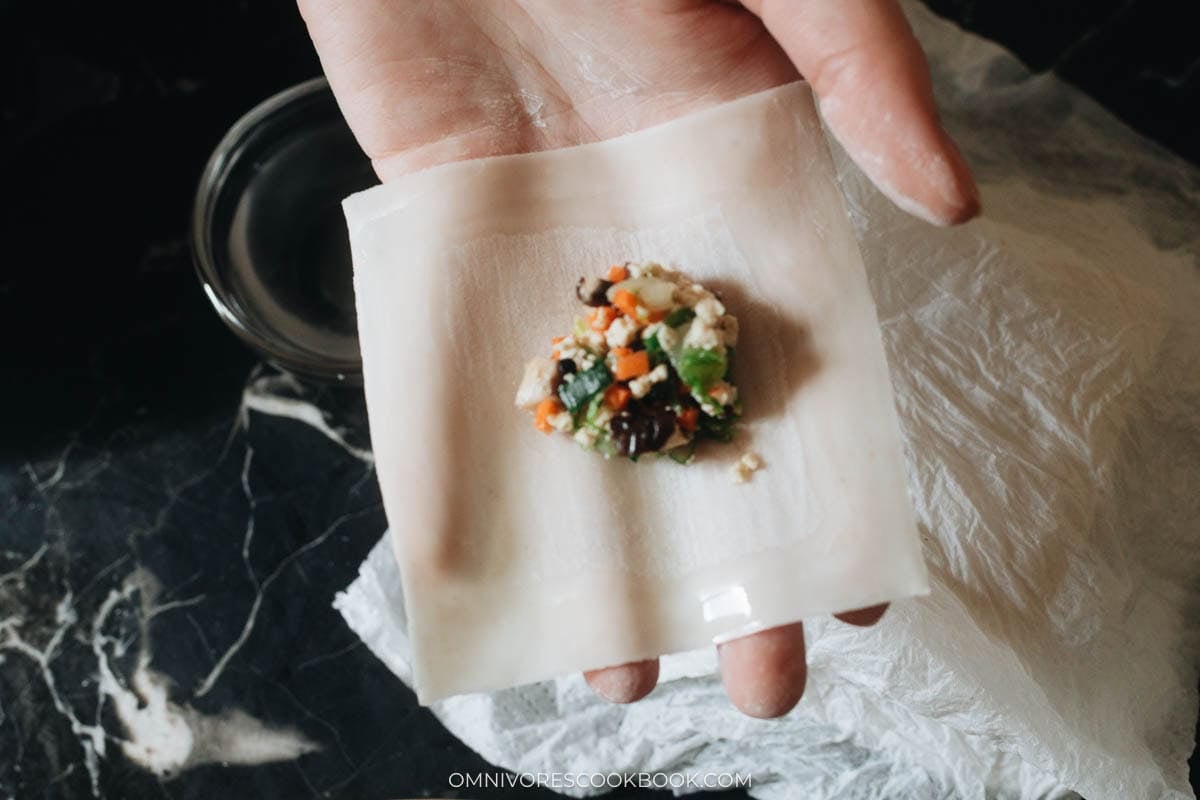
6. Fold the bottom: Then fold pointing up to meet the top point into a triangle, press out the air and seal the edges.
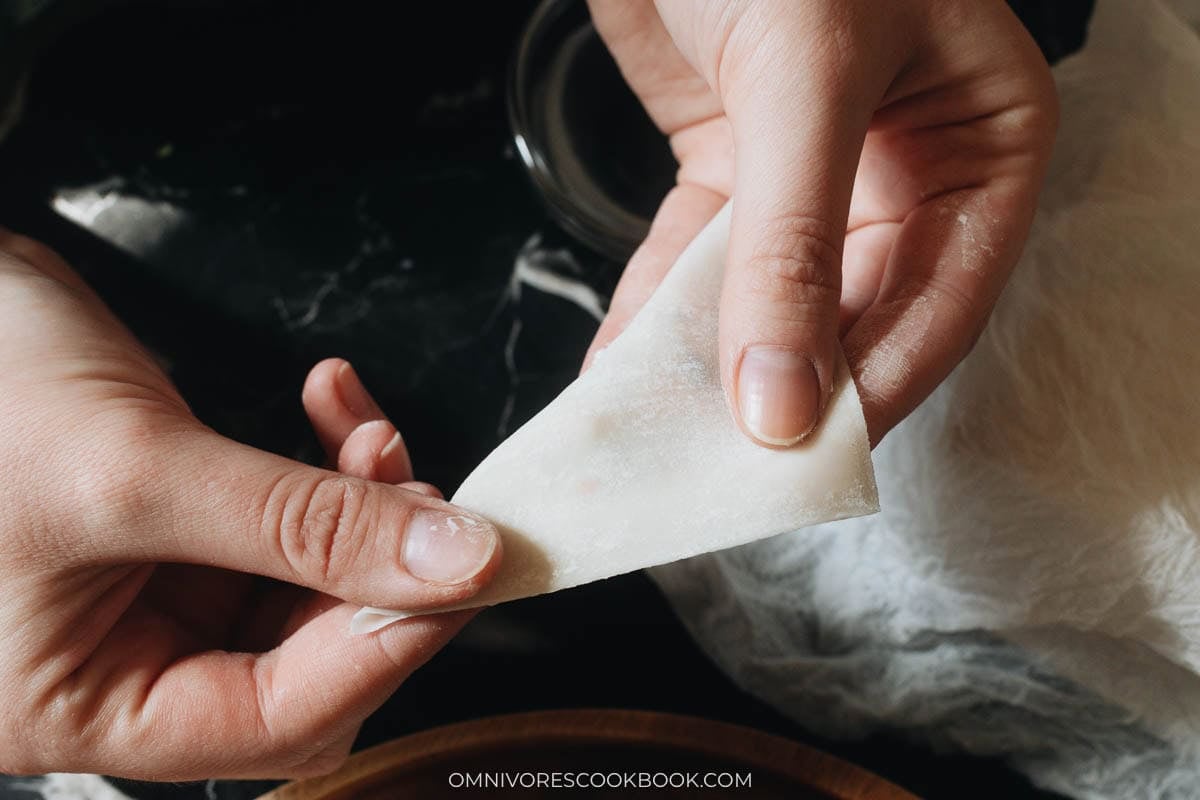
7. Keep folding: Then wet a bottom corner of the triangle, fold the other corner over the wet one, and press to seal.
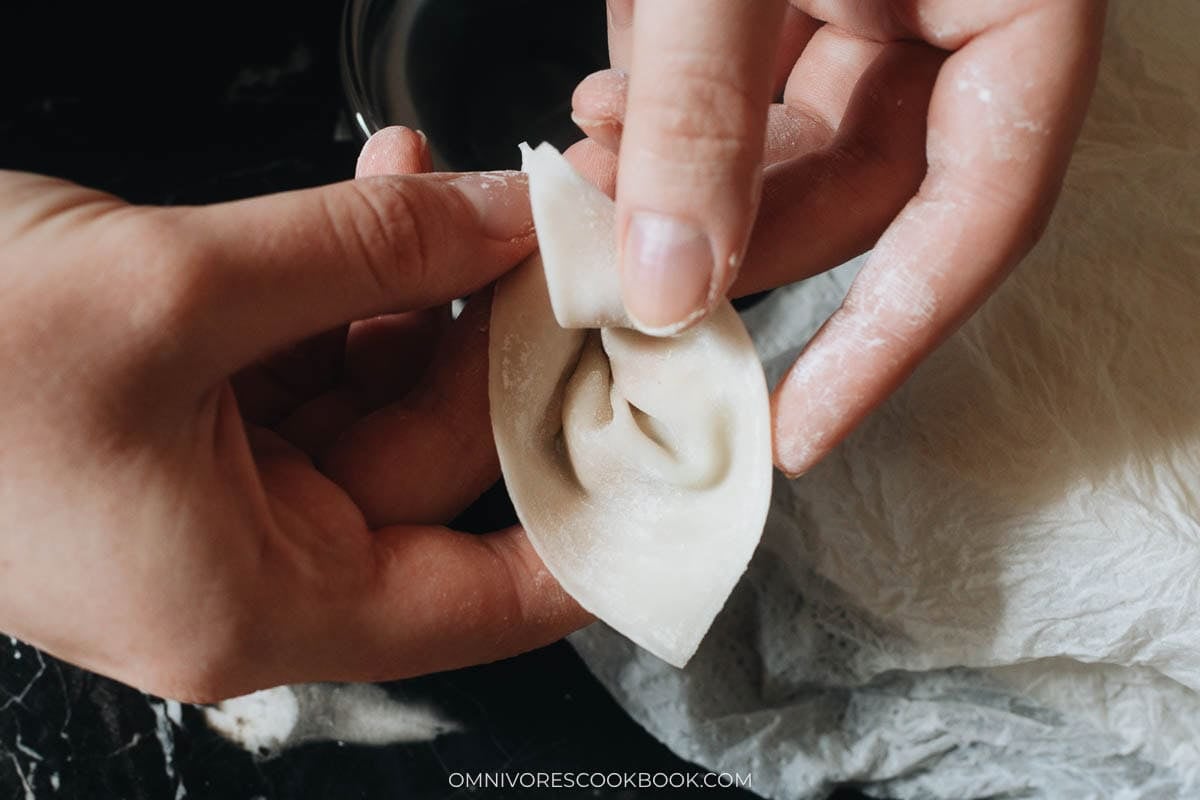
8. Place on the tray: Cover with damp paper towel, and repeat with the remaining wrappers and filling.
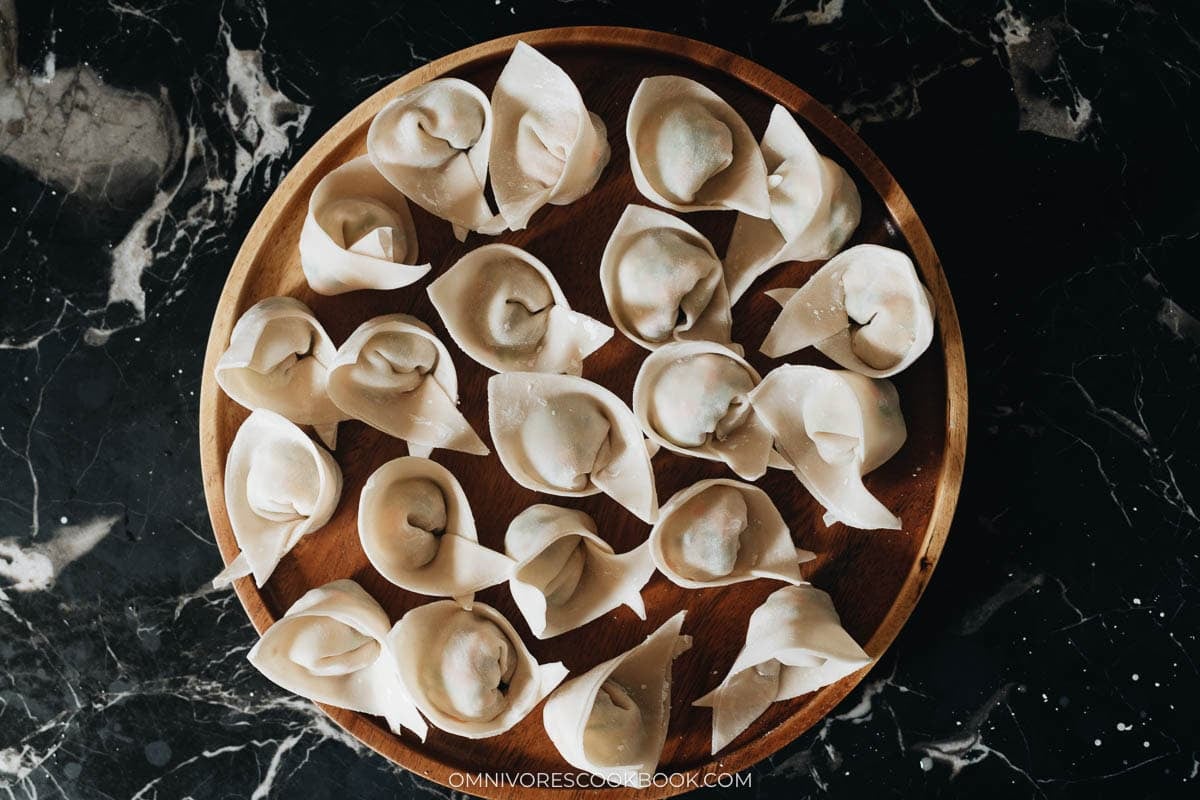
9. Boil the broth: Combine the vegetable broth, reserved shiitake soaking liquid, mushroom powder, light soy sauce, and white pepper in a medium pot and bring to a boil over medium-high heat.
10. Cook the wontons in the broth: Add the wontons you plan to serve into the boiling broth, no more than 15 wontons per batch so they do not stick or crowd the pot. Simmer for 2 minutes, or until the wrappers turn semi-transparent and float.
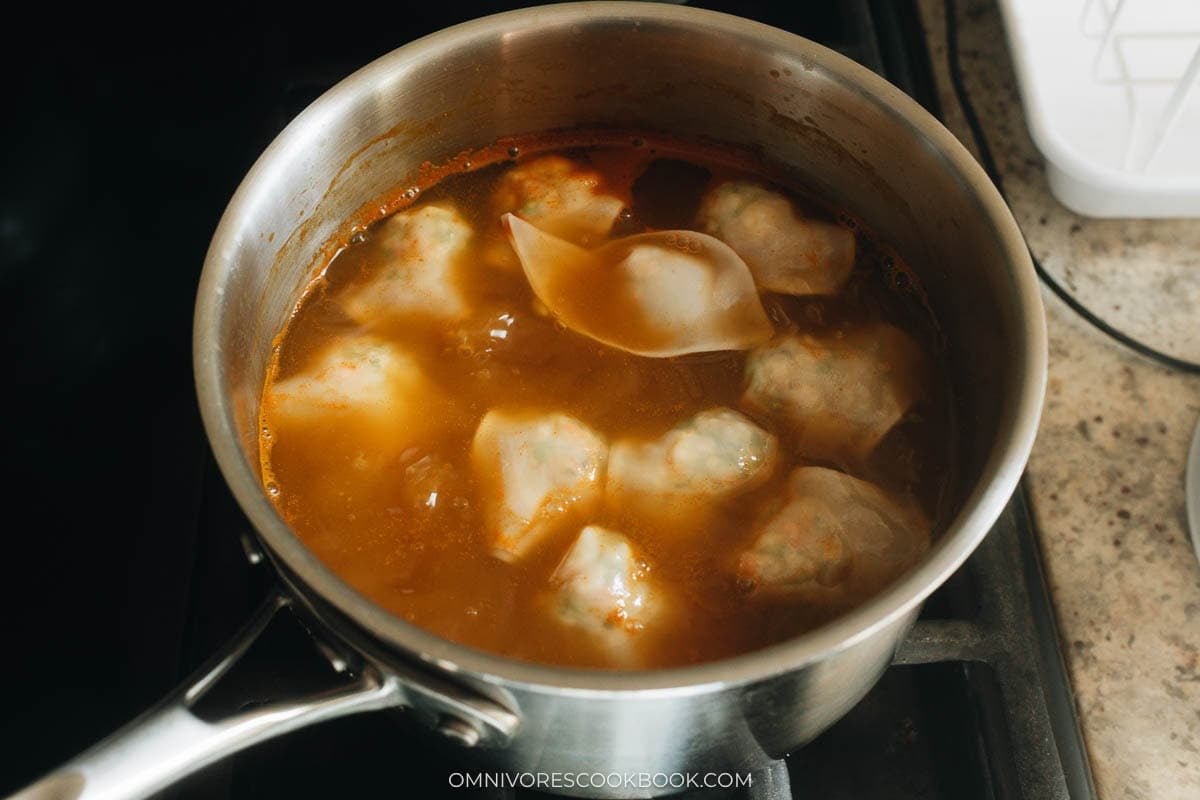
11. Serve hot: Transfer the cooked wontons to serving bowls with a slotted spoon, ladle over the hot broth, and garnish with sliced green onion and a drizzle of sesame oil or homemade chili oil. Serve right away.
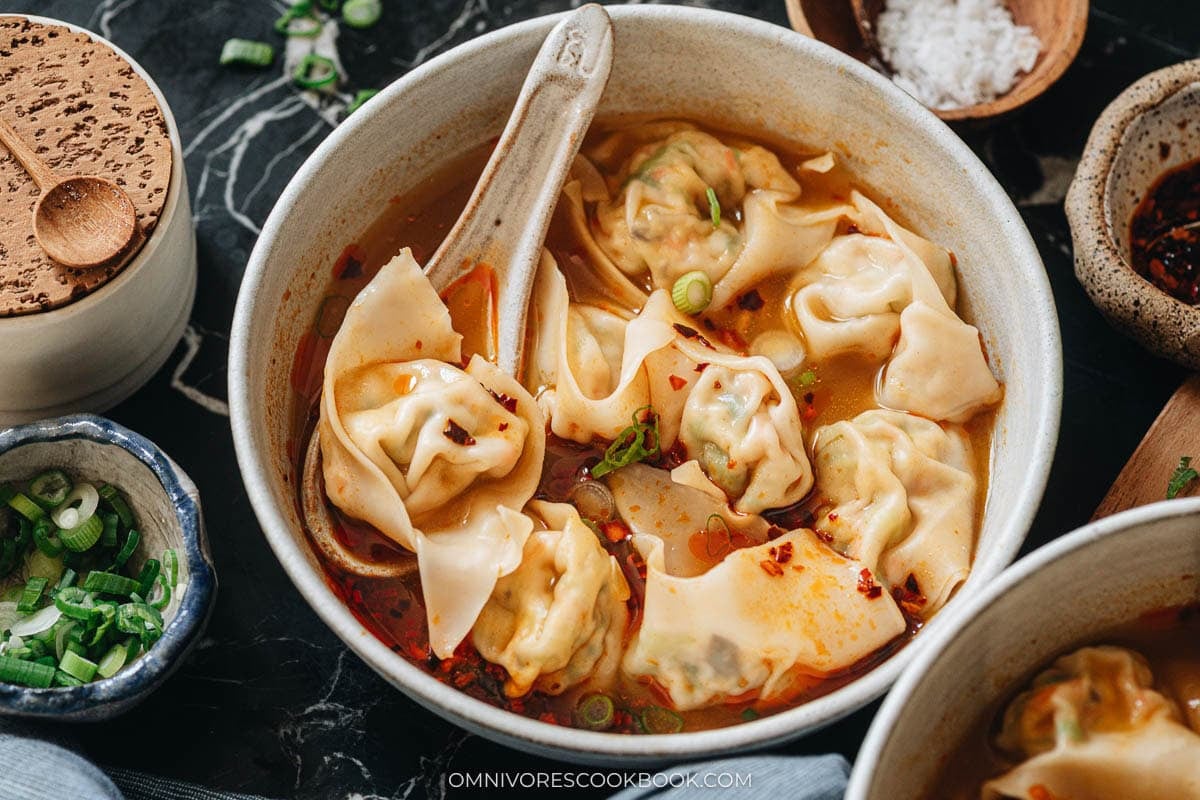
Expert Tips
Save the shiitake soaking liquid for the broth: The soaking liquid has a concentrated mushroom umami that store-bought vegetable broth cannot replicate on its own. Pour it into the broth pot before you throw the shiitake water out, and strain it through a fine mesh sieve if you see any grit at the bottom of the soaking bowl.
Buy the largest square wrapper the market carries: A larger wrapper gives you more room to fold around a vegetable filling that does not compress the way a meat filling does. Small wonton wrappers force you to underfill or overstuff, and both trade-offs hurt the finished dish.
Wrap under damp paper towel from the first minute: Wonton wrappers dry out in the time it takes to look up from the stove, and a dry wrapper cracks along the fold before you can seal it. I cover the stack of wrappers and every finished wonton on the tray with damp paper towel or damp cheesecloth as I go.
Cook the wontons in the broth, not in a separate pot: Cooking the wontons directly in the finishing broth flavors the broth with a light starch from the wrappers and skips a step. The pork wonton method sometimes calls for a plain water boil to keep the broth clear, but a vegan broth benefits from the extra body.
Tweak the broth to taste before you serve: Store-bought vegetable broth varies a lot from brand to brand, some are carrot-heavy and sweet, others are darker and earthier. Taste the broth after the wontons come out and adjust with a splash more soy sauce, a pinch more mushroom powder, or a drop of sesame oil, so the final bowl tastes like a Chinese wonton broth rather than a generic vegetable soup.
Serving Suggestions
On plant-based nights this bowl is the whole dinner, and on a bigger meal night it is the light warming starter that opens the table. I ladle it into small serving bowls with a drizzle of sesame oil on top and a spoon of homemade chili oil for whoever wants heat, which is how the dish shows up at my table. When I want more contrast in the bowl, I boil the wontons in water and serve them in the Sichuan red oil sauce, which turns the broth from a comfort soup into a fragrant tingly one.
The other night I prepared a plant-based Chinese dinner for friends, and this vegan wonton soup was the perfect way to start the meal. I served it alongside my Chinese eggplant with garlic sauce as the vegetable main, a bowl of smashed spicy cucumber salad as the cold refresher, and a small stack of vegetable egg rolls for something crispy. Together, the menu comfortably fed 6 people without needing a single meat dish.
Frequently Ask Questions
Why is my wonton filling watery inside the wrapper?
The most common cause is skipping the salt-and-squeeze step on the napa cabbage. Napa cabbage is over 90% water, and if you do not draw that water out with salt before mixing the filling, it will seep into the wrapper during cooking and turn the bite soggy. Give the cabbage a full 15 to 20 minute salt rest, then squeeze it hard between your palms until it stops dripping.
Do I need to thaw the frozen wontons before cooking?
No thaw needed and that’s why I love it. Simply cook the frozen wontons straight from the freezer into the boiling broth the same way you would cook fresh wontons. The cook time runs about a minute or 2 longer for frozen than for fresh, and the wontons are done when the wrappers turn semi-transparent and float to the surface. Skipping the thaw also keeps the wrappers from sticking together on the tray. Win-Win!
My wontons opened while cooking. What happened?
This usually happens if the edges weren’t sealed well or if too much filling was used. Lightly moisten the edges with water and press firmly to seal. Always keep the unused wonton wrappers covered also prevent them from turning dry and hard to seal. Also, avoid a vigorous boil—a gentle simmer is enough to cook the wontons without breaking them apart.
Want to Save This Recipe?
Enter your email below & we’ll send it to your inbox. Plus get great new recipes from us every week!
This 50-minute vegan wonton soup is the ultimate Chinese comfort bowl, with shiitake, napa cabbage, and crumbled tofu wontons simmered in a rich mushroom vegetable broth. The wrappers become silky, the filling stays juicy, and the broth is packed with amazing umami flavor that I am simply obsessed with.
Prevent your screen from going dark
Prepare the filling
Add the shiitake mushrooms into a small bowl and add 1/2 cup or enough hot water to cover. Soak for 20 minutes, or until the mushrooms turn tender throughout. Reserve the soaking liquid. Cut the mushrooms into 1/4” (0.5 cm) squares.
Place the napa cabbage into a large bowl and sprinkle with 1 teaspoon salt. Mix a few times and let sit for 15 to 20 minutes. Squeeze out the excess water. Discard the water and place the cabbage in a large mixing bowl.
Add the rehydrated and chopped mushrooms and the remaining filling ingredients to the drained cabbage. Stir to mix well.
Wrap the wontons
Prepare the wrapping station by placing the filling, wonton wrappers topped with a few layers of damp paper towels, a small bowl of water, and a tray for wrapped wontons.
Wrap the wontons one at a time, keeping the wrappers covered at all times to prevent from drying out. Take one wrapper and place it pointed side up. Use your finger to wet the wrapper along the two edges of one side. Place 1/2 tablespoon of filling in the center. Fold the wrapper over the filling to form a triangle. Seal the edges of the wrapper by pressing together the edges. Use your finger to smooth out any air bubbles as you go. Once the triangle is sealed, wet one of the bottom corners, fold the other corner over the wet one. Press the corners together to seal and place onto the tray. Cover the wrapped wonton with damp cheesecloth or a few layers of damp paper towel to prevent from drying out. Wrap the rest of the wontons.
(Optional) Once you wrap all the wontons, you can freeze the ones that you do not plan to serve immediately.
Cook and assemble
Combine the broth ingredients in a medium-sized pot and bring to a boil. Add the number of wontons you plan to serve. If planning to serve more than 15, you should separate the cooking into two batches. Cook for 2 minutes, until the wrappers turn semi transparent and bloated.
Once cooked, transfer the cooked wontons into small serving bowls using a slotted spoon. Pour in a ladle of the broth. Garnish with green onions and sesame oil or chili oil to taste.
Serve hot as an appetizer.
Ingredient Substitution Guide
- For a vegan dish, be sure to select wonton wrappers that do not contain egg.
Serving: 1serving, Calories: 115kcal, Fat: 1.4g, Saturated Fat: 0.2g, Cholesterol: 3mg, Sodium: 607mg, Potassium: 182mg, Fiber: 2.1g, Sugar: 3.8g, Calcium: 62mg, Iron: 1mg

Did you make this recipe?
I’d love to hear how it turned out for you! Please take a moment to leave a 5-star rating ⭐️ and share your thoughts in the comments further down the page. It really helps others discover the recipe too.



