
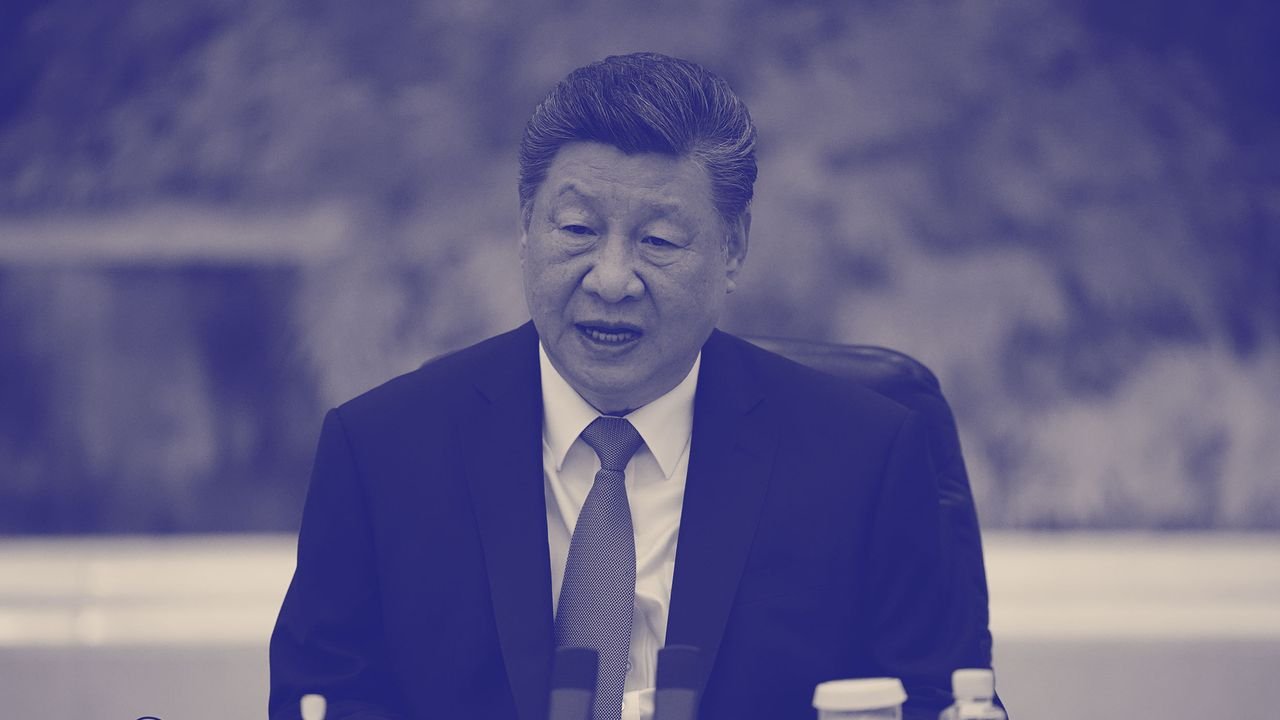
I think one way to think about this is that the difference between China’s relationships with Iran and the Gulf states is a really stark difference from the dynamic that we see in China’s balance of interest between Russia and Europe. In that instance, Russia is clearly where Xi is invested in the relationship. That is the relationship he prioritizes. And, even though China has real economic interests in Europe, I don’t think they’re really concerned about pushback from the Europeans. I think in the Middle East, it’s a different story line. I think they have a weaker relationship with Iran than they do with, say, Russia, and they have deeper relationships with the other side of this conflict, namely the Gulf states.
Yes, you did see Xi calling for the Strait of Hormuz to be opened up after a call with Mohammed bin Salman, the crown prince of Saudi Arabia, which I wasn’t exactly sure how to interpret, but which felt like a light critique of Iran, and that’s something we haven’t seen from Xi when it comes to Russia.
Yeah. China will strike the same pose and same posture when it comes to Russia: They’ll claim to be a neutral party, but, no, they won’t imply that Russia’s doing something untoward in the same way. And I think that reflects where they’re really at. I don’t think they like what’s going on in the Middle East.
What have you made of the reports that China is offering some sort of military assistance to Iran? What do we know about that, and how significant do you think it is?
I think that there is a well-established defense nexus between the two of them. But my guess would be that, in this instance, it would probably be limited, right? They don’t want to do anything that’s going to be overly provocative toward the Gulf states or toward the United States. I think what ends up happening a lot of the time on the Chinese side is that, because they do have a sprawling defense-industrial complex, it’s a little bit of either malign neglect or implausible deniability. I think there may be awareness of firms selling to the Iranians, and I think they’re comfortable with letting it slide, as long as it doesn’t really have the Chinese government’s clear fingerprints on it. And then if somebody complains about it they may go after a particular firm or entity and finger-wag at them and say, No, no, no, you’ve been naughty, and you shouldn’t do that anymore.
You said something in your first answer about the degree to which China sees American behavior vis-à-vis Iran in the past few months as similar to American foreign policy throughout this century. Were you referring to American wars of regime change specifically?
Yeah. I think as idiosyncratic and as different as Trump is from his predecessors, from Beijing’s perspective, there is a real through line of continuity across Administrations, Democratic or Republican, from the invasion of Afghanistan to the invasion of Iraq, to what President Obama did in Libya, and then the Iran war. So this is just, in their mind, the latest iteration of the same foreign policy and impulse in the Middle East which is bipartisan and spans Administrations, even to encompass Trump.
China and Russia are often described as caring deeply about sovereignty and disliking regime change for that reason. Putting aside the issue of Ukraine and the hypocrisy there, is this posture an ideological thing or about self-interest?
I think it’s more strategic than ideological. I do think that both the Chinese and the Russian sides, and Xi and Putin in particular, do see themselves as bedevilled by the United States and the West, and think that they need to lock arms to fend off against that. I think there is some mutual admiration between the two of them as authoritarians, but I really think about this as being a marriage of convenience, almost like between two Mob bosses. I don’t think there’s any kind of pretense that there’s real amity or affinity there, but I think in some ways, for guys like that, that is actually a more sustainable basis for a relationship than having shared values or shared ideological goals.
They both talk about sovereignty, but I think you’re right, as we’ve seen in the case of Ukraine, that China doesn’t necessarily care that much. And despite the fact that they’ve long talked about their non-interference policy, I think if you look at China’s behavior globally and what they do in other countries, that’s not quite right. They talk about sovereignty and they don’t want to get involved in other countries’ business, unless they have some kind of equity or their own interest at play, in which case they’re happy to muck around in the politics of other countries, right? Especially if it’s a much weaker country.
But I want to circle back: I think one of the biggest pieces of conventional wisdom where there’s a real misconception is that there’s a tendency, I think, in a lot of strategic circles in the United States to still think about the Middle East as the locus of great-power competition or relationships. And I just don’t think that’s true anymore. I think people think about what’s going on in the Middle East and kind of superimpose on it something like what happened when Kissinger did shuttle diplomacy in the Middle East, when the region was a potential flash point between the United States and the Soviet Union. But I don’t think that’s how China sees it, certainly, and I think objectively it is not the case. The Middle East is still important because of the supply chains and because of the energy and the oil, of course, but it is not the geopolitical center of gravity that it once was.



