 Gov. Mikie Sherrill is getting ready to unveil her first budget for New Jersey, a fiscal plan that could set the tone for her four-year term.
Sherrill, a Democrat who took office in January, is scheduled to address state lawmakers at the State House in Trenton on Tuesday at 2 p.m. The presentation will stream live on NJSpotlightNews.org.
In recent years, majority Democrats in the Legislature have increased annual spending steadily for priority items including K-12 public school aid, mass transit and direct property tax relief. Last-minute spending add-ons approved by legislative leaders have also inflated the annual budget, which now totals nearly $60 billion. But Sherrill — a former congresswoman who emphasized affordability on the campaign trail last year — is signaling that restraint may now be in order.
It remains to be seen where there may be cuts, and how deep they could be. At a recent news conference, Sherrill said she will seek to restore structural balance to a state budget that, in recent years, has called for spending more than is collected annually from taxes.
The presentation marks the start of a public debate leading to a July 1 deadline for lawmakers and the governor to enact a balanced budget.
This year’s budget message was delayed beyond a late-February statutory deadline. Lawmakers gave Sherrill’s administration extra time to assess the state’s finances, a decades-old bipartisan courtesy for first-year governors.

Here are some of the key areas to watch:
Structural balance
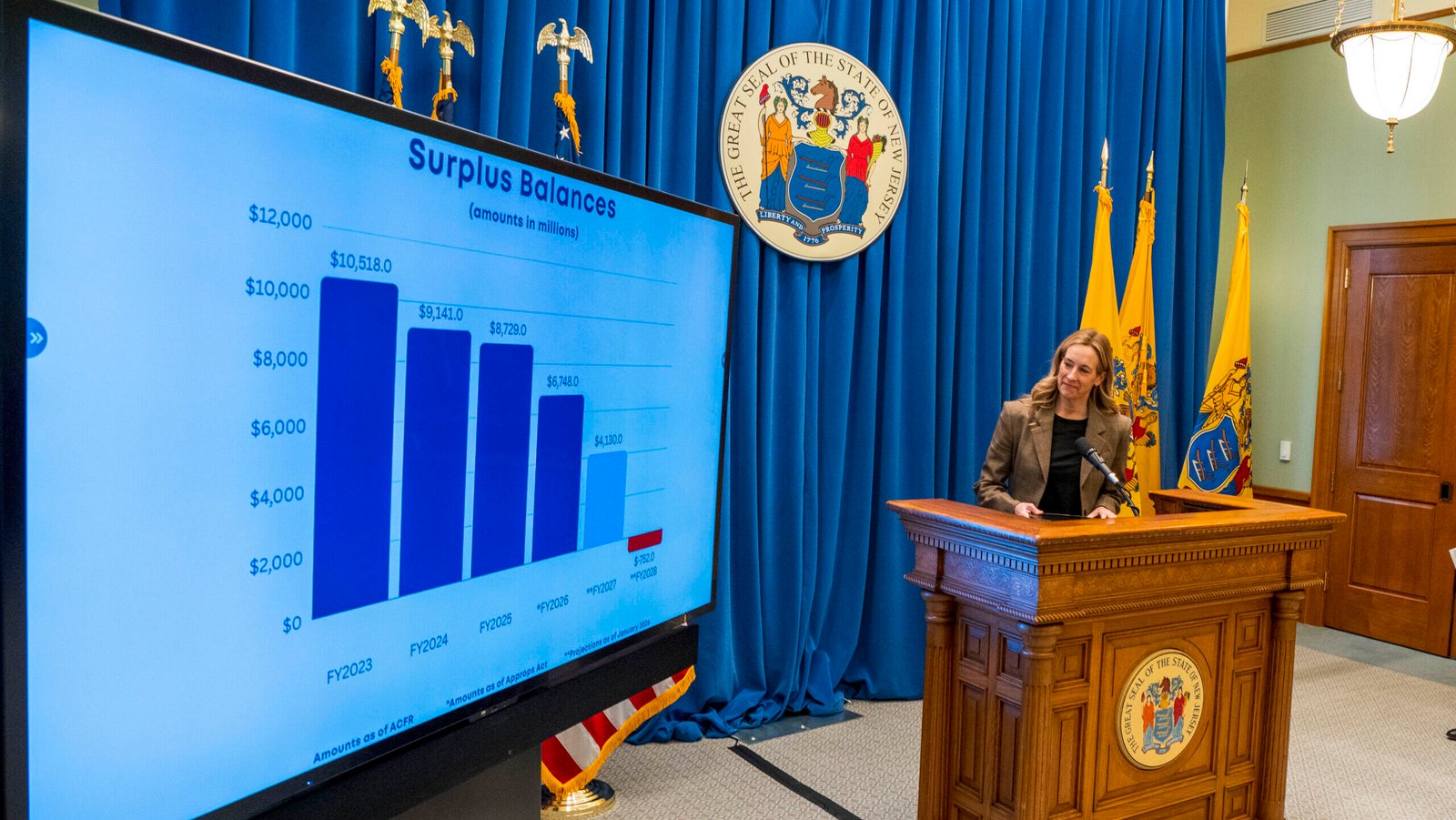
The budget that Sherrill inherited from former Gov. Phil Murphy is in place through June, and it calls for overall spending to outpace revenues by more than $1 billion. After a tax collection uptick through the first half of this fiscal year, Sherrill’s treasurer has indicated state government is on course to end the fiscal year with a budget surplus larger than was originally forecast. While that’s good news, the forecast for the next fiscal year suggests a major reversal: Projected spending growth is expected to outpace revenues by as much as $3 billion if no spending reductions are carried out, the treasurer said. In recent years, Murphy and lawmakers made up for such structural imbalances by spending budget surplus, among other short-term fixes. The Sherrill administration’s projections suggest that a more than $7 billion surplus may run dry within a matter of years, unless there’s a major course correction. Sherrill has suggested she’ll have more to say during Tuesday’s budget message about plans to restore the budget’s structural balance.
Affordability
The rising cost of everything from groceries to property taxes played a key role in Sherrill’s election victory. On her first day in office, she responded by signing an executive order addressing concerns about the rising utility bills she made a cornerstone issue during the election. Also listed on Sherrill’s affordability agenda last year was a pledge to expand New Jersey’s popular child tax credit, something she could try to accomplish as part of her budget plan for the next fiscal year. As Sherrill looks for places to trim, she could rein in a planned increase in spending on Stay NJ, a direct property tax relief program for senior homeowners making up to $500,000 annually. Meanwhile, despite the state’s return to funding its full annual pension obligations in recent years, affordability remains a major concern for many state and local government retirees depending on New Jersey pensions, because they’ve gone without cost-of-living adjustments for more than a decade. Calls to lift that cost-saving hold are growing louder amid a period of significant inflation – and after lawmakers, whose jobs are part time, received 67% pay increases this year.
Last year, Murphy and lawmakers agreed to full funding of the state’s K-12 school-aid formula, ensuring a major share of the nearly $60 billion annual budget went to direct “formula aid” for public school districts. Adding to other significant state outlays for public education was increased spending on preschool aid, school facilities and teacher pension benefits, among other items. Not everyone, though, has been happy with the status quo in Trenton, including parents in communities that have lost state aid in recent years under the current state funding formula, even as the overall allocations have risen significantly. That’s drawing calls to change the funding formula, which many view as outdated. Underlying the funding debate is a legal challenge by advocates seeking to desegregate New Jersey schools, which remain among the most racially bifurcated in the country.
Mass transit dollars
Several years ago, Murphy and lawmakers enacted a temporary tax on top-earning corporations, calling it a “transit fee” because revenue generated is statutorily directed to New Jersey Transit. That means hundreds of millions of dollars annually go directly to the nation’s largest statewide bus and rail operator — that is, until the law expires on Dec. 31, 2028. However, the establishment of that tax, heavily criticized by business-lobbying groups, hasn’t prevented the levying of a series of NJ Transit rider fare increases in recent years, with the next due in the summer. Atop money from the fares and the dedicated tax, funds from the state budget also get allocated annually to help support NJ Transit’s own operating budget. How much the agency will need from the latest state budget remains to be seen, but prolonged underperformance of state business taxes could force Sherrill and lawmakers to reach deeper into the budget’s general fund to subsidize a mass-transit system that’s integral to the state’s overall economic health.
In recent years, the Legislature’s majority Democrats have added hundreds of millions of dollars in spending to the final draft of the governor’s recommended budget as they introduce and swiftly approve a final appropriations bill. The additions aren’t offset with coinciding spending cuts or tax increases, though, so the additions often have widened the structural gap between annual spending and revenues that Sherrill has identified as a key concern. At the same time, the individual sponsors of the last-minute budget changes — including line items funding legislative priorities and pet projects often referred to as Christmas tree items — have been concealed by legislative leaders until weeks after the budget was signed into law. In recent weeks, lawmakers from both major political parties have called for reform, with one saying the budget process itself has become “shameless.” Sherrill promised increased government transparency and accountability on the campaign trail last year, and she could seek to reshape the final stages of the late-June budget-approval process as part of a broader effort to reestablish fiscal restraint.
This story is made possible in part by the Corporation for Public Broadcasting, a private corporation funded by the American people.