
New Jersey, a state looking to protect roughly 500,000 undocumented immigrant residents, is hobbling some ICE operations with legislation, executive orders and court rulings. As pressure mounts to close a Newark detention center, though, foes are reaching for yet another tool: the rich vein of state and local bureaucracy.
In March 2025, shortly before the 1,000-bed Delaney Hall opened in Newark’s Ironbound section, city inspectors showed up for a compliance check. After they were denied access, Newark sued GEO Group, which owns Delaney Hall, and the sides are in mediation.

Last week, amid reports of a hunger strike and poor living conditions, state health personnel were also blocked from a full review. Gov. Mikie Sherrill’s administration is expected to release details about what inspectors found from their limited visit.
These are small steps, only partly successful and with no clear immediate impact on the lives of the about 300 people incarcerated there. At the same time, they are the type of regulations-based squabbles that are gumming up President Donald Trump’s hardline immigration policy all over the country.
The reasoning for opponents is simple: Hound ICE to follow the rules – for construction and occupancy, for instance, or water and sewer use – just as a private business must.
‘It was not political’
In Howard County, Md., a Baltimore suburb, authorities in February revoked a building permit for the conversion of a warehouse to hold hundreds of people suspected of breaking immigration laws. Roughly 50 miles west, in Washington County, local government swayed a federal judge to delay work on another warehouse because of environmental and community concerns.
In Georgia, in a rural enclave named Social Circle that is 45 miles east of Atlanta, plans for an ICE detention center were thwarted in February by a fast, cheap, low-tech approach: City Manager Erik Taylor ordered a lock on the property’s water meter.
“I had heard a couple of days before that moment that the property had sold, and to that point we hadn’t had conversations at all with anybody at the federal level,” Taylor told NJ Spotlight News. “The day after I made that the decision the person from the Department of Homeland Security came in and I just said, ‘Can’t do it. There’s a lock on the meter.’”
Social Circle, with roughly 5,500 residents, uses about 80% of its water system’s daily capacity of 1 million gallons. The detention center was planned for 10,000 people, Taylor said.
“A regular apartment building, or a commercial facility or a big-box store — or even an individual house — wouldn’t have moved forward with a decision like that without a conversation with the city,” Taylor said. “It was not political to me. It was based on a concern for our natural resources.”
Rose Cuison Villazor, a Rutgers Law School professor and director of the Rutgers Center for Immigrant Justice, said that invoking local regulations can be considered a sound argument.
“They’re saying the reason why we’re doing this is not because we’re trying to avoid immigration law, but rather we just don’t have the capacity, and we have responsibilities to our residents and if more people come here, then that’s going to draw resources away,” Cuison Villazor told NJ Spotlight News. “They’re relying on their own power to maintain the health, safety and welfare of their residents.’
Highlands region
In New Jersey, Roxbury officials also have cited water use among their many reasons to oppose the conversion of a warehouse to detain 1,500 immigrants. The Morris County facility, about 45 miles west of Manhattan, would generate 15 times more wastewater, a volume well beyond the sewer system’s capacity, according to a lawsuit filed jointly by the state and township.
What’s more, the warehouse lies in the protected Highlands region, which provides 70% of New Jersey’s drinking water.
That area’s environmental policy, dating to 2004, involves a bureaucracy all its own, touching on 88 towns in seven counties; thousands of pages of federal, state and land-use rules; an appointed council; litigation; legislation; executive orders; native plant and wildlife studies; and a 489-page master plan.
“A large ongoing water withdrawal that was not previously anticipated poses a substantial risk of exceeding system capacity, which could in turn reduce water pressure and reliability for residents, impair flows needed for fighting fires, deplete groundwater and diminish nearby wells,” the lawsuit states.
The federal government in May agreed to delay the Roxbury plan while an environmental review is conducted.
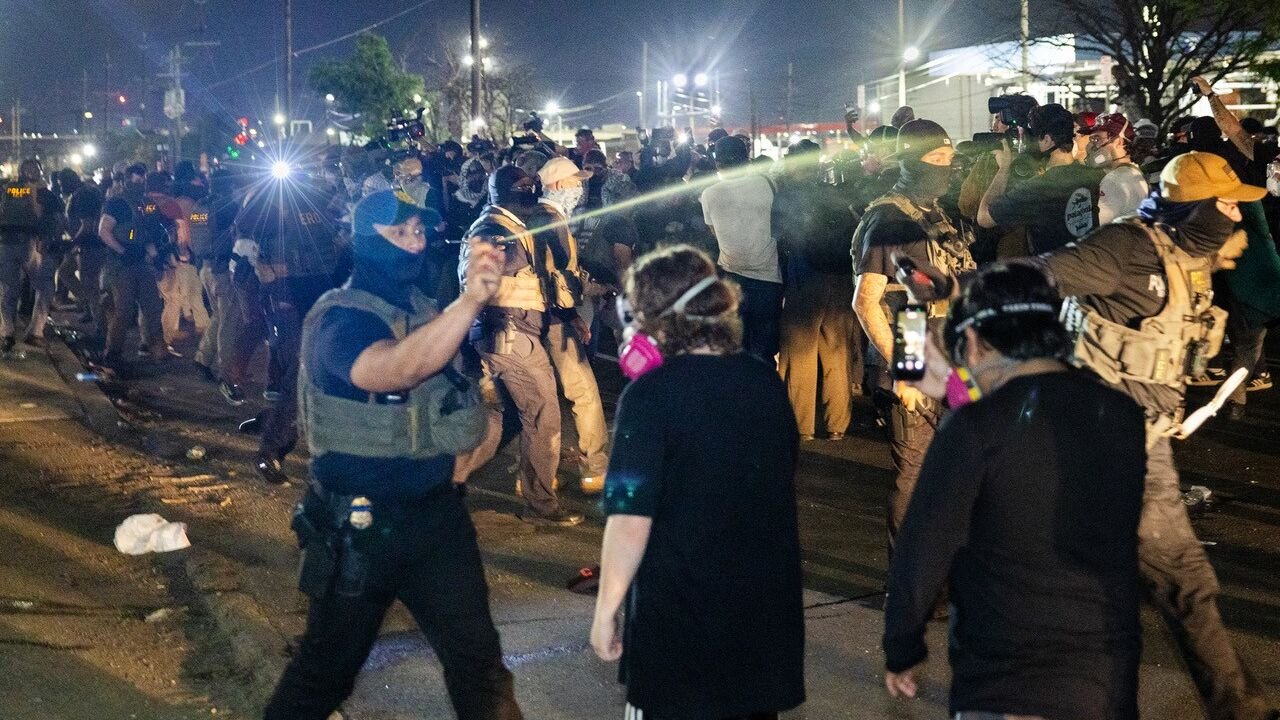
In Newark, New Jersey’s largest city, near-constant demonstrations have taken place outside Delaney Hall since May 22. On Friday — amid escalating clashes between demonstrators and ICE agents, and with counter-protesters expected over the weekend — Sherrill assigned State Police to set up a “peaceful protected zone.”
“We know what ICE has done in other states, and we know American citizens have lost their lives, and I refuse to let that happen in our state,” Sherrill said at a news conference.
On Sunday, after some people arrested outside Delaney Hall were found with weapons, Mayor Ras Baraka announced his own local safety policy, with a curfew enforced in a half-mile area from the building. On Monday night, he announced what he called “a greater span of control” and the involvement of Public Safety Director Emanuel Miranda Sr.
“The police tactics over this last weekend were overly aggressive, unnecessary, and in some instances unconstitutional,” Baraka said in a statement. “The city of Newark sees protests all the time and we have our own way of policing based on community relationships, the integrity of protestors and upholding personal freedoms.”



