
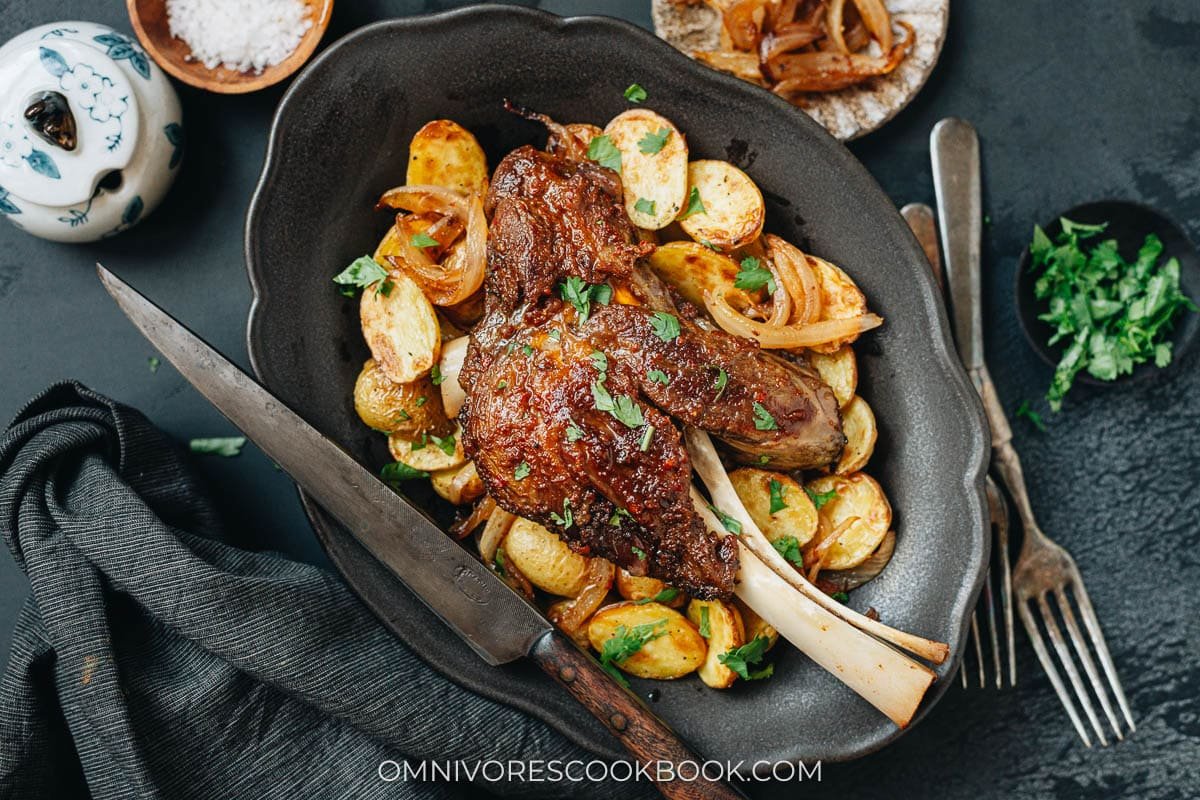
Xinjiang is in the northwest corner of China, home to the Uyghur ethnic minority, and Xinjiang cooking sits at the edge of the Silk Road with the earthy spice work of Central Asia woven into every dish. The first thing most people think of is the charcoal grilled Xinjiang lamb skewers, but lamb is the staple meat of the region and shows up in many forms, and this whole roast shank is the slow oven version of the same flavor profile.
My memory of Xinjiang lamb is tied to the family-style Uyghur restaurants in Beijing where I grew up, where the lamb came to the table on a heavy plate with the cumin and chili crusted onto the surface. My husband is the lamb lover in our house and is the one who asks me to make this most weekends in the cold months, and I refined the recipe over many test rounds to settle on the spice blend that tastes closest to the restaurant version. Now it is the dish I default to for our small holiday dinners with friends.
I marinate the shanks overnight in a dry rub of cumin, Chinese chili flakes, and ground Sichuan peppercorns, with ginger and sliced onion in the bag to perfume the meat. The next day I roast the shanks uncovered at high heat to brown the surface, then drop the oven temperature, seal the pan with foil, and let the connective tissue melt down until the meat falls off the bone with a fork. If your holiday table needs a centerpiece that does most of its work the day before, I highly recommend you to make my step by step recipe below.
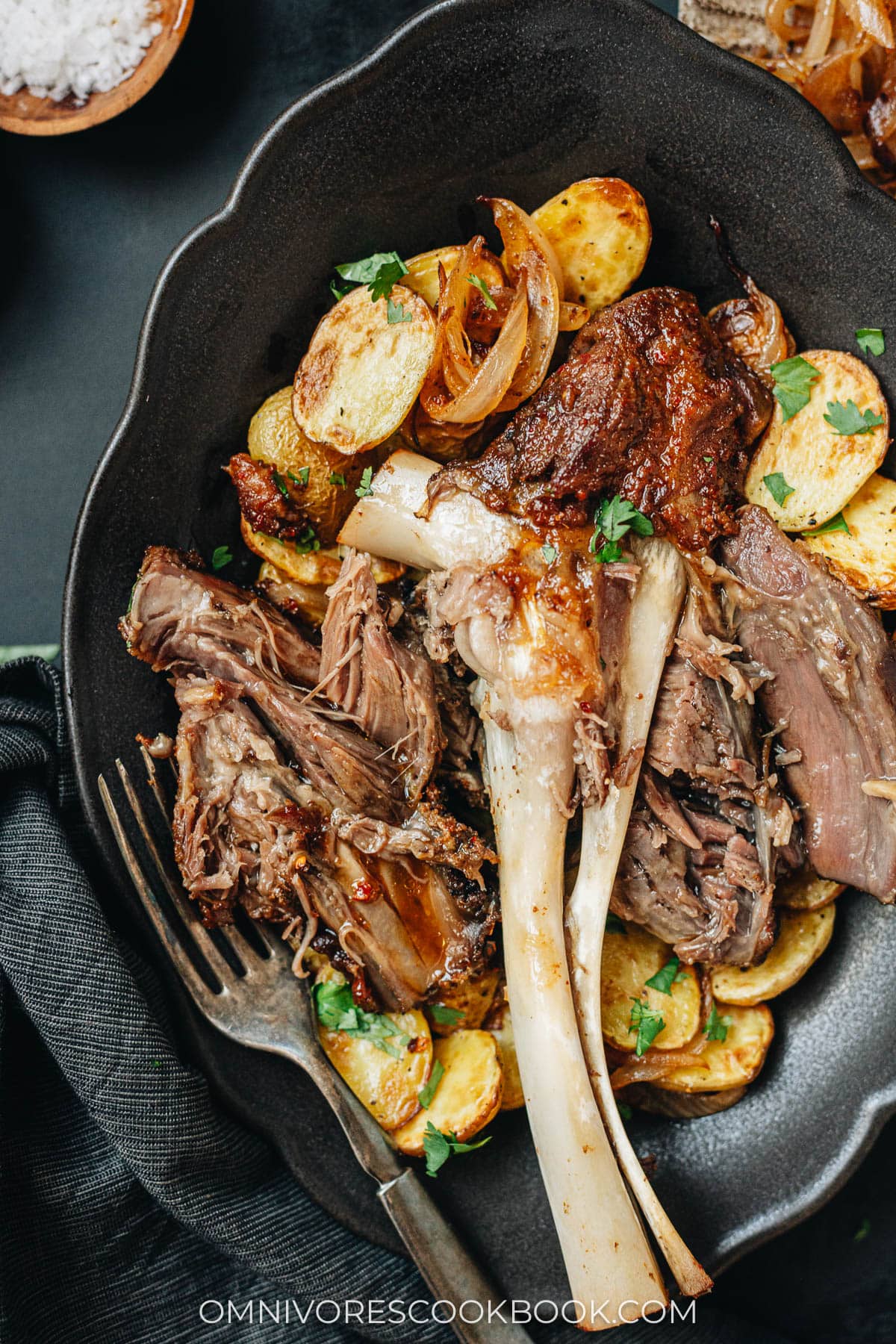
Ingredients
There are only 8 ingredients on this list, and 3 of them are the spices that make up the Xinjiang rub. The rest is one good shank, some aromatics, and a fresh garnish.
Lamb shanks: I buy bone-in lamb shanks from my butcher, ideally on the smaller end so each one is a full single serving. I look for shanks with a good amount of fat marbling, because the slow roast renders it into the meat and keeps the muscle juicy.
Salt: I use sea salt for the dry brine because the coarse grain sticks to the surface of the shank and pulls the moisture out so the spice rub can adhere.
Spice rub: I anchor the rub on cumin powder for the smoky Xinjiang flavor, balanced with Chinese chili flakes (my favorite Chinese chili flakes are the ones from The Mala Market) and freshly ground Sichuan peppercorns. I grind my Sichuan peppercorns fresh because the fragrance fades fast once they sit ground in a jar, and a fresh grind is key here. I highly recommend the Mala Market Sichuan peppercorns.

Aromatics: I tuck large sliced ginger and a whole sliced onion into the marinade bag with the lamb to perfume the meat overnight.
Finish: I spray oil over the rubbed shanks to keep the spice crust from burning during the high-heat sear, and I scatter chopped cilantro on top right before serving.
How to Make
1. Salt the shanks: Sprinkle a generous amount of sea salt over every surface of the lamb shanks, patting it on by hand so it sticks. I use about 3/4 teaspoon of salt per shank for shanks around 1.2 to 1.3 pounds.
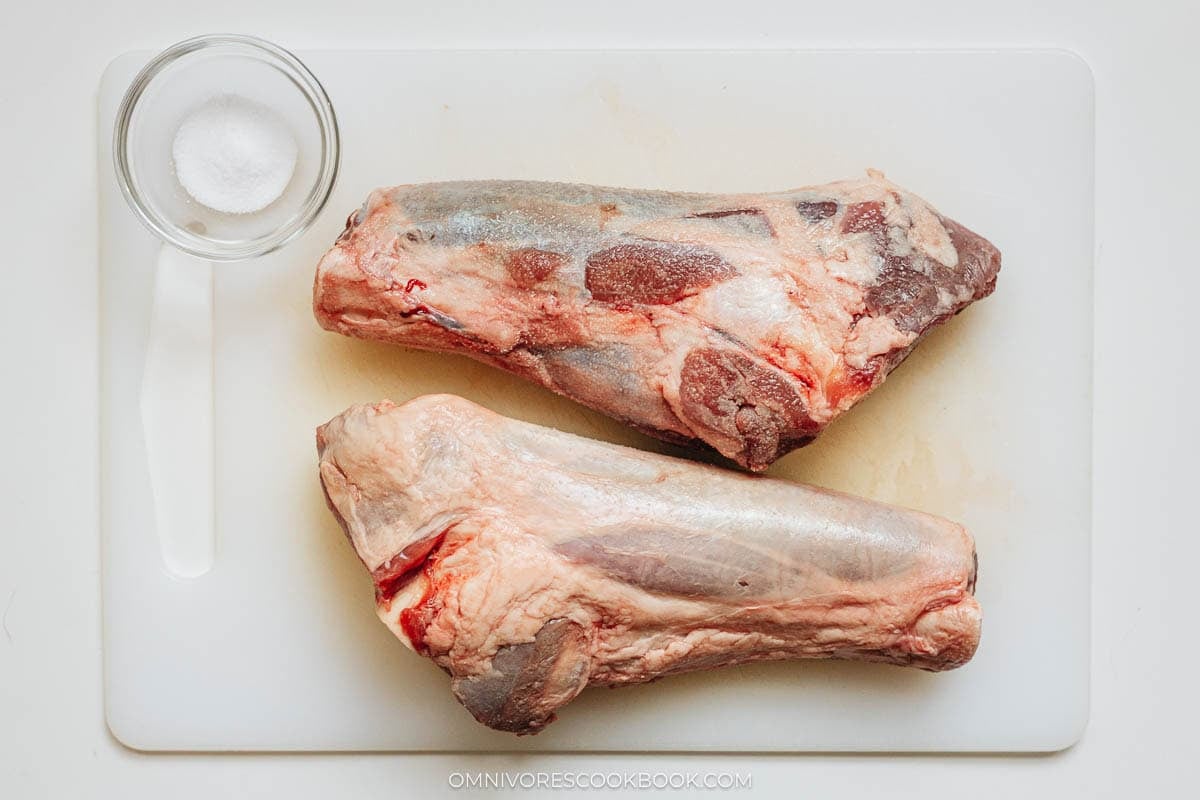
2. Mix the spice rub: Combine the cumin powder, Chinese chili flakes, and freshly ground Sichuan peppercorns in a small bowl. Sprinkle the spice mix over the salted lamb and pat it onto every surface by hand so the rub coats the meat from end to end.
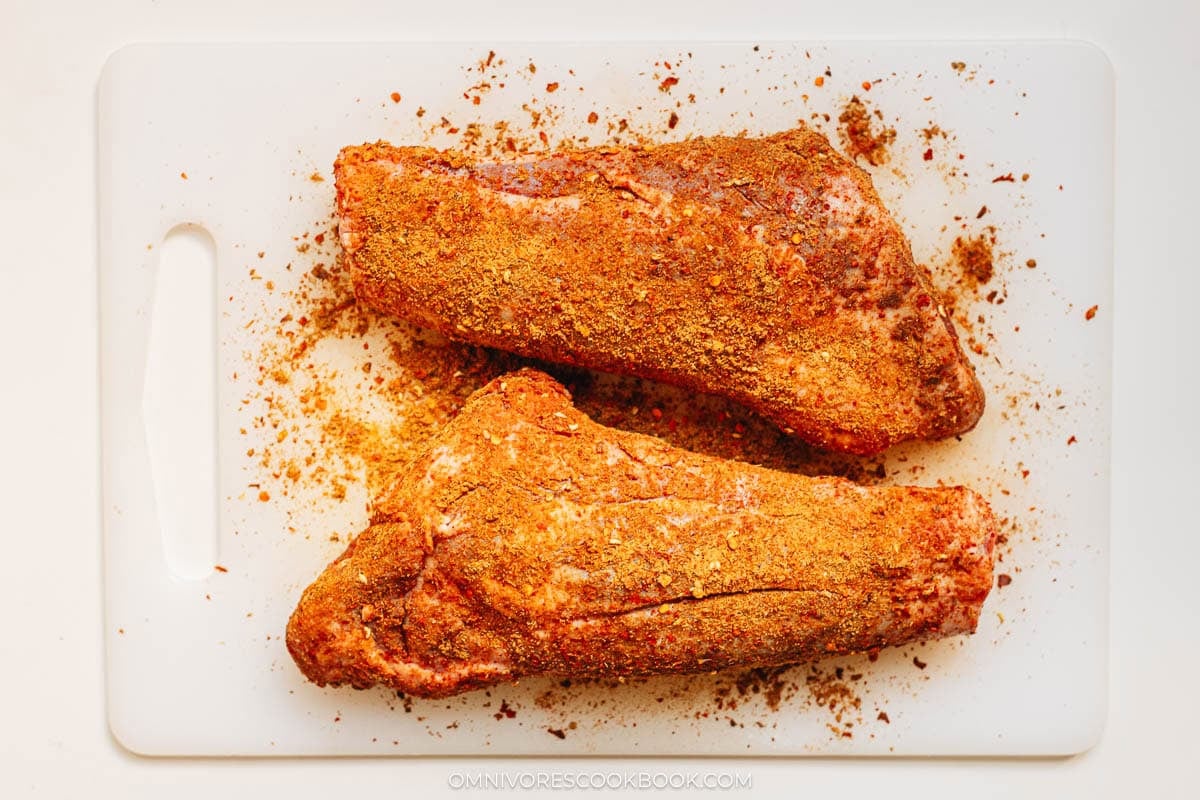
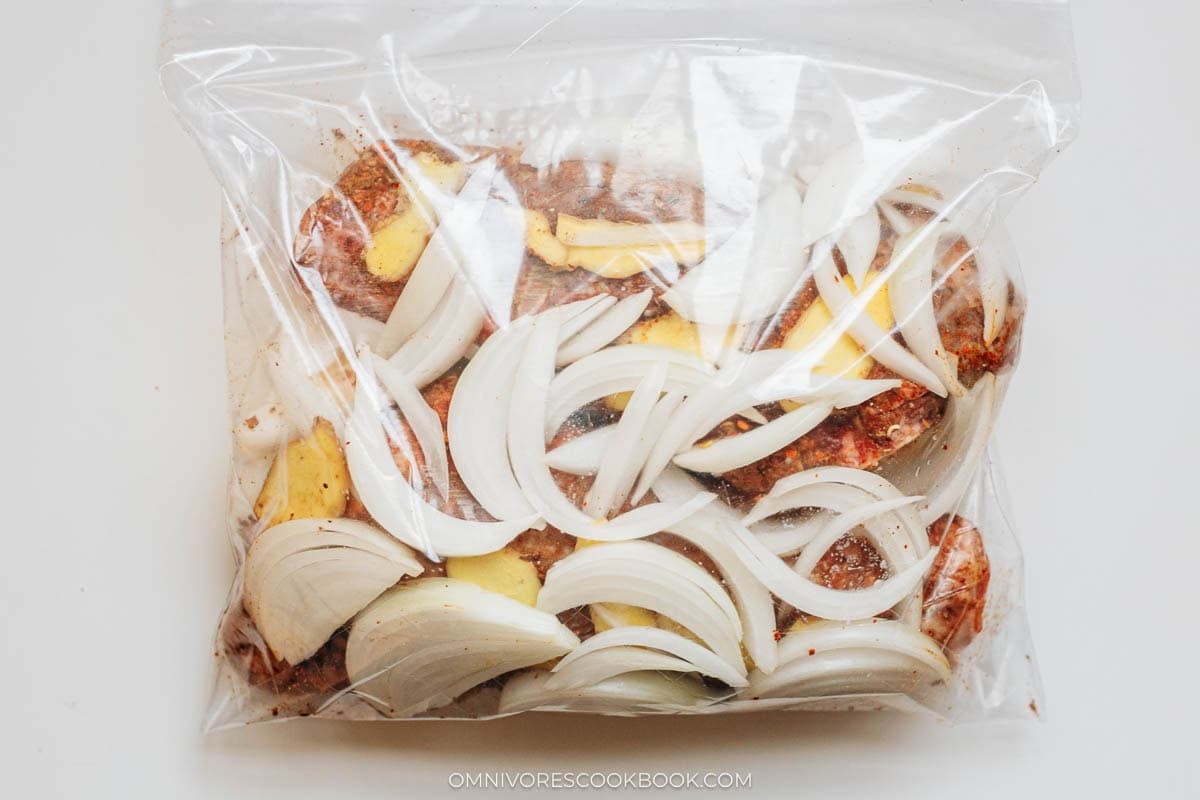
3. Marinate overnight: Place the seasoned lamb shanks into a large ziplock bag and tuck the ginger slices and onion slices over the meat. Squeeze out as much air as possible, seal the bag, and refrigerate overnight or for a minimum of 3 hours.
4. Preheat the oven: When you are ready to cook, preheat the oven to 450°F. Take the shanks out of the fridge while the oven heats so they start at closer to room temperature.
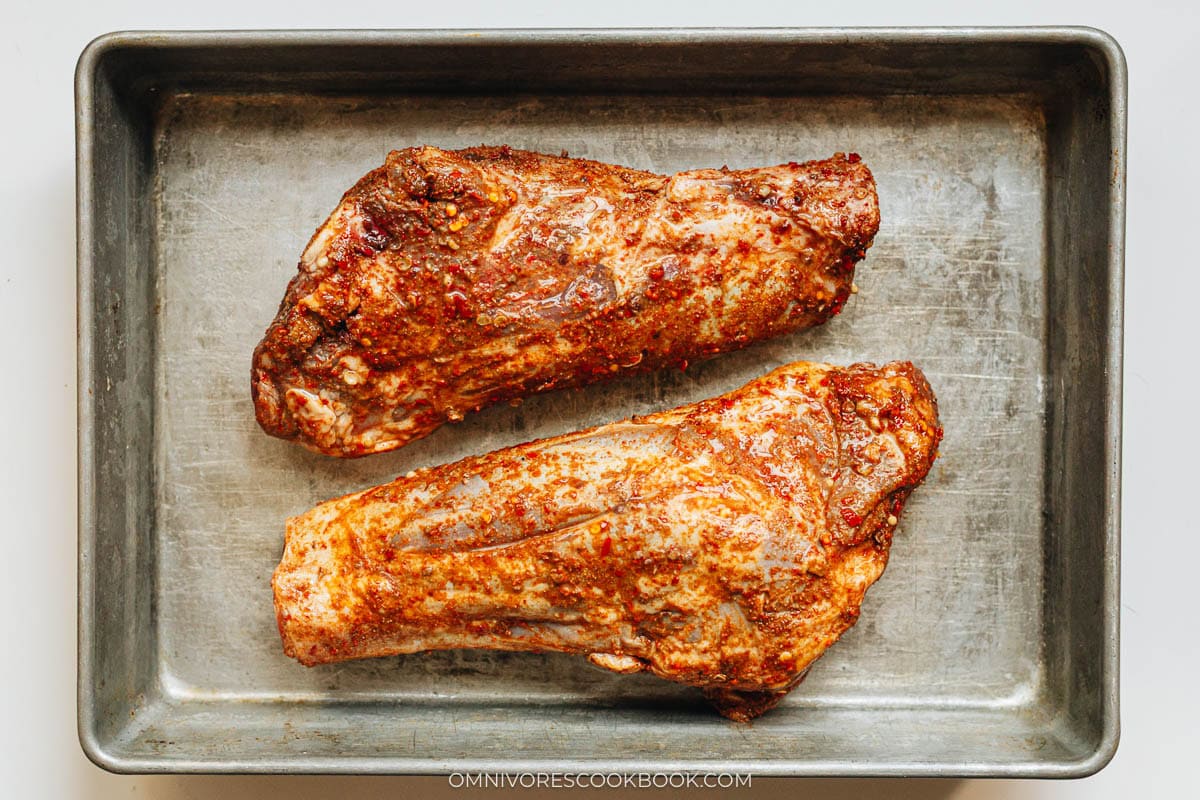
5. Sear at high heat: Remove the lamb from the bag and discard the ginger, reserving the onion to cook with later if you want a side dish. Place the shanks in a roasting pan, spray the surface with olive oil to keep the spice crust from burning, and roast uncovered for 20 minutes until the surface is well browned.
6. Drop the oven temperature: Take the pan out of the oven and transfer it to the counter. Lower the oven to 325°F and wait for it to drop before you put the pan back in.
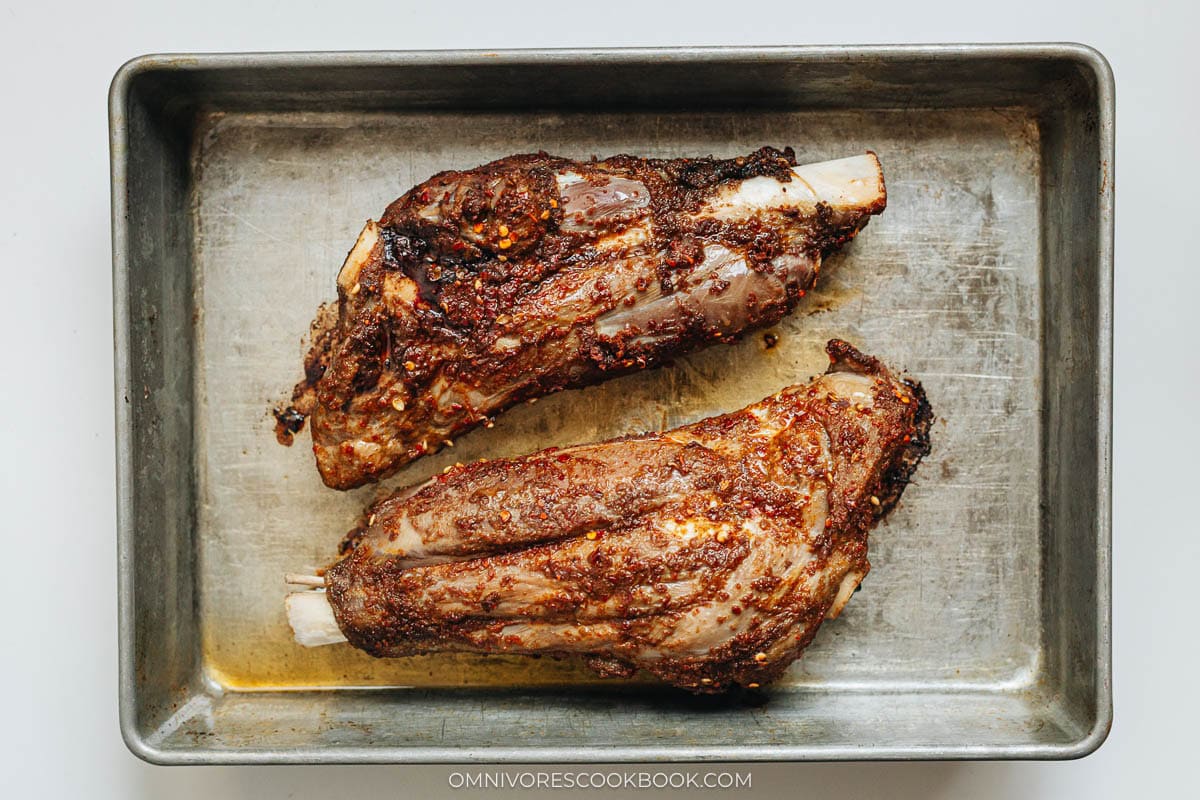
7. Seal and slow roast: Wearing oven mitts, cover and seal the pan tightly with foil or a heavy lid. Return the pan to the 325°F oven and roast for 2 full hours without lifting the foil at any point.
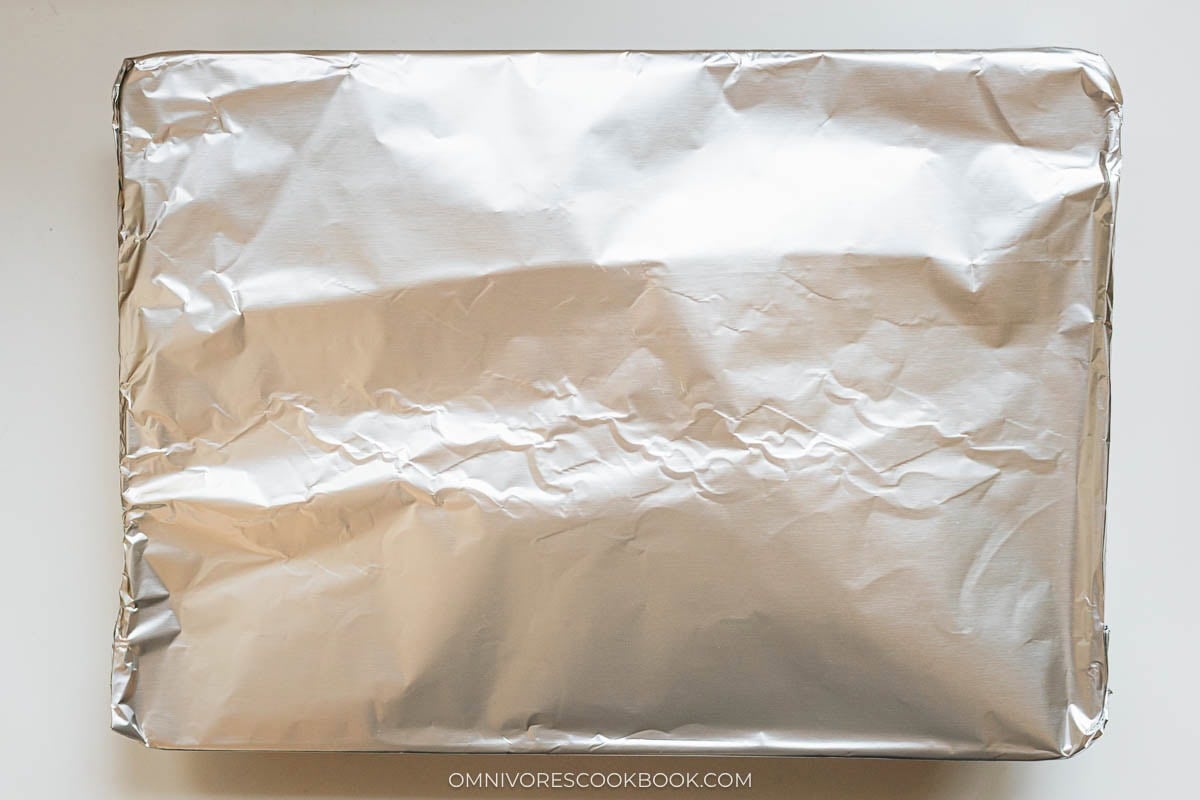
8. Rest and garnish: Transfer the pan to the counter and uncover it carefully to release the steam. Scatter chopped cilantro over the shanks and drizzle the pan drippings collected at the bottom over the meat right before serving.
My Cooking Tips
Score the fat cap with shallow cuts before the rub: A whole untouched fat cap on a shank renders slowly and pools on the surface instead of melting into the meat, and the spice crust slides off the slick layer as the pan heats. I recommend drawing 3 or 4 shallow cuts across the fat cap with the tip of a paring knife in a crosshatch pattern, which gives the salt and spice rub a textured surface to grip and lets the fat baste the meat as it renders down.
Source lamb shanks at a Halal butcher when the grocery store falls short: A standard grocery store keeps lamb shanks in the freezer case most of the year and the cuts come in uneven sizes, while a Halal butcher counter sells fresh shanks year round and the staff will trim them to a matched weight for a dinner party. I call ahead to ask for matched single-serving shanks, and the Halal counter near my Asian market is where I pick up the best shanks I have cooked.
Use a heavy roasting pan with low sides: A thin sheet pan warps in a 450°F sear and dumps the drippings on one side of the oven, while a deep braiser traps too much steam and stops the surface from browning. A heavy cast iron or stainless roasting pan with low sides holds the heat steady through the high-heat sear and the 2 hour slow roast, and the low sides let the dry oven air circulate over the foil.
Open the foil away from your face when the roast finishes: A sealed pan after 2 hours at 325°F holds a wall of trapped steam that hits like a kettle the second the foil lifts, and a careless pull can scald the inside of your wrist. I crack one corner of the foil with tongs and tip the steam toward the back of the oven first, then peel the rest of the sheet off slowly in a single direction.
Rest the shanks 10 minutes before plating: Cutting into the shank right out of the oven dumps the juice onto the cutting board and leaves the meat dry on the fork. I uncover the foil and let the shanks rest in the pan for 10 minutes before I move them to the serving board, which gives the juices time to redistribute through the meat so the first bite is as juicy as the last.
How I Love Serving
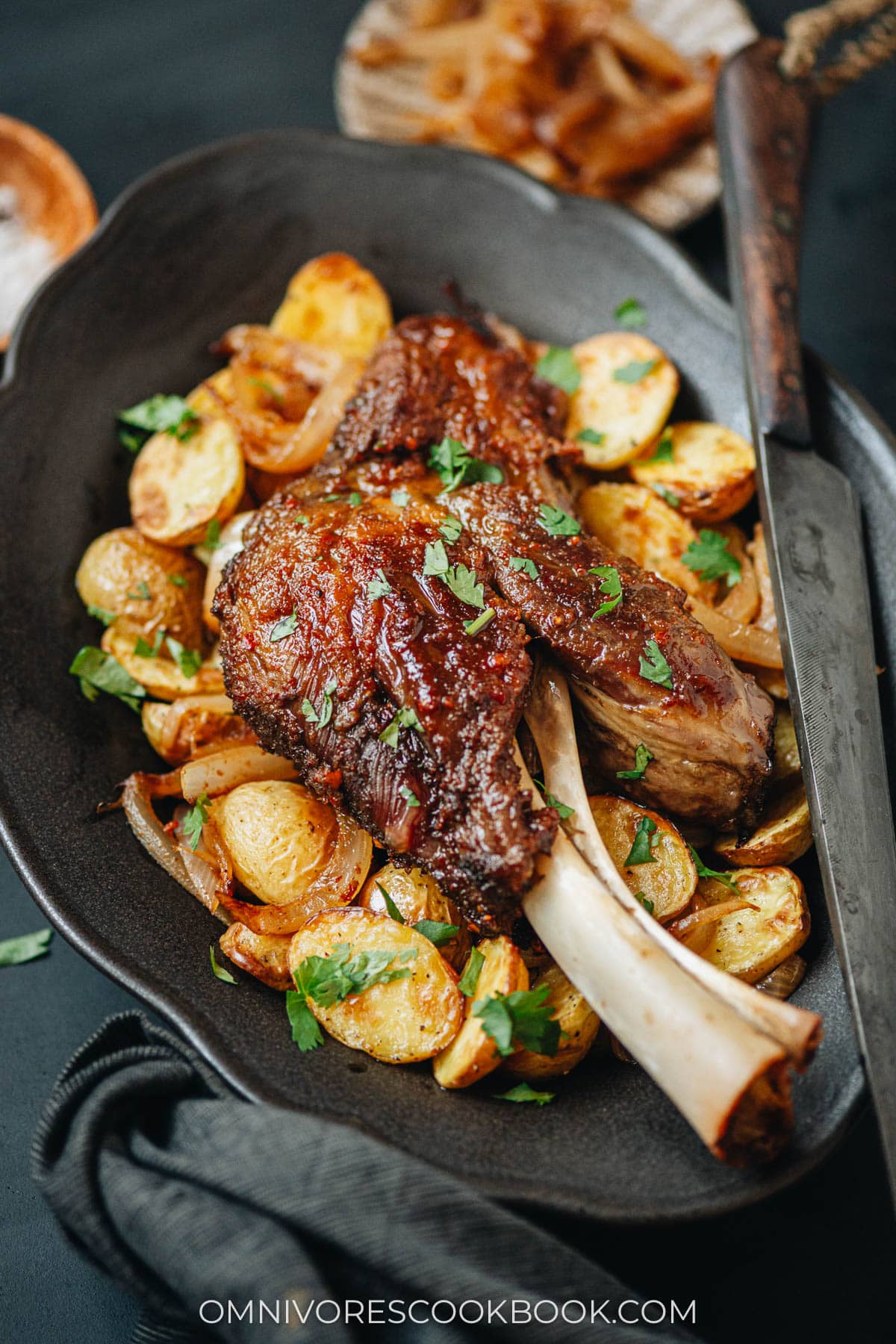
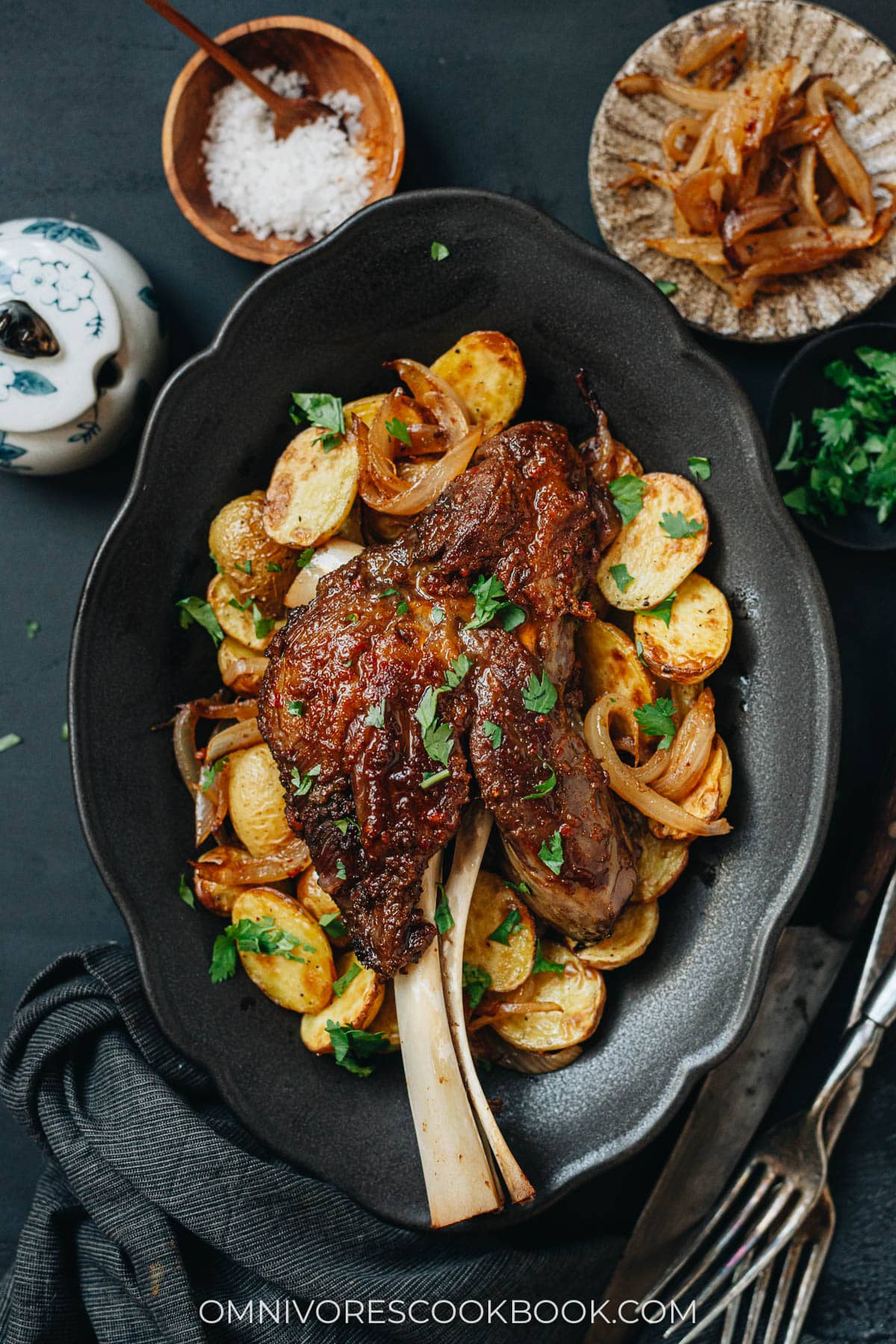
Roast lamb shank takes the centerpiece spot on my table, and I plate one shank per guest on a wood board with the pan drippings drizzled over the top and the cilantro scattered on at the last minute. I usually set the lamb out next to a plate of Chinese cumin chili sauteed potatoes for the matching Xinjiang spice profile and a cold dish of wood ear mushroom salad to start the meal, while my husband is the first one in with a steak knife to take the meat off the bone.
When I host a larger Chinese dinner party around the lamb, I add a bowl of biang biang noodles for the chewy carb side and in my opinion the flavors pair naturally. For a Western holiday meal I keep the lamb whole and serve it with Chinese garlic green beans and miso glazed carrot.
Frequently Ask Questions
How big a lamb shank should I buy for each guest?
I aim for shanks that are 1.2 to 1.3 pounds each, which works out to one shank per guest for a Western style plated dinner. If I am serving the lamb family style alongside other main dishes, I cut down to one shank per 2 to 3 guests because everyone is sharing across the table.
Can I use a different chili flake if I cannot find Chinese chili flakes?
Korean gochugaru is my first swap because it has a similar coarse-ground texture and a milder heat that lets the cumin stay in the lead. If you are working with a spicier chili flake than that, I cut the amount in half and round out the rub with a teaspoon of paprika so the spice level does not run away from the cumin.
How long do leftovers keep in the fridge and freezer?
Cooked lamb shanks keep covered in the fridge for 3 days and in the freezer for up to 1 month. I wrap each shank individually in foil once it has cooled, slide the wrapped shanks into a ziplock bag with as much air pressed out as possible, and reheat them in a 325°F oven for 15 minutes before serving. For frozen shanks, I move them to the fridge the night before so they thaw slowly, then reheat the same way.
Want to Save This Recipe?
Enter your email below & we’ll send it to your inbox. Plus get great new recipes from us every week!
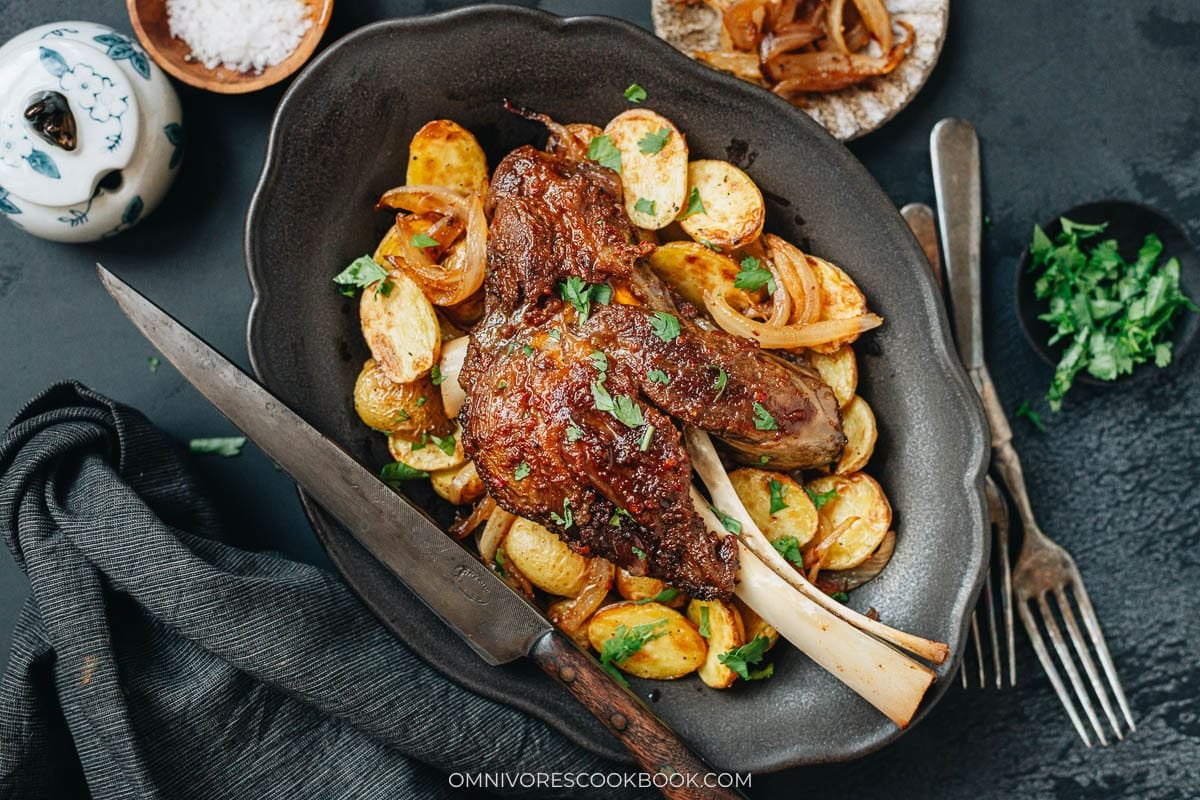
This Roast Lamb Shank (烤羊腿) is the Xinjiang centerpiece I make for a weekend dinner or a holiday feast, with the meat falling off the bone after an overnight cumin marinade and a long slow roast under foil. I love serving it whole drizzled with the pan drippings and scattered with cilantro, alongside the spice-rubbed onions stir fried into a sweet smoky side.
Prevent your screen from going dark
Place the salt in a small bowl. Holding the lamb shank with your hand, using the other hand to sprinkle a generous amount of salt evenly over all surfaces of the lamb shanks.
Mix the cumin powder, Chinese chili flakes, and Sichuan peppercorns in a small bowl. Sprinkle the mixed species evenly over the lamb to cover all the surfaces, and use your hand to gently pat the spices onto the lamb.
Place the lamb shanks in a large ziplock bag. Spread the ginger slices and onion evenly over the lamb. Squeeze out as much air as possible then seal the bag. Marinate in the fridge overnight, or a minimum of 3 hours before cooking.
When you’re ready to cook, preheat the oven to 450°F (232°C).
Remove the lamb from the bag and discard the ginger, reserving the onion on the side to cook with later (if desired, see footnote 3). Place the lamb shanks in a roasting pan. Spray olive oil over the lamb to prevent the spices from burning. Roast without covering the pan for 20 minutes.
Transfer the lamb to your kitchen counter. Lower the oven to 325°F (162°C). Wearing a pair of oven mitts, carefully cover and seal the pan with foil or a pan lid. Return the pan to the oven once it’s dropped to 325°F (162°C). Roast for 2 hours. Do not open the foil during the process.
Once done, transfer the pan onto your kitchen counter. Uncover the pan and sprinkle cilantro over the lamb, if using. You will have some drippings collected in the roasting pan. I like to reserve it and drizzle the sauce over the lamb. Serve hot as a main dish. You can also store the lamb covered with the foil and heat it up in a 325°F (162°C) oven for 15 minutes before serving.
Ingredient Substitution Guide
- The lamb shanks I cooked were about 1.2 to 1.3 lb per shank. If your lamb shanks are bigger, you might consider using a bit more salt, about 1 teaspoon for shanks that are 1.5 lbs+.
- Chinese chili flakes are not very spicy and they add a great flavor to the lamb. If you plan to use spicier chili flakes, you can use 1/2 to 1 teaspoon chili flakes plus 1 teaspoon paprika to reduce the spice level.
- You can use some oil or butter to cook the onion on the stove to make caramelized onion. It goes great with the lamb. Or you can discard the onion if you don’t plan to cook with it.
Serving: 1serving, Calories: 617kcal, Carbohydrates: 1g, Protein: 92.2g, Fat: 24.4g, Saturated Fat: 8.6g, Cholesterol: 294mg, Sodium: 603mg, Potassium: 1137mg, Fiber: 0.3g, Sugar: 0.1g, Calcium: 62mg, Iron: 9mg

Did you make this recipe?
I’d love to hear how it turned out for you! Please take a moment to leave a 5-star rating ⭐️ and share your thoughts in the comments further down the page. It really helps others discover the recipe too.



