
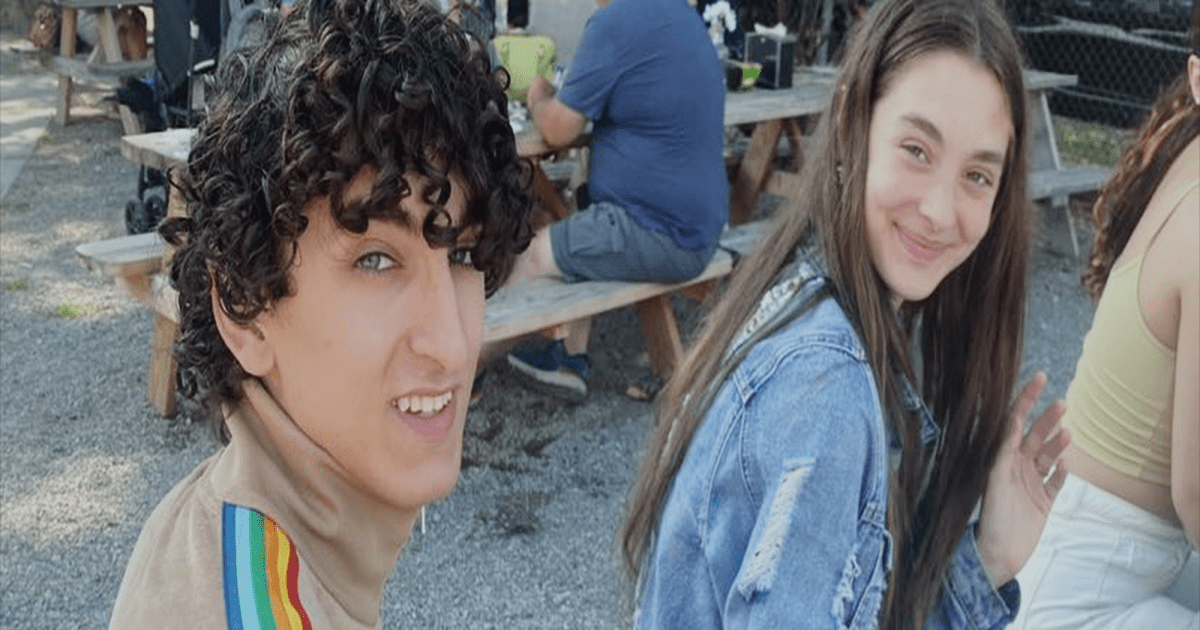
Dominic Russo with Mackenzie Shirilla.Netflix
Maybe I’m leaning too much into The Discourse, but here’s this mind-boggling thing happening on the internet with the internet’s latest supervillian. Mackenzie Shirilla is the—star? protagonist?—of a new documentary on Netflix about a deadly 2022 car wreck that claimed the lives of her boyfriend Dominic Russo and his friend Davion Flanagan. Shirilla, the driver, was eventually sentenced to two consecutive life terms in an Ohio women’s prison after a judge ruled that she deliberately drove her 2018 Toyota Camry directly into a brick wall at more than 90 miles per hour.
While the case had previously been covered on HBO’s Mean Girl Murders and and Hulu’s Killer Cases, its May 15 Netflix release catapulted it to stratospheric new levels of public awareness. It’s not hard to see why. The whole thing is true crime catnip: Shirilla comes off as an entitled wanna-be influencer with a massive internet footprint, overly permissive parents, and a contentious romantic relationship history with Russo, 20, who showers her with designer gifts paid for, apparently in cash, with money from “crypto investments.” The entire friend group is portrayed as Sam Levinson’s Euphoria come to life, where everybody involved is privileged, addicted to weed or mushrooms, and bored.
In one clip that’s since gone viral, Shirilla’s mother, Natalie, addresses the court at her daughter’s sentencing and all but shrugs away Davion Flanagan’s death by saying, “he was a new friend.”
YouTube and TikTok Nation are activated. Countless prison phone calls between Mackenzie and her mother have been released online, each signaling some new element of the case: her prison romances, her lack of remorse, her glee at the film’s popularity, her hope that Kim Kardashian takes on her case. She’s alleged to have sugar daddies putting money on her books, prison godmothers watching out for her on the yard, a lucrative but undisclosed prison business, a waist trainer. Sleuths have tracked down her high school disciplinary records. Her father, Steve Shirilla, was suspended from his job as a digital media teacher at a local Catholic high school over his comments in the film about being happy his daughter smoked weed “instead of shooting up.” It’s been reported that he won’t return.
The only redeeming person in the whole thing seems to be Davion’s adopted father, Steve Flanagan, who is portrayed as the film’s moral center. But even he seems, perhaps understandably, lost in bloodthirsty vengeance. Eventually he reflects on people’s capacity to change, and his hope that Mackenzie’s parents learn to hold her accountable. As for an appropriate punishment? He wants his son’s life to have concrete value, he says about the prospect of the judge issuing a sentence of either of at least 15 years to life.
“If that were 30, I’d be happier with that,” he says.
As a culture, we’ve been to this place before. It was called the 1990s and it was not particularly fun for whole swaths of people who were young, poor, or of color. Prison populations soared, communities were wrecked, and most of the damage was underwritten by salacious coverage of crimes perpetrated by young people whom judges and the media wrote off as irredeemable.
For a small pocket of time, just before and during the pandemic, we seemed ready to reckon with damage wrought by those punitive impulses. The Supreme Court even ruled that sentencing juveniles to life without the possibility of parole constituted cruel and unusual punishment. Shirilla, at least, will be eligible for parole—in 2037. But at sentencing, in August of 2023, Judge Nancy Russo (no relation to Dominic) didn’t seem optimistic. “I understand that the pain in this room wants me to impose the harshest sentence,” Russo said. “But I don’t believe that would be the appropriate sentence because I do believe that Mackenzie will not be out in 15 years.”
So, in other words, it’s not worth sentencing Shirilla to the maximum because she’s…probably going to wind up serving most of it anyway?
Likability is not a pre-requisite for freedom. The frenzy over this film shows that we have learned nothing from the hundreds of thousands of lives destroyed by an overzealous punishment system egged on by pop culture. We’re now hurtling dangerously toward a new nadir, one where the tough-on-crime tactics of the ’90s gets recast, its razor-sharp edges sanded down with the help of a new filter.



