
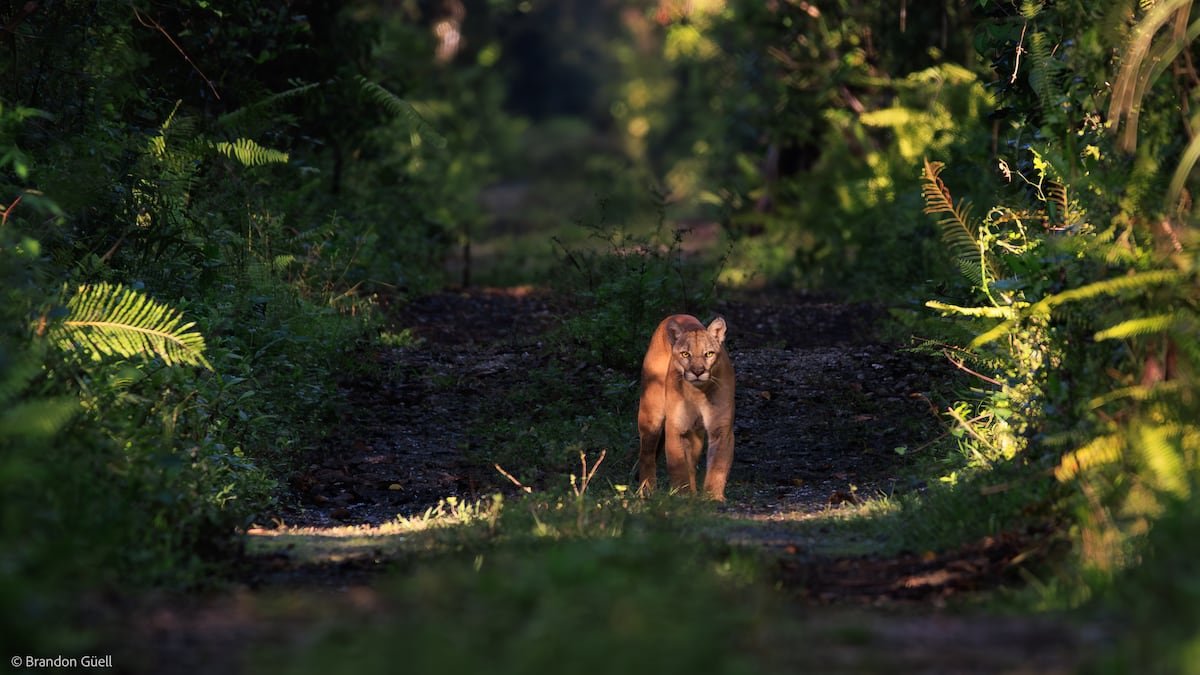
When wildlife rescuers arrived to County Line Road in Collier County last month, they found a female Florida panther who looked like she had been struck by a car.
The panther was alive, but badly wounded.
Experts treated her for 18 days and gave her surgery, but complications from her injuries led them to a difficult choice: They euthanized her.
She was 9 months old.
One week later, on a county road in Hendry County, another female was hit and killed.
She was known to scientists only as UCFP511, or the 511th uncollared Florida panther that the state has handled since 1981.
She was 4 months old.
They are among the four panthers killed by cars since Sept. 20. There now have been 15 officially recorded endangered Florida panther deaths in 2026, according to state data. There were 18 recorded panther deaths last year, and 36 in 2024.
This year, all of them were likely caused by car strikes. Most of them were in rapidly growing Collier County, where the population has increased by 41,000 people — 11% — over five years beginning in 2020.
There hadn’t been a panther death since July 1, and then, as scientists say often seems to happen, there were several over a short span, said Dave Onorato, the state’s lead panther biologist.
“So, the last month has been busy after more than two months of no activity,” Onorato said.
Cars, and the roads that slice through Southwest Florida panther habitat to accommodate them, are the leading cause of death for a species with likely fewer than 230 adults remaining in the wild.
Year after year, the stories are similar. 2022 brought the first recorded panther strike in Hillsborough County in nearly two decades. More than 30 were killed in 2024, mostly by cars. And last year, two littermate kittens were hit a few hundred feet apart on a busy street surrounded by Naples subdivisions.
State biologists and Florida’s leading conservation experts agree on a solution: strategically conserving land where panthers are known to live, then connecting those lands with wildlife crossings above or below busy roads.
“We can’t save the Florida panther without saving its home,” said Traci Deen, president of Conservation Florida, a statewide nonprofit land conservancy that’s working to save more than 50,000 acres.
“Protecting connected corridors gives panthers the room to roam and find mates and raise the next generation of panthers.”
It’s a solution that’s obvious in principle but can be complex in practice, especially as the state grapples with exploding growth. Biologists know the lands on which panthers prefer to roam, and there’s been proven success when that land is conserved and connected. (The 2022 National Geographic documentary, “Path of the Panther,” underscores the importance of connecting key panther habitat.)
But conserving land is expensive, and as Florida’s policymakers shuffle funds each year to address the state’s myriad issues, experts say more money and attention to land conservation — through state acquisition programs and initiatives to buy properties’ development rights — is always needed. Experts estimate adult panthers need between 200 and 400 square miles of land to hunt, travel and reproduce.
“We’re investing billions of dollars a year on transportation infrastructure as a state, and we’d be remiss to not invest significantly in our natural infrastructure, too, as our population grows,” Deen said.

Investing in land conservation can have results: Last year, Conservation Florida worked with the state’s environmental agency to secure the permanent protection of more than 60 acres in Fakahatchee Strand Preserve State Park in Southwest Florida.
Within minutes of the nonprofit’s team venturing out to document the properties, they came face to face with a panther, Deen said.
“It’s experiences like that that remind us that these majestic animals are still here,” she said. “And to me, that they are appreciative of us being mindful of conserving their home.”
Despite the recent streak in panther deaths, there is still some hope for the population.
In February, an adult female wearing a radio collar led biologists to the Florida Panther National Wildlife Refuge.
There they found a female kitten, likely no more than 30 days old.
She’s the only kitten birth documented so far this year.
If you have spotted an injured, sick or dead panther, report it to the FWC Wildlife Alert Hotline at 888-404-3922.
The Tampa Bay Times launched the Environment Hub in 2025 to focus on some of Florida‘s most urgent and enduring challenges. You can contribute through our journalism fund by clicking here.



