
SAN DIEGO – Liver disease claims the lives of more than 50,000 people in the U.S. each year and is one of the top 10 causes of death in the country.
While liver transplantation is possible and generally successful for patients with end-stage liver disease and failure or liver cancer, waiting for the right donor can also be fatal, as patients on the national donor waiting list become severely sick and die each year while waiting for a transplant.
UC San Diego and Allele Biotechnology & Therapeutics hope to change that reality for thousands of liver disease patients with the launch of a federally funded research project to develop a fully functional, patient-specific liver for transplantation, produced entirely with a three-dimensional bioprinter.
The project is funded by an award of up to $25.8 million over five years from the Advanced Research Projects Agency for Health, an agency within the U.S. Department of Health and Human Services, and will partner Allele’s expertise in cell manufacturing with UCSD’s specialists in liver biology and imaging and artificial intelligence.
Ultimately, the research group aims to grow bespoke livers ready for transplantation from a sample of a patient’s own cells, reducing the demand for donors and the need for immunosuppressive drugs to ensure a patient’s body doesn’t reject the donated organ.
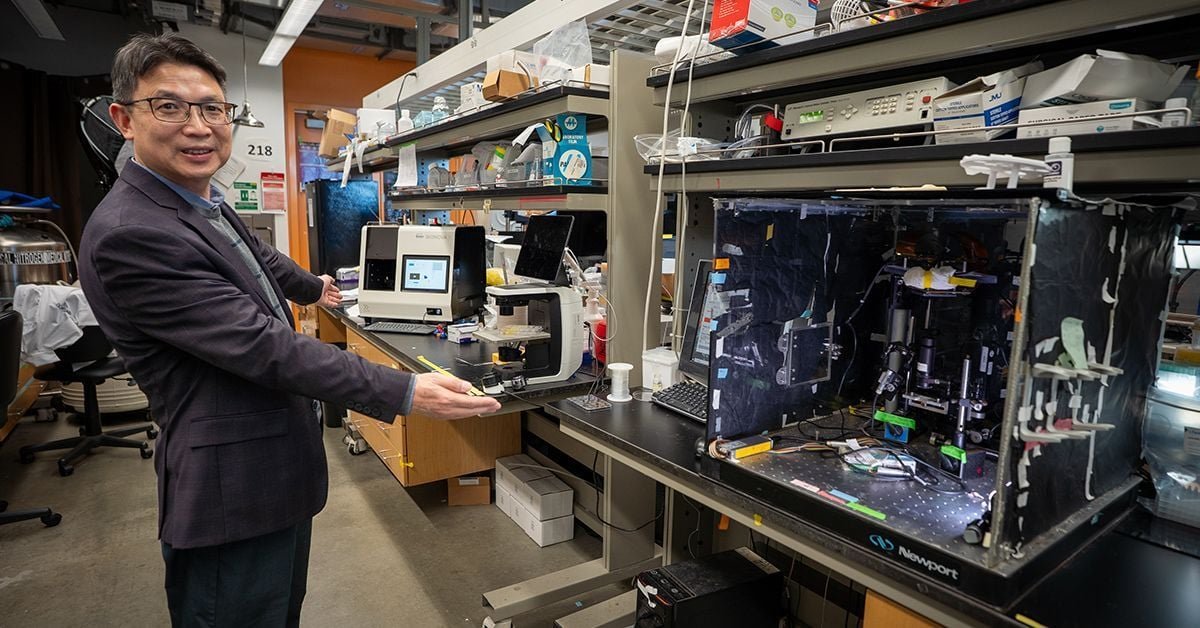
“We are truly the pioneer for making this bioprinters, biomaterial that works with cells, and then we have the scalability for (good manufacturing practices) production,” said Shaochen Chen, a professor in the Aiiso Yufeng Li Family Department of Chemical and Nano Engineering at UCSD’s Jacobs School of Engineering.
San Diego Bioengineering Expertise a Draw for Researcher
An expert in 3D bioprinting, Chen first began researching the potential of creating human organs from cell samples while working as a professor at the University of Texas at Austin in 2000. However, UT Austin did not have a medical school at that time, leading Chen to move to UCSD in 2010 because of its acclaimed medical and engineering schools.
Chen and his researchers would go on to demonstrate in 2016 that their bioprinting platform could create small human liver tissue models and launch a startup, Allegro 3D, which was acquired for $6 million in 2022 by the Swedish bioconvergence company BICO.
Chen first connected with Allele Biotechnology after founding Allegro 3D, which leased space in the same office and laboratory building as Allele, which had cell manufacturing resources that the university lacked.
Allele was founded in 1999 and has developed an mRNA reprogramming method for the creation of stem cell-derived therapies. The company is expected to generate multiple liver-specific cell types for the project and eventually manufacture 10s of billions of them per organ.
‘From Aspiration to Reality’
The 3D printing technology used on the project can then use controlled light patterns to solidify groups of cells layer by layer, recreating minute aspects of living human tissue like blood vessel networks.
“This work has the potential to fundamentally change countless lives by moving that vision from aspiration to reality,” stated Gabriel Schnickel, a professor of surgery with the UCSD School of Medicine, chief of UCSD Health’s Division of Transplantation and Hepatobiliary Surgery and a co-investigator on the project.
According to Chen, the researchers plan to first test the liver bioprinting and transplantation in rats and pigs before shifting to clinical trials in humans, a process that is expected to take the project’s five full years.
If it reaches that stage, Chen’s team and Allele should be capable of producing a 3D bioprinted human liver in roughly a month, potentially saving the lives of the more than 12,000 people in the U.S. on the transplant waiting list.
“San Diego is such a nice biotech hub, with the ecosystem to support success,” Chen said. “I think … we’ll do very well compared to our other competing (research) teams, and hopefully it will be successful to benefit society at large.”
Allele Biotechnology & Pharmaceuticals, Inc.
FOUNDED: 1999
CEO: Jiwu Wang
HEADQUARTERS: San Diego
BUSINESS: Cell manufacturing and technology development
WEBSITE: allelebiotech.com
CONTACT: [email protected]
NOTABLE: Allele was primarily funded via research grants and sales of laboratory reagents for its first decade.
Eli is an award-winning reporter primarily covering the tech and life sciences industries. He previously worked as the San Diego City Hall reporter for the regional wire City News Service. He has also covered public health, transportation and state and local politics in the San Francisco Bay Area for Local News Matters, the nonprofit arm of the regional wire Bay City News Service, where he also oversaw the development and daily content management of the outlet’s public health and COVID-19 news and resource webpage. He is also a contributing writer covering Minor League Baseball for the analysis and commentary website Baseball Prospectus. Eli is a graduate of San Francisco State University and a native of Northern California.



