
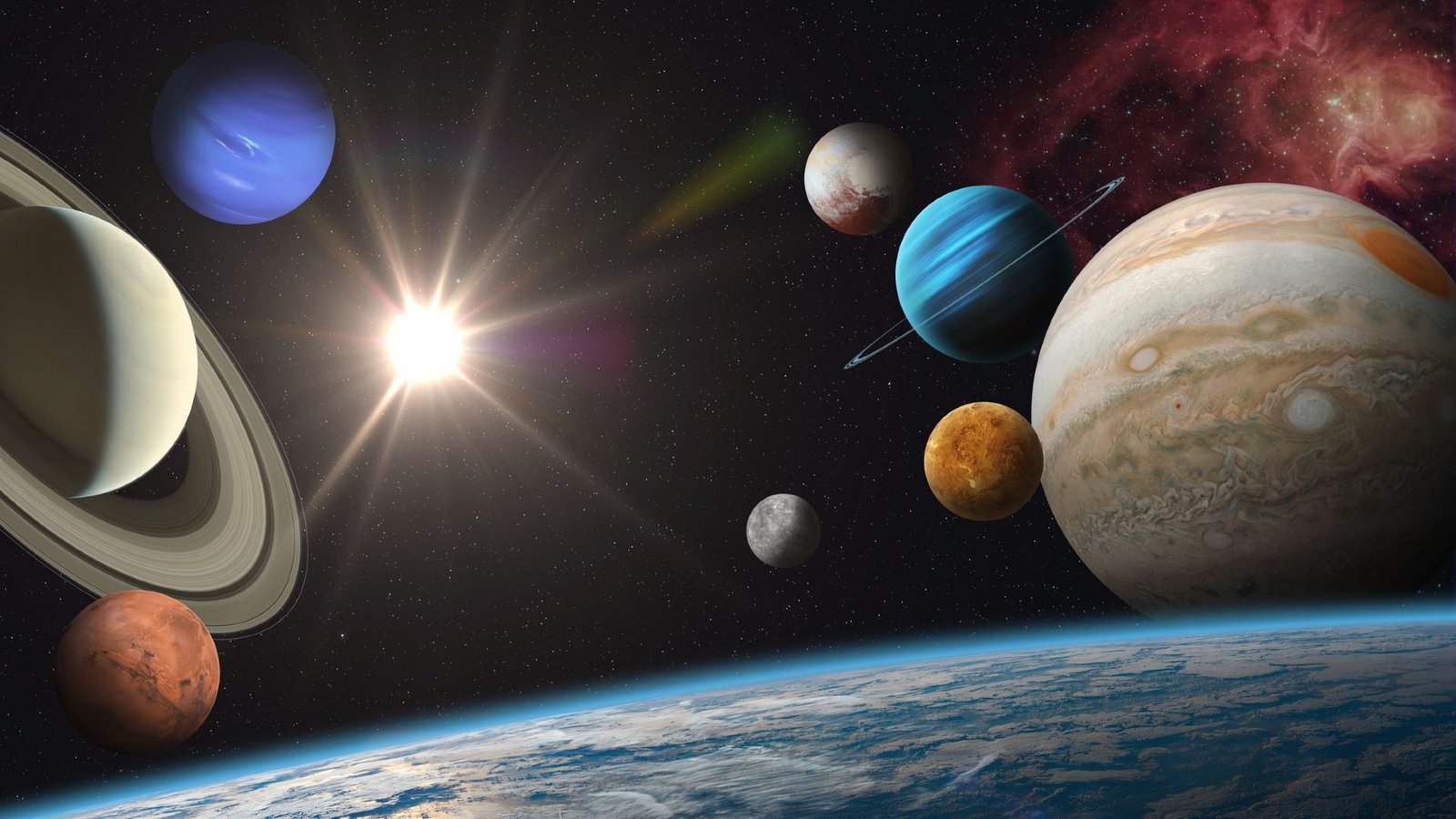
Planets go through different life stages: They form, evolve and eventually meet an end. But the timelines for these processes differ widely between Earth-like planets and worlds that orbit less-powerful stars.
How Long Do Most Planets Last?
Planets feel permanent from a human perspective, but in reality they have life cycles that span billions of years. From their formation in swirling clouds of gas and dust to their eventual destruction or transformation, planets evolve along with their stars and the wider universe. So how long do most planets actually last? The answer depends on several factors — especially their star, their size, and their environment.
Planet Formation: The Beginning of a Long Life
Planets form from disks of gas and dust surrounding young stars. These materials gradually collide and stick together in a process called accretion, eventually creating full-sized planets. This process typically takes a few million to tens of millions of years, which is relatively quick in cosmic terms.
For example, planets like Earth formed about 4.5 billion years ago along with our solar system. Many planets across the universe form similarly, meaning their lifespans often stretch into billions of years.
The Main Life Stage: Billions of Years of Stability
Once formed, most planets remain stable for extremely long periods. In stable systems, planets can survive for:
Billions to trillions of years if left undisturbed
At least as long as their host star remains stable
Potentially longer if they become “rogue planets” drifting through space
For instance:
Earth has existed for about 4.5 billion years and is expected to remain intact for several more billion.
Gas giants like Jupiter could survive even longer because of their massive size and strong gravity.
In general, planets are extremely durable objects — they do not “wear out” like living things.
What Eventually Destroys Planets?
Planets usually do not die on their own. Instead, external forces eventually change or destroy them.
⭐ Death of Their Star
The most common cause of planetary destruction is the evolution of their host star.
In about 5 billion years, the Sun will expand into a red giant. Scientists predict this could destroy or severely damage inner planets like Mercury and Venus, and possibly Earth.
💥 Cosmic Collisions
Large impacts with other planets, asteroids, or stars can break apart or reshape planets, especially in young or unstable systems.
🌌 Gravitational Chaos
Planets may be ejected from their solar systems by gravitational interactions. These “rogue planets” can wander the galaxy indefinitely.
🕳️ Extreme Cosmic Events
Rare events such as nearby supernova explosions or encounters with black holes can strip or destroy planets.
Can Planets Last Forever?
In theory, a planet could exist for trillions of years if nothing destroys it. However, the universe itself is changing:
Stars eventually burn out.
Galaxies collide and reshape planetary systems.
Over extremely long timescales, cosmic expansion and stellar death may leave planets frozen and lifeless.
So while planets are incredibly long-lived, nothing in the universe is truly permanent.
The Bottom Line
Most planets last billions of years, often surviving for the lifetime of their star and sometimes much longer. Their eventual fate depends largely on their environment rather than internal aging. Compared to human timescales, planets are among the most enduring objects in the universe — silent witnesses to cosmic history across unimaginable spans of time.
Sign up for our weekly Life’s Little Mysteries newsletter to get the latest mysteries before they appear online.
“Planets start off as microscopic dust grains in disks orbiting young stars, and eventually grow by a huge amount through a series of collisions,” Sean Raymond, an astrophysicist at the University of Bordeaux in France, told Live Science in an email.
Gas giants, like Jupiter and Saturn, start off as massive rocky and icy cores, and then capture gas from the disk to become giants. Rocky planets like Earth undergo a late phase of giant collisions with other growing planets and smaller objects after the gas disk from the sun had dissipated, Raymond said. However, there is still some debate among scientists about the order in which planets formed.
Defining the “end” of a planet, however, is more complicated. “You could say a planet lasts until it’s destroyed,” Matthew Reinhold, a planetary scientist at Stanford University, told Live Science. Or, you could define a planet’s ending to be when it no longer operates under the same conditions. “You could say, ‘This was a world that had these conditions at some point, but now it has changed and has these very different conditions,” Reinhold said. “Because I prefer those previous conditions; I consider this planet as having ended.'”
Let’s take Earth as an example. Like many others, our planet’s lifespan is tied to the evolution of the sun. The sun currently creates heat and light through nuclear fusion at its core — a process in which hydrogen transforms into helium. In about 5 billion years, the sun will run out of hydrogen, at which point it will expand into a red giant and eventually collapse into itself.
“Our Earth will ‘die’ in multiple ways,” Raymond said. “First, the slowly-brightening Sun will make conditions on the Earth unlivable by vaporizing the oceans. Then, Earth may be swallowed by the Sun when it becomes a red giant. Finally, Earth (if it’s still around) will be tossed into interstellar space.”
According to these calculations, Earth’s total lifespan will be about 9.5 billion years.
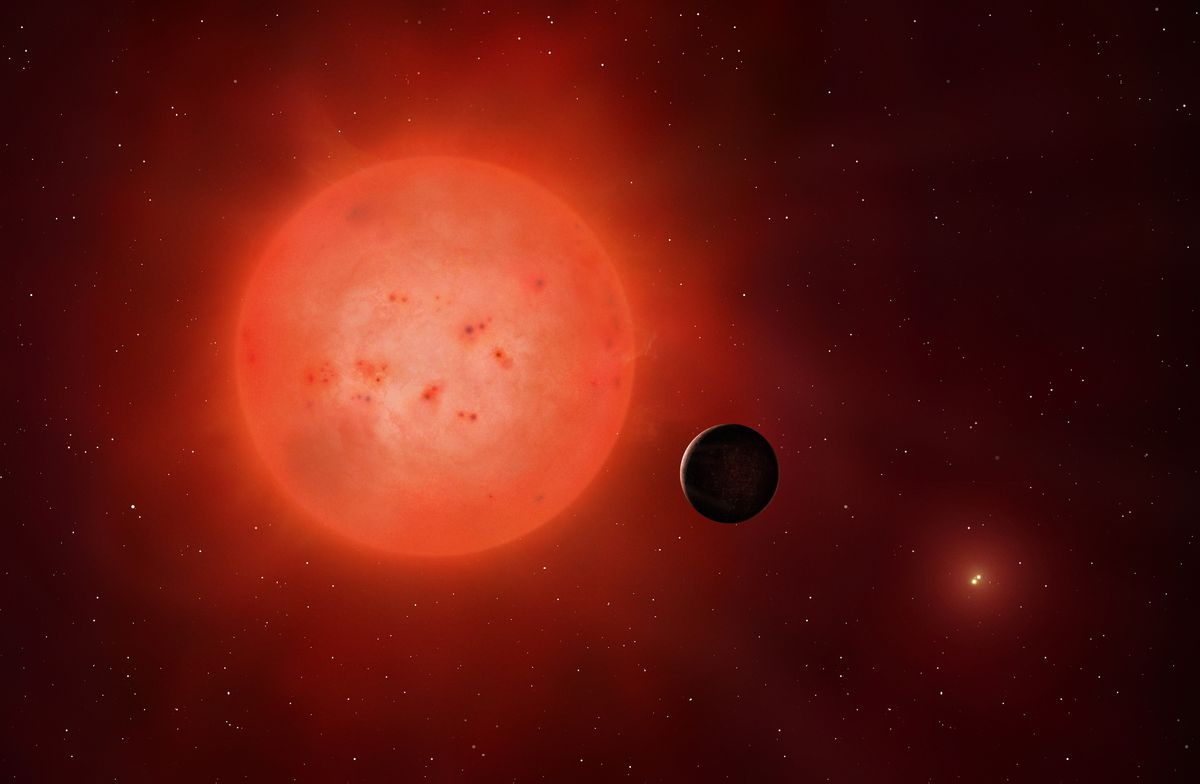
Earth probably won’t live as long as most planets, he noted. That’s because, unlike the sun, which is a yellow dwarf star, most stars are red dwarfs that are smaller and cooler than our sun, and they burn fuel much more slowly. “They can last for trillions of years,” Reinhold said.
In that case, it might not be the death of the star, but rather an internal process that leads to these planets’ demise.
In his work, Reinhold has modeled what might happen to a hypothetical habitable planet orbiting a red dwarf star. Active geology, such as plate tectonics, is considered crucial for habitability because it allows nutrients to move between the planet’s mantle and surface and drives the carbon-silicate cycle.
“We want a planet that can stabilize its climate,” Reinhold said, and the carbon-silicate cycle is Earth’s natural thermostat.
Reinhold found that mantle convection will last somewhere between 30 billion and 90 billion years, while mantle melting might last somewhere between 16 billion and 23 billion years. Although these number ranges are too large to be meaningful, Reinhold said, they suggest that any Earth-like planets orbiting a red dwarf will die of an internal process long before their stars get close to the ends of their lives. And even on the shortest timelines, most rocky planets orbiting red dwarfs will maintain their conditions for billions of years.
Bigger stars have much shorter lifespans, because they use up their nuclear fuel more quickly. So the fate of an inner planet orbiting an A-type white star, for instance, would be tied up to the star’s lifespan of 100 million to 1 billion years.
It’s also possible for gas giants to lose their atmospheres due to the intense light from their star, Reinhold said, becoming rocky planets. This process depends on how close a planet is to its star, how much energetic radiation the star emits, and how strong a planet’s gravity is. “The stronger their gravity, the better they are at holding onto their atmospheres, and the more radiation they get from their star, the more intense the stripping power,” Reinhold explained. Depending on those factors, this can take anywhere from millions to billions of years.
The end of the universe
Even when a planet’s conditions change over time, the rock itself still exists. But over large timescales, there are different possibilities for its fate as the probability of rare events increases. It may collide with another planet, or be kicked out of its orbit.
“In all of this mayhem over quadrillions of years, the planets that have been kicked away from their stars will be kicked out of the galaxy to wander for eternity in the void,” Reinhold said. “What actually seals [its] fate really comes down to the nature of the end of the universe,” said Reinhold.
Solar system quiz: How well do you know our cosmic neighborhood?
source: https://www.livescience.com/space/planets/how-long-do-most-planets-last



