
Haifaa Al-Mansour is the first female filmmaker from Saudi Arabia and a prominent cinematic figure, influencing and inspiring a new wave of Saudi filmmakers. Her acclaimed 2012 work “Wadjda” received numerous awards from festivals around the world, including the Audience Award at the Los Angeles Film Festival, and was nominated for a BAFTA for Best Foreign Language Film. While also directing episodes for television, in 2025 she released her fifth feature titled “Unidentified”, a mystery thriller set in Saudi Arabia which had its world premiere at the Toronto International Film Festival.
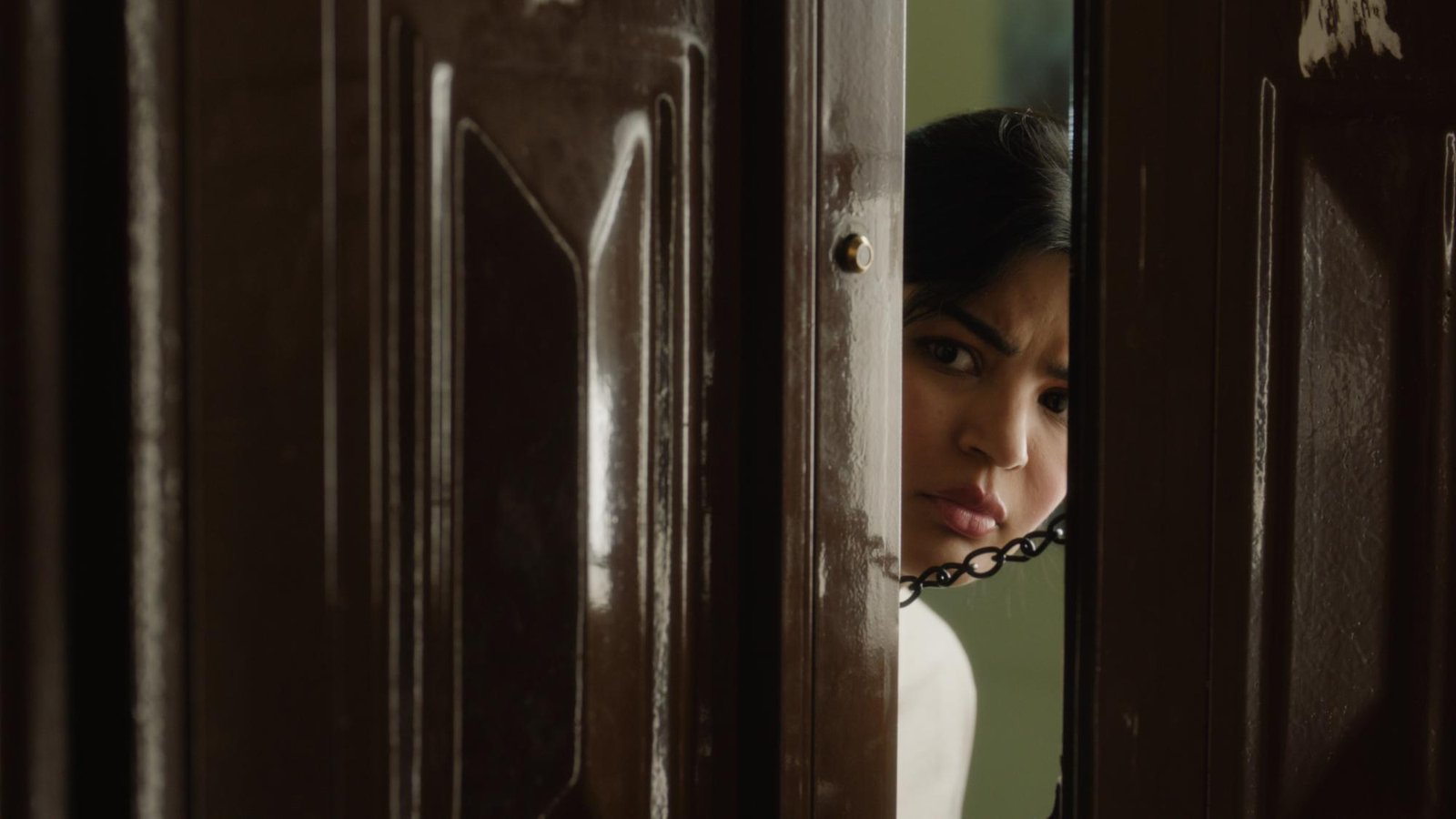
Noelle Al Saffan, a 29-year-old divorcee who carries deep trauma, returns to her small hometown for a fresh start. A fan of true crime podcasts, she gets a mundane clerical job at the local police station, digitizing old files, with Colonel Majid, the officer in charge, being quite supportive of her from the beginning. Her life changes when the body of a teenage girl in her school uniform is discovered without any identification. Haunted by the girl’s senseless death, Noelle decides to investigate despite the protests of both Ali, the officer in charge of the case, and eventually Majid, since her actions essentially hamper the official investigation.
Nevertheless, Noelle continues her research without stopping, using her insight into the hidden world of women to identify the victim. In the process she befriends a group of women, mainly a young woman named Jude, along with other characters who all seem connected to the crime. In order to solve the mystery, she must challenge preconceived notions about women and the dangers surrounding them, while each discovery she makes leads to even more questions.
Haifaa Al-Mansour constructs a particularly interesting narrative, giving a feminine, one could even say feminist, twist to the whodunnit trope, while also presenting aspects of Saudi Arabia rarely depicted on screen, such as the rather vibrant nightlife of Riyadh. The concept of a woman carrying trauma from a previous marriage, whose full impact is gradually revealed throughout the story, attempting to solve the murder of an unidentified young woman provides an appealing foundation, which Al-Mansour uses to introduce a number of social observations.
The concept of patriarchy and the place of women in the country comes to the fore from the beginning, essentially dictating the actions of the deceased, as young women in particular search for ways to experience freedom and entertainment in a setting that rarely allows them to do so. Although this approach works quite well initially, as the story progresses the narrative seems to turn against them, with the crime eventually appearing as a form of divine punishment and the final twist overturning the whole premise. At the same time, the impact of social media is communicated rather effectively.
On the other hand, the progression of the investigation itself remains intriguing to watch, with the twists and occasional flashbacks placed effectively within the narrative. This quality can be attributed both to the direction and to the editing by Olivia Eliseo and Agustin Rexach, resulting in a fittingly brisk pace. Monty Rowan’s cinematography is also of a particularly high level, balancing the realism of the urban settings with the lyricism of the desert imagery, especially in the final shot of the protagonist alone, which proves truly memorable.
Mila Alzahrani as Noelle fills the screen with charisma every time she appears, presenting the many layers of her character in an equally convincing fashion. Aziz Gharbawi as Ali is also effective as a man who tries to follow the rules but continuously stumbles upon Noelle’s disruptive actions. The rest of the cast, however, occasionally deliver performances that feel somewhat television-like, with Shafi Al Harthi as Colonel Majid demonstrating this tendency rather clearly. Overall, the acting, the narrative approach, and the minimal use of music occasionally give the production the feeling of a television drama, which ultimately becomes one of its biggest issues, alongside the somewhat conflicted commentary.
As such, “Unidentified” emerges as a work with a number of appealing qualities, particularly regarding its protagonist and overall production values, which is nevertheless hampered by a series of narrative issues.



