
Andreas Dalsgaard’s docuseries The Oligarch and the Art Dealer is a riveting look inside how money flows around the world in very opaque ways.
The three-part doc centers on two men: Dmitry Rybolovlev, a Russian billionaire who amassed his fortune via fertilizer and spent a year in prison on murder charges of which he was later cleared; and Yves Bouvier, a Swiss art dealer who built an empire creating art freeports, or high-security warehouses where the mega-rich can store and sell assets while avoiding paying duties or taxes.
Together, the men assembled one of the greatest private art collections in the world. Rybolovlev used a portion of his $6.7 billion to acquire iconic works by Rothko, Modigliani, Klimt, Picasso, and da Vinci. Bouvier brokered the sales for a fee.
Everything went splendidly between the two for over a decade: Rybolovlev spent an estimated $2 billion on art because, according to the series, owning masterpieces set him apart from his fellow billionaires, like, say, Elon Musk.
Then, in 2105, a war between the duo began when Rybolovlev accused Bouvier of secretly overcharging him to the tune of $1 billion. Bouvier insisted that he did nothing wrong.
Who was right or wrong isn’t at the center of The Oligarch and the Art Dealer. Instead, Dalsgaard focuses on legal documentation — emails, text messages, financial statements – that were made public during litigation that reveal how the .00001 percent live. The series is a peek inside the rarefied world of billionaires, which makes for a fascinating, infuriating, can’t-take-your-eyes-off-it three-hour watch.
In the series, Bouvier sits for on-camera interviews, while Rybolovlev is represented through lawyers and his former financial director. Journalists and art dealers who worked with Bouvier put the legal documents in layman’s terms, effectively pulling back the curtain on the secretive world of the ultra-wealthy.
Dalsgaard was in Denmark to screen all three episodes of The Oligarch and the Art Dealer at the 23rd edition of the Copenhagen International Documentary Film Festival (CPH:DOX). The series’ first episode premiered at Sundance.
We asked Dalsgaard about making a series without a hero and why The Oligarch and the Art Dealer is Shakespearean.
Director Andreas Dalagaard on Making The Oligarch and the Art Dealer
MovieMaker: Was it difficult to create a series around two characters you don’t necessarily trust?
Andreas Dalsgaard: For me, as a storyteller, that was what was really interesting, because here it was, a story with billions at stake. But at the center of it is an unreliable character, Bouvier, and also his opponent, Rybolovlev. They have so much at stake, they can’t speak the truth. We, as filmmakers, but also you, as the audience, are pawns in that game because it’s not just a game that’s fought out in courts. It’s not just a game that’s fought with lawyers. It’s also about controlling the narrative and bending the narrative. I found it very interesting to tell the story in a way, so the audience becomes part of that game and understands what the game is and how to navigate it themselves.
MovieMaker: There is no real hero to root for in The Oligarch and the Art Dealer. How did you approach that, and was it difficult?
Andreas Dalsgaard: Yes and no. It’s a story about two middle-aged white guys with much too much money, and who cares who wins. But then at the same time, the series gives this unique insight into a world that we only get to watch superficially when we see yachts outside St. Bart’s, Monaco or Miami from social media. But we can’t really see what goes on, partly because there’s this big service structure that services these very rich people, so that we don’t get to see what actually goes on. When you look at the story also a bit at a distance, it’s, it’s almost Shakespearean.
MovieMaker: How so?
Andreas Dalsgaard: Shakespeare was telling stories about kings and dukes and how their greed or their very fraught human nature ends up becoming their undoing. [This series] is super relevant because it helps us understand what construes the world we live in today. And then it’s also a very basic entertaining drama of lies and manipulation.
MovieMaker: Did you ever feel like Rybolovlev’s and Bouvier’s people were using you as a way to prove their case to the public?
Andreas Dalsgaard: They were definitely using us, and that’s very much the case in many stories like this, where the media is a tool. Our job as filmmakers is to use that for the benefit of the film so that they actually get on camera, tell their stories, and then it’s our job to balance it and balance it not only fairly, but also accurately.
You can read more of our film festival coverage here.
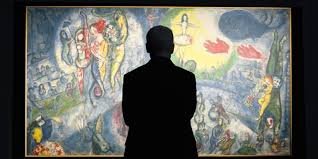
Main image: The Oligarch and the Art Dealer.



