
Eventually, rich and liberal Harvard joined the cost-cutting trend. Looking back, Dube said that the Living Wage Campaign served, in some ways, as a microcosm of the broader struggle over wages and living standards that has engulfed this country for the past half century. In his book, he writes, “many workers and middle-class Americans have received paychecks smaller than they should be even as our society has grown more prosperous.” He goes on, “I aim to show you why—and more importantly how—we can change the labor market to work better for us all.” Even in more normal times, this would be a lofty goal. Coming at a moment when A.I. is threatening to bring an unprecedented wave of disruption to the world of work, it seems doubly ambitious. But Dube is undeterred. “I am not saying I know what exactly is going to happen,” he said, when I asked him about the impact of A.I. “But what I am proposing is a set of tools that can help us adapt to whatever the future crises are.”
These tools can be divided into three categories. At the ground (“micro”) level, Dube stresses the importance of unionization campaigns and other efforts to pressure employers to pay living wages. Even if these initiatives don’t wholly succeed, they can prompt companies to raise wages in an effort to counter them, he argues. (As examples, he cites Amazon and Walmart.) In some circumstances, moral suasion can also be effective. After four years, the Harvard Living Wage Campaign resulted in a new labor contract that raised the wages of university-employed janitors and mandated comparable wages for outsourced workers.
At the economy-wide (“macro”) level, Dube emphasizes the importance of maintaining full employment. When workers are scarce, firms have to offer higher wages to attract and keep them. Since the nineteen-seventies, Dube points out, the only periods in which the earnings of low- and middle-income workers saw notable growth were the late nineteen-nineties and (setting aside the COVID-19 pandemic) the years from 2018 to 2024. In both of these periods, the unemployment rate fell below four per cent. In the U.S. system, the Federal Reserve has primary responsibility for insuring that maximum employment falls, but it also has a mandate to contain inflation. Dube welcomes the Fed’s increased willingness, during the past decade, to keep interest rates low even as unemployment falls to low levels. He writes that an “accommodating monetary policy that doesn’t prematurely choke off growth is crucial to sustaining recoveries” and promoting shared prosperity.
Dube is best known for his research into minimum-wage laws. At the national level, the minimum wage has been stuck at a measly $7.25 an hour since 2009. But more than thirty cities and states have introduced higher minimums, with at least two of them—Seattle and Washington—setting them above twenty dollars. Dube’s own work, and the findings of other studies he details, indicated that raising minimum-wage laws does an effective job of increasing the wages of low-paid workers, while having little impact on employment levels—conclusions that contradict the warnings of business groups and conservative economists. Dube does concede that raising the minimum wage above some threshold could have an adverse impact on hiring. Based on a review of recent studies, he suggests setting it at two-thirds of the local median wage. That would translate to $12.73 an hour in Mississippi, where the federal minimum wage of $7.25 currently applies, and $22.64 in Maryland, where the state minimum wage is fifteen dollars.
Minimum-wage laws are examples of intermediate, or “meso”-level, interventions, the third wrench in Dube’s tool kit. To boost earnings further up the pay scale, he also advocates the introduction of industry-wide pay standards. In parts of Europe, including France and Germany, wage bargaining between employers and labor unions often takes place at the sectoral level, rather than at the individual-company level, and collective-bargaining agreements set pay levels and work conditions for entire industries. In Australia, a government-appointed Fair Work Commission sets minimum-wage levels for many industries, including retail, hospitality, and health care.
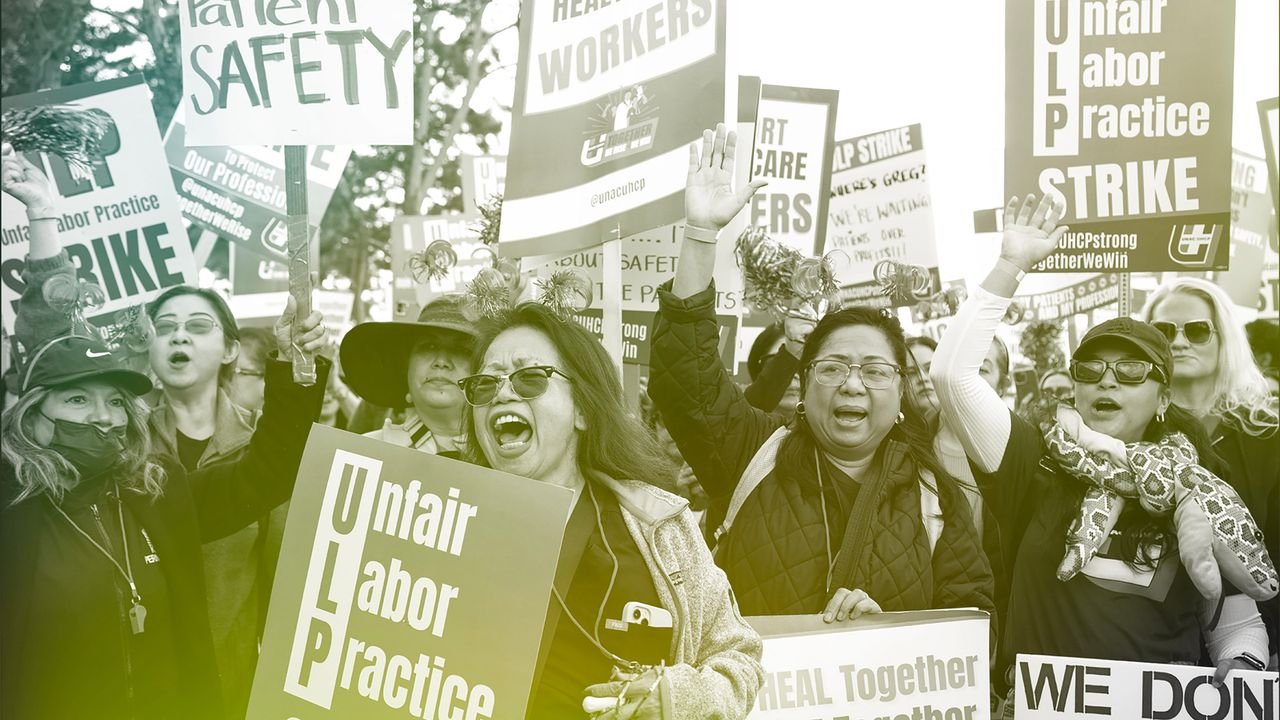
Could a similar approach work in the United States? Dube discusses some recent initiatives along these lines. In California, in 2023, a lengthy strike by health-care workers at Kaiser Permanente ended with the company agreeing to introduce a minimum hourly wage of twenty-five dollars by 2026. Shortly thereafter, Governor Gavin Newsom signed legislation extending this goal to most of the health-care workers in the state. The same year, California established a Fast Food Council and gave it the authority to raise the minimum wage at fast-food chains to twenty dollars an hour. Elsewhere, a 2023 Minnesota law created an official wages board for nursing homes in the state. The following year, the new board, which includes workers, employers, and government officials, set a series of wage floors to go into effect by 2027: $28.50 an hour for licensed nurses, twenty-four dollars for certified nursing assistants, and $20.50 for other workers, including contract employees. Dube sees scope for extending this approach to the gig economy. He notes that, in Massachusetts, the state has established an earnings floor of $32.50 an hour for Uber and Lyft drivers.



