
“This is what’s keeping Hollywood alive right now,” says Pixie USA founder and CEO Jonas Barnes, referring to verticals, or micro-dramas that people watch on their phones. “I would say half of the Los Angeles film industry is working on these things right now.”
If you’ve heard of verticals, you’ve probably also heard criticisms of verticals. They’re highly addictive feature-length stories, cut up into episodes of about two minutes, with a heavy emphasis on relationships and romance.
They don’t generally pay creators well, but they do keep them working. As Hollywood executives try to track industry trends to save their jobs (and those of many others), verticals are providing at least a stopgap for some cast and crew, albeit one that nobody seems to love.
Yet.
Barnes sees plenty of room for improvement, and upside. He sees a wide-open niche for an approach to verticals that he hopes will be rewarding for creators, audiences, and sponsors. His Pixie USA makes verticals designed to showcase businesses looking for new ways to advertise their brands and win audience loyalty.
Everyone has a phone in their pocket or purse. Which means everyone is seconds away from watching a vertical, if it’s done right.
Pixie USA’s Jonas Barnes on the Power of Verticals

Barnes first realized the power of shorts as a UC San Diego student. His story starts with the fact that he’s not short: At 6’8, he played basketball for the university team.
He recalls that his coach would try to steer him and other players toward easier classes so they could focus on the sport, and that one of his classes involved attending different arts events around town — plays, concerts, ballet. At one point, students were assigned to create something that combined several of those art forms.
“So I was like, ‘Music… acting… that’s a movie!’ So I made this little two-minute movie. And it did very well. People were like, ‘Dude, that was awesome.’ Probably because it was two minutes and everyone else had a 20-minute presentation,” says Barnes. “It was my first lesson in ‘Shorter is better.’”
When a broken ankle took him out of basketball, he decided to pursue a film career. He went to the San Diego film commission and learned that he could list himself as a local hire in several departments. Almost no one else had.
He started getting crew jobs, and in the late ’90s moved up the coast to Los Angeles. He began working for Neal Moritz, who was in the process of becoming one of the most successful Hollywood producers of all time. (His run of hits includes the Fast & Furious and Sonic the Hedgehog franchises.)
Barnes spent two decades working with Moritz, first as a writer and producer on films including 2017’s S.W.A.T.: Under Siege. He began to focus on brand integrations, wherein brands would pay for product placements within films.
Last year, Barnes launched Pixie USA with a plan to build entire micro-drama productions around brands.
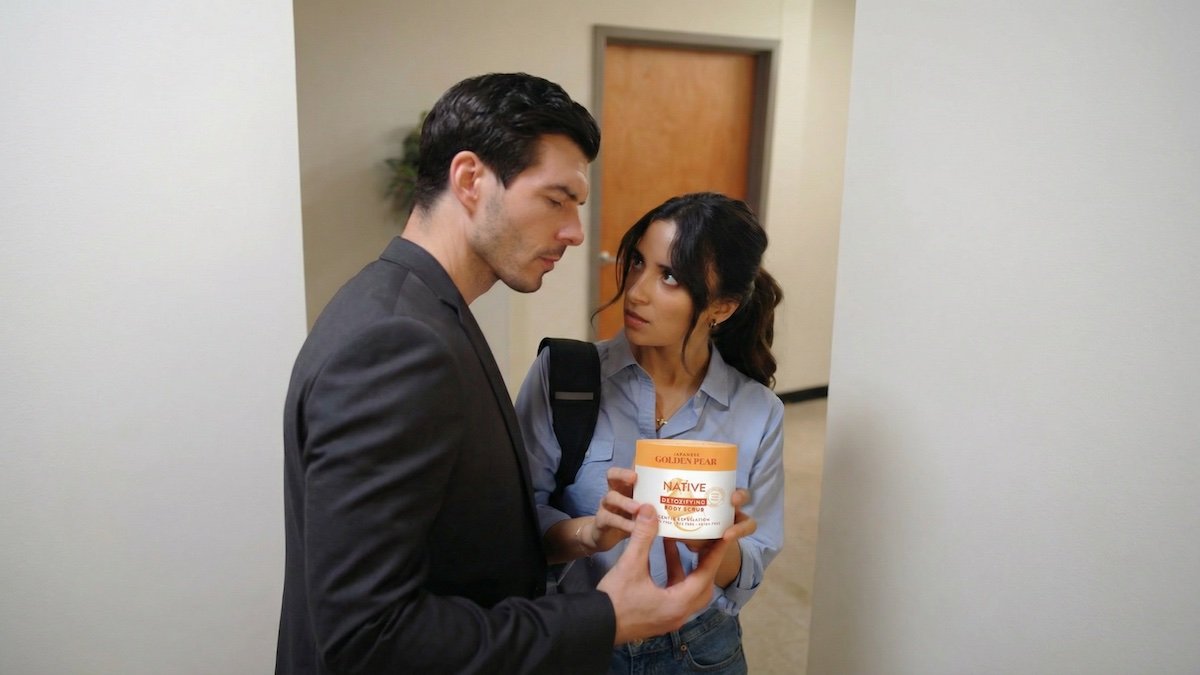
While he can’t discuss some of his projects due to NDAs, his biggest launch so far is The Golden Pear Affair, a 55-episode micro-drama produced with Procter & Gamble’s Native brand.
He was attracted for verticals in part by the fast turnaround time.
“I was looking at the model, and then I realized, ‘Oh, this is kind of perfect for brands. It has a three-month turnaround. You know you’re recouping within six months. Your money’s back in your pocket.”
About Verticals, or Micro-Dramas
Verticals have not has the easiest rollout.
They had a much-hyped debut with Quibi, a short-lived streaming service founded by Jeffrey Katzenberg and led by Meg Whitman. Offering stories in both vertical and the traditional horizontal format, it raised more than $1.75 billion from investors, with the promise that it would occupy audiences looking for short-form entertainment as they took buses and trains, or sat in waiting rooms.
Quibi has the misfortune to debut during pandemic lockdowns, when few people were going out in public to wait for public transportation or appointments. The company also spent splashily on high-profile payments to A-list creators, which created too much overhead. (Antoine Fuqua, for example, had a deal to produce a $15 million project.) The Quibi library sold to to Roku for less than $100 million.
Today’s verticals are much different: A project’s entire budget is often $250,000 or less, and the productions, including the actors, are usually non-union — which means no household names. They’re made up of feature-length stories broken down into episodes of about two minutes. You can watch a few for free, perhaps on TikTok or Instagram, and then watch the rest of the story behind a paywall.
The biggest vertical producers include the Chinese company ReelShort and Holywater Tech, which was founded in 2020 by two Ukrainian entrepreneurs and includes the vertical platform My Drama. It received an investment last year from FOX Entertainment.
Verticals have plenty of critics, especially among people who object to the low, non-union wages and fast pace of production on most micro-dramas. When the popular industry trade TheWrap shared a story last month on X calling verticals “the future of Hollywood,” the backlash was passionate and swift. People complained about the non-union sets, and perceived poor quality of the medium’s quickly produced stories.
Barnes sees opportunities for improvement.
How The Golden Pear Affair Is Different From Other Verticals

Though viewers can watch excerpts of The Golden Pear Affair on TikTok or Instagram, fans are encouraged to watch on the project’s own website, TheGoldenPearAffair.com.
Like most successful verticals, The Golden Pear Affair spells out the stakes and central conflict very quickly. It begins with the protagonist, Sophia, wearing a wedding dress, and saying in a voiceover: “I’m about to marry a man I’ve never met. And if I don’t do it, my twin sister dies.”
The product integration of Procter and Gamble’s Native line of personal care products is campily funny. At one point a character applies deodorant while getting out of the shower, thinking to himself, “This Japanese Golden Pear Native smells amazing. I need to remember to pick this up next time I’m in the U.S.”
The site makes money at least two ways. First, after watching seven free episodes, fans can pay $9.99 to watch the whole series. There’s also a shopping section where fans can buy products including, yes, the Japanese Golden Pear deodorant stick. And the hope is that fans fond of the series will remember their positive feelings next time they’re picking up body wash or deodorant at the grocery store.
Barnes doesn’t disclose exact numbers, but says The Golden Pear Affair has had millions of viewers. It also provides a potential template for similar branded shows, with other major sponsors.
And Pixie USA is working on building its own app, which could compete with the likes of Reel Shorts.
One the frequent complains among verticals naysayers is that they don’t know anyone who watches them. It’s something Barnes often hears when he pitches men on the merits of micro-dramas.
“They’d be like, ‘Why have I not heard about this?’ I just say, ‘Go home and ask your wife.’”
Women over 35 are among the biggest consumers of verticals, Barnes says. He says the audience for verticals is somewhat akin to the audience for romance novels: vast, but not necessarily vocal.
“It’s not something you tell your husband about, right? You don’t tell your husband you’re reading steamy novels,” he says.
The market also has huge room for growth, he says, especially given that most people spend more time with their phones than looking at a TV or film screen. Fifteen years ago, the idea that Mr. Beast would spend millions on YouTube videos would sound insane — but so would his 475 million subscribers.
“It’s the beginning of an entertainment business,” Barnes says. “People are seeing it a lot for what it is now, and not what the future of it.”
Main image: A horizontal version of The Golden Pear Affair stars Nick Ritacco and Alyona. Pixie USA.



