
Even before the Trump administration went to war with Iran, it was talking differently about its approach to combat.
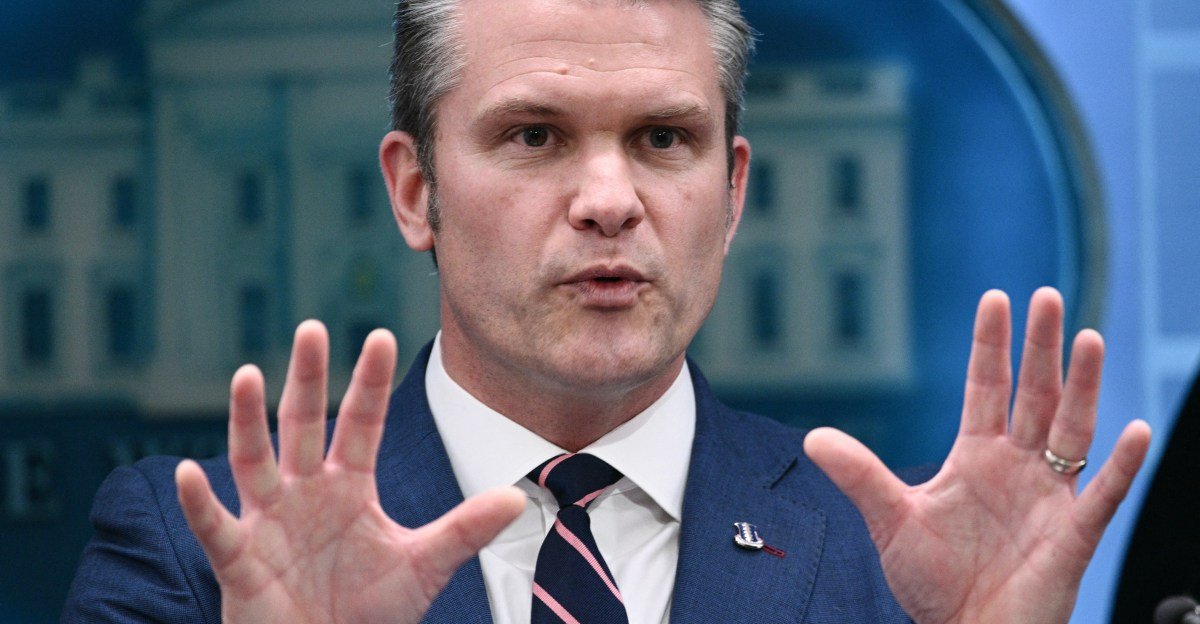
President Donald Trump relabeled the Department of Defense to something more in line with his values: the Department of War. His Defense secretary, Pete Hegseth, promised to deliver on a philosophy of “maximum lethality.” For many years, Hegseth has wanted to unleash an American warrior and fight the enemy, no holds barred. (In 2024, Hegseth authored a book titled The War on Warriors: Behind the Betrayal of the Men Who Keep Us Free.)
After notching successes in Venezuela and in last year’s limited strikes on Iranian nuclear facilities, Hegseth and Trump began the Iran war confident and with a seemingly unbridled willingness to inflict damage. Trump’s post earlier this week threatening to wipe out a whole civilization may have resulted in a temporary ceasefire, but it seems like that strategy isn’t going anywhere.
Today, Explained co-host Sean Rameswaram spoke with the New Yorker’s Benjamin Wallace-Wells about how that philosophy has been realized in Hegseth and Trump’s first big war. Wallace-Wells explains Hegseth’s need to unleash that warrior ethos at every opportunity and how it might be driving the US’s next step with Iran.
Below is an excerpt of the conversation, edited for length and clarity. There’s much more in the full podcast, so listen to Today, Explained wherever you get podcasts, including Apple Podcasts, Pandora, and Spotify.
How is [Hegseth] executing this concept of his?
I’d say a couple of things. The first is, it’s interesting to note, in all of the reporting that we’ve seen from many different outlets, that Hegseth is the only person who’s in the president’s circle who seems as optimistic as Trump does about the progress of the war and the possibilities of the war.
You see [Vice President] JD Vance distancing himself very actively from the war. You see [Secretary of State] Marco Rubio taking an ambivalent position. Gen. [Dan] Caine sees risks as well as possibilities. But Hegseth has been gung-ho the whole way.
His approach to the war, I think, has been that American lethality will deliver whatever the president wants. In the very first hours of the war, you have this massive bombing raid that kills [Iran’s Supreme Leader] Ayatollah Ali Khamenei, and then President Trump comes out a few days later and says, in that raid, not only was Khamenei killed, but some of the other senior figures in the Iranian regime who we had hoped might succeed Khamenei [were killed]. Within a day of the war beginning we see 175 people killed in a school in southern Iran, presumably through a targeting error, though we’re still not totally sure exactly what happened there.
In both of these cases, you see a program of unleashed lethality. And I think you can see in both those cases that it undermines the aims of the United States and the stated war aims of the president, both in eliminating some of the potential replacements in the case of the initial bombing, and then also in making it just a little harder to imagine the Iranian public getting behind the kind of uprising that President Trump has said he wants to trigger.
How much of his approach do we think is coming from his own belief in this concept of maximum lethality, and how much of it is so many in his Cabinet just wanting to please the president?
It’s interesting to think of Vance, Rubio, and Hegseth as each representing one idea of the president. Vance represents the sort of nationalism of the president. Rubio represents maybe a more traditional Republican transactional approach. And Hegseth just represents the full military maximalism. And he has become more influential because he has been the one who has, I think, successfully seen what the president wants to do in Iran and made himself the spokesman and enabler of that.
I do think that there’s a pretty good chance that this doesn’t turn out so well in public opinion and the progress of the war. I’m not sure that it’s been a very savvy long-term play for Hegseth, but I think we should remember that Hegseth did not have a political base or role in the world before Trump tapped him. He had never been a senior military commander. He’d served in the military as a younger man. He was the weekend co-host of Fox and Friends.
He owes his position in the world to President Trump. He’s, according to public opinion, now deeply unpopular, as is the war. If we’re thinking just in pure personal terms, it’s not crazy for him to take a shot and try to position himself as the maximalist face of this war. But I do think that there may be real costs for the rest of us.
Another thing that feels significant to this conversation and feels like maybe a companion piece to this idea of maximum lethality is Pete Hegseth is really tying this war [together with] his approach to God.
I would say to a Christian God, even more specifically. He’s specifically asked during military press conferences for people to pray to Jesus Christ on the troops’ behalf.
Another element that matters here is, he’s referred to the Iranian regime as apocalyptic, and together with delivering prayers from the podium where he’s giving technical updates on the progress of the war, it does give an atmosphere of holy war to the whole operation.
Pete’s whole thing is maximum lethality. The president seemed to go even further with his post, the whole world was on edge, and then we got a ceasefire out of it, however tentative it may be. Does that prove something about this concept of maximum lethality as a viable foreign policy?
If you threaten nuclear war, you can spook some people. I think that that’s pretty intuitive, but I don’t know that that really proves anything in terms of foreign policy. We’re looking at a situation where Iran seems like they’re likely to have full control of the Strait of Hormuz, where the regime is still in control, where the United States has alienated a huge number of its own allies around the world with its willingness to play brinksmanship.
In the narrow sense of, Trump had managed to get himself into a real trap and then by threatening enormous lethality, to use Hegseth’s word, he was able to maneuver out — I guess it worked, but it’s really hard for me to say that in any bigger-picture sense this was effective. I have to look back at this whole month and just say, what was this all for? It feels to me like a whole lot of fury and bombs and death, and it’s really hard for me to see a lot that’s come from it.



