
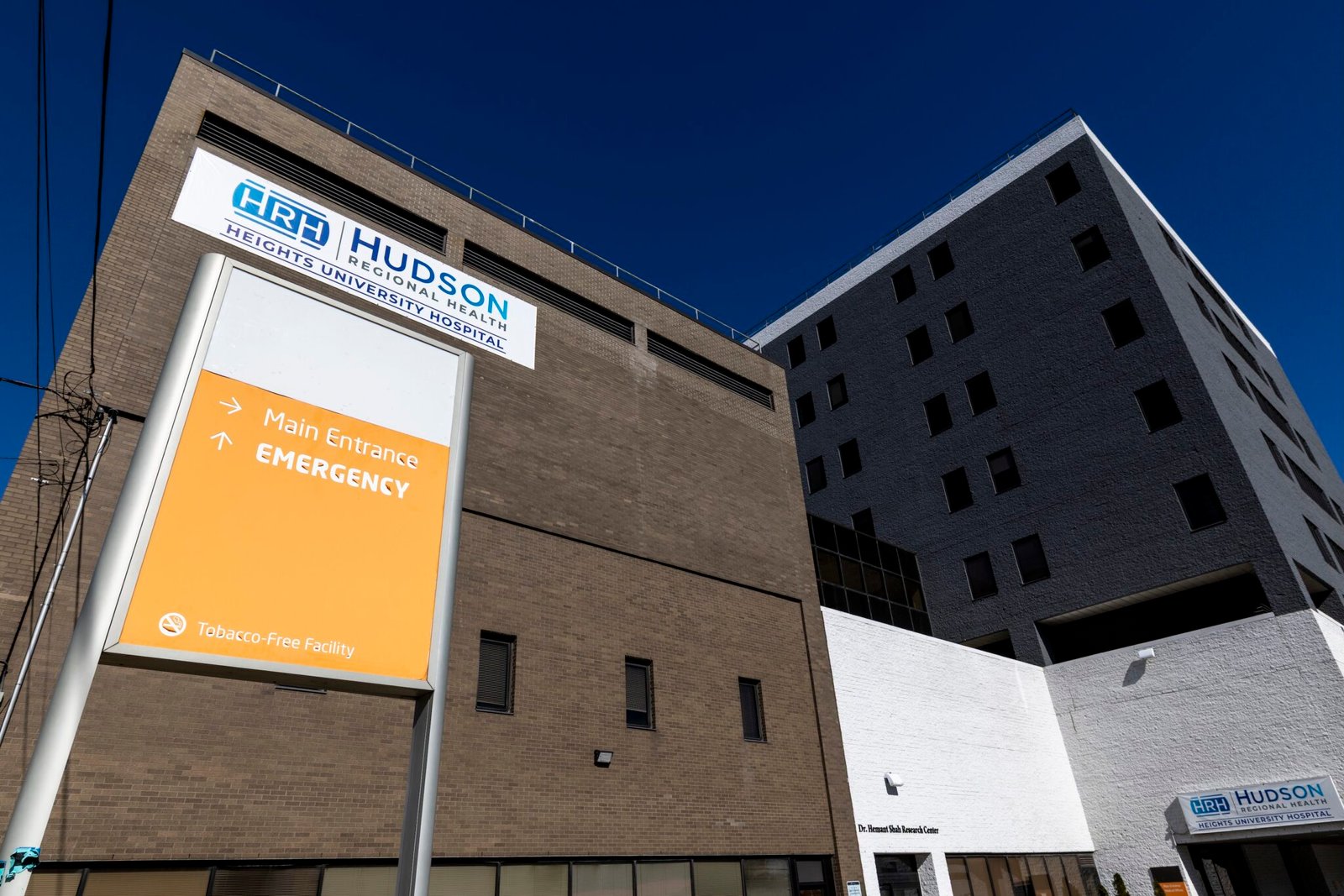
New Jersey lawmakers are concerned about the strength and sharpness of the state’s toolset to regulate hospital operations following the closure of a Jersey City hospital that has landed in court.
Democratic and Republican members of the Assembly Budget Committee pressed state Health Commissioner Raynard Washington Wednesday on the state’s capacity to regulate and manage New Jersey’s 71 acute care facilities. They also said they worry about the impact of hospital closures on the communities they represent.
“If someone is having a heart attack in West New York, there is no way that Englewood [hospital] or Holy Name Hospital in Bergen County can be the closest hospital that they get to,” said Assemblyman Gabriel Rodriguez (D-Hudson), who represents the district just north of Jersey City that includes West New York.
New Jersey reports first measles case of 2026 involving Hudson County resident
Residents of the area’s densely populated communities already struggle to access care, Rodriguez said, and are worried about the lack of options after Heights University Hospital in Jersey City closed its emergency room in mid-March.
“The concern is growing rapidly,” he said.
Washington said his department continues to examine the health needs of Jersey City and the region as part of the hospital closure process with Heights University, which suspended inpatient admissions last fall without full state approval. Long known as Christ Hospital, the 150-year-old building was one of two acute-care facilities in a city that is home to nearly 300,000 residents.
Heights University’s closure “is a real concern because you’re talking about cities that, yes, we want them to grow and we want them to be successful,” said Assemblywoman Eliana Pintor Marin (D-Essex), who chairs the budget committee. She said she’s seen the impact of hospital closures on Newark, which she represents.
“Closure of a hospital to a community that is growing deteriorates the area,” she said.
Executives with Heights University, one of four operated by the Hudson Regional Health system, announced in mid-April that they now want to re-open the facility and got a judge to temporarily halt the state’s closure process. They declined to say what changed since March, when they claimed that financial losses at Heights University — expected to top $30 million this year — endangered operations at other hospitals in the system.
The state has fined the system $128,000 for violating procedures.
Closure of a hospital to a community that is growing deteriorates the area.
– Assemblywoman Eliana Pintor Marin (D-Essex)
Assemblyman Michael Inganamort (R-Morris) asked Washington for a progress update during the budget hearing Wednesday, noting that the state provided more than $38 million to try and keep the Jersey City hospital open.
“Four weeks after the closure, what specific tools are we talking about?” Inganamort asked.
Washington offered no specifics but said he looked forward to talking about the options “as the legislative process moves forward.”
When asked by the New Jersey Monitor, Maggie Garbarino, a spokesperson for Gov. Mikie Sherrill, said: “The Sherrill Administration is actively pursuing solutions to strengthen the State’s ability to intervene and avoid chaotic reductions in health care services, along with creating enhanced accountability measures to ensure facilities do not walk away from their obligations to their patients and staff. We look forward to working with our partners in the Legislature to introduce legislation.”
Vijay Chaudhuri, a spokesman for Hudson Regional Health, urged state officials to beef up financial support, not regulatory oversight.
“The State would be far better served focusing its efforts on allocating and providing long-term healthcare funding to hospitals that serve underserved populations — funding that HRH had been requesting for many months but that never materialized,” he told the New Jersey Monitor in an email.
During the hearing, Assemblyman Michael Venezia (D-Essex) asked about the state’s existing hospital closure protocol and whether it was sufficient. Hospitals must file a certificate of need application with the State Health Planning Board, undergo a detailed review, and host public hearings if they want to add, subtract, or move clinical services.
“Last year it was CareWell Health [Medical Center] in my district, this year it’s Heights Hospital. How many more hospitals are in this situation and does the Department of Health have the proper fiscal oversight to make sure we don’t see more of these,” Venezia asked.
CareWell Health in East Orange, which came close to closure last year, is one of several hospitals being closely watched by a Health Department financial monitor, Washington said. The Department of Health was unable to say exactly how many hospitals are under watch Thursday.
“There are a number of areas, that have already been mentioned in this hearing, that have hospitals that are struggling financially. We continue to work alongside them. We have to re-imagine in some ways how we deliver health care, not just in Jersey but across this country,” Washington said.
“Of course we can’t also solve for bad actors,” he added.
The Health Department’s proposed budget — a total of $2.79 billion in state and federal funding — includes more than $655 million in formula aid for hospitals, among other supports. Lawmakers are in the process of reviewing Sherrill’s $60.7 billion spending plan and crafting a final version they must adopt before the new fiscal year begins July 1.
Assemblyman Avi Schnall (D-Ocean) urged Washington to consider investing more in other providers, like low-cost government health clinics and urgent care centers, which might be less costly. He said financial pressures will likely force other hospitals out of business.
“I shudder to think, if we wouldn’t have that hospital, to transport patients to the next closest hospital would be the difference between life and death,” Schnall said of RWJ Barnabas’ Monmouth Medical Center’s Southern Ocean Campus, in his hometown of Lakewood.
“You are hitting on a hard reality for all of us. Our health care system needs transformation as a whole. For far too long we have focused on a piece of a complex puzzle, without focus on the overall picture,” Washington said.
GET THE MORNING HEADLINES.



