
This article first appeared in New Jersey Monitor, a content-sharing partner of NJ Spotlight News.
Nearly 69,000 New Jerseyans have dropped health insurance obtained on the state marketplace in January in a flight driven by the expiration of cost-saving federal subsidies, state regulators announced.
Enrollment on Get Covered New Jersey, the state’s marketplace, closed on Jan. 31. Since then, 68,830 enrollees have canceled, for a 14% decline, and many who remained moved to cheaper plans with higher out-of-pocket costs, according to the Department of Banking and Insurance.

“We are seeing the heartbreaking consequences of the federal government’s failure to extend the enhanced premium tax credits for tens of thousands across the Garden State,” acting Banking and Insurance Commissioner Susan Ochs said Tuesday. “These individuals and families will now be at risk of forgoing important preventative care and left to rely on costly emergency services that they may not be able to afford.”
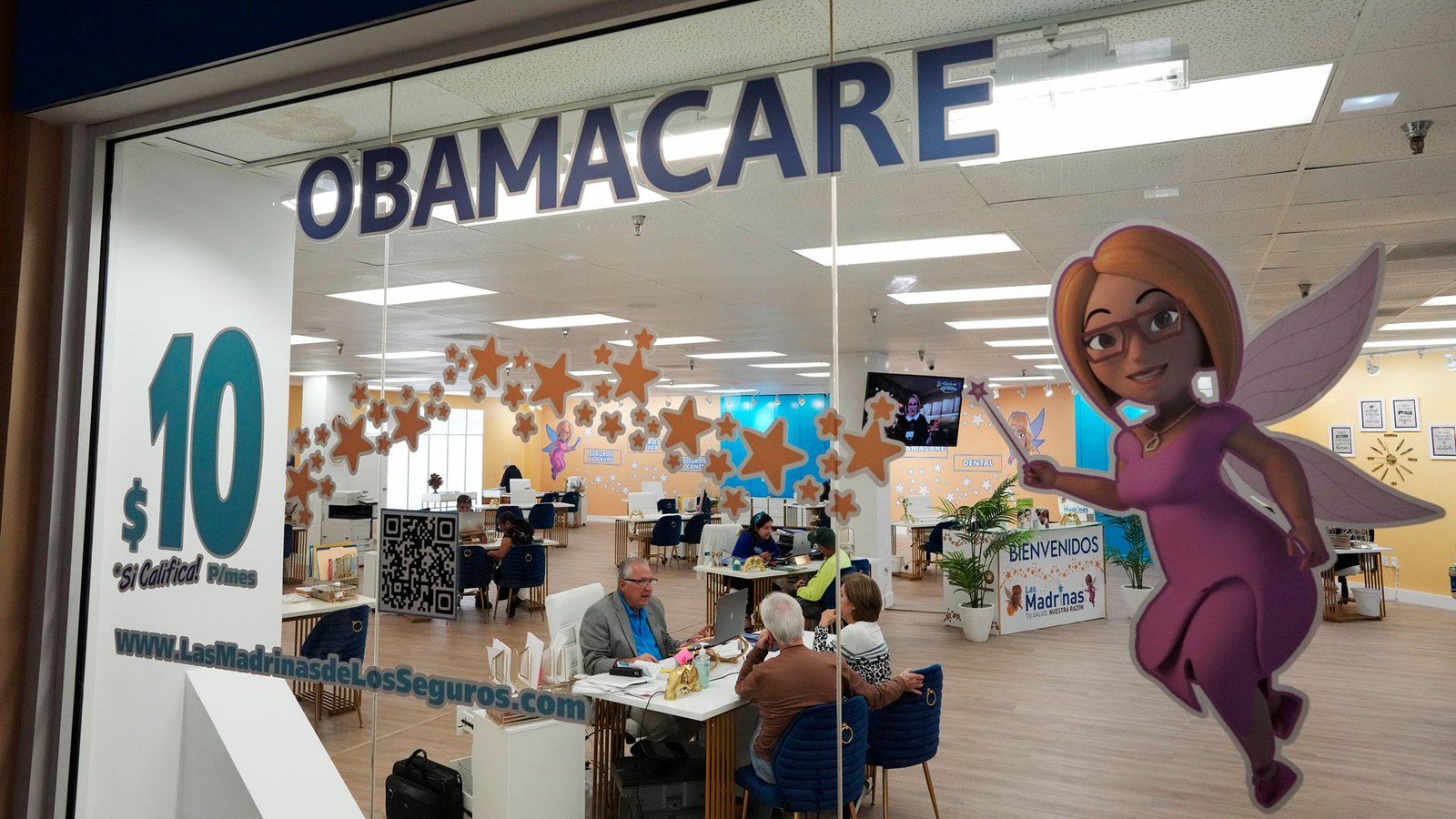
The decline comes after congressional Republicans and the Trump administration declined to extend pandemic-era enhanced subsidies that allowed many to afford exchange-traded health plans, popularly called Obamacare.
Democrats pushed for the funding to be extended, but the two sides reached an impasse, prompting what was then the longest full federal government shutdown in U.S. history. The current shutdown — a partial one affecting the Department of Homeland Security — eclipsed the lengths of Trump’s two others, each a record setter at the time.
Before the subsidies expired, 48% of enrollees who received financial assistance to obtain health insurance paid less than $10 a month for coverage, compared with 11% in the current plan year, the department said.
Many of the 440,362 who were enrolled in New Jersey exchange-traded plans on April 15 had downgraded their coverage, according to the department. The share of individuals enrolled in silver-level plans fell to 68% this year from 83% in 2025, while enrollment in bronze plans nearly doubled, to 31%.
“We are seeing costs skyrocket for New Jersey families as a direct result of the federal government’s mismanagement,” Gov. Mikie Sherrill. said “While New Jersey is committed to addressing health care costs, Washington has chosen to drive up health insurance prices.”
Permanent tax credits passed as part of the Patient Protection and Affordable Care Act under President Barack Obama are still available for taxpayers with household incomes not greater than 400% of the federal poverty line. That’s $62,600 for an individual or $128,600 for a family of four in 2026.
New Jersey offers subsidies for households whose incomes do not exceed 600% of the federal poverty line. Those cutoffs are $93,900 for an individual or $192,900 for a four-person household in 2026.
We’re in this together.
For a better-informed future.
Support our nonprofit newsroom.



