
Gov. Mikie Sherrill ordered state agencies Monday to work together to draft a strategy by the end of September to reduce New Jersey’s longstanding shortage of affordable housing.
Sherrill signed an executive order that tasks Kellie Doucette, the state’s chief operating officer, with creating a housing governing council to inventory vacant or underused state-owned properties where housing could be built, identify state rules and regulations that hinder affordable housing development and assistance, and propose rule changes, legislation, and other solutions to streamline and expand housing development statewide.
She unveiled the plan before a packed crowd of housing advocates at the Statehouse in Trenton.
“For years, I’ve heard the same story again and again across our state. ‘Mikie, it’s getting too expensive. I don’t know how I’m going to afford to stay here.’ And we’ve seen it — rising utility costs and healthcare costs, childcare costs, transit costs, grocery bills, and the biggest of all, housing,” Sherrill said. “We just aren’t going to make New Jersey more affordable if we don’t make housing more affordable.”
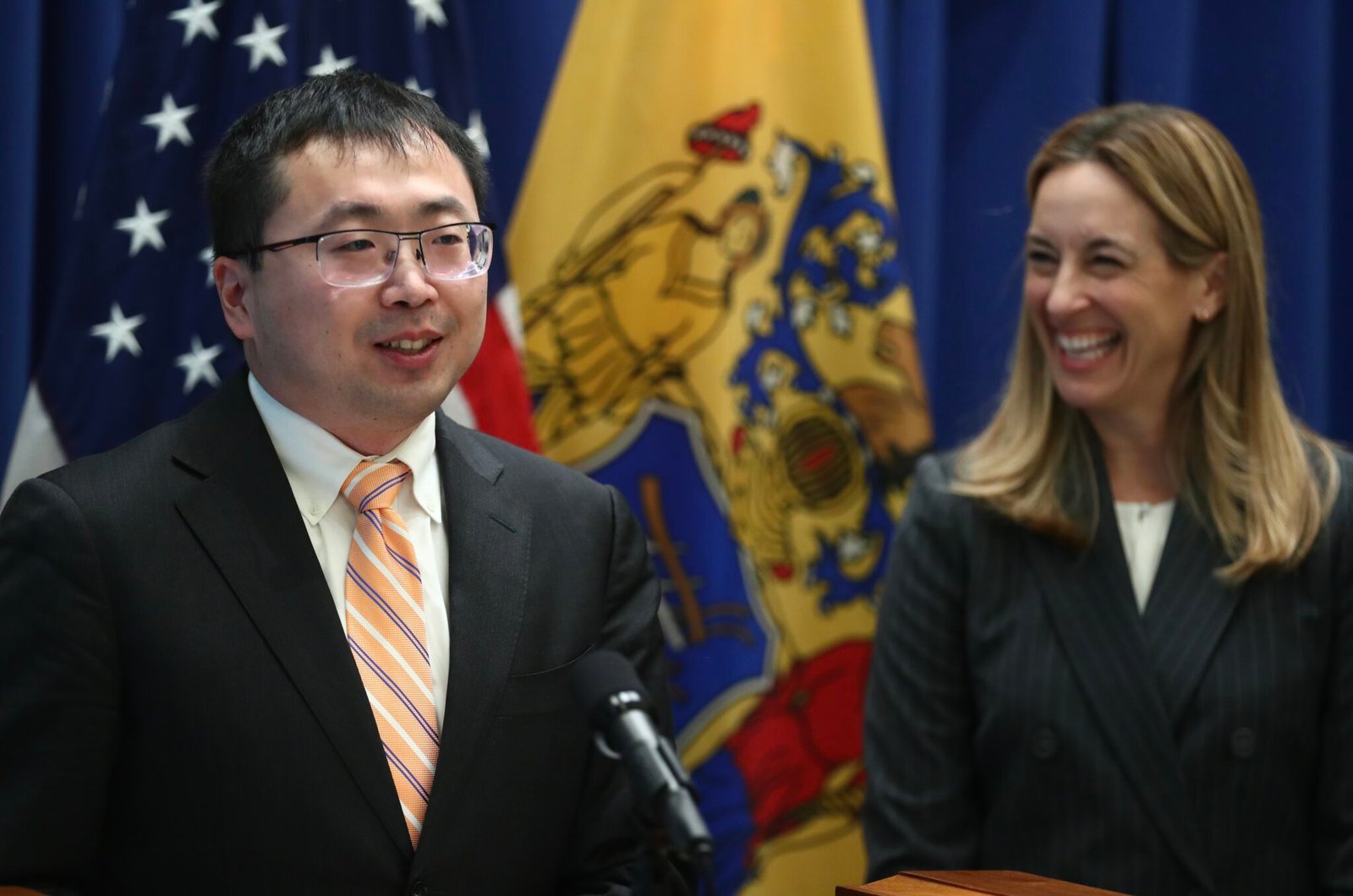
Standing beside Sherrill for the announcement was Jamie Ding, the Lawrenceville resident who’s had a 31-game winning streak on the TV game show “Jeopardy!” Ding works at the New Jersey Housing and Mortgage Finance Agency, where he is multifamily and tax credit program administrator.
Assemblyman Louis Greenwald (D-Camden) introduced him, joking that Ding is “New Jersey’s most famous New Jerseyan. It’s not you, governor, I’m sorry.”
Ding applauded the executive order and offered the briefest speech as the only non-politician to address the crowd.
“I’m tempted to try to say something really profound and esoteric, and I guess here it is: Housing is good. People, you know, need somewhere to live,” Ding said. “When you always consider something somebody else’s problem, it will never get solved. So it’s nice that we’re doing something responsible here.”
Housing costs have soared by 60% in parts of the state in the past five years alone, leaving more than a third of New Jerseyans spending over a third of their income on housing, Sherrill said. The median home price in New Jersey is over $500,000, while the median monthly rent is more than $1,800, with average rents topping $3,000 in the state’s priciest parts, according to her executive order. Housing advocates have estimated that New Jersey is about 300,000 units short of the affordable housing it needs.
“That’s no way to get ahead. We have a severe shortage of affordable homes, and it hits everyone: families saving to buy a first home, seniors paying rent on a fixed income, workers trying to live closer to their jobs, young people looking for a first apartment,” Sherrill said.
She gave Doucette 45 days to form the council, drawing members from the state departments of Community Affairs, Treasury, and Law and Public Safety; the New Jersey Economic Development Authority; New Jersey Transit; and the New Jersey Housing and Mortgage Finance Agency. That council has 150 days to make recommendations and propose housing goals that will guide the state’s long-term planning.

Sherrill also forbade state agencies from selling state-owned property without Doucette’s approval. She gave state departments 60 days to submit inventories of their state-owned land and unused or underused properties and report on their efforts to reduce red tape and accelerate housing development.
“I don’t want a 10-year study or strongly worded letter,” Sherrill said. “That’s why we’re putting these deadlines in — to be the state that moves most aggressively and most quickly in ideas for building out the housing we need.”
GET THE MORNING HEADLINES.



