
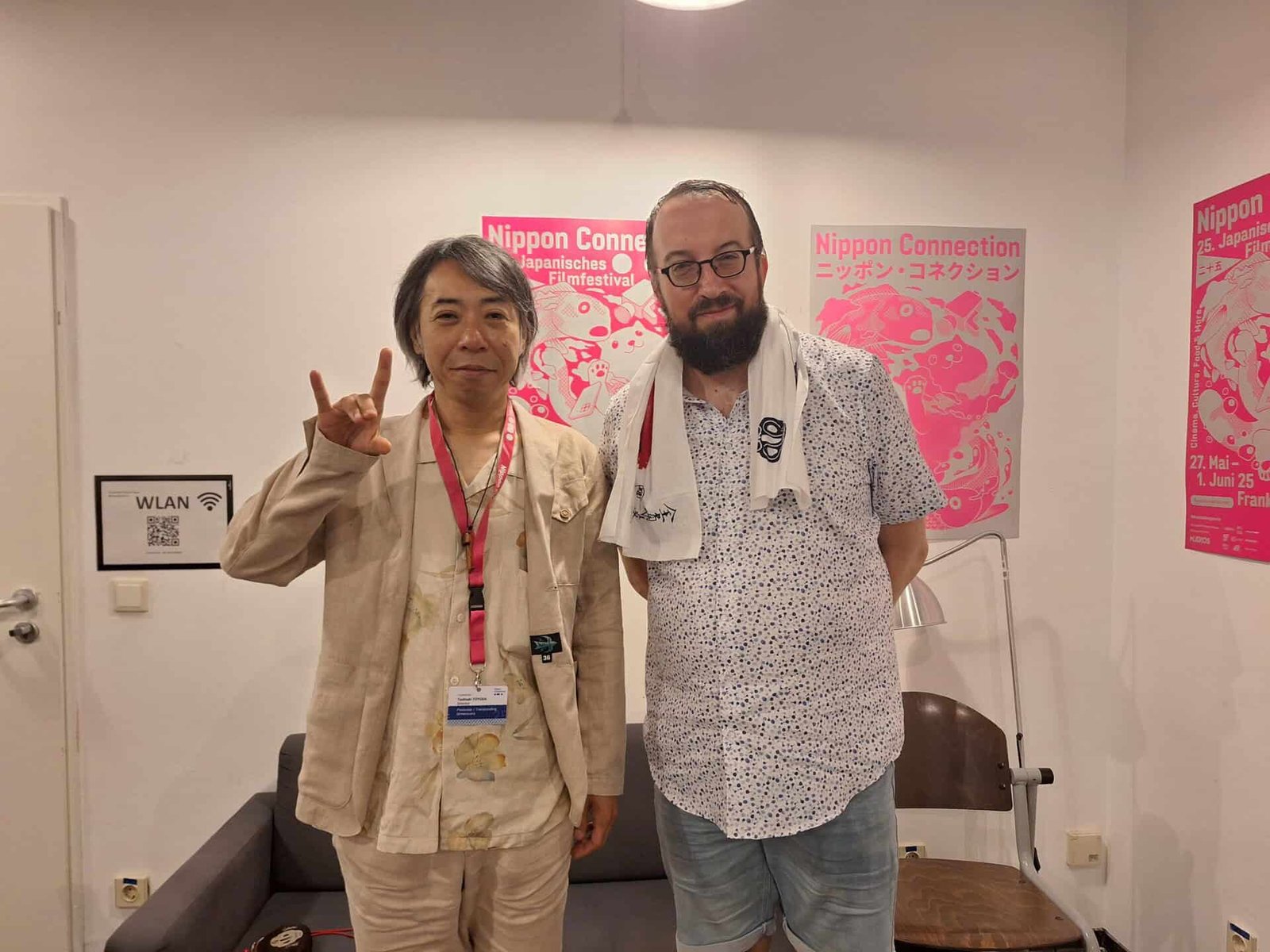
Toshiaki Toyoda hardly needs an introduction to fans of Japanese cinema. Since his debut in 1999 with “Pornostar”, he has been acknowledged as one of the most original filmmakers in the country. With films like “Blue Spring”, “Hanging Garden” and “9 Souls” he became internationally known, as his films continue to screen in festivals all over the world. At the same time, while anyone who has started the journey into his filmography will quickly become a fan, it is quite astounding there is a lack of critical or academical literature on Toyoda.
This is particularly surprising because Toyoda is one of the most important directors currently working in Japan. His works range from commentary on the bursting of Japanese bubble economy, the disillusionment of the youth, and the violence of social exclusion, to even more recent topics such as the handling of the COVID-pandemic by politicians, the corrosive logic of capitalism, and the spiritual vacuum that seems to define contemporary existence. His cinema is angry, compassionate, punk, spiritual, musical, confrontational, and frequently difficult to categorize.
Approaching Toshiaki Toyoda’s filmography, especially his early works, it becomes clear they are heavily influenced by the ideas of the punk movement. This is not just due to the choice of music in his features, but also their content and style. Toyoda takes an established genre, the yakuza film, the prison-break drama, the family drama, the biopic, the documentary, the spiritual allegory, and infuses it with various other ideas and images in order to make a statement about how specific concepts within society corrode people’s relationships.
At the same time, even though there is a certain level of cynicism in his works, there is also compassion in the cinematic world of Toshiaki Toyoda. Whether it is the story of a boxer trying to start a new life and facing new adversaries, inside and outside the ring, or a whole generation who has lost perspective and faith, Toyoda has a lot of sympathy for the underdogs, the outsiders, and in general those who feel left behind. As the director himself once said, “Because I can not fit into societal norms and am a misfit myself. People who can fit into this society seem strange to me.”
Pornostar and the Birth of a Guerilla Voice
Using crime-filled Shibuya of the 90s as his setting, Toshiaki Toyoda presents a true guerilla film, which frequently functions as a music video. “Pornostar” starts with a mysterious, almost catatonic young man named Arano walking in the street and bumping everyone around him, in a more violent edition of The Verve’s “Bittersweet Symphony” music video. Eventually, he stumbles upon Kamijo, a young club-owner who struggles to stay away from the Yakuza, despite the fact that he is kind of a gangster himself. Through a series of violent episodes, Arano ends up in Kamijo’s group, as the latter appreciates his knack for violence. Their relationship, though, is anything but smooth.
From the beginning, Toyoda presents a world where violence is the rule, where every man seems to be a gangster or on his way of becoming one. This world seems to be a perfect fit for Arano, who emits ferocity and blood from every pore of his body. Despite the fact, he does not seem to enjoy the setting or his circumstances, since his only purpose is violence, particularly against Yakuza, for no apparent reason at all.
Arano, the young man in “Pornostar”, is misconceived by the yakuza as they see him as one of their own, but in reality, he is a self-destructive force that cannot be tamed or controlled. In that fashion, the film contains a number of extremely brutal scenes, where knives are the weapon of choice, with the one where Arano comes across Kamijo’s archenemy being the most impressive and the most savage of all.
As usual in Toyoda’s films, some surrealism is also involved, while the characters’ motives are not always clear. Women, clearly, hold a secondary role, and Toyoda seems to mock the sultriness that usually characterizes them in similar films, particularly with the character of 5-star Pussycat. Music plays a very important part in the film, with a number of alternative rock tracks by Dip providing a fitting background for the ragtag surroundings of Shibuya and the many action scenes. Along with some slow-motion sequences that occasionally appear, “Pornostar” frequently functions as an extreme music video.
The production is obviously low budget, but DP Norimichi Kasamatsu does a great work of portraying the decaying and moody atmosphere of Shibuya on the streets and the motley colors of the interior settings, like clubs and toilets in bars. Toshihide Hukano’s editing keeps the film flowing and exemplifies the violence of the action sequences by rapidly changing perspectives of the same scene. “Pornostar” is not a masterpiece, but it is a very entertaining film that flows smoothly, and a great place for someone to start his association with Toyoda’s filmography.
Toyoda himself remembers that shooting “Pornostar” was defined by a lot of conflicts. Some of the crew did not support any of his decisions and questioned everything he did. The cast and some of the people doing the camerawork were quite young and they really liked what he did and supported him. There is a scene in Shibuya where he used a crane to shoot it, and the older members of the crew were almost revolting against him, but in the end, he made the scene like he had envisioned it. That was the moment he knew he had won his most important battle.
Unchain and the Captivating Story of a Loser
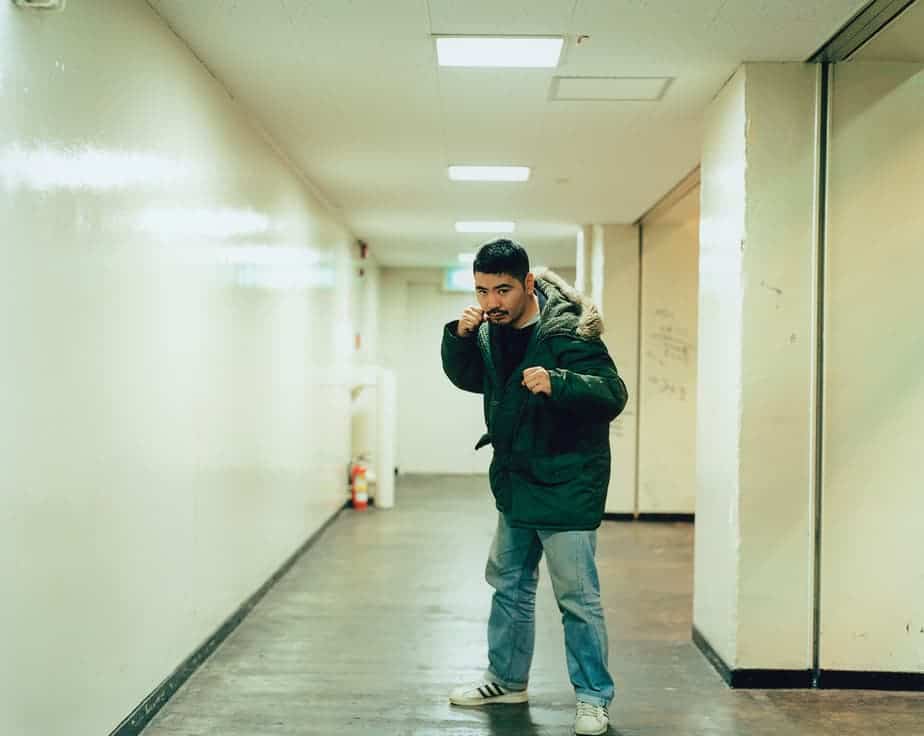
Films and documentaries about underdogs that manage to win, or people who were winners all their life, are something common in cinema. Toshiaki Toyoda, though, chose to deal with the exact opposite subject, a group of people headed by “Unchain” Kaji, who do not seem to get a break from the day they were born.
As the story unfolds starting with Kaji, we learn of his unfortunate life, which actually began from his birth. His parents abandoned him when he was an infant and he was raised by his uncle, although he did not know that until he became 18. His uncle eventually died and he took up boxing, without managing to win even once, as he retired with a record of eight losses and one draw, after severe damage to his eye. As he tries to start a new life as a civilian, his situation becomes even worse, despite the efforts of his friends.
Toyoda followed Kaji and his friends for four years, recording their lives, which, despite their occasionally desperate efforts, do not seem to improve. Particularly in Kaji’s case, his life is a never-ending downward spiral, as he seems to survive just by the faithfulness of his friends. Even that though, is not absolute.
“Unchain my heart” are the words that Kaji lived by. Kaji is an artist that lived by those words. The appeal, for Toyoda, was that he also wished to live that way, even if he had to break the law. Kaji was never afraid of his failures. This is one of the most important keys to understanding Toyoda’s cinema: failure is not merely a dramatic device, but a condition of existence, a way through which characters reveal their dignity, anger, stubbornness, and humanity.
Once more in a Toyoda production, music plays a very important role, with the recurring theme of a Japanese remix of “Unchain My Heart” by Ray Charles being the perfect soundtrack for the footage presented on screen, along with a number of alternative tracks. Chihara Junia’s narration is also a perfect fit for the film’s aesthetics. As the 98 minutes of the film end, one cannot exactly describe its appeal or the reason one cannot take their eyes off the screen. Evidently, Toyoda manages to appeal to a sentiment that one did not even know existed, and that is the documentary’s biggest success.
Blue Spring and the Apogee of Punk Youth Cinema
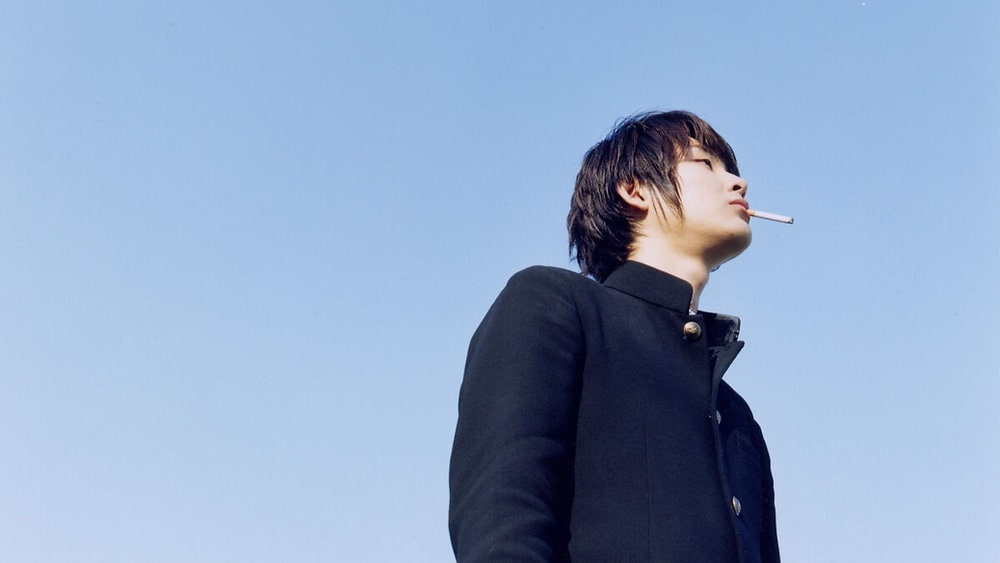
What started with “Pornostar” continued in the best way possible in “Blue Spring”, with the concept of the guerilla/punk film finding its apogee here, in probably Toshiaki Toyoda’s best work to date. The script is based on a series of autobiographical short stories by manga author Matsumoto Taiyo, and takes place in a rundown boys’ high school, which seems to be attended only by delinquents and lost causes.
The protagonist, Kujo, becomes the leader of a seven-member gang of the school’s seniors by winning a suicidal clapping game. Initially, he seems to cherish his role, punishing those who do not treat the rest of the gang members with respect, occasionally using a baseball bat to do so. However, after a while he gets bored, a tendency that expands onto everything he does.
Toshiaki Toyoda directs a film concerning the issues of adolescent life; however, both his characters and the general situation are extreme in their conception, thus making the film stand apart from similar movies. In that fashion, his characters are “losers” but most of all hopeless, particularly regarding their future, and even more, everyone seems to know the fact. Themselves, their teachers, and even their parents, which, in this case, are nowhere to be found.
This fact is highlighted by the clapping game, with the winner in essence being the one who has the less regard for his life, and actually is the only source of excitement in their mundane life. Through the characters, Toyoda makes a sociopolitical comment, as the hierarchy implemented in the school appears occasionally primitive, with the “leader” having to prove his superiority against various challengers, and occasionally similar to one of totalitarian regimes.
“Blue Spring” remains not only faithful to the story and its visuals, it adds to the relationship between the characters and the viewer. Kujo, Aoki and Yukio are young people who have lost their drive in life, as their teachers, parents and seemingly every authority has given up on them, which is more than evident given the state of their school.
The aspect that really makes the film stand out, though, is the presentation. The combination of Norimichi Kasamatsu’s fittingly bleak cinematography, the changes in pace implemented by Mototaka Kusakabe’s editing and, most of all, the exceptional rock/punkish music by Thee Michelle Gun Elephant, give the film its guerilla/punk aesthetics, frequently making it function as an extreme music video. The irony of the images of the cherry blossoms, the violent humor, the punching between the two former friends, and the finale all make the most of the aforementioned elements, and are the ones that truly stress how cool and stylish “Blue Spring” is.
The acting is in complete resonance with the film’s aesthetics. Ryuhei Matsuda is exceptional as the indifferent leader, with this attitude coming in direct contradiction with the eagerness Hirofumi Arai presents as Aoki, with their performances functioning as forerunners for their inevitable clash. Not much more to say, “Blue Spring” is definitely a cult film, and a must watch for all fans of Japanese indie cinema.
9 Souls and the Utopia That Society Refuses
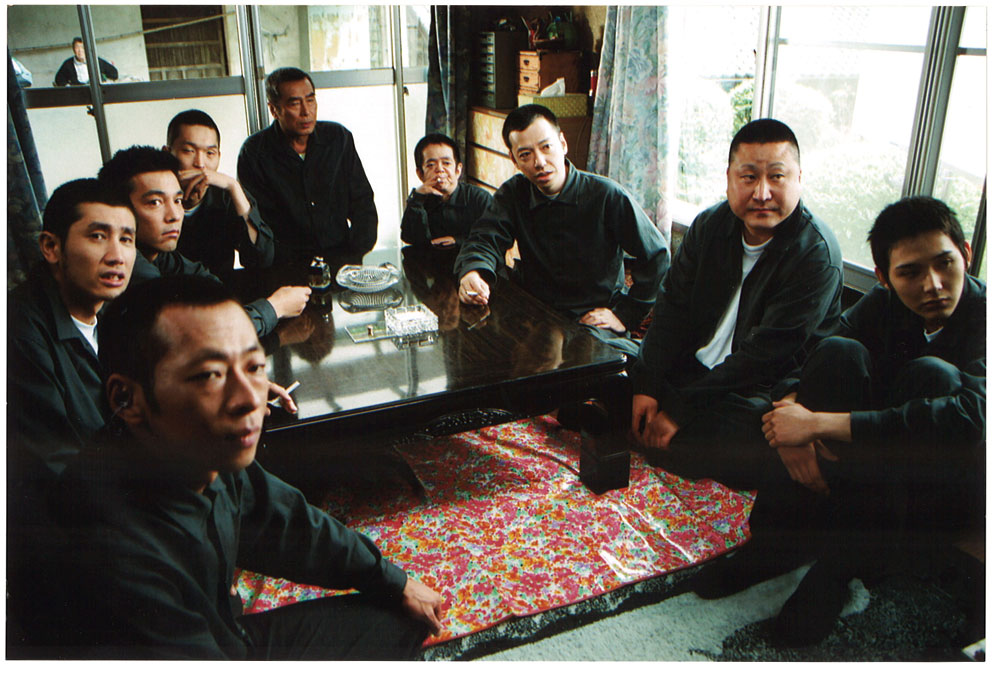
What began with “Pornostar” and “Blue Spring” found its apogee in “9 Souls”, one of the greatest samples of Japanese indie cinema. The film follows nine convicts who escape prison after the tenth inmate, Yamamoto, loses it just before a rat shows the others the way out of their cell. The convicts decide to search for a money stash hidden by Yamamoto, and so they function as a team, despite the fact that they differ in age, nature of crime and general background.
In “9 Souls”, the band of misfits that escape prison become friends, only to have their newly-found camaraderie and confidence tested by the various stereotypes and reservations of society, thus making rehabilitation or any chance for a new start in life impossible. The movie starts as a surreal, absurd comedy, with the scenes with the sheep and the strip club in the middle of nowhere being the highlights of this style. As the story progresses, though, drama takes the place of comedy.
By comparing “9 Souls” to the debut feature of the director, “Pornostar”, one can see the progress Toyoda has made in narrative, as well as technical aspects. Whereas “Pornostar” was basically focused on two male protagonists and their fatal relationship, “9 Souls”, as the title suggests, is a movie with an ensemble cast, each of them with their own personality, weaknesses and strengths. Toyoda’s script manages to give each of these characters his own moment.
In the second part of the film, the script changes its tone to a much darker, disillusioned look at the world the nine escapees step into. Being outcasts and regarded as a menace to society once uncovered, they are hunted down by the public. Whether it is the streets of a city or the wide, open landscape in the country, the prison is always there even if one cannot see the bars anymore. Not being allowed the opportunity to change or rehabilitate in the eyes of society labels them as permanent outsiders.
Additionally, the version of Japan the film shows is a place where dreams are no longer possible, a bleak area with anonymous cities and a gray countryside. Almost all of the shots outside are static, showing a foggy, cold landscape with almost no humans, except for the protagonists. “What’s your dream?” one of the others asks Michiru. “No dream,” is the young man’s response as he continues looking down like most of the time in the movie.
DP Junichi Fujisawa had a very difficult task of bringing to life all the surreal notions Toyoda had in his head, but he managed to do a great job in all of the film’s settings. Kusakabe Mototaka also does a great job in editing the film, retaining the relatively fast pace and keeping the different stories that are occasionally presented consecutively from becoming confusing. “9 Souls” features an ensemble cast that includes a great mixture of veterans and then-new actors, and their chemistry is a thing of wonder.
In the end, “9 Souls” is a film which delivers a dark, bleak view on Japan, possibly influenced by the director’s own experiences with its justice system. However, this is not a bitter movie, since its themes of forgiveness and redemption make it a captivating, human drama. “9 Souls” is a film that had a number of difficult tasks to fulfill, but did so in the most impressive fashion, becoming a masterpiece in the process.
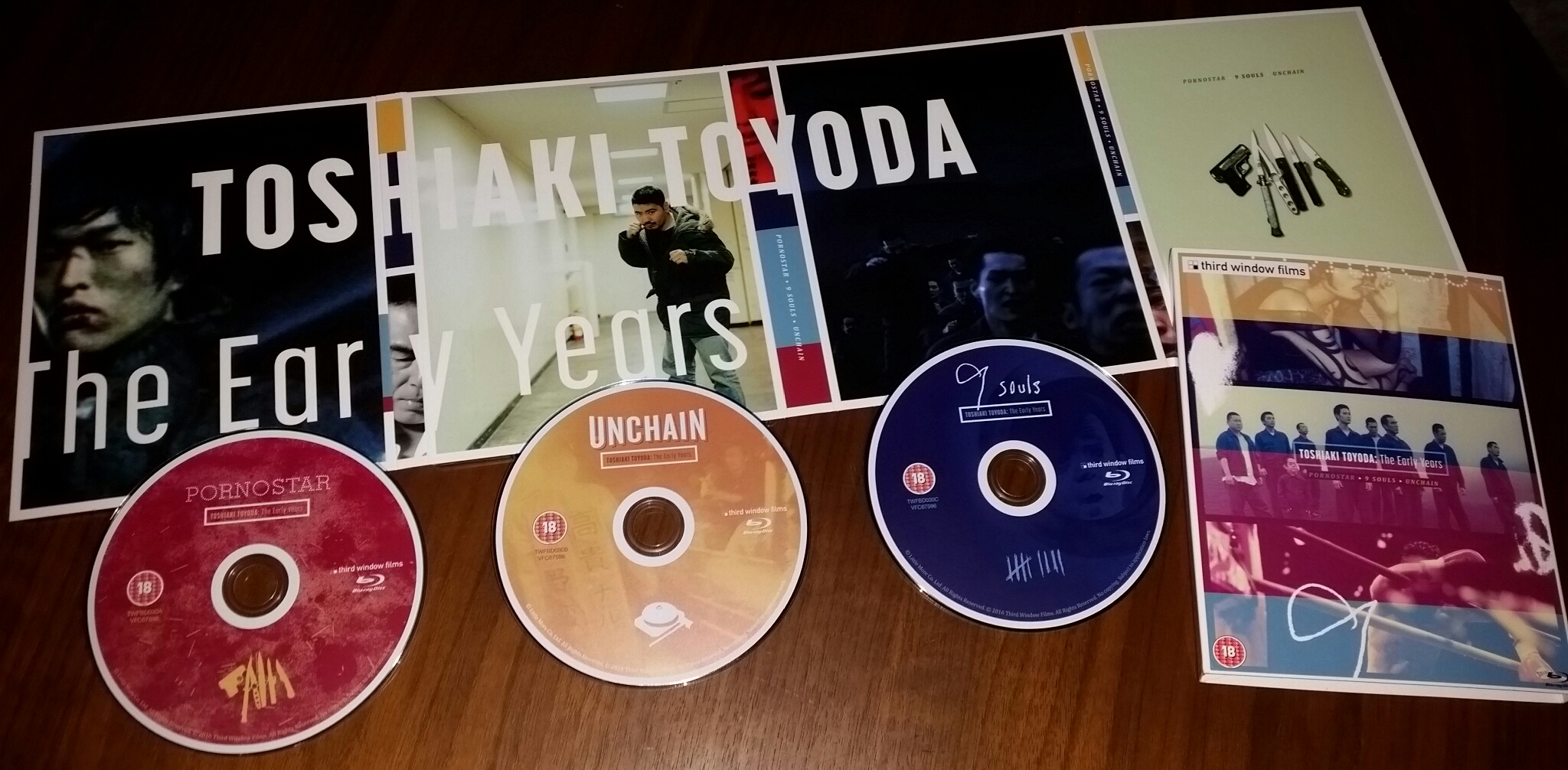
Buy This Title
by clicking on the image below
Hanging Garden and the Violence of the Open Family
Toshiaki Toyoda’s take on the family drama is based on the homonymous book by Mitsuyo Kakuta, and presents a rather extreme approach to the genre. The Kyobashis appear to be a regular family of four: Eriko, the mother, works part-time in a restaurant, otherwise busying herself with housekeeping. Takashi, the father, is a regular salary man. The two kids, Mana and Ko, are students. Lastly, Eriko’s mother, Sacchin, is hospitalized due to lung cancer, but refuses to have an operation.
What makes the family special, though, is that they have agreed, following an initiative of Eriko’s, not to have any secrets and always be sincere with each other. Presumably, this results in constant awkward situations, like a discussion during dinner of how each child was conceived and a celebration for Mana’s first period. Seemingly, the family copes with this tactic, and even presents an image of regularity.
However, as the script deepens into the characters, this facade shatters. Takashi retains two extramarital relationships. Ko clearly has sexual inclinations towards one of them. Mana rarely attends school, spends her time shopping, getting photographed for adult magazines and even having sex with strangers. Eriko tries to cover her depression beneath a constant smile she retains even when she has violent thoughts about people. At the same time, all of the members continue to play their part in the concept of the “open family”.
Toyoda makes a movie regarding the concepts of sincerity and hypocrisy by pushing each to their extreme. The former by presenting what could happen if everybody was truthful all the time, and the latter by presenting the actual lives of the family members, stating that everybody has secrets and feels the need to lie to keep them. At the same time, he makes a point of how dysfunctional families can be in the contemporary Japanese metropolis.
“Hanging Garden” is visually impressive, with vivid colors painting the urban scenery, incorporating wonderful cinematography by Junichi Fujisawa and production design by Mitsuo Harada. Toyoda’s trademark odd camera angles that frequently feature swinging of the frame are here as well. The visual prowess of the film finds its apogee in a scene where a rain of blood showers Eriko.
Evidently, “Hanging Garden” is not a light film, as most of the plethora of family dramas coming out of Japan. Toyoda, however, manages to present a very entertaining and meaningful production, through a combination of elaborate direction, great acting, a little humor and a little surrealism, along with a number of social comments.
Blood of Rebirth and the Birth of Toyoda’s Spiritual Cinema
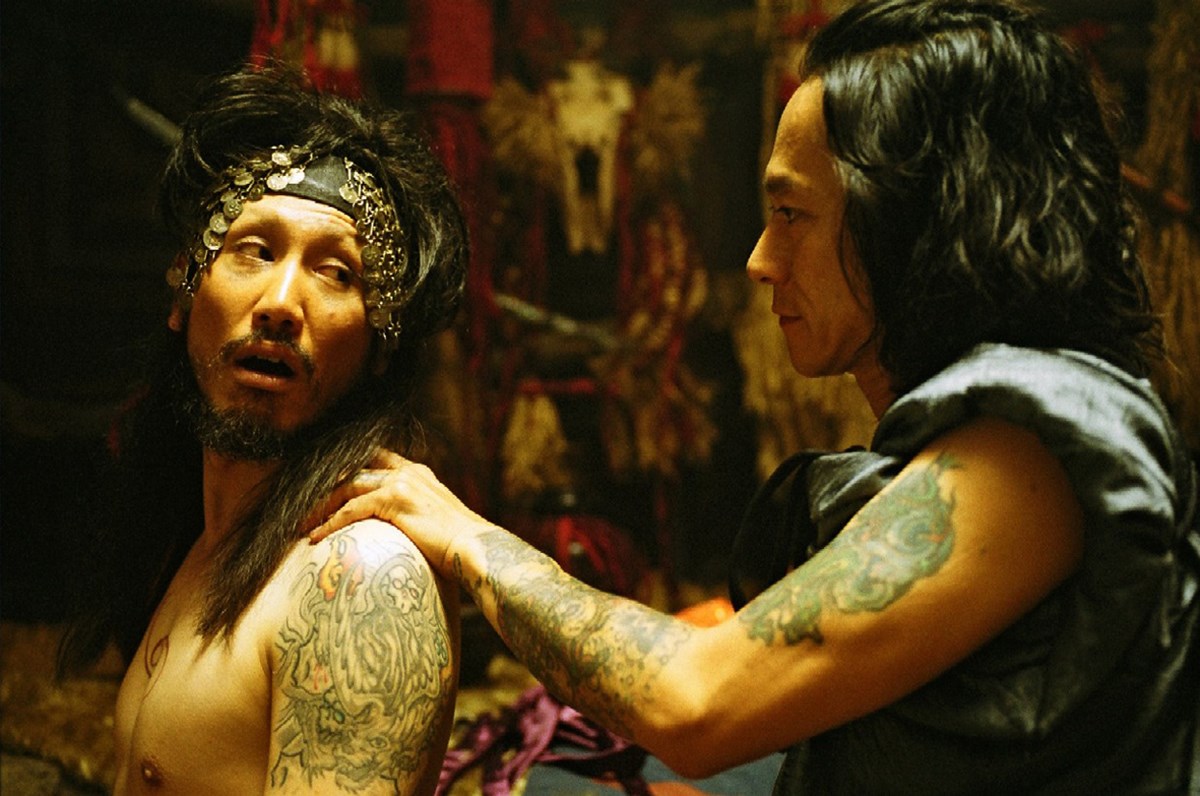
Following a four-year absence after his arrest in 2005, Toshiaki Toyoda returned with “Blood of Rebirth,” a work that stands as both a personal and artistic statement. Released in 2009, the film reintroduced a filmmaker known for “Blue Spring” and “Hanging Garden” in a markedly different mode. Produced under low-budget conditions and reportedly shot in just ten days, the feature adapts the classic joruri tale of Oguri Hangan into a punk-infused, spiritual allegory.
With former BLANKEY JET CITY drummer Tatsuya Nakamura in the lead, supported by Kiyohiko Shibukawa and Mayu Kusakari, the film also marks a turning point toward the spiritual themes Toyoda would further explore in later works and the style that is prevalent in his current approach. In that regard, “Blood of Rebirth” can be considered a precursor for films like “The Day of Destruction” and “Transcending Dimensions”.
Set in a mythic world before human dominance, the story follows Oguri, a gifted blind masseur summoned by a tyrannical king suffering from a mysterious illness. Refusing to pledge loyalty, Oguri provokes the king’s wrath and is executed after the king forces him to stay and gets him drunk. However, his journey does not end there. Wandering between life and death, he confronts a gatekeeper of the underworld before returning to the mortal realm in a severely impaired state, stripped of bodily autonomy.
“Blood of Rebirth” is less a conventional narrative than a sensory and spiritual experience. Drawing from the “Oguri Hangan” legend, Toyoda crafts a film that merges historical fantasy with avant-garde aesthetics, resulting in a work that feels closer to a ritual than a story. At the same time, the overall approach resembles significantly that of a music video, with the intense use of music and the lack of dialogue pointing towards that direction.
The spiritual and metaphysical elements take center stage, and in combination with the fragmented narrative, the difficult-to-realize allegories, the extended naturalistic sequences of the forest and the emphasis on mood over plot make “Blood of Rebirth” a challenging watch. At the same time, however, the beauty of many of the images is undeniable, while the ritualistic approach, which also extends to the presentation of violence, makes the whole thing a rewarding experience. Particularly the climactic sequences, with the floating-head battle, add a very appealing element of absurdity, while the very ending, which blends tragedy with Toyoda’s very unique sense of humor, will definitely stay on the mind of any viewer.
It is a film driven by instinct, anger and creative freedom, which functions as both a comeback statement and a declaration of a new cinematic style for Toyoda.
Monsters Club and the Compassion for the Irredeemable
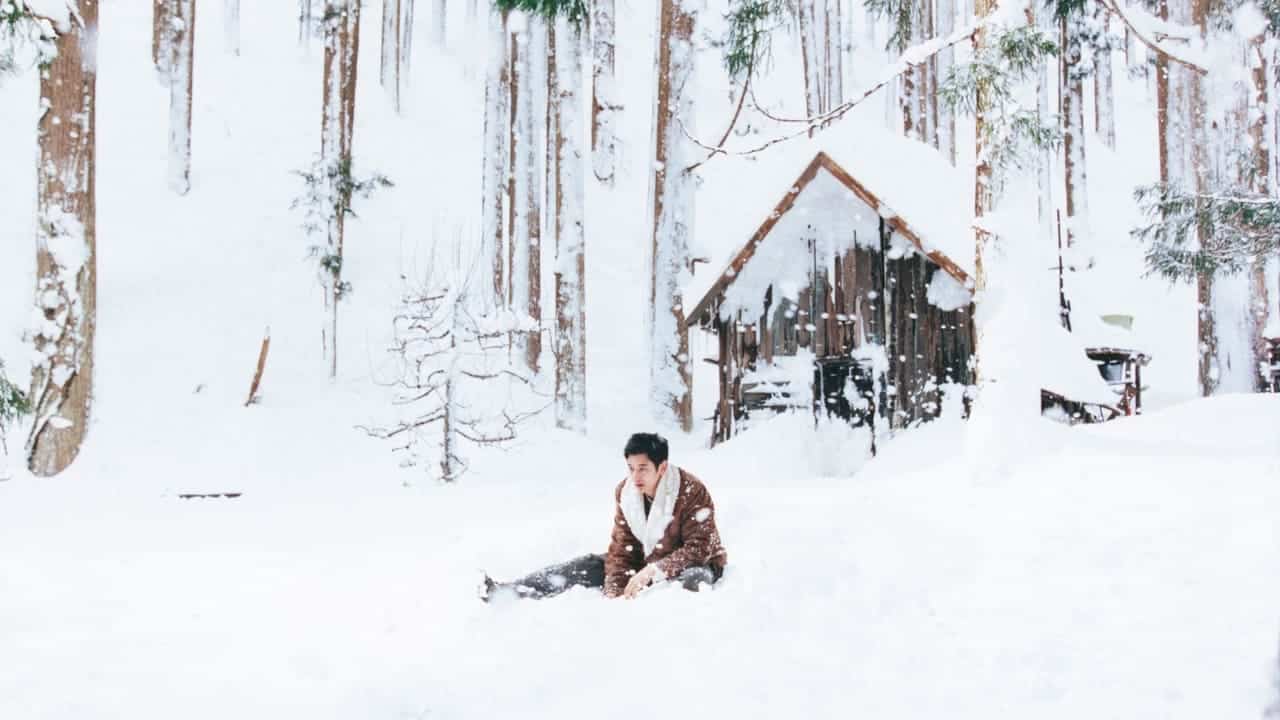
Inspired by the story of the Unabomber, “Monsters Club” offers itself more as an exploration of the mentality behind a troubled mind over an exploitation of true crime. Withdrawn from society, Ryoichi lives an isolated existence on snow-covered mountains where he idles the days away with menial tasks and sending mail bombs to the CEOs of corporations and TV networks. After encountering an odd figure in the night, he is visited by the ghost of his older brother, whose suicide had driven him into withdrawing from the world.
There is no romanticizing the scenario, yet there is a certain call to understand the loss of humanity that can go into crafting such a tragic figure. As such, it is hard to argue that Ryoichi is a redeemable character, but his plight speaks to the missteps anyone can take to find themselves drowned in nihilistic ruminations. One of the director’s common traits is humanizing difficult characters, and “Monsters Club” proves both his greatest challenge and success in making a confused, violent loner a sympathetic figure.
For such an introverted persona to portray in Ryoichi, Eita Nagayama is a whirlwind of complex emotions, bounding between anger and melancholy with ease. The slow build up to the inevitable decline is extremely discomforting, a tragic portrayal of a man meeting an unfortunate end. Furthermore, the inclusion of Japanese visual artist Pyupiru as the ghost brings a unique, ominous vibe to the production through the performer’s play with conventions on gender and form, encapsulating perfectly Ryoichi’s own struggle of identity.
Flowing at a slow pace, the visuals know when to hover over the wilderness to capture the sense of isolation or zoom in on the pained expressions of Ryoichi. The snowy landscapes give the production an almost meditative vibe, dominating the film as even the interior shots reflect the quiet cold that is ever present. The sound design, which always takes on great importance in Toyoda’s work, further resonates the feelings of solitude, with the cold winter winds providing a desolate audioscape that engulfs Ryoichi.
“Monsters Club” has remained one of Toyoda’s least revered works, brooding in isolation with a meditative approach that is slower paced than the more frenetic and stylized productions audiences have come to expect. However, its nuanced approach and understanding of severe, all-encompassing depression make the project one of his most accomplished works and essential viewing.
I’m Flash! and the Capitalism of Faith
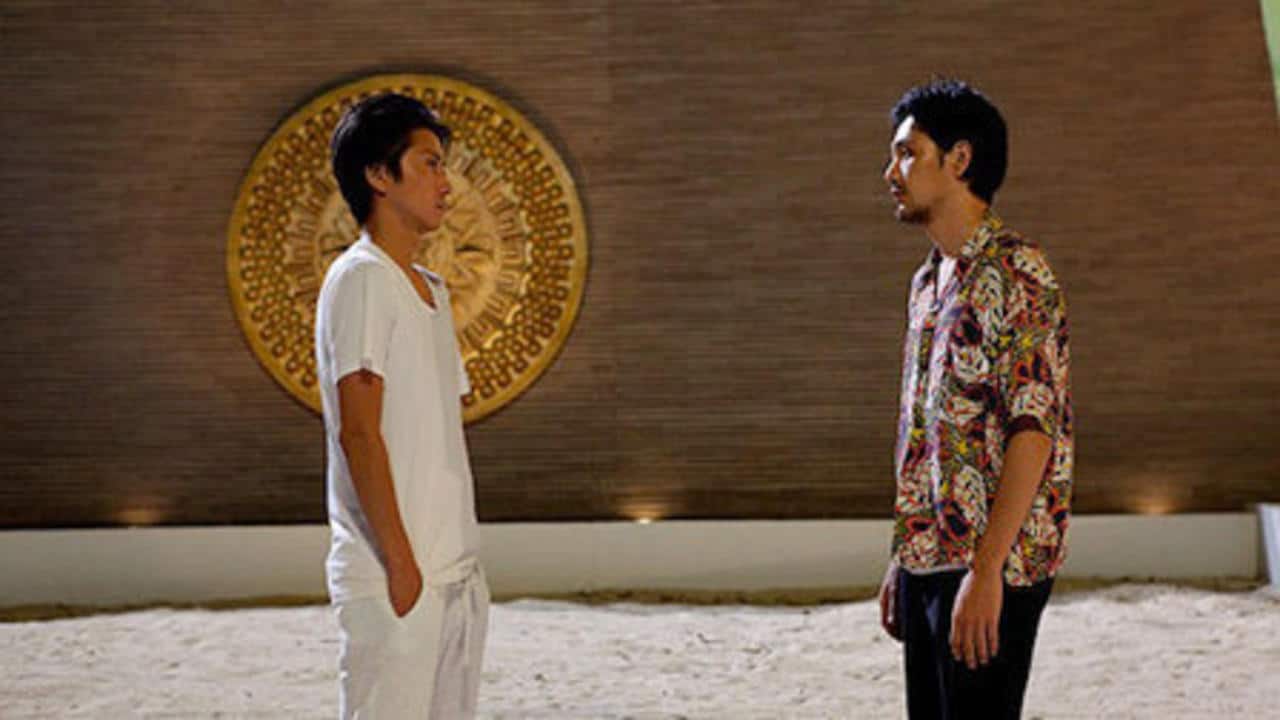
In the face of great catastrophes, many people tend to turn to religion or spiritualism to make some sense of what has happened and to find some solace in the idea of an afterlife. “I’m Flash” explores how people develop beliefs and questions whether they are just a distraction from the inevitable, or whether there is something very profound about them, while at the same time managing to tell a story about the link between cults and capitalism.
In Tokyo, three men are approached by the agent of popular cult leader Rui, who wants to employ them as bodyguards. Even though they are skeptical about the job at first, considering the reputation of the capricious man they are supposed to protect, they soon find the money is well worth it, as Rui spends most of his time in his luxurious home, secluded from the outside world. After an accident, which caused the death of another driver, the once charismatic leader is not himself anymore.
Through the performance of Tatsuya Fujiwara, along with Shigemori Toyotaro’s cinematography, Toyoda manages to capture the spiritual emptiness of Rui’s existence, his life in what seems like a golden cage, and a system of fate which has become his prison. While exploited as a means to make money, provide for his brother’s plastic surgery and his sister’s luxurious lifestyle, there is a bitter irony in the realization of the truth behind Rui’s slogans.
As we have seen before, Toshiaki Toyoda has always remained critical of authorities, whether we are talking about governments or even the criminal underworld. However, he has also repeatedly focused on the ideology behind these hierarchies and modes of exploitation. In this 2012 feature, he shifts perspectives as he tells a story about how capitalism operates under the disguise of religion.
In the end, “I’m Flash” is a blend of drama and satire, and another great show of talent from Toshiaki Toyoda. Aside from its performances and cinematography, it is the feature’s humor and acidic portrayal of the state of belief and spiritualism in an increasingly superficial, capitalist system that lingers.
Crows Explode and the Challenge of the System

Taking up where Takashi Miike left off with “Crows” was a challenge, since both his films were quite popular, but Toyoda was direct about the nature of the project. It was a big challenge for him to direct a film in a massive marketing system. The cast was different from the previous two films, and the process was difficult. However, he was lucky to have met new and young actors.
Although “Crows Explode” may stand somewhat apart from the more personal works in Toyoda’s filmography, it still makes sense within his broader universe. The director has always been fascinated by hierarchy, youth violence, loyalty, boredom, charisma, and the systems that form young men into soldiers of some kind, whether in the school of “Blue Spring”, the streets of “Pornostar”, the prison of “9 Souls” or the more explicitly commercial arena of “Crows Explode”.
In that sense, even when he works inside a massive marketing system, Toyoda’s interest remains attached to outsiders, violent codes of behavior, and the strange rituals through which men define themselves.
The Miracle of Crybaby Shottan and the Hope of Failure
In the midst of all the controversy, it is good to remember that Toshiaki Toyoda is still a great filmmaker. And what better way to do just that than a biopic about Shoji Segawa, a Japanese professional shogi player who changed the rules of the game, especially since Toyoda was also a shogi player until he reached 17.
Toyoda had been wanting to make a film about shogi for a long time, and the book about Shoji Segawa’s life touched him very much. Up until the point where Segawa leaves the world of professional players, the story was more or less the story of Toyoda’s life. However, when Toyoda had to decide whether to become a professional shogi player, he stopped and followed his interest in film, whereas Segawa later returned to the world of shogi and turned pro. His story really impressed him.
Toshiaki Toyoda directs a very entertaining biopic, which unfolds in four parts, covering the majority of Segawa’s life until his final success. The part revolving around his childhood is tender and somewhat funny, particularly through the way the rivalry is presented. The second and most lengthy part revolves around his years in the academy and takes place mostly during his twenties. This part has its amusing moments, but the Damocles Sword of the time limit casts a heavy shadow on all the characters.
Two elements dominate all parts of the narrative. The first one is failure, which is the theme most explored in the film, as Toyoda deals with its impact, which can result in despair or instead, more effort and subsequently, hope. The second element is agony, which provides the most thrilling moments of the film in a number of occasions.
This approach, which keeps the film subtle and low-key for the most part but provides rather intense moments at key points, is one of the best assets of the narrative, and results in a production that retains the interest for the whole of its 127 minutes. On another level, Segawa’s story also highlights the fact that in order to reach the higher levels of any competitive field, extreme sacrifices must be made, particularly to one’s personal life, although even this kind of effort does not guarantee success.
Ryuhei Matsuda is quite good as Segawa, particularly in the dramatic aspects, with his performance anchoring the movie in the best fashion. Norimichi Kasamatsu’s cinematography highlights the game in a way that makes it captivating even for the spectator who does not know much about it, although this achievement can also be attributed to Toyoda’s direction, who highlights the fact that he knows the mechanics of shogi quite well.
Overall, “The Miracle of Crybaby Shottan” returns the viewer to the roots of mainstream cinema, where a great story is presented in simple, but captivating fashion, and that is where the value of the film lies.
The Planetist and the Healing Power of Nature and Sound

If you were wondering what Toyoda did between 2014 and “Crows Explode” and 2018, this documentary provides the perfect answer: he spent those years on the Ogasawara Islands, a UNESCO World Heritage Site located 1,000 km south of the main Japanese archipelago, with “Tarzan of the Sea” Noritsugu Miyagawa.
Toyoda directs a naturalistic documentary that seems to aim at highlighting both the beauties of the setting and the benefits of spending time in such a unique, but mostly secluded place. This last aspect is mostly represented by the segment dealing with Goma, as we watch the artist who suffered a head trauma years ago that left him without a capacity to have memories creating music in an effort to communicate with the environment, and particularly whales, and to find solace and healing from his traumatic mental state.
This segment, through both image and Goma’s music, becomes almost psychedelic after a fashion, with its aesthetics being quite close to those of music videos, a tactic that actually extends to the whole documentary. The performances by both Tatsuya Nakamura and Kazuhide Yamaji also point towards this direction, with the setting of the cliff overlooking the sea providing an excellent image for the sounds heard by the artists’ solos.
Toyoda’s camera has captured excellently the natural setting, presenting a number of images of extreme beauty, with the one where people are jumping from cruising boats into the sea being one of the most memorable. For those who manage to overcome the film’s length and observational rhythm, a rather impressive audiovisual experience will be there waiting for them.
Wolf’s Calling and the Resurrection Trilogy Begins
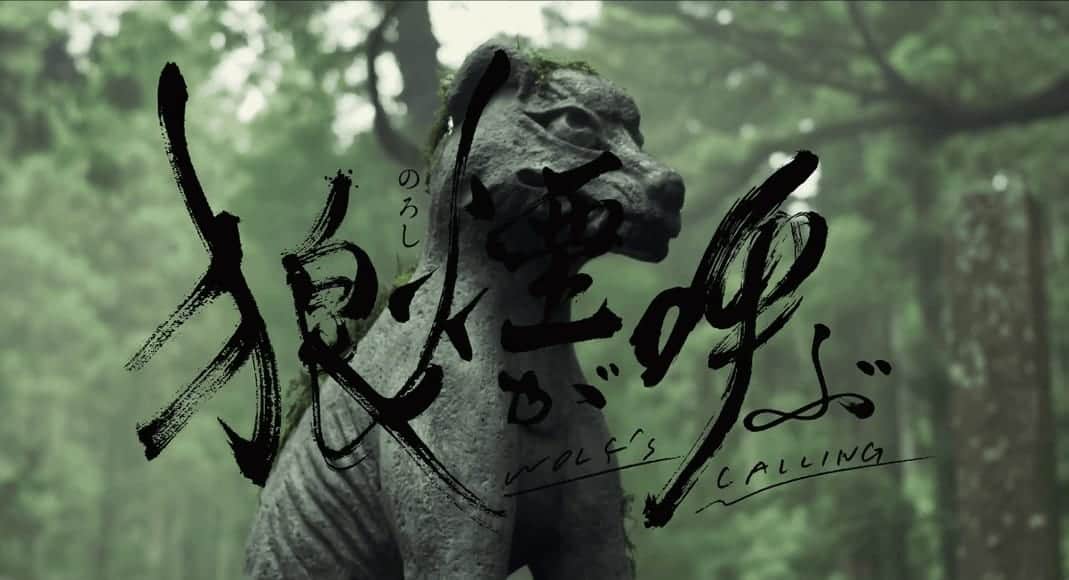
In April 2019, director Toshiaki Toyoda was arrested for unlawful possession of a handgun. It turned out that the weapon was a familial keepsake and he was released without charge. Based on this experience, he produced a 17-minute period drama called “Wolf’s Calling”.
A girl finds an old handgun in her attic and the symbolic object conjures a mystical scene of samurai gathering within the moss-grown location of Kasosan Shrine in Tochigi Prefecture. Produced outside the committee system and with his own money, “Wolf’s Calling” stars a familiar cast for a Toyoda movie. Kiyohiko Shibukawa and Ryuhei Matsuda are accompanied by Tadanobu Asano in a supporting role.
A pure concept of sound and sight creates a movie with hardly any dialogue, but with a highly anti-climatic build-up. Through a condensed soundtrack, the music functions as the most important instrument of the narration. “Wolf’s Calling” is all about tension and anticipation and leaves the viewer wanting more.
As in “Blue Spring”, Toshiaki Toyoda presents an iconic scene on a rooftop. After the credits have rolled, we see a samurai on top of a skyscraper in modern Tokyo. Yoyogi Park and the new Olympic Stadium are shown as part of the skyline, in which the messenger of a bygone time is set in. The perfect mixture of tradition and modernity.
The Day of Destruction and Audiovisual Rage
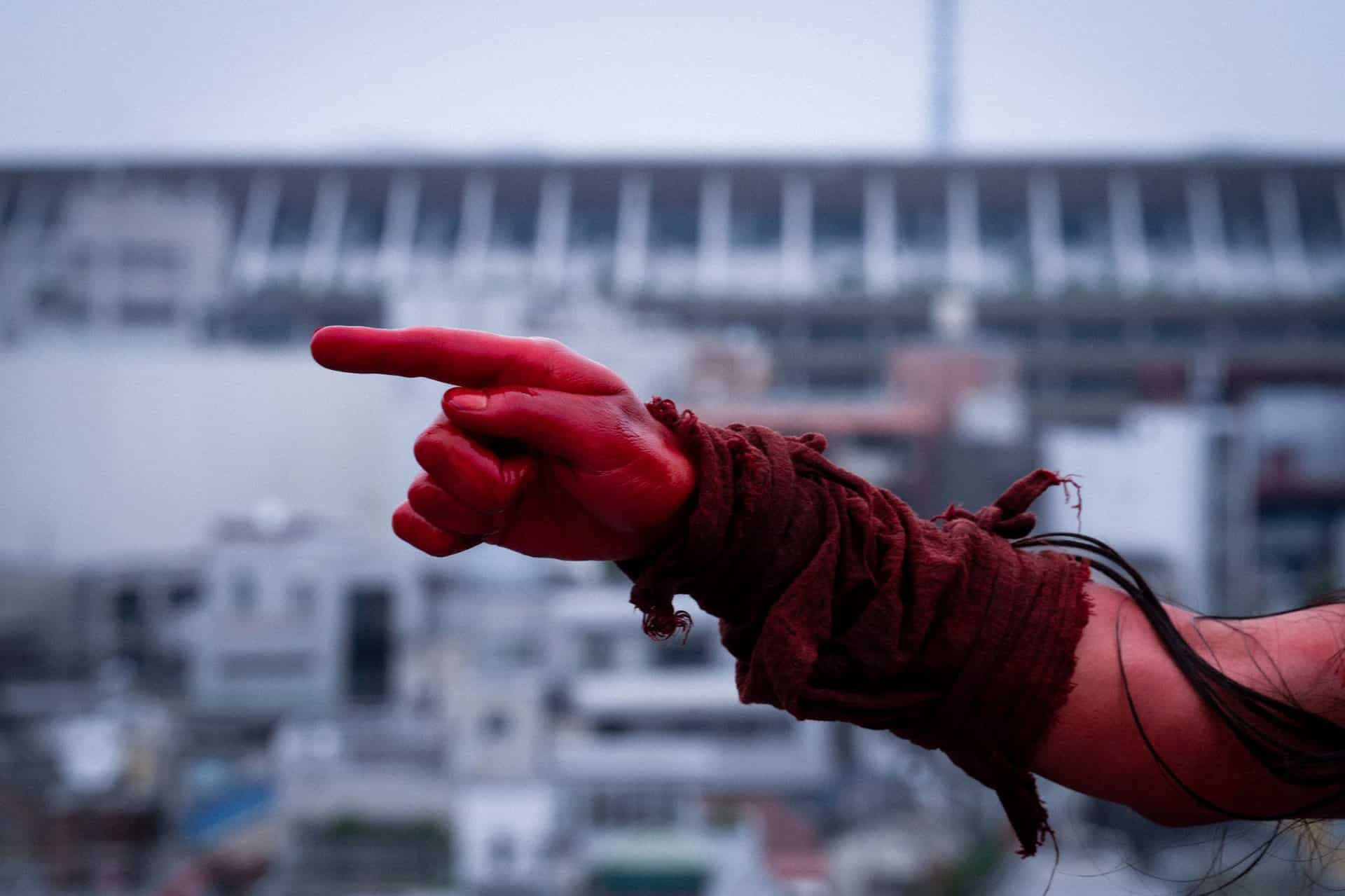
Toshiaki Toyoda is an angry man. Angry for the treatment he experienced at the hands of the police for the second time, angry about the greed resulting from the Tokyo Olympic Games, angry at capitalism, and angry at the government for its policies regarding the pandemic. All this anger is channeled in “The Day of Destruction” and eventually is turned into an audiovisual rage that fills the screen on multiple occasions.
The narrative of the film is somewhat confusing, as it mixes timelines, events and protagonists in an approach that can only be described as delirious. The movie opens in black and white in front of a snowed setting surrounding an abandoned mine. Shinno, a businessman, has come to visit the tunnel in order to see the monster inhabiting the mine, according to the rumors, and has paid former miner Teppei to allow him to do so.
I will not pretend to understand all the religious and ritualistic references of the movie, but a number of comments Toyoda wanted to make are rather obvious. The criticism regarding the whole concept of the Olympics and the people who head capitalism is quite obvious, while the priests, and in essence religion, get their share also when it is revealed that prayer alone cannot help people.
Toyoda himself explained the anger with characteristic directness: “This is aimed towards the capitalism as a system. I hate it. The anger exists because of the people climbing through this system.” He also stated, regarding the pandemic in Japan, that he did not really see any hope in that. This anger, however, is not simply political sloganizing. It becomes image, rhythm, ritual, performance, music and blood.
Apart from context, the film thrives in terms of production values. Kenji Maki’s job in the cinematography is exceptional, with the combination of composition and coloring resulting in a number of sequences of intense and occasionally grotesque beauty. The combination with music and the overall soundtrack that features tracks by Gezan, Mars89, Seppuku Pistols and Toshiyuki Terui is a master class on scoring a film, a trait Toyoda has exhibited repeatedly.
“The Day of Destruction” is a distinct proof that Toshiaki Toyoda is in top form once more, and all we can do as viewers is sit back and enjoy what the Japanese director has in store for us for the future.
Buy This Title
on Terracotta by clicking on the image below
Shiver and the Pure Rhythm of Cinema
In the latest years, Toshiaki Toyoda has also embarked on an exploration of experimental cinema, mostly revolving around the connection of image and music, with films like “The Planetist” and “The Day of Destruction” being testament to the fact. “Shiver” continues on this path, with a music-video-like approach that follows the rules of Ettō, a new type of music video streaming program rooted in local cultures.
Essentially a series of vignettes that present an impressive combination of image and sound, “Shiver” seems to focus on concepts such as tradition, nature and particularly water, and the human body as connected to the playing of different percussion instruments. More intensely, though, Toshiaki Toyoda focuses on the ways music is formed from a vibration that becomes a sound, that becomes a rhythm, that eventually becomes a piece of music.
The combination of Koshiro Hino’s music and the Taiko sounds of Kodo is rather intriguing, with “Shiver” being a movie that definitely deserves to be experienced through a great sound system and quite loud. Kenji Maki’s excellent cinematography captures the aforementioned intricate combination in utter artistry, while a number of images are definitely bound to stay in memory.
There are many music documentaries out there, and many of them are quickly forgotten, but this is not the case with “Shiver”. The way Toyoda manages to capture the flow, the rhythm and the overall power and joy of the music is breathtaking. Additionally, “Shiver” should stand as an example of what an extraordinary visual storyteller Toyoda has become, utilizing editing, cinematography and the drummers’ movement to create a unique experience.
“Shiver” is more a music video than an actual movie, but the result remains quite imposing and entertaining, in a movie that could easily be released as a record.
Go Seppuku Yourselves and the Peak of Political Cynicism
Completing the accusation-towards-the-system “Resurrection Trilogy”, following “Wolf’s Calling” and “The Day of Destruction”, the eloquently titled “Go Seppuku Yourselves” is another audiovisual extravaganza, this time aiming at the samurai system and particularly Bushido, alongside politicians.
The metaphor about the ways the current Japanese government handled the pandemic is palpable here, with Toyoda presenting an accusation that is depicted through an intense ironic essence and a somewhat subtle approach. On the other hand, the accusation towards Bushido and the politicians of the era, which again can function as a metaphor for today’s politicians, is completely on-the-nose.
As we hear Raikan utter during his first appearance in the movie, “I am a samurai. Killing people is what I do”, his role in the narrative becomes rather evident, only to find its apogee during his final speech, where he describes Bushido as a boring way of life while mocking the magistrate for his corrupt ways. Yosuke Kubozuka is impressive in the part, uttering his lines with a very fitting theatricality, which becomes more and more intense as his speech progresses.
Kiyohiko Shibukawa as Danbe does not say much, but his overall presence, particularly his eyes and body stance, steal the show once more, with his bloody face essentially concluding the short. In terms of production values, the movie is astonishing. DP Kenji Maki’s cinematography captures the different settings in the most impressive fashion, with his camera placements adding to the overall ritualism that dominates the short’s aesthetics.
“Go Seppuku Yourselves” is an ideal conclusion to the “Resurrection Trilogy”, and one of the most impressive short films of Toyoda’s recent period.
Transcending Dimensions and the Human Soul

In Toshiaki Toyoda’s newest film, “Transcending Dimensions”, a hitman chases a mysterious Japanese ascetic and encounters a mix of mystical power and spacetime. The combination of science fiction and crime breathes new life into his “Mt. Resurrection Wolf” series, which includes “Wolf’s Calling”, “The Day of Destruction”, and “Go Seppuku Yourselves”.
Toyoda has explained that he practices both Tai Chi and Shugendo, and also has acupuncture every month. He has been training in Tai Chi and Shugendo for many years, and for the latter especially, one prays next to mountains or in mountainous areas, so one is very close to nature. When he was having a drink with a physicist, he told him about his research, and Toyoda told him about Tai Chi and Shugendo. The physicist listened to his idea for a science-fiction feature before telling him he would have to transcend dimensions if he wanted to see this through. This was the birth of “Transcending Dimensions”.
The film sums up the ingredients of the previous three short films of the series. The cinematography by Kenji Maki and Masaki Murakami’s editing create a psychedelic trip consisting of the typical tools of Toyoda’s work, such as overlong slow-motion sequences. The visual aspects are supported by a strong soundtrack, which has to be experienced on a big screen.
At the same time, the cryptic narration is challenging. The director’s attempt to create a thought-provoking and intellectually stimulating experience circling around complex philosophical questions meets a disproportionate amount of confusing narrative elements. Still, for lovers of his short films, “Transcending Dimensions” will be very appealing in the way it merges the formula of its predecessors and gives them enough screen time for a full-on transdimensional encounter with their favorite filmmaker.
Above all, as Toyoda himself stated, “Transcending Dimensions” is a movie about the human soul. In the context of his filmography, this statement could almost describe his entire career.
Buy This Title
on Terracotta by clicking on the image below

The Cinema of Misfits, Anger, Music and Faith
There are several patterns that define Toyoda’s cinema. The first is his attraction to those living on the borders of society. The boxer who cannot win, the violent drifter, the hopeless student, the escaped convict, the dysfunctional family member, the cult leader, the terrorist, the monk, the samurai, the musician, the ascetic: Toyoda’s protagonists are rarely people who fit into societal norms. This is not accidental. As he says, “Because I can not fit into societal norms and am a misfit myself.”
The second is music. Music plays a very important part in his films, and the director’s explanation is simple: “I just hear the music as I watch the images. It just comes to me.” This instinct has resulted in some of the most memorable audiovisual experiences in modern Japanese cinema, from the punk explosion of “Blue Spring” and the alternative rock of “Pornostar” to the ritualistic force of “The Day of Destruction”, the percussion-driven structure of “Shiver”, and the spiritual soundscapes of his recent works.
The third is anger. Perhaps it is due to the frequent unjust run-ins Toyoda had with the Japanese authorities over the years, but it seems his features have only become more angry as his career progressed. Whereas “9 Souls” presented its viewer with some kind of utopia, the camaraderie of the main characters, short features such as “The Day of Destruction” or “Go Seppuku Yourselves” offer nothing of the sort. Throughout his career, Toyoda has taken a look at the state of politics, whether they really serve the people and aim for the greater good.
The fourth is compassion. Toyoda wants these people and characters to succeed and we sympathize with their motivations and feelings for the world outside. We understand their anger, but we also support their drive to make something of themselves, even if it leads them to criminal paths. His films are not merely portraits of rage, but portraits of wounds.
Finally, there is spirituality. The collision of reality and the supernatural is the natural way of the world, as Toyoda sees and feels it. From “Blood of Rebirth” to “I’m Flash!”, from “The Day of Destruction” to “Transcending Dimensions”, faith, death, ritual and transcendence become increasingly important elements. He is not someone who believes in a specific religion, but sometimes, it happens that he spends a lot of time thinking about death.
This is why Toyoda’s cinema remains so vital. It is not simply rebellious for the sake of rebellion, nor obscure for the sake of obscurity. It is the work of a filmmaker who keeps trying to understand where people come from, where they go, and what remains when society, family, religion, authority, capitalism and even the body itself fail them.
Toshiaki Toyoda’s cinema is not always easy, and it is definitely not always clean. It can be rough, uneven, excessive, overlong, angry, cryptic and confrontational. Yet it is also alive in a way very few contemporary filmographies are. It pulses with music, bleeds with rage, drifts into ritual, and returns again and again to the lonely figures that society has rejected or forgotten.
In the end, Toyoda’s films need to be explored further. Not only because he is one of the most important directors currently working in Japan, but because his work offers one of the most uncompromising, personal and fascinating cinematic maps of contemporary Japanese alienation.



