
The Indian Film Festival of Los Angeles 2026 offered a particularly rich selection of works that highlighted the diversity, urgency, and formal ambition currently shaping South Asian cinema. From Pakistani feature debuts and socially grounded shorts to Nepali coming-of-age stories and visually striking meditations on disappearing cultures, the festival revealed a cinematic landscape where local specificity and universal concerns meet in consistently intriguing ways.
The following titles stood out among the most interesting works we caught during the festival, each one approaching questions of identity, patriarchy, tradition, modernity, memory, and social structures through a distinct aesthetic and narrative language.
Ghost School by Seemab Gul
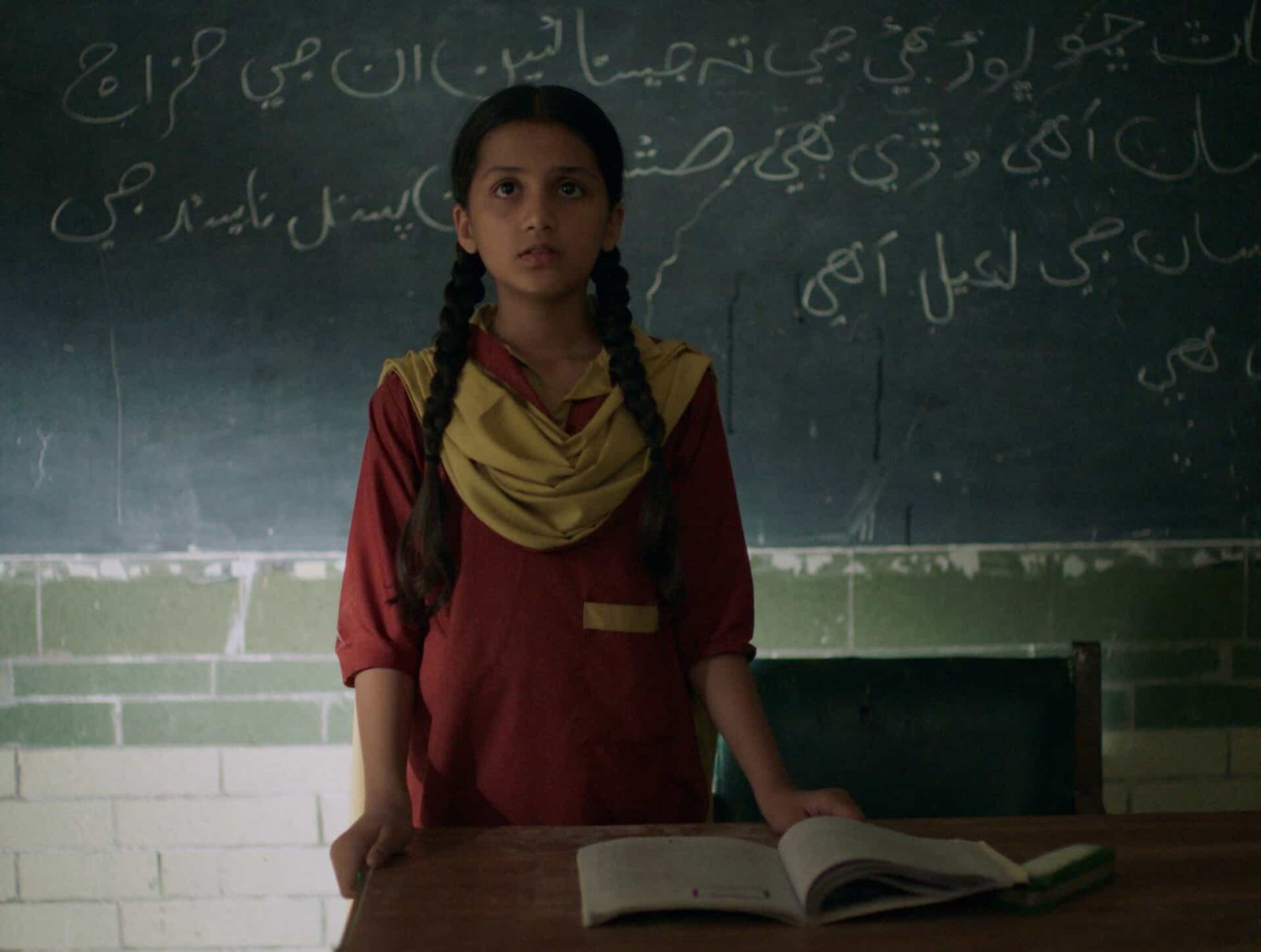
“Ghost School” is a 2025 Pakistani drama written, directed, and produced by Seemab Gul in her feature debut, a project that stems from her background in documentary filmmaking and her personal encounters with abandoned schools in rural Pakistan. The work had its world premiere at the Toronto International Film Festival in 2025, screening in the Discovery section, before continuing its festival run at the Indian Film Festival of Los Angeles. Set in a rural Pakistani village, the story follows ten-year-old Rabia, who discovers that the only school in her community has suddenly been shut down. Rumors quickly spread that the building is haunted, with whispers of a jinn possessing the teacher and cursing the space.
Seemab Gul crafts a work that follows an episodic, almost road movie-like structure, using her protagonist as a way to highlight a number of issues regarding education in rural areas, particularly for girls who find themselves within a highly patriarchal system. At the same time, the critique goes far beyond these restrictions, as lazy and corrupt officials, superstition, and an overall lack of a properly functioning system are portrayed with notable realism. Zamarin Wahdat’s cinematography and Anna Bauer’s music reach their peak in the ritualistic sequence of the boys’ procession with torches, while Nazualiya Arsalan delivers an impressive performance as Rabia. Although some issues do exist, “Ghost School” emerges as a competent piece of cinema that manages to communicate its themes in a way that is both thought-provoking and engaging.
Tenfa by Nihaarika Negi
A hauntingly beautiful if melancholic look at a disappearing culture, “Tenfa” is a remarkable achievement in barely 30 minutes of screentime. Through the story of Delma, a wet nurse who is about to retire after a lifetime of giving birth to babies, writer and director Nihaarika Negi tells the slow-paced story of an isolated valley and its fast-disappearing culture, its dwindling population, and its fading memories. The valley is located somewhere in the Kinnaur district of Himachal Pradesh, at the far reaches of the Indo-Tibetan border, and following deadly landslides caused by large-scale hydroelectric projects, the valley is largely cut off from the outside world.
The three generations of women thus bond over the need to reconnect with the natural environment and remember the old ways. “Tenfa” is full of breathtaking extreme wide shots of the valley, as well as striking low-angle shots of the sun or moon seen through the forest canopy. In such shots the masterful cinematography by Anshul Uniyal proves crucial. Hand in hand with the narrative, these images, along with Peter Lam’s dreamy soundtrack, express the need for connection, especially to the ghost of memories that haunt the forest and elude the three women. Gently but tragically, Nihaarika Negi’s thoughtful, soulful short exposes the sheer cost of progress and how modernity has bound the people in a gathering of absence.
Permanent Guest by Sana Zahra Jafri

“Permanent Guest” is a Pakistani short directed and written by Sana Zahra Jafri, marking her second short project and functioning as a proof of concept for her upcoming feature “Scattered Rain”. Crowdfunded and rooted in the director’s ongoing exploration of social, political, and gender dynamics within South Asian societies, the work continues her focus on the female experience and the often unspoken tensions within domestic spaces. Set in Lahore, “Permanent Guest” follows 26-year-old Fatin, who lives with her mother Yasmeen and is preparing for a neighborhood wedding when their routine is disrupted by the unexpected arrival of Shabeer, an elderly relative who comes to stay for medical tests.
Sana Zahra Jafri crafts a story that thrives on tension, and most of all on the gradual build up of it, with the way the entire setting of the house changes as soon as the guest arrives emerging as one of its strongest traits. At the same time, the presentation of patriarchy in the country reaches one of its peaks here, through the depiction of the main protagonists and their reactions. Jaffar Raza Jafri’s cinematography is excellent, with a number of frames remaining memorable, while Saim Sadiq’s editing allows the story to unfold at a measured pace without either lagging or rushing. Rasti Farooq delivers a compelling performance, effectively portraying a character who tries to bottle up her rage and discomfort, while “Permanent Guest” emerges as an excellent short on all fronts, well shot, directed, and acted.
Lali by Sarmad Sultan Khoosat
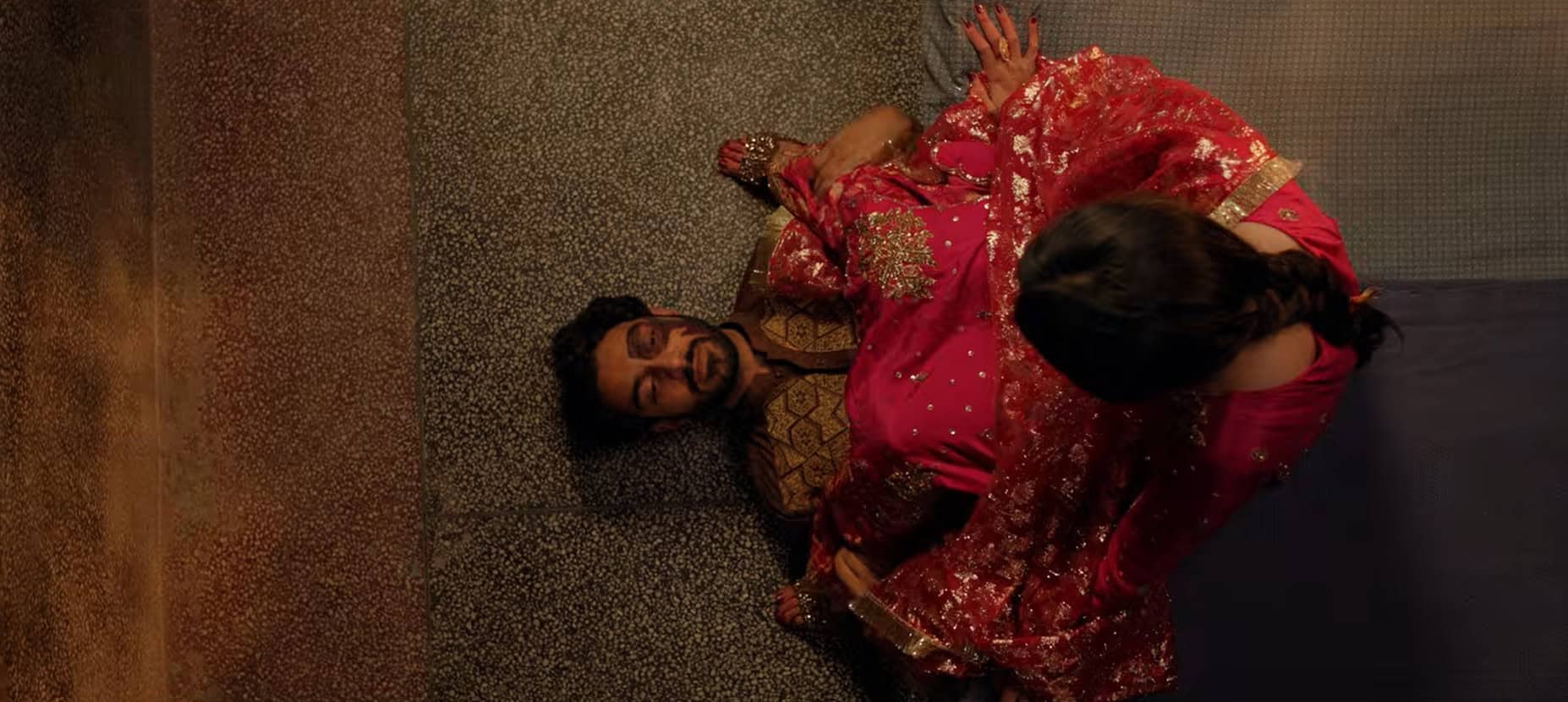
Arranged or not, marriage offers little relief to an introverted young Punjabi metal fabricator, suffocated by a loud, possessive and former singer mother, especially with his face half covered by a birthmark. Thus, when Sajawal is proposed to the nevertheless cute Zeba, known as cursed after three prospective husbands died before their weddings in violent circumstances, there is little room to refuse. Here is the argument for “Lali”, a remarkable tragicomedy, surprisingly uninhibited, as brilliantly shot as it is somewhat dispersed across multiple directions. The film opens on an ecstatic Sohni Ammi, an impressive Farazeh Syed, who leads her son’s wedding ceremony with commanding authority, while nothing could manage to derail the proceedings, not even the bullet fired accidentally into her belly by a clumsy guest.
In light of the vast neighboring film industry, while choosing the theme of marriage so central to Bollywood narratives, “Lali” brings a distinctly singular touch to it. Technically, the movie is flawless. The work of Sarmad Sultan Khoosat and his producer Saim Sadiq, the same team as “Joyland” but in reverse roles, teamed with cinematographer Khizer Idrees, is remarkable: both inventive and refined, with its saturated colours and surprising angles. The film could practically be split into five distinct segments, each with its own tone and genre influences, undoubtedly showcasing the author’s mastery but also undermining its unity and clarity of purpose. That said, “Lali” remains remarkable in many respects, a must-see discovery in Pakistani cinema, a landscape we rarely get to encounter.
Rihanna by Suraj Paudel
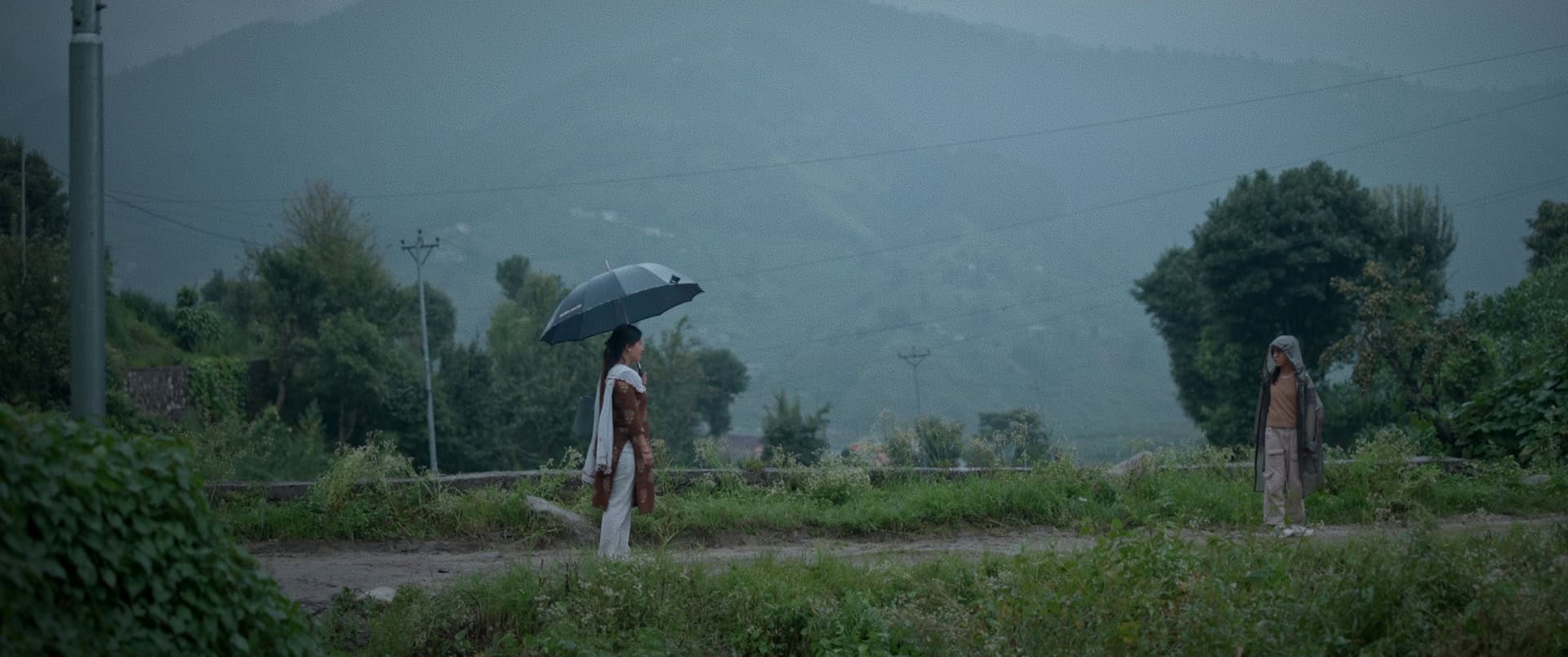
Suraj Paudel is a filmmaker, writer, and editor from Nepal. An alum of the 2022 Busan International Film Festival’s Asian Film Academy, he edited “Lori”, which received a Short Film Special Mention from the Jury at Cannes, and is currently developing the script for his feature “Where the River Runs South,” selected for the Asian Project Market and the Asian Cinema Fund. “Rihanna” is his latest short. The story begins in a classroom, where a teacher is taking attendance. Suddenly, the name that comes up is Rihanna, a 13-year-old girl who has changed her name from Saraswati to that of her favorite idol. Her decision, however, has repercussions throughout her life, as becomes evident as the narrative progresses.
The first thing one notices here is how sharp the dialogue is throughout the 16-minute short, and how effective Prithu Bhatta is in the role of Saraswati when delivering it. Her comebacks are consistently on point regardless of who she faces, although she does go overboard at times, particularly when she accuses her mother of wasting her life. Shrijana Adhikari, in the role of the caring mother, delivers a strong performance, while the chemistry between the two stands out as one of the production’s best traits. Shishir Bishankhe’s cinematography is equally competent, with his framing, particularly in the exterior scenes, being quite impressive. The comments on westernization and the generational gap between parents and children are portrayed eloquently, resulting in a very competent short overall.
Taken together, these highlights from the Indian Film Festival of Los Angeles 2026 reveal a program deeply invested in works that are both socially alert and cinematically ambitious. Whether through social realism, fable, chamber drama, tragicomedy, or coming-of-age comedy, these titles confirm that IFFLA remains an essential platform for some of the most vital voices in South Asian cinema.



