
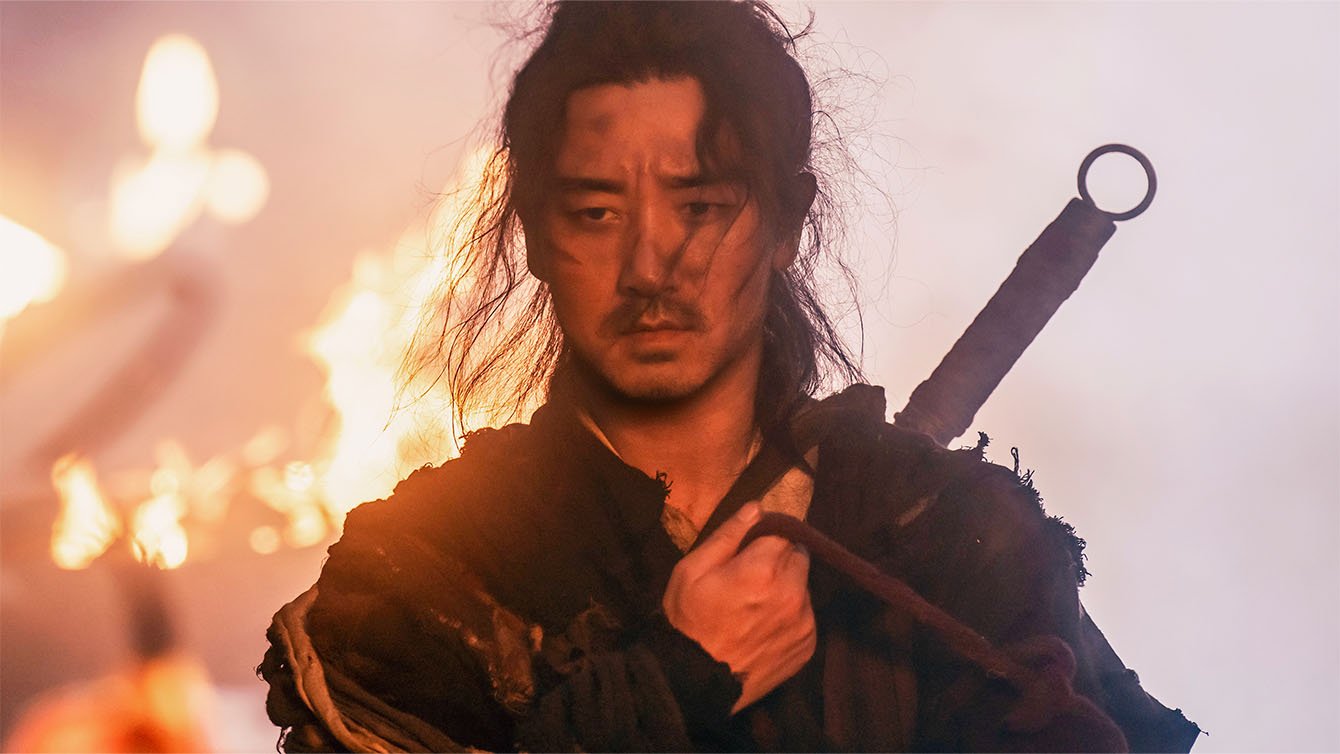
Directed by Liu Wenpu and starring a slew of top-notch talent, “The Butcher’s Blade” is the kind of cheesy, hard-hitting martial arts throwback that this kind of genre has been employing effectively as of late. Films like “The Grandmaster of Kung Fu,” ”Twilight of the Warriors: Walled In,” and “The Tai Chi Master” are just some of these old-school genre efforts released in recent years, and now this can join the list as this action-packed Wuxia crime drama debuts on Digital May 12 from Well Go USA Entertainment.
When thousands in disaster relief funds disappear, upstanding constable Xue Buyi (Liu Fengchao) is framed for the disappearance. Desperate to prove his innocence, he takes a job with a secret squad, including Li Zhen (Yuan Fufu) and Huang Shining (Chunyu Shanshan), whose only goal is to serve and protect those who can afford to pay. Forced to choose between his integrity and his freedom, Xue decides the only path forward is to fight back and hope that exposing these dangerous agents of chaos will be enough to set him free.
“The Butcher’s Blade” is a quintessential old-school martial arts throwback. Its straightforward narrative exists primarily to bridge the gap between high-octane fistfights, and it does so with surprising efficiency. The plot kicks off by casting Xue as a convenient scapegoat for a corrupt government infraction he refused to facilitate. This setup effectively forces him to infiltrate the halls of power to clear his name, naturally introducing the supporting cast along the way.
The tension between Xue and Li Zhen regarding the disaster relief office provides the necessary friction to spark a mystery over stolen funds. This conflict leads Xue to the new teacher, Huang Shining, who acts as a narrative anchor at the staff center. While the motivations are simple, they successfully propel the characters from one set piece to the next without wasting time.
The real strength of “Blade” lies in its exhilarating confrontations. The film utilizes a roster of talented performers and nameless guards to stage impressive battles across city squares and temples. These sequences aren’t just filler; they reinforce the story beats while showcasing top-tier choreography. Two standouts include a scrap with a government spy amidst hanging laundry and a creative swordfight in a fireworks shop where the merchandise detonates around the combatants. The finale maintains this momentum, delivering thrilling weaponry work that ties back to the film’s earlier setups.
However, the film’s “action-first” mentality is a double-edged sword. The primary drawback is a distinct lack of depth. Without subplots to break up the investigative dialogue, many characters feel like placeholders. We rarely learn anything about them beyond their names, making it difficult to feel emotionally invested in their fates. Additionally, the sheer number of minor court figures can make it difficult to track specific allegiances.
Ultimately, “The Butcher’s Blade” is a one-note but highly enjoyable genre piece. It’s a serviceable throwback that excels exactly where it needs to: the action. While it may feel shallow for those seeking a complex narrative, fans of traditional kung-fu cinema will find plenty to appreciate in its hard-hitting execution.



