
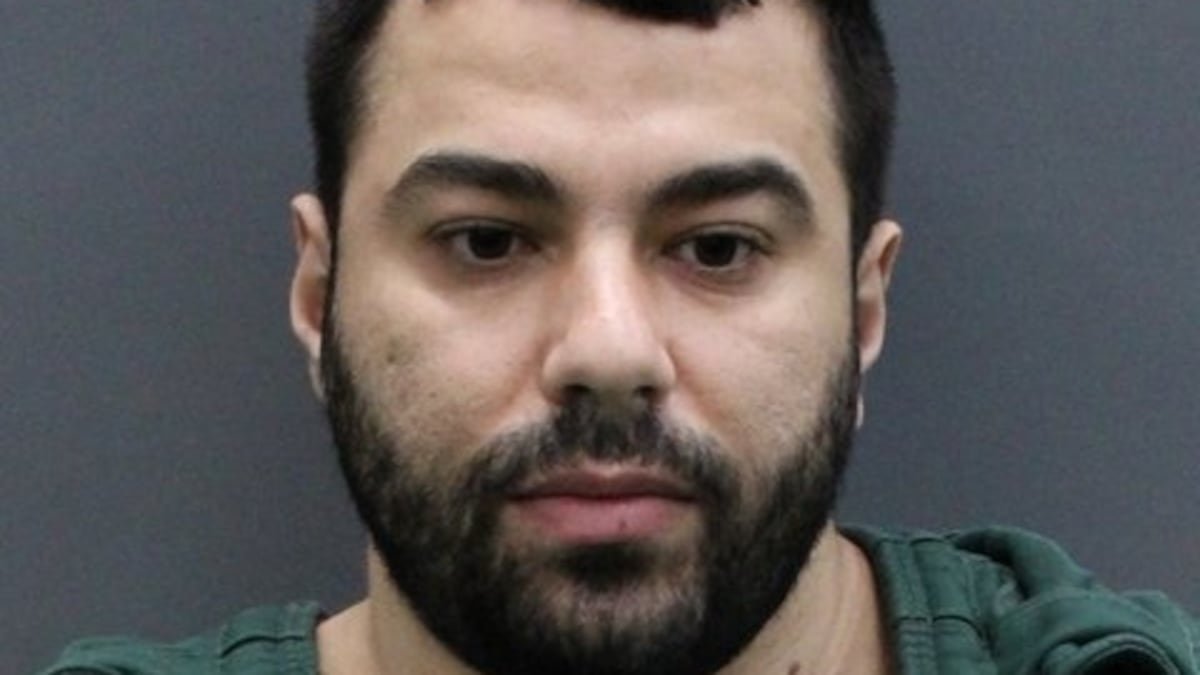
Prosecutors intend to seek the death penalty for the man accused of murdering two University of South Florida graduate students, Hillsborough State Attorney Suzy Lopez’s office announced Friday.
Hisham Abugharbieh, 26, is accused of stabbing Nahida Bristy and Zamil Limon to death before disposing their bodies in trash bags. The friends went missing on April 16.
It took a week for Limon’s body to be found in a trash bag on the north side of the Howard Frankland Bridge. A kayaker found Bristy’s body in the water nearby a few days later.
In a news release, Lopez’s office said its decision to seek the death penalty was based on three aggravating factors: that the killings were committed in a “cold, calculated and premeditated manner,” that they were “especially heinous, atrocious, or cruel,” and that they occurred during the “same criminal episode.”
If Abugharbieh is convicted as charged, jurors must vote by at least 8-4 to recommend the death penalty. If they do, and a judge agrees, Abugharbieh would still be entitled to appeal his conviction and sentence, which could take years.
The state’s notice comes after Lopez announced that she is working with Attorney General James Uthmeier to investigate whether ChatGPT and its developer, OpenAI, can be held responsible as an accomplice to the murders. Abugharbieh consulted with the platform and asked it various questions about how he could dispose of the bodies without attracting suspicion, court records state.
Among the questions he asked the program: What happens if a person is “put in a black garbage bag and thrown in a dumpster?”
ChatGPT responded that “it sounds dangerous,” according to the record. A follow-up message asked, “How would they find out?”
A day before the disappearances, Abugharbieh asked the program, “Can a VIN number on a car be changed?” and “Can you keep a gun at home without a license?” court records state. The program’s responses are not detailed in court records.
Abugharbieh and Limon had lived together in the Avalon Heights apartments, an off-campus complex where many USF students live. Abugharbieh was not enrolled as a student at the university.

Limon and Bristy, both 27, were part of the Bangladesh Students Association, a group of students from abroad who bonded like family at USF, attending events and breaking bread together, friends said. Bristy had been pursuing a doctoral degree in chemical engineering, and Limon had been pursuing a doctoral degree in geography, environmental science and policy.
When Hillsborough deputies began interviewing people who lived at Avalon Heights, they noticed Abugharbieh had a cut wrapped in a bandage on his left pinky finger. He told them he’d injured himself while slicing onions.
A third roommate who lived with Limon and Abugharbieh provided the first big break in the case when he told detectives that the apartment’s doormat and some other items were missing. Detectives went to the complex’s dumpster, where they found Limon’s glasses, student ID, wallet and clothes.
At that point, the sheriff’s office announced that Limon and Bristy were considered endangered. Abugharbieh was a person of interest in the case, and the sheriff’s office had placed him under surveillance.
Detectives got a search warrant for the apartment and used a forensic blood detector to find what had been a large pool of blood in the kitchen that continued into Abugharbieh’s bedroom, records state.
Detectives located further records and video footage showing Abugharbieh’s car, a Hyundai Genesis G80, being driven from the USF area across the Courtney Campbell Causeway and through Clearwater and the Sand Key area before returning to Tampa late that night, records state.
Abugharbieh told investigators the missing students had not been in his car. He denied any involvement in their disappearances and told detectives he’d gone to Clearwater to look for fishing spots, records show.
Investigators found that Limon’s cellphone signal pinged to locations on the causeway and in Clearwater at the same time before the signal dropped.
Abugharbieh’s story changed when detectives told him about Limon’s phone records. Abugharbieh then said Limon asked to be driven there with Bristy, and he’d obliged. He said he’d dropped them off and left.
Abugharbieh’s phone records indicated he’d made a second trip across Tampa Bay after midnight on April 17. The path of travel spanned the Howard Frankland Bridge and into north St. Petersburg.
He was later booked in jail on charges that included battery, false imprisonment, tampering with evidence, failure to report a death and unlawfully holding or moving a dead body. Two counts of first-degree murder were later added, along with additional counts of evidence tampering, failing to report a death and unlawfully moving a body in connection to Bristy’s remains.
At a news conference announcing the identification of Bristy’s remains last week, Hillsborough Sheriff Chad Chronister described Abugharbieh as “elusive” and “deceptive.”
On April 24, about the same time as Limon’s body was found on the bridge, Abugharbieh’s family called the sheriff’s office to report a domestic battery incident involving him and his sister at the family’s home in the Lake Forest neighborhood, off Bruce B. Downs Boulevard in North Tampa.
Deputies went to the home, and Abugharbieh refused to come out. Hours later, about the time a SWAT team decided to enter the home, he came out and surrendered, Chronister said.
“I think the concerning part is that he was nonreactive,” Chronister said. “He was callous and showed zero emotion, even when we confronted him with information that we had.”
The university planned to honor Limon and Bristy with posthumous degrees at a doctoral commencement ceremony Friday morning.
Times staff writers Dan Sullivan, Tony Marrero and Lucy Marques contributed to this report.



