
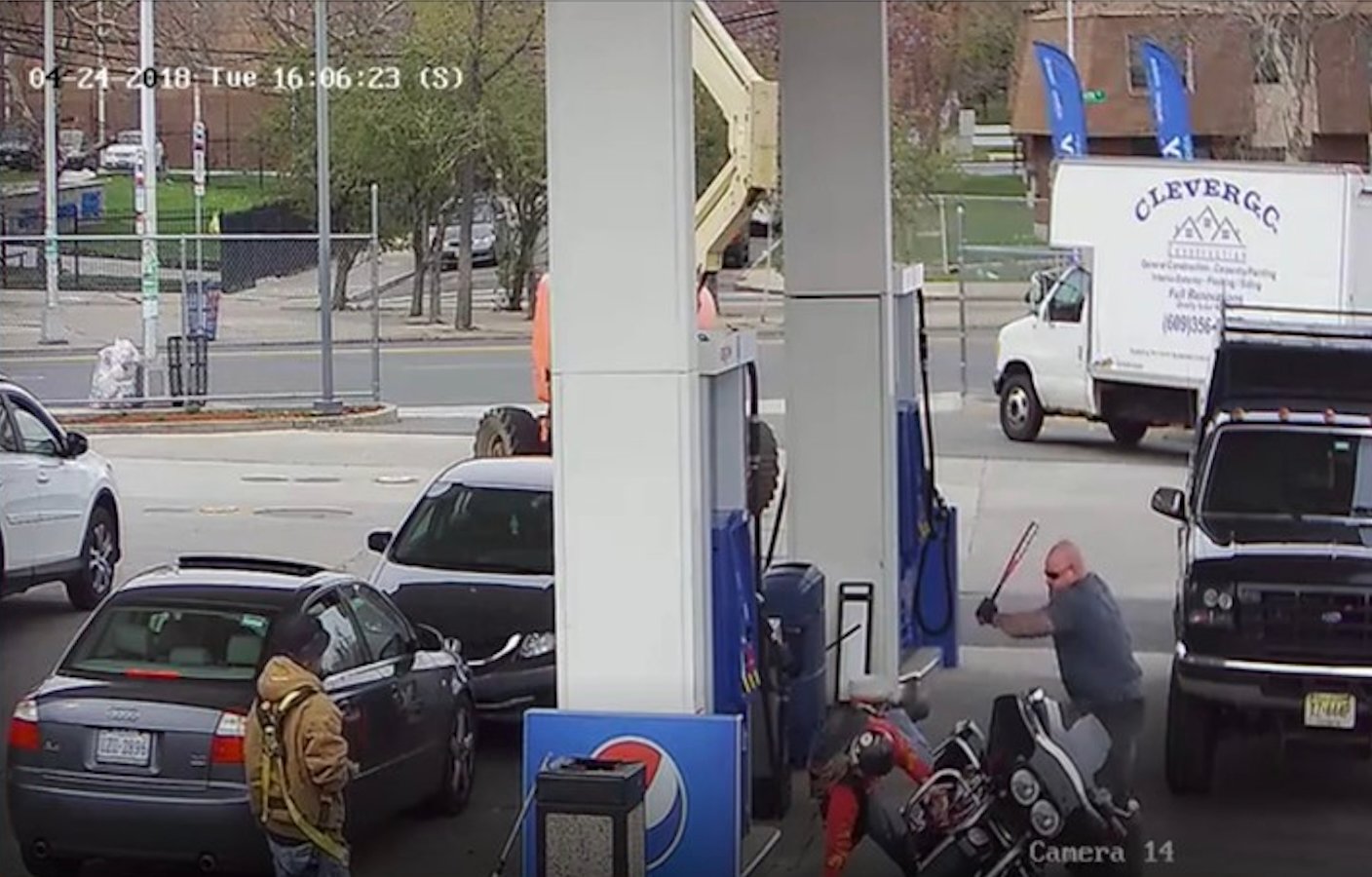
Organized crime continues to thrive in New Jersey even though shootings and other major crimes are down, with neighborhood-based street gangs, drug traffickers, outlaw motorcycle clubs, and prison and jail gangs now typically more numerous and active than the mob, law enforcement officials said at a public hearing Tuesday in Trenton.
More than a dozen agents and investigators testified at the Statehouse for three hours before the State Commission of Investigation about how organized crime has evolved in the Garden State in recent years.
Mafia groups like La Cosa Nostra are still active with families based in Elizabeth (DeCavalcante), Philadelphia (Bruno-Scarfo), and New York City (Genovese, Lucchese, Bonanno, Colombo, and Gambino) operating in New Jersey, but they no longer define organized crime here, said Bruce P. Keller, the commission’s executive director.
Individual criminals have found it can be more rewarding to work as part of a team to successfully pull off illegal money-making schemes like gambling, loansharking, extortion, sex and labor trafficking, and fraud, he added.
Social media and technology advances have helped street gangs and other structured criminal groups both expand their ranks and carry out crimes like credit card theft, identity theft, phishing, and witness intimidation, Keller and others who testified said.
“Just as the generation of children raised in recent years have become known as digital natives, so too have organized criminal gangs become digitally sophisticated,” Keller said.
Organized crime groups also increasingly use modern digital conveniences like Venmo and Paypal — or personal tablets for those behind bars — to facilitate their crimes, law enforcement officers testified. That’s been an especially lucrative strategy for crafty car thieves, who use sites like Google’s Street View to scope out potential targets, said Sgt. Sean Lake of the Newark Police Department’s gang intelligence unit.
“They use applications such as Zillow, and they look up where the million-dollar houses are. Then they’ve gone on Google Maps, and literally they could walk down the street on Google Maps and see what cars were parked in the driveway over the last few months,” Lake said.
Those who gave testimony identified several recent trends that have kept investigators scrambling to keep up.
The number of outlaw motorcycle gangs in New Jersey has doubled in the past decade, with about 16 today compared to eight or so identified in 2018, according to testimony.

County jails and state prisons have increasingly become places where gangs actively recruit new members, said Edwin Torres, a senior criminal intelligence officer at the commission. While staff at many facilities work hard to identify and thwart gang activity, most facilities have far fewer correctional officers than gang members, making the fight against such activity a losing “numbers game,” he added.
“It is absolutely a monumental problem in the correctional system,” Torres said. “It’s almost like a Whack-a-Mole — you keep trying to pat down one problem and another one will pop up.”
Morris County Sheriff James Gannon told commission members that about 15% of people incarcerated at the Morris County Jail, which also holds people from Sussex and Somerset counties, has a gang affiliation.
Gangs that used to be bitter rivals now increasingly work together to achieve their illicit ends, and those who join are getting younger and younger, officers testified.
Lt. Nicole Bradley of the Hudson County Prosecutor’s Office’s gang intelligence unit testified that her office arrested a 14-year-old girl for murder last year.
“These kids come off into the gangs at 12, 13, 14, 15 years old,” added Edwin Santana of the Morris County Sheriff’s Office’s gang intelligence unit. “They didn’t have any sort of guidance or safety, but they found it in the gang, unfortunately.”
Investigators also warned organized crime groups probably are working now to capitalize on FIFA’s World Cup, the five-week, global men’s soccer tournament that will play eight matches starting next month in East Rutherford.
Martha Nye of the New Jersey Attorney General’s Office said officials expect schemes will include counterfeit merchandising, sex and labor trafficking, illegal gambling, money laundering, illegal drug trafficking, cyber fraud, and coordinated theft efforts.
“Major international sporting events attract not only millions of fans and billions of dollars in commerce but also organized criminal networks looking to exploit enormous crowds, global attention, and the rapid flow of money,” said Nye, deputy first assistant attorney general.
Those who testified suggested several solutions policymakers should embrace to crack down on organized crime.
Torres pointed to two bills now in the Statehouse pipeline that would make participation in a street gang a crime and heighten penalties for anyone who recruits people into gangs.

Gannon called on policymakers to review bail reform to make sure repeat offenders aren’t slipping through the cracks and the system takes a more “balanced approach” to pretrial detention.
“We must ensure that risk assessments are accurate and consistently applied, repeat offenders are appropriately addressed, and violent offenders are not released when they pose a clear threat. Public safety must remain a top priority,” Gannon said.
Tracking repeat offenders would be easier if police, prosecutors, parole officials, and others partnered more on investigations and did more information-sharing, said John Havens, a special agent with the Federal Bureau of Investigation.
“Many times, a significant gang member or highly violent gang member will be arrested, and — say it’s a stolen vehicle charge or something like that — you then progress through the system, and the case goes to prosecutors that may not know exactly who they’re dealing with,” Havens said. “It’s getting lost in the noise, the significance of who this person is and what they do.”
Others urged state and local policymakers to expand staff and intelligence-gathering in prisons and jails to thwart gang recruitment and activity and prosecutors to undertake more racketeering investigations and prosecutions aimed at taking down organized crime bosses.
The hearing was the commission’s first since April 2024, when it heard testimony about ghost guns and repeat gun offenders.
The agency, which probes public corruption and organized crime among other things, made headlines last fall when Senate President Nicholas Scutari proposed partially merging the state Comptroller’s Office into the commission. Critics saw the move as an attempt to weaken government oversight and kneecap the comptroller, which has in recent years taken on far more investigations than the commission.
Keller took the helm at the commission last July. Its previous director resigned after the Asbury Park Press reported she had a second full-time out-of-state job.
In his opening statements during Tuesday’s hearing, Keller tapdanced around those controversies, ticking off a list of the commission’s recent doings and promising big things ahead.
“SCI continues to focus on exactly what the Legislature intended at the time of its creation — independent investigations dedicated to rooting out corruption and other corrosive problems in all of their forms,” Keller said.
Tuesday’s hearing largely focused on gangs and other organized crime activity in Paterson, Newark, Jersey City, and other parts of North Jersey. The commission plans another public hearing this fall on organized crime in South Jersey.
GET THE MORNING HEADLINES.



