
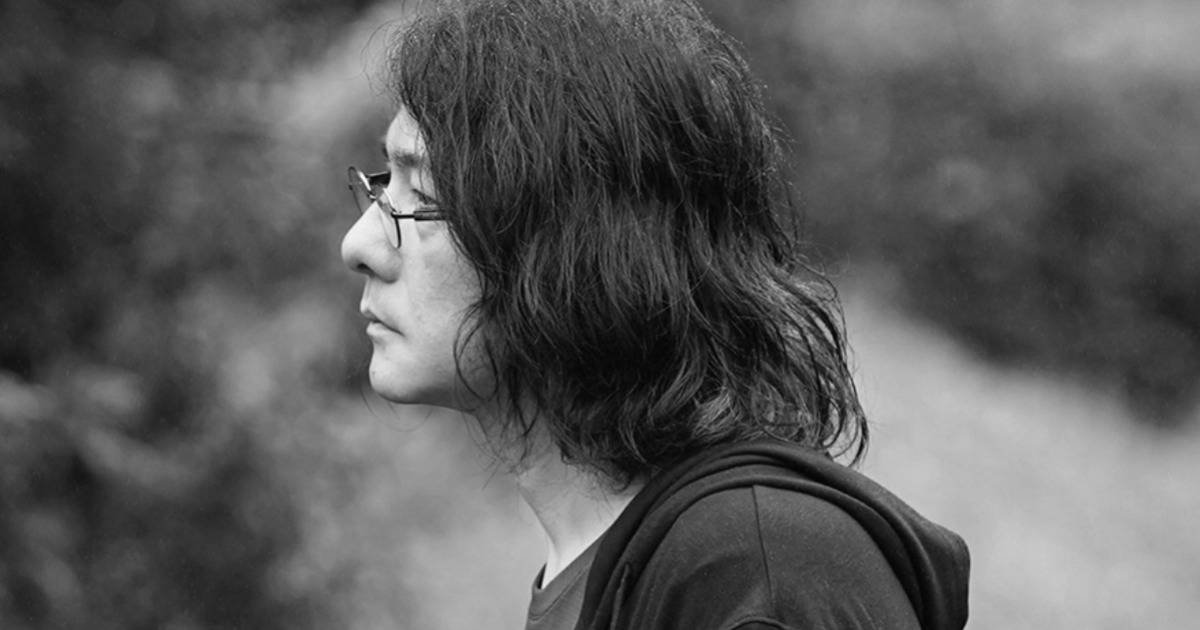
Shunji Iwai remains one of the most influential voices in contemporary Japanese cinema. With films such as “All About Lily Chou-Chou”, “Swallowtail Butterfly” and especially “Love Letter”, Iwai developed a deeply emotional and visually distinctive style that blends memory, music, longing and the fragile inner lives of his characters. Over the decades, “Love Letter” in particular has become one of the defining Japanese films of the 1990s, continuing to resonate with audiences and filmmakers alike around the world.
In conjunction with the film’s recent 4K restoration and revival screenings at Metrograph — where the film was described as “one of the most beloved directorial debuts of the 1990s” — we spoke with Iwai about memory, loneliness, social media, and the enduring legacy of a film that continues to captivate new generations more than thirty years after its original release.
“Love Letter” has now lived with audiences for more than 30 years. Does “Love Letter” mean something different to you today than it did back in 1995?
When I made it, I never imagined that people would still be watching it 30 years later. To be honest, I don’t think I was thinking about 30 years into the future at all back then. Most films have a very short shelf life. New films continue to emerge, and older ones gradually disappear. So the fact that “Love Letter” continues to find young audiences today feels almost miraculous to me. I’m very grateful for that.
Your films — including “Love Letter” — often blur the boundaries between memory, fantasy, and reality. Were you interested in the way people reconstruct the past rather than remember it accurately?
I would say that memory is one of the biggest themes in both my work and my life.
I have a memory from when I was a child. I didn’t like milk growing up, and my mother once said to me, “But you were breastfeeding just recently.” I think I was around three years old at the time, and I remember being frightened by the realization that I couldn’t remember something that had happened only a year earlier. It made me think about how quickly human beings forget things.
I moved around a lot as a child and attended different schools, and I became deeply afraid that I would eventually forget the people and places from those earlier parts of my life. It almost became a kind of phobia. Since then, I’ve always been fascinated by the question: What exactly is memory?
That’s why filmmaking felt so natural to me. Cinema is a medium that records and preserves memory. I think life, death, and memory are probably the three biggest themes in both my films and my life.
Check the review of the film
Aside from memory, letters themselves obviously play a central role in “Love Letter.” They almost feel like conversations with memory itself. What attracted you to letter writing as a cinematic form — especially today, when handwritten letters have largely been replaced by smartphones and social media?
In my generation, letter writing was still a very normal form of communication. I exchanged letters with friends all the time when I was younger. But what fascinated me was the idea of complete strangers communicating through letters. At the time, that felt almost fantastical to me.
I wanted to make a story about two people who didn’t know each other at all, yet slowly formed a connection through writing. Back then, that kind of interaction was extremely rare.
What’s interesting is that it didn’t even take 30 years for the world to change completely. About ten years after “Love Letter,” social media and the internet made it entirely normal for strangers to communicate with each other every day. In a way, I sometimes feel that the mid-1990s may have been the last moment when you could naturally make a contemporary film centered around letter writing.
So the fact that young audiences can still watch the film today and be moved by it makes me very happy — although it also feels a little strange.
It’s interesting, though, because younger generations now seem to be rediscovering things like letter writing or vinyl records — things that once felt outdated or anachronistic suddenly seem meaningful again.
Yes, that is very interesting to me.
When I was younger, many people kept diaries, but those were deeply private things that you would never show to anyone else. Today, people write about their daily lives publicly for audiences they don’t even know. I honestly think that’s something humanity has never experienced before.
What fascinates me is not necessarily the invention of social media itself, but rather what it reveals about human beings. In everyday life, people rarely talk to strangers on trains or in elevators. And if you overhear somebody’s conversation, you don’t suddenly interrupt and tell them they’re using a word incorrectly.
But online, people do that constantly. They insert themselves into conversations they were never invited into. In a way, that’s frightening. But it’s also deeply human.
I sometimes think that if you gave social media to someone from a thousand years ago, they would probably use it in exactly the same way we do today. There’s something very strange — and very revealing — about human nature in that.
Music also plays an enormous role in your films. Do you see music as a way of expressing what characters themselves cannot say?
I don’t think of music as something explanatory or didactic. For me, music functions more as a harmonizing element within the film. I think about it in the same way that I might think about snow in a scene, or a vast landscape, or the ocean. Sometimes a scene simply requires those elements in order to fully exist emotionally.
Music works in a similar way. The harmony, melody, and atmosphere created by music are essential to expressing what I want the audience to feel.
Many younger filmmakers and audiences now see “Love Letter” as one of the defining Japanese films of the 1990s. Do you ever think about the film’s legacy?
I’m very thankful for it, although I honestly don’t fully understand why the film has endured in the way it has.
For me, filmmaking has always been quite a lonely process — even back when I was a university student. Of course, there are collaborators around you, but discovering the core of a film — its spirit, its emotional center — is something deeply personal. It feels almost like the work of a philosopher confronting an idea alone.
In my case, I happened to enjoy that loneliness. I enjoyed spending time thinking carefully about stories and images and emotions.
So the fact that “Love Letter” is still loved after 30 years truly feels miraculous to me. And beyond that, the film also allowed me to continue making films throughout my life. Many people don’t get that opportunity.
That’s why I feel grateful that I struggled through the process of making “Love Letter.” It ultimately gave me the career — and the life — that I have today.
Thank your for the interview.



