
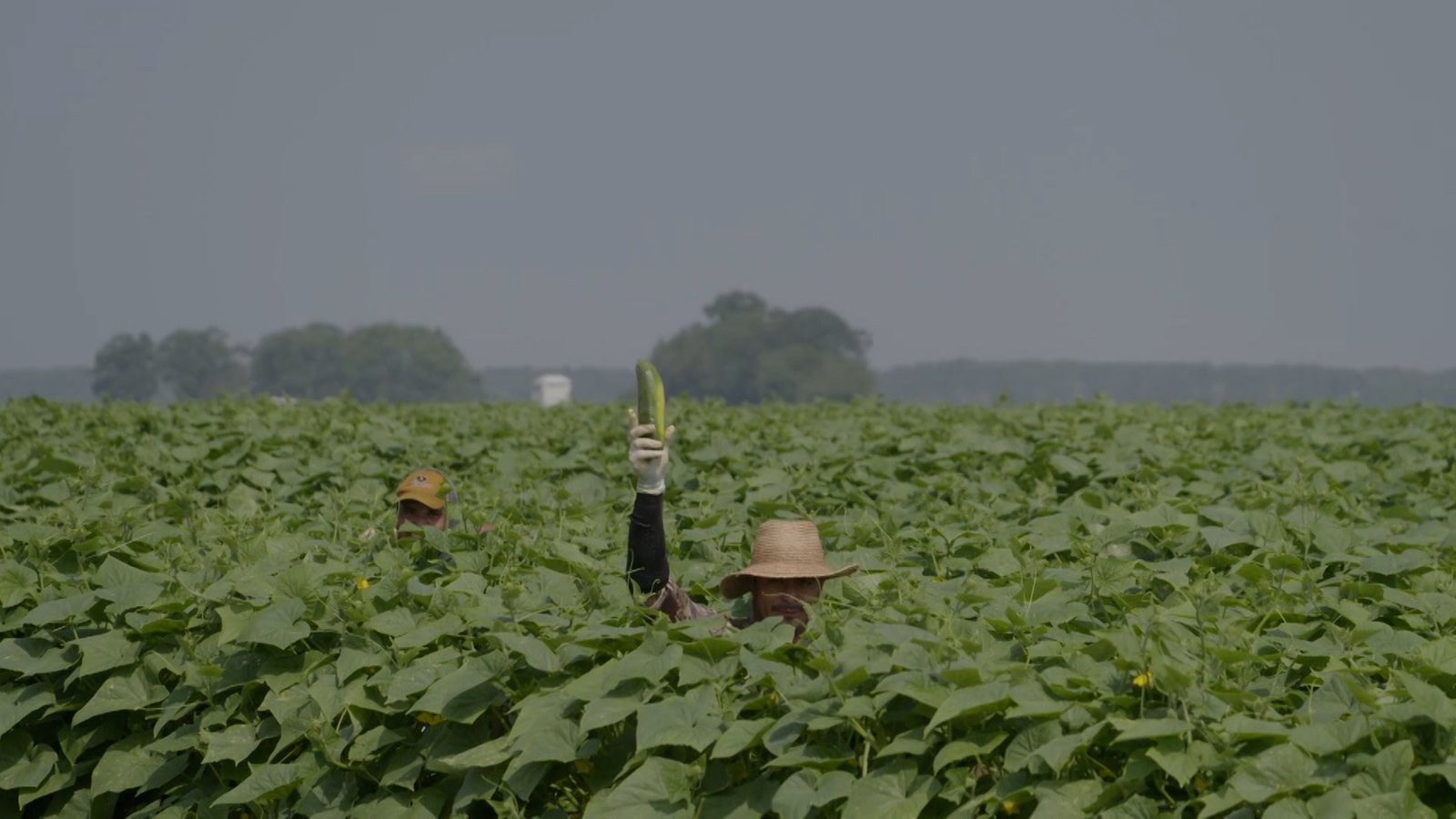
 From fuel to fertilizer, significant cost increases triggered by President Donald Trump’s ongoing war in Iran are starting to take a toll on New Jersey farms.
Farm diesel prices have surged nearly 50% since the military conflict began in late February, according to a recent report from the American Farm Bureau.
Nitrogen fertilizer prices are up by more than 30%, with the relatively smaller farms in the Northeast getting hid particularly hard, the report said.
In New Jersey, that double price shock is putting a “significant financial strain” on farmers, said Liz Thompson, executive director of the New Jersey Farm Bureau.

As a result, some farms are seeing their already thin profit margins begin to disappear, while others may be going deeper into debt to keep operations on track, Thompson said during a recent legislative hearing in Trenton.
“Although the effects vary by commodity, nearly every part of New Jersey agriculture has been affected by fuel and fertilizer (costs) because these are necessary inputs,” she said.
The hearing came as New Jersey policymakers are exploring ways to help prop up the farming industry in the wake of the war. Some are calling for a rescue package or some other form of emergency aid for an industry that boasts nearly 25,000 employees statewide.
The financial fallout from the war, though, is extending far beyond just traditional farms as economists warn it is triggering price inflation, including increased food prices paid by consumers.
In New Jersey, the war’s impact is also being felt at golf courses up and down the state, and golfers are facing higher fees as a result.
“When it comes to recreation, it’s the end user who ends up spending more money,” said Maureen Sharples, executive director of the Golf Course Superintendents Association of New Jersey.
But it’s not just the impact of the war that’s dealt a blow to the state’s farming industry this year.
Farmers have also had to contend with volatile spring temperatures, including a major freeze event in April that caused hundreds of millions of dollars of damage, according to Gov. Mikie Sherrill’s administration.
First there was a warm period that saw temperatures rise above 90 degrees in some places, causing many crops to flower early. And that was followed by a cold spell that brough low temperatures dipping below 30 degrees.
The state’s fruit growers were hit particularly hard, industry officials said.
In response, Sherrill issued a state of emergency. She’s also formally requested the Trump administration issue a disaster declaration that would make New Jersey eligible to receive federal aid.
“The full impact from this event is yet to be known, but what is certain is that this event resulted in widespread damage across our state rather than isolated hardship,” Sherrill wrote in a letter sent to U.S. Agriculture Secretary Brooke Rollins.
“Early information from growers suggests that some farmers are experiencing losses approaching or surpassing ninety percent,” the letter said. “In several regions, these losses may be season ending for key fruit crops.”
While industrialization and heavy development have eaten into the vast farming landscape that once earned New Jersey its “Garden State” nickname, the state’s agriculture industry still generates roughly $1.5 billion in product sales annually, according to U.S. Census data.
Several New Jersey counties, including Burlington, Hunterdon, Salem, Sussex and Warren counties, still boast tens of thousands of acres of farmland within their respective borders.
State taxpayers have also made major investments in farmland preservation in recent decades, to both sustain the remaining farm businesses and to help stave off development pressure that causes many farmers to cash out and leave the industry.
Yet even before the war, New Jersey’s farmers were facing some of the highest operating costs in the nation relative to their peers in other states, said Brian Shilling, director of the Rutgers Cooperative Extension.
These include nation-leading property taxes, but also high labor costs, which eat up more than 30% of a typical farmer’s production overhead, Shilling told members of the Assembly Agriculture and Natural Resources Committee during the recent hearing.
“Highest-in-the-nation by far, and our No. 1 cost category,” Shilling said of the state’s agriculture labor costs.
After taking testimony on the impact of the rising fuel and fertilizer costs, the committee approved legislation seeking to enhance support for bulk purchasing by farmers. The legislation was sought by the state’s Department of Agriculture as a way to help reduce farmers’ supply costs.
Lawmakers are also being encouraged to work with industry leaders to find other ways to help New Jersey’s farms become more efficient as they face cost pressures that are unlikely to ease anytime soon.
“We can’t affect global prices of fertilizer, we can’t affect fuel prices, we can’t really opt to pay less than a minimum wage — even though we’re paying far more than that for labor,” Shilling said. “We have to look at efficiency.”
This story is made possible in part by the Corporation for Public Broadcasting, a private corporation funded by the American people.



