
The pressure couples, but particularly women, feel in patriarchal societies to bear children is a concept repeatedly explored in cinema, across Asia as a whole. In “Shamsiqamar”, Nusrat Husanov places the concept within an Uzbek setting, while adding the issue of Down syndrome, which makes the whole topic even more dramatic.
“Shamsiqamar” follows Saodat, a talented mathematics teacher whose life has long been marked by the pain of infertility. When she finally learns that she is pregnant, her world is filled with joy, hope, and the promise of a long-awaited new beginning. However, this happiness is soon shaken when doctors detect signs of Down syndrome in her unborn child, turning what should have been a moment of celebration into the beginning of a painful emotional and moral struggle.
Asliddin, her husband, Rahmat, her mother-in-law, and even the doctors urge her to terminate the pregnancy, convinced that the child will become a burden and destroy her future. As a result, Saodat finds herself surrounded by pressure, prejudice, humiliation, and constant reproach. Even her own home, which should have been a place of comfort and protection, becomes a battleground where she is forced to defend both her choice and the life growing inside her. She, however, wants to keep the baby and is willing to fight anyone for her decision.
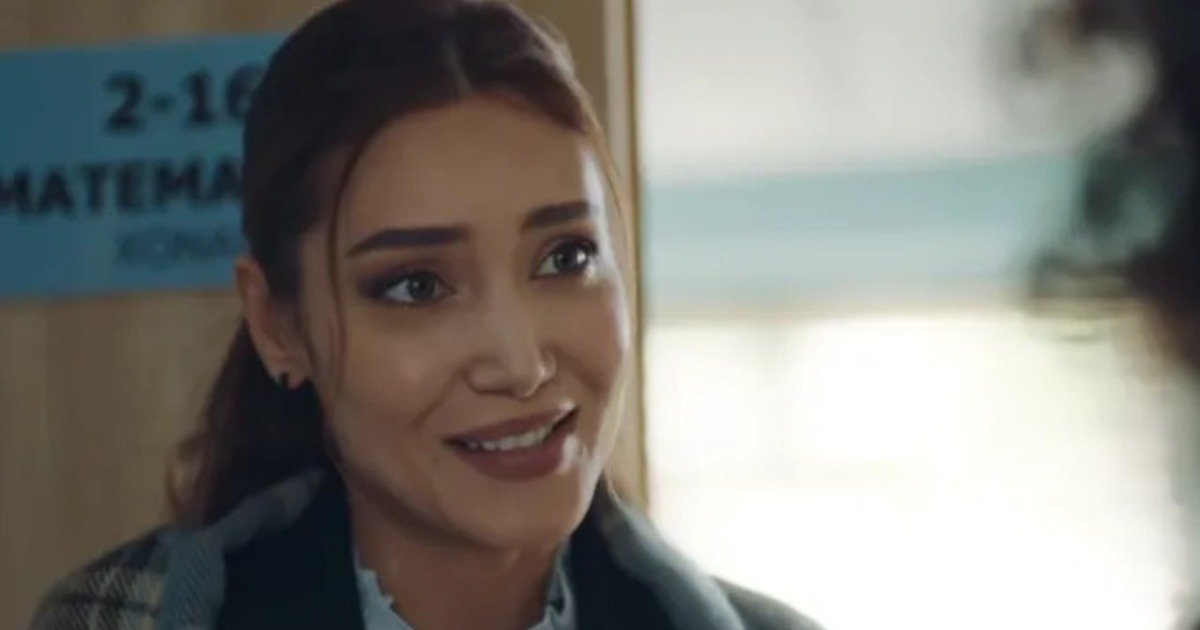
Allow me to start with the negative. Yulduz Rajabova, although convincing in the rather demanding role of Saodat, does look too beautiful for a math teacher, since her whole appearance is more fitting to a model than an educator. Secondly, the overall cinematic approach, and particularly the music video scenes, as well as the style of the visuals and sound, point more towards a TV production, although the movie is not stripped of cinematic elements. Lastly, the script, particularly when the story turns around, does become somewhat far-fetched, with the “awful doctor” sequence towards the ending being indicative.
“Shamsiqamar”, however, also boasts a number of traits. The struggle of a woman against all odds adds a very appealing sense of drama to the story, essentially since her “opponents” seem to be mirroring different concepts of Uzbek society. Her mother-in-law represents patriarchy, the doctor the health system, while the students and teachers in her school occasionally reflect the educational system. As a whole, they also stand for society itself, with the critique here being as pointed as it is realistic.
The clashes themselves are also quite appealing to watch. The one between Saodat’s husband and his mother, the one between her and the female doctor in the hospital, and the one between her and her students, and subsequently the faculty, provide very appealing focal points. Furthermore, the fact that some people actually want to help her, as in the case of her sister-in-law, and that some of the protagonists eventually exhibit a change of heart, grounds the story in reality. This approach prevents it from becoming an unrealistic one-against-all movie.
Lastly, the presentation of the lives of people with Down syndrome, including both the issues and the benefits for them and their parents, is eloquently handled. At the same time, this is a comment that will definitely raise some debate, particularly since Nusrat Husanov does not shy away from communicating his opinion.
The cinematography is a bit too polished, while the focus on the beauty of the protagonist, through many close-ups, is quite intense. In the end, though, it does not really create any issues, and the comments and story are presented adequately in visual terms. The editing results in a mid-tempo rhythm that allows the story to unfold without rushing or lagging, although the math Olympiad concept could have been presented a bit better.
Yulduz Rajabova is convincing in the role of Saodat, with the way she becomes a victim but still strives to fight against a fate dictated by others, mostly her husband and those around him, being one of the best traits of the movie. Her performance carries much of the drama, particularly in the scenes where Saodat is forced to defend a decision that everyone else tries to take away from her.
“Shamsiqamar” has its issues, but the basis of the story, the charisma of Rajabova, and the overall comments allow it to move beyond its shortcomings, resulting in a movie definitely worth watching.



