
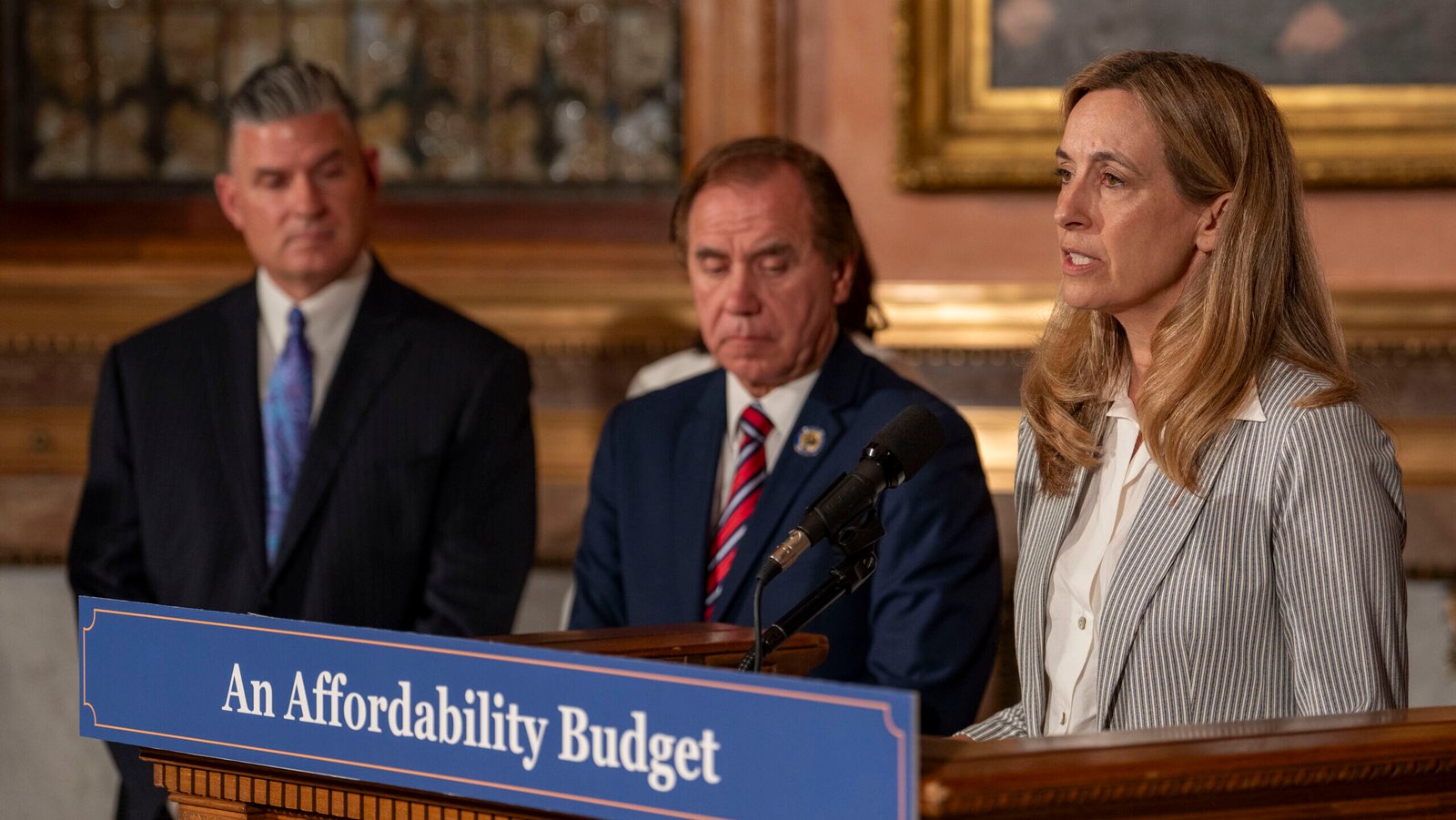
 Gov. Mikie Sherrill and lawmakers plan to spend a record amount of state funding for direct property tax relief, money to homeowners that comes on the heels of the latest big increase in New Jersey’s notorious annual local levies.
In the face of that cash infusion, though, many senior homeowners are being cut from the Stay NJ relief program as government itself tightens spending.
Full funding for the state’s popular Anchor relief program survived in the budget for fiscal year 2027 enacted last week by Sherrill and fellow Democrats who control the Legislature. The latest annual allocation for Anchor is more than $2 billion in total dollars, though the next round of benefits will be distributed at their current level.
That means inflation will continue to erode the true value of Anchor benefits, which have ranged from $450 to $1,750 for the last several years, depending on age and residency.

Meanwhile, lawmakers failed to carry a bipartisan push to expand property tax relief for renters before the June 30 budget deadline. New Jersey tenants, studies show, face an especially high cost burden compared to their counterparts in other states, and typically without the financial safety net of owning property. New Jersey renters qualify for $450, the lowest level of state-funded Anchor benefits.
It is a mixed bag for Sherrill’s first budget as it addresses housing affordability concerns. Some have faulted Sherrill for not delivering more for everyday New Jerseyans battered by rising expenses.
Critics include many Republicans who say they expected more from a governor who has preached affordability since her January inauguration in Newark.
“Our seniors counted on property tax relief and will be, again, appalled at this budget,” Assemblyman John Azzariti (R-Bergen) said as lawmakers debated Stay NJ program changes on the Assembly floor last week.
$10,570 in taxes
The average New Jersey local property tax bill last year rose $475, according to state data, to help fund services like K-12 public schools and police and fire departments. The annual average hit a record-high $10,570.
Helping to offset the rising levies in recent years has been the Anchor program, which is the state’s most popular direct relief initiative, by enrollment. Anchor benefits homeowners and renters who meet income and eligibility standards, with the biggest payout for homeowners earning less than $150,000 annually. The program consumes about half of the more than $4 billion set aside for direct property tax relief in the nearly $61 billion budget for the fiscal year that began on July 1.
Anchor, by including renters, acknowledges that New Jersey’s high property tax burden is passed to tenants, whose montlhy rent averages $2,400, according to Zillow.com. That is nearly 20% higher than the national average.
The Stay NJ program excludes New Jerse senior renters from benefits that can far outpace those from Anchor. Fine print in the 2027 budget restricts Stay NJ to seniors earning more than $200,000 annually, rather than the prior ceiling of $500,000, under a broader agreement between Sherrill and Democratic legislative leaders. Some remaining Stay NJ recipients eventually may see benefit reductions as a result of the budget deal.
Under that pact, the $6,500 maximum benefit is reserved for senior homeowners with annual incomes of $100,000 or less, according to budget documents.
Sherrill, a former congresswoman serving her first term as governor, had pitched making changes to the program as an affordability measure for state government itself.
Structural gap
For years, New Jersey has operated its budget with a wide structural gap, with surplus depleted regularly to cover expenditures that outpace tax collections. Stay NJ’s generous benefits, particularly those reserved for wealthy senior homeowners, became an easy reform target. Sherrill and lawmakers whittled the Stay NJ allocation to $756 million, from a projected $1 billion-plus, and narrowed eligibility.
“When I took office, I promised New Jersey families that affordability would be the North Star of every decision we made,” Sherrill said last week. “With the passage of our first budget, we are delivering on that promise.”
During legislative floor debates, Assemblyman Al Abdelaziz (D-Passaic) forcefully pitched the Stay NJ cuts as necessary to preserve the benefits for those who need them most.
“When I hear it’s a sham or a gimmick, tell that to the seniors that are receiving that benefit,” Abdelaziz said. “Approximately 40% of those seniors that receive it will continue receiving that $6,500. That keeps them in their homes.”
Senior and disabled homeowners who qualify for the state-funded Senior Freeze program will continue to receive uninterrupted benefits from a $345 million budget allocation. The budget also maintains full funding for a state income tax deduction that permits homeowners to write off as much as $15,000 annually in local property taxes.
$230 million savings
Standing beside Sherrill during her State House news conference on the budget last week was Senate President Nicholas Scutari (D-Union), a prime sponsor of legislation that calls for widening a version of the same income tax break that is offered to renters of all ages. That proposal, cosponsored by Sen. Troy Singleton (D-Burlington), would save New Jersey tenants more than $230 million annually, according to the nonpartisan Office of Legislative Services. To do so, it would allow renters to deduct more in annual rent payments from their state income taxes.
The renter savings legislation was approved by the Senate last month, though it has yet to come before the Assembly, where the agenda is set by Speaker Craig Coughlin (D-Middlesex).
Beyond the budget bill, a measure backed by majority Democrats permits nearly $360 million in new spending. That included money for FIFA World Cup soccer tournament-related costs and a more than $100 million loan to ease Jersey City’s municipal budget shortfall. It also funded many line items inserted for local projects — spending that in Trenton is known as “Christmas tree” items, or pork — at the behest of lawmakers.
Many Republicans accused majority Democrats of choosing to fund these types of projects, primarily in their own legislative districts, instead of preserving more funding for Stay NJ recipients statewide or working to reduce the structural budget gap. They also wanted to see more school funding in the form of state aid that can ease local property tax pressure.
“It’s a shell game, for talking points, and to try and (say) you’re doing something that you’re actually not,” said Assemblyman Brian Bergen (R-Morris). “The victims here are the taxpayers.”
This story is made possible in part by the Corporation for Public Broadcasting, a private corporation funded by the American people.



