
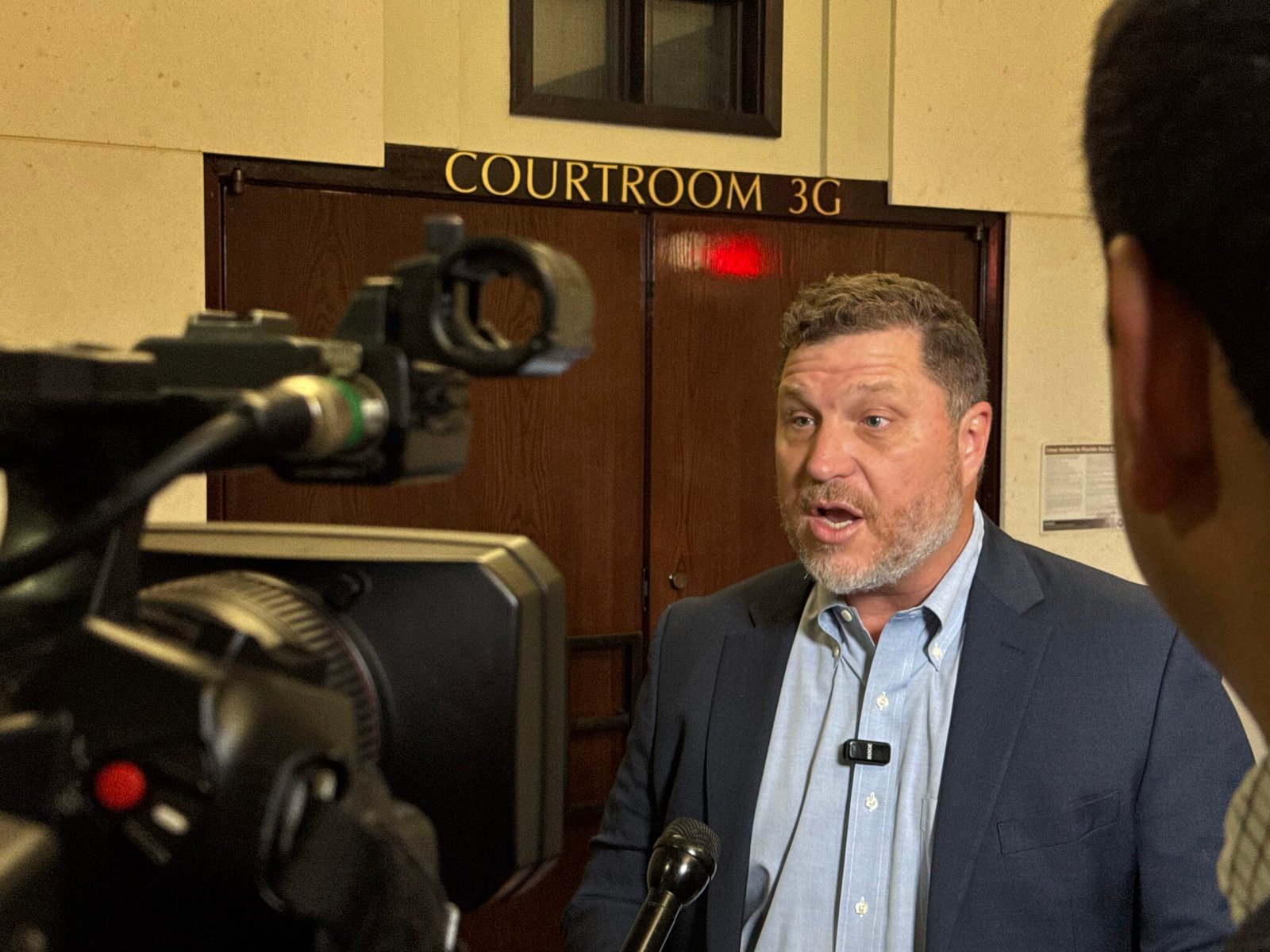
The fate of Amendment 3 — a far-reaching property tax cut proposal that could cost cities and counties as much as $12 billion annually in the coming years — will soon be decided by a circuit court judge in Leon County.
A trio of lawsuits filed by former elected officials and a group called Save Our Voters from Misleading Ballot Language challenged the wording of the amendment’s ballot summary set by the Florida Legislature. Judge David Frank must decide whether to toss the lawsuits or order the measure rewritten.
Frank heard more than two hours of oral arguments Wednesday and at the end gave attorneys until Aug. 3 to submit to him their final legal arguments.
Those challenging the measure say it’s replete with impermissible political rhetoric and would mislead voters about its true reach. If the judge rules the summary needs to be rewritten, a 2011 state law requires the Florida’s attorney general to complete the task within 10 days of a court ruling.
If David rules in favor of the state, former state Sen. Jeff Brandes, a named plaintiff in one of three challenges to Amendment 3, has committed to pursue the challenge up to the Florida Supreme Court.
“I took an oath to support and defend the Constitution,” Brandes said Wednesday. “I think I’m willing to support and defend the Constitution until I feel that’s no longer a viable option. At the end of the day, I think this is definitely an issue for the Supreme Court.”
Frank did not indicate how quickly he would rule. However, he acknowledged election supervisors around the state will start assembling the November ballots after the Aug. 18 primaries results are final.
The Legislature passed the property tax change during a special session in June. The title of the amendment labels it, “SAVE OUR HOMES FROM EXCESSIVE PROPERTY TAXES.”
Much of the legal arguments centered around the use of the word “save” and how former courts have ruled that it cannot be used for title summaries.
Meanwhile, the summary for Amendment 3 says the amendment “benefits Florida taxpayers” by “ensuring funding for core services,” “protecting small businesses,” and “ensuring fairness for Florida residents.”
Amendment 3, which passed the Legislature as HJR 1F, maintains the existing homestead property exemption through this year for resident homeowners. But it increases the homestead exemption for longstanding property owners to $150,000 in 2027 and $250,000 in 2028. Lawmakers limited the increased exemption to taxes paid to local governments and did not alter the taxes that now go to schools.
Amendment 3 also would reduce the allowed rate of assessed value growth for non-homesteaded property and create a path for full elimination of non-school property taxes on homestead properties.
It wouldn’t take effect unless it’s approved by 60% of the voters in November.
‘Common sense’
State economists project that, if approved, the amendment would reduce property-tax revenues by an estimated $5 billion in its first year and by nearly $12 billion per year after five years.
Ben Gibson, the attorney representing Attorney General James Uthmeier and Secretary of State Cord Byrd, defended the title and ballot summaries. Voters, he argued, have “common sense” and will understand Amendment 3 would be an extension of previous homestead tax exemptions that voters have approved in the past.
“The standard here that the plaintiffs have to meet is not whether the amendment could have been written better or whether it explains every aspect of the amendment,” Gibson said. “But whether or not the ballot title and summary when read together are clearly and conclusively defective.”
Meanwhile, opposition to Amendment 3 appears to be mounting and there doesn’t appear to be an organized effort to push for its passage. Gov. Ron DeSantis, who championed the elimination of property taxes, has repeatedly criticized Amendment 3, saying it doesn’t reflect his original property tax proposal.
DeSantis has said he won’t campaign for its passage.



