
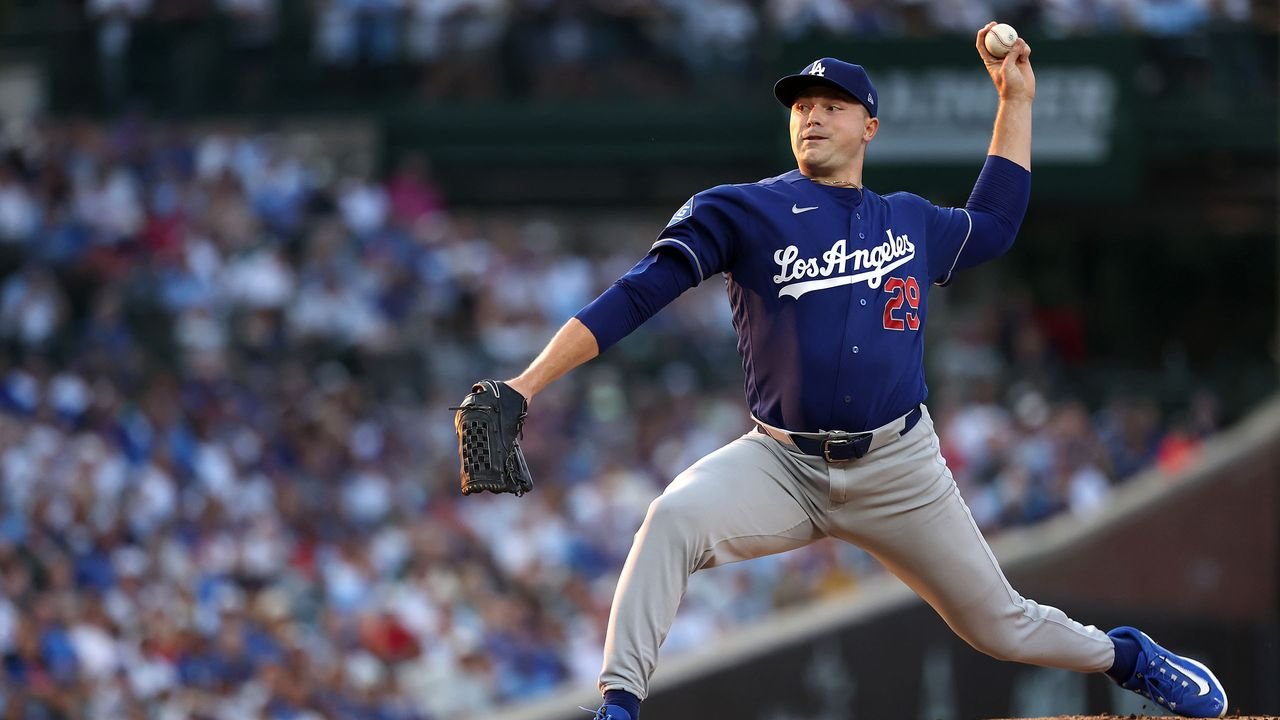
So it’s understandable that some fans, post-Skubal trade, have adopted an “Occupy Dodger Stadium” mentality. It doesn’t help that the Dodgers were able to trade for Skubal for a package of prospects, without attaching any big-league talent: Skubal was an expiring contract, and it had been rumored that he would be leaving Detroit to sign with L.A. after the season, trade or not. The Dodgers may have felt more comfortable than other teams going after him, confident that he’d stick around, but the Tigers were motivated to deal, so that they would get something, at least, in return. (In an interview after the trade, Skubal said that he still hoped Detroit would make him an offer in the off-season. “Hopefully those negotiations pick back up in November,” he said, adding, diplomatically, “I would love to return.”) In this way, the Dodgers’ dominance is compounding. With every superstar the Dodgers add, the more attractive they become to other superstars. Put another way, the Dodgers may have become too big to fail. And the real ramifications of this, some have suggested, will arrive not in October, when the world expects the Dodgers to hoist another World Series trophy, but later in the year, when the owners of other teams, dissatisfied with the current arrangement of things, insist on changes that the players can’t abide, causing all baseball to stop for the foreseeable future.
The league’s current collective-bargaining agreement—the bylaws that set guidelines for payroll, player movement, and the on-field rules—is set to expire just before midnight on December 1st. The contract is negotiated between the league and the players, via their union. By all reports, the process has not been going well. The majority of owners are evidently frustrated at a handful of big-market teams spending so much more than their competition, demanding a salary cap, or a hard limit on how much a team can spend on their roster, with the league floating a $245.3-million figure that is just more than half of what the Dodgers are paying their players this season.
Among fans, much of the reaction to the Dodgers’ dominance has boiled down to a need for “parity”—a word that brings to mind values like fairness and egalitarianism—and a resentment of the team’s owner, Mark Walter, and his deep pockets. One can, of course, connect the Dodger discourse to the broader political moment; a popular internet comedian attempted to channel the D.S.A.-mentum of the recent Democratic primaries into a critique of the team, going viral for comparing the need for a salary cap with Mayor Zohran Mamdani’s attempts to pass a wealth tax in New York City. (“How are the little guys supposed to compete with the Dodgers?”) But this framing, in which a salary cap is a tool in the fight against the M.L.B.’s ruling class, doesn’t quite fit the actual situation. The main obstacle is the players.
Owners pitched a salary cap once before, in the summer of 1994. In response, the players went on strike, deriding the proposal as anti-labor. The strike ended the season and cancelled the World Series (the first time since 1904 that no world champion was crowned). That strike lasted two hundred and thirty-two days, and plans for a cap were eventually abandoned. A similar reaction is expected this winter. “Our union has never been broken, and never will be,” Bruce Meyer, the interim director of the Major League Baseball Players Association, said in June. And the rank-and-file, which contains a significant number of millionaires, are not afraid to employ the language of class struggle. “If the billionaires are wanting it, they’re billionaires for a reason,” Cody Bellinger, the Yankees All-Star outfielder, said last month. “They want to continue to enhance their portfolio as much as possible. Us players understand that.” Owners have proposed including a salary floor, in addition to a cap, insuring greater upward mobility for the league’s least-paid players. The players have supported something similar, a “Competitive Integrity Tax,” which would penalize teams spending less than a hundred and fifty million dollars on their roster, but have refused to consider a salary cap.



