
Get your daily dose of health and medicine every weekday with STAT’s free newsletter Morning Rounds. Sign up here.
Happy Friday from sunny San Diego. This is Jonathan Wosen, West Coast biotech & life sciences reporter. We’ve got a strong lineup to help you kick off the weekend, featuring the lively final day of our STAT Summit, a pharmacist’s insights into why patients sometimes stop taking medication, and a recap of the highlights (or, depending on your perspective, lowlights) of STAT’s coverage of Elizabeth Holmes, for those looking to refresh their memory before watching a newly released documentary of the former Silicon Valley wunderkind’s fall from grace.
STAT Summit, Day 2
Thursday marked the second and final day of our annual flagship STAT Summit in Boston, and the event ended on a high note, with timely sessions on vaccine hesitancy, cutting-edge tools to study the brain, and the future of biotech. Here are some highlights:
A PSA to health care firms. If you’re an executive at a health care company that may have violated the law, the Department of Justice has a message for you: Please report yourself. The justice department, which has announced plans to expand investigations into corporate wrongdoing, is creating new incentives for both companies and whistleblowers to report offenses such as providers billing for unneeded services and the fabrication of patient records. Read more from STAT’s Isabella Cueto.
Merck and Moderna go exploring. Merck and Moderna made headlines when they announced in August that their cancer vaccine, which uses messenger RNA, significantly delayed cancer recurrence and metastatic disease in melanoma patients. Their next challenge? Proving this approach can transform other tumors. Read more from STAT’s Jason Mast about where the company’s execs think their next best opportunities may lie.
A Congressional representative’s thoughts on China. The head-spinning rise of China’s biotech sector has some policymakers endorsing protectionist measures. Rep. Jake Auchincloss (D-Mass.) has a different idea: Be better than China. Auchincloss plans to introduce a bil that would allow early-phase trials to bypass pre-approval evaluation, speeding up clinical development. He also warned that Trump administration moves to politicize science funding decisions could undermine the nation’s biomedical preeminence. Read more from my colleague John Wilkerson.
What to read before you go see that new documentary on Elizabeth Holmes
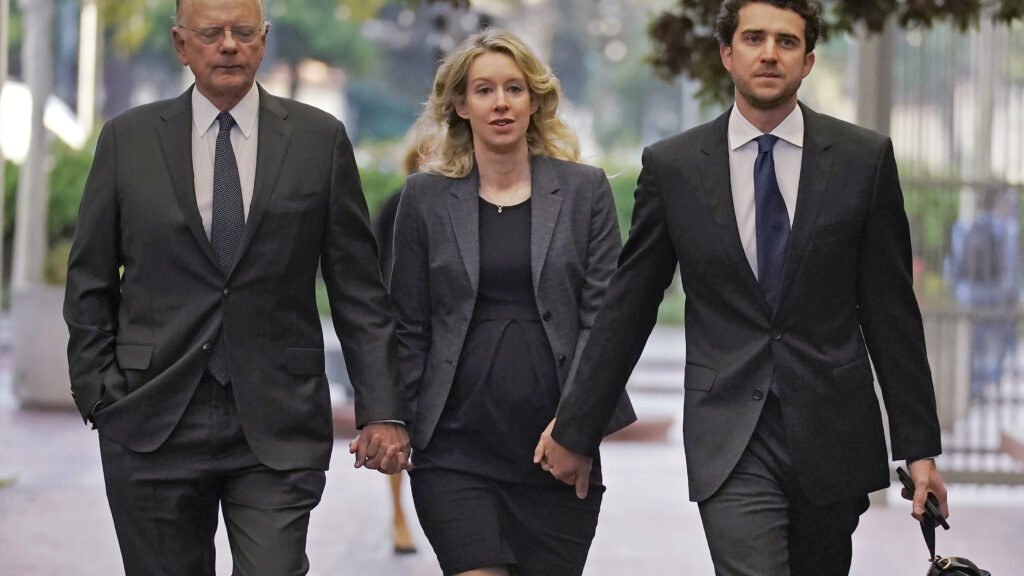
We’re leaving room for popcorn and intrigue tonight: The new A24 documentary, “You Can See Everything,” hits theaters today. Its subject is fallen Silicon Valley golden child Elizabeth Holmes, who invited a film crew into her home days before she was about to start her years-long prison sentence.
But STAT, of course, has been covering Holmes for years. We documented Theranos’ halcyon unicorn days. We were at the American Chemical Society meeting back in 2016, for instance, when Holmes was finally to reveal the company’s secretive and dubious data (and, turns out, basically didn’t).
“Would you have Al Capone come and talk about his novel accounting practices?” one clinical pathologist at ACS said at the time. “Is it acceptable to allow someone to talk about science if they’ve used that science so horribly inappropriately?”
It’s been a wild ride: Holmes was convicted in 2022 of defrauding investors and sentenced to more than 11 years in federal prison. STAT last year published an op-ed from Theranos whistleblower Tyler Shultz, which notes the suspicious familiarity between Holmes’ original efforts and her partner’s new diagnostic company, Haemanthus.
Over the years, we tracked the company’s layoffs, legal woes, and eventual shutdown — and kept on top of everything in between with regular Readout dispatches. (Sign up here!) Read up if you need a primer before movie night! — Meghana Keshavan
Why do patients stop taking medication? The answers can be complicated
As a clinical pharmacist, Marcela Gottschald thought she understood why patients usually stop taking medication: They forget, grow tired of dealing with side effects, or don’t understand the severity of their condition. But Gottschald has learned that beneath those initial explanations often lie more complicated concerns. In a STAT First Opinion, she writes about meeting patients worried that taking medication meant they were losing control over their own bodies, and how stopping treatment was a way for them to prove they could still function unaided.
One case left an especially strong impression on her: A young man who’d been on immunosuppressants after he received a kidney transplant. After his body’s immune system attacked the donated kidney, he told Gottschald that he’d simply forgotten to take his medication. But he later shared that his girlfriend was pregnant, and that he’d stopped taking immunosuppressants because he felt he needed to “become a man.”
“This conversation changed the way I understood adherence,” she writes. “Medication can become entangled with the way people see themselves, and the kind of people they believe they need to be.”
A possible silver lining in Pope Leo XIV’s cancer diagnosis
This week, surgeons removed the lower lobe of Pope Leo XIV’s right lung to treat his lung cancer. The Vatican said the surgery was successful with no complications, though it didn’t provide details on the cancer’s stage or whether additional treatment is needed. But some experts are inferring that the cancer was likely caught early, noting that surgery is often prescribed when the entire tumor can be removed.
“The decision to proceed with surgery is encouraging because it suggests the treating physicians believed the cancer could be completely removed. However, successful surgery alone does not necessarily mean the cancer has been cured,” Mohamed Abazeed, a lung cancer physician at Northwestern Medicine, said in a statement.
Lung adenocarcinoma, the type of lung cancer that the pope underwent treatment for, is the most common type of lung cancer and a serious illness. That being said, the 5-year survival rate for localized non-small cell lung cancer is 67%, according to the American Cancer Society. At the absolute earliest stages, 5-year survival can rise to more than 90%. In some cases, surgeons might even do surgeries called a segmentectomy, or a wedge resection, which takes less tissue than one of the five lobes of a lung, to preserve more lung function. — Angus Chen
An FDA policy that made getting a hearing aid easier and cheaper has had mixed results
Four years after the Food and Drug Administration legalized over-the-counter hearing aids, it’s easier and cheaper than ever to get one. So why are companies leaving the market?
Many experts heralded the FDA’s decision in 2022, saying it made it possible for adults with mild-to-moderate hearing loss to get hearing aids over-the-counter rather than through a prescription or professional fitting.
The regulation succeeded in making it cheaper. Prescription aids typically run about $3,400, while over-the-counter aids are roughly $500, according to a JAMA article published Thursday. The majority of first-time buyers are choosing these over-the-counter devices.
But there are some caveats. It’s unclear how many people who need the devices are actually buying, clinicians are struggling to figure out how to refer patients to over-the-counter devices, and it’s tough to know you’re buying a sound product. Researchers found that only 25% of the hearing aids listed on Amazon could be verified with the FDA.
These challenges have forced some of the earliest companies who released over-the-counter hearing aids to flee the market after struggling to gain a foothold. Read on for the solutions proposed by the researchers. — O. Rose Broderick
In other news…
In DOGE’s aftermath, federal health workers bristle at new performance reviews, STAT
- Is AI eroding PhD students’ critical thinking and analysis skills? Nature
- Time to hang up the stethoscope? Knowable
- Inside the plague research labs at the heart of a Russian mystery, New York Times
- Americans who go to church and trust science are also more likely to believe in ghosts and curses, new research shows, The Conversation



