
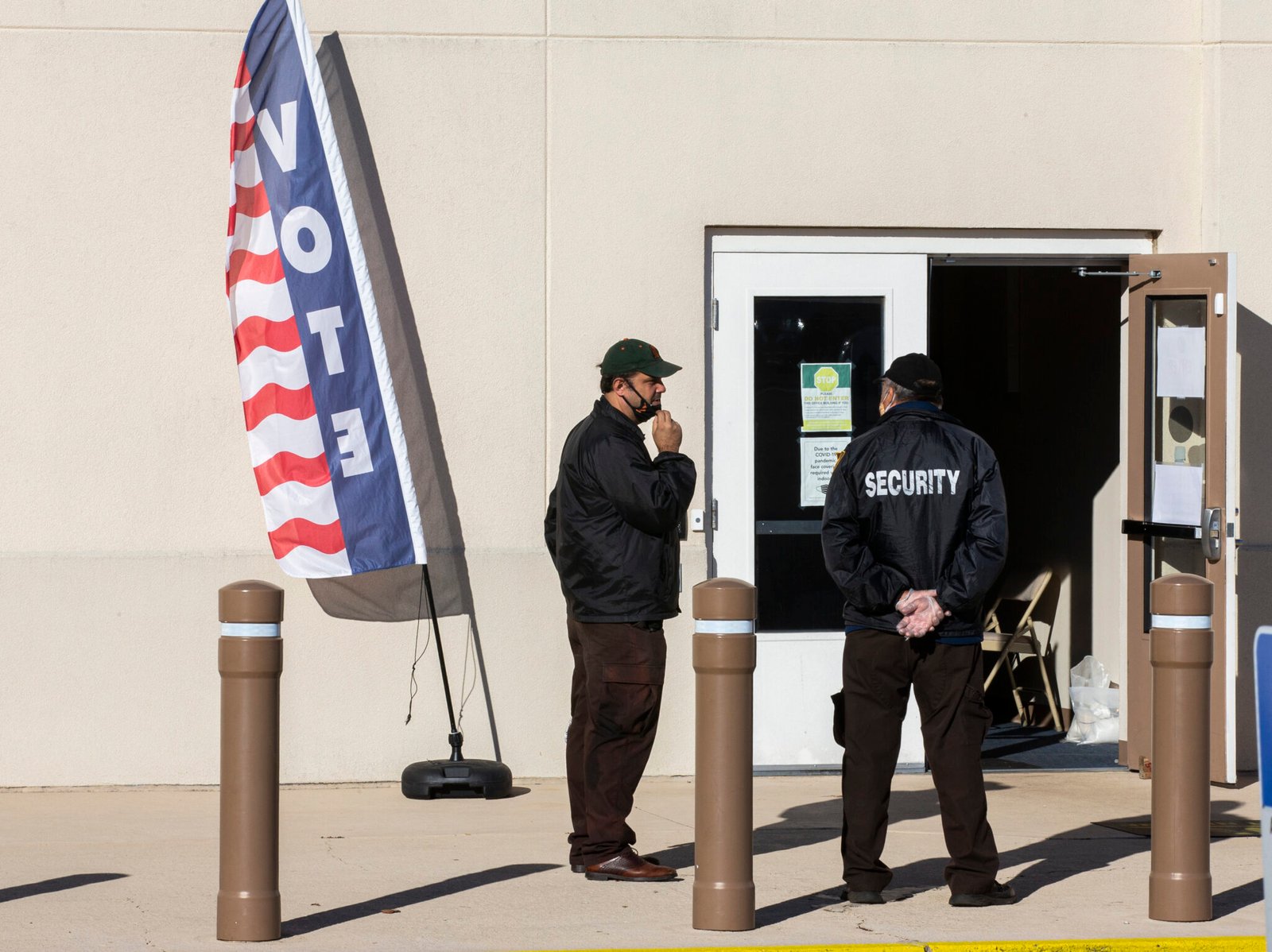
More than 1 million people have already voted ahead of Florida’s Aug. 18 primaries but, in the marquee races for governor and senator, millions registered as No Party Affiliation (NPA) won’t be able to participate because of the state’s closed primary election system.
And that’s not right, says Villa Johnson of the League of Women Voters of Sarasota County.
“This year our closed system will shut out 4 million voters that are not registered with the party or with a minority party,” she said in a Zoom conference call Thursday. “That’s 28% of the electorate, but even that number doesn’t tell the whole story. Many thousands of voters register with a party they don’t support just so they have a voice in the election.”
Thursday’s virtual press conference was organized by Open Primaries, a national advocacy group working to promote open and nonpartisan primary systems that let all voters participate. The group has active lawsuits in Pennsylvania, Oregon, and Maryland challenging use of public funds for “private elections,” said John Opdycke, president of Open Primaries.
The organization is contemplating filing such a lawsuit in Florida, he added.
The Sunshine State is one of only 10 with completely closed primary systems, according to the U.S. Election Assistance Commission.
Facing a more than a 1.5 million voter registration gap with Republicans, Florida Democratic Party (FDP) Chair Nikki Fried announced a year ago that the party was considering opening its primary election system.
“As soon as this election cycle is over, then we’ll continue a conversation to decide on where the party is,” Fried told the Phoenix last weekend in Tampa. “Every single day, more and more people are registering as independents. I think a real conversation needs to happen within our party.”
Opdycke says that 10,000 Americans change their voter registration from either the Republican or Democratic parties to independent every week. “As the number of independents rise, the fact that they’re shut out of voting in so many states has become more and more controversial,” he said.
John Marvin is state coordinator for Florida Open Primaries. After the FDP discussed the idea last year of opening its primaries, his organization conducted an online survey of Democratic and independent voters, receiving more than 600 responses from each of those groups, he said. Some 90% of both Democrats and independents said Florida should adopt open primaries and more than 80% of each group said Democrats should unilaterally open its primaries if that were the only choice.
Fried sees “some gray area” in Florida statute as to whether a political party could change to an open primary.
“The Republicans have already said that they will sue us, and so we would be prepared for a legal challenge to overturn that statute as being unconstitutional,” she said.
Open Primaries is looking for a legislative sponsor for an open primaries bill in the Florida Legislature next year, Opdycke said, although he wasn’t certain exactly what it would say.
However, given the Republican Party of Florida’s vow to challenge any such proposal, it’s difficult to see how far such a bill would advance in the GOP-controlled Florida Legislature.



