
Law firms cannot use a celebrity’s voice or image in their Florida advertising campaigns.
Morgan & Morgan, the personal injury law firm with 140 locations across the nation, wants to change that.
The Orlando-based firm filed a complaint in the U.S. District Court in Tallahassee last week against The Florida Bar, alleging its rule violates attorneys’ First Amendment right of free speech.
The 36-page complaint also alleges the rule is unconstitutionally vague and provides no guidance, “leaving standardless discretion in the hands of the Bar and inviting arbitrary and discriminatory enforcement.” That, the suit argues, is vague and violates the Fourteenth Amendment’s due process protections.
“The First Amendment protects a lawyer’s right to advertise. Yet for decades, Florida has stood alone among the states in imposing the most restrictive measures on attorney advertising, banning lawyers from using a celebrity’s voice or image in their ads, even as insurance companies run ads featuring celebrities like Peyton Manning and Jason Bateman every day,” Deepak Gupta, the attorney representing Morgan & Morgan, said in a prepared statement.
He continued: “This rule doesn’t protect the public, it protects the industries and interests that already have the upper hand against consumers, while silencing the lawyers who represent them.”
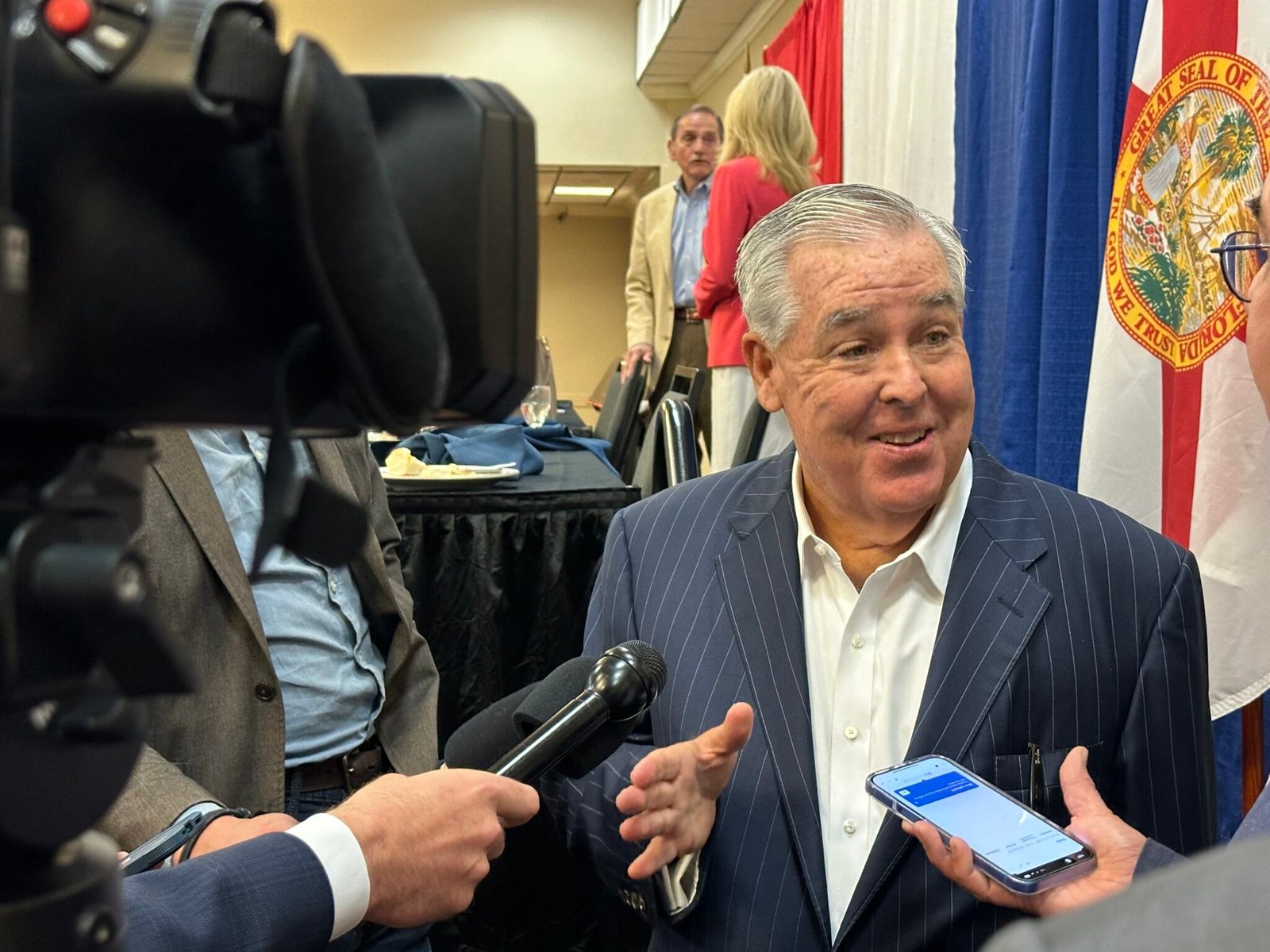
Orlando attorney Alexander M. Clem, CEO of Morgan & Morgan, is the named defendant in the suit. Clem is responsible for submitting Morgan & Morgan’s ads to the Florida Bar for review.
According to the complaint, the Bar prohibited Morgan & Morgan from running advertisements featuring former basketball player Shaqille O’Neal, actor and professional stock-car racing driver Frankie Muniz, NASCAR driver Kyle “Rowdy” Busch, and professional golfer John Daly.
The Bar told the firm that a billboard offering a fee football camp along with the image of Miami Hurricanes player Malachi Toney ran afoul of the rule. Morgan & Morgan could use the billboard only if the firm removed its logo and other content linked to the firm.
“Morgan & Morgan still wishes to run these or similar celebrity advertisements in Florida. But it cannot, because it would face discipline under Rule 4-7.15(c) for doing so,” the complaint alleges.
Specifically, Florida Rule of Professional Conduct 4-7.15(c) prohibits any lawyer advertising containing “the voice or image of a celebrity.” The rule applies across all media as well as brochures, flyers, websites, and social networks.
Before filing the challenge, the firm tried to resolve the issue administratively. The complaint says the firm approached the Bar Board of Governors in April about changing the rule to allow firms to use celebrities with an appropriate disclaimer.
After the board didn’t move on the request, Morgan & Morgan subsequently requested that it suspend the rule’s enforcement so the Bar and Florida Supreme Court could consider changes.
Gemma Torcivia, chair of the Bar’s Standing Committee on Advertising, recommended against the change. According to the complaint, Torcivia said it was not “advisable to permit the use of celebrities in advertising” because it “will confuse the public” and “create a negative potential perception.”
Even if the Bar did agree to an amendment, the challenge acknowledges “it would be months or years before the Florida Supreme Court could consider and adopt the proposed amendment, during which time Morgan & Morgan and its lawyers would be subject to an indefinite period of constitutional and economic injury.”
Gupta is asking the court to declare the rule unconstitutional, both on its face and as applied to Morgan & Morgan’s advertising, and to enjoin the Bar from enforcing the regulation.
Morgan & Morgan also is asking for the court to award it reasonable costs, expenses, and attorney’s fees.



