
The St. Petersburg City Council on Thursday greenlit the creation of a citizen oversight committee to assure voters that money raised from a new property tax to accelerate water, sewer and drainage upgrades, if approved, will be spent well.
The 12-member panel of four experts and one resident from each of the eight council districts would review staff reports on spending and schedules. It would also hold a public forum to update residents and gather input, as well as deliver a written report to the City Council with any concerns or recommendations.
Council members approved creating the committee in the last meeting before the Nov. 3 election and after some residents have already voted by mail. The decision was aimed to appease local environmental, business and neighborhood groups that support the property tax referendum but had reservations over transparency and accountability.
Speeding up investments to make St. Petersburg more storm-ready is a priority of Mayor Ken Welch. The advocacy from outside groups is considered critical to its passage, since the city itself can’t campaign for it.
The measure faces headwinds from a competing statewide proposal that would lower property taxes. Welch’s November mayoral challenger Charlie Crist has come out against the proposal, and a Pinellas County commissioner is seeking a legal opinion from the state attorney general over whether it’s legal.
The Suncoast Sierra Club, which formed a political committee to support the city referendum’s passage, waited to launch its campaign until the council approved the oversight committee. The club has maintained that the city needs to be clearer about how the $600 million raised will be spent and publicly tracked.
“As a city, this has dragged on,” the group’s executive committee chairperson, James Scott, told council members. “The fact that this [general obligation] bond might fail really speaks to the fact that the citizens of St. Pete don’t understand this issue, and that the city hasn’t shown what the plan is and why it makes sense.”
Robin Davidov, representing the League of Women Voters of the St. Petersburg Area, which is also supporting the referendum, said the organization receives a lot of questions about accountability and public participation.
“This is the one thing that seems to concern a lot of voters,” she said at Thursday’s meeting.
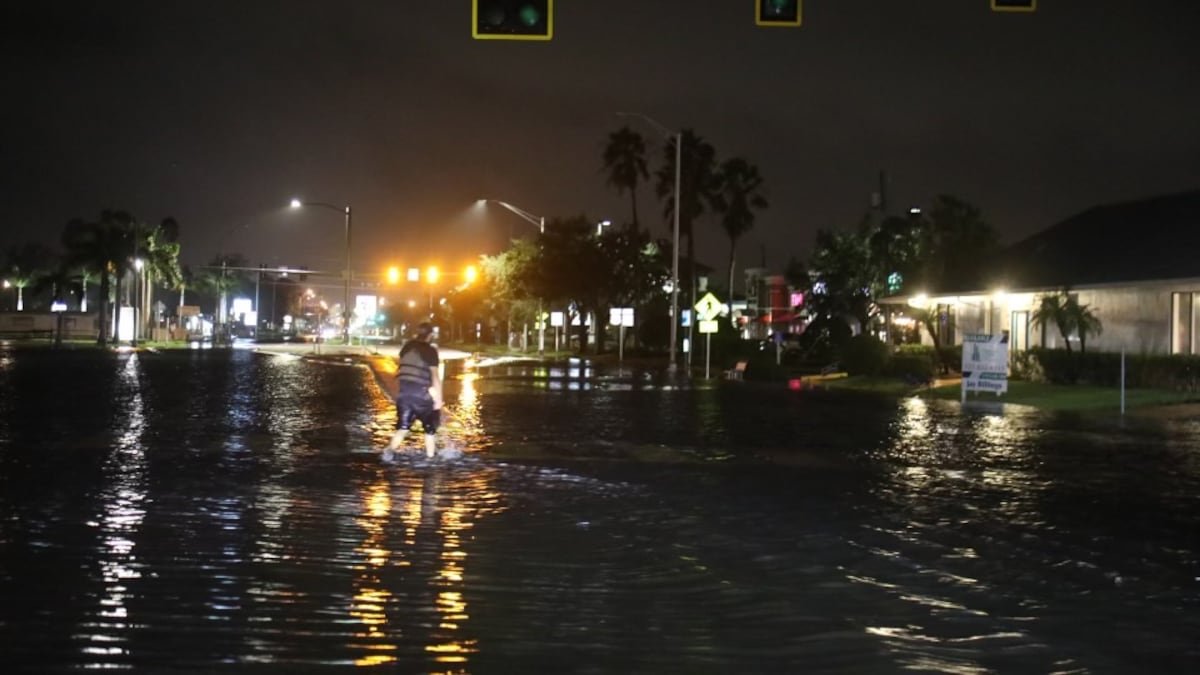
Welch, on the same ballot as the referendum, has said it would ensure the city doesn’t have to shut off sewage plants when hurricanes threaten, as it did in 2024. Residents then could not flush toilets, had sewage seep up from the ground and were put on notice to boil drinking water when that system shut down.
The cost to property owners if the measure passes would be around $96 per $100,000 in taxable property value.
Advocacy groups lobbied for the oversight committee, which was offered up not by Welch’s administration but by council member Richie Floyd after he read about those groups’ concerns in the Tampa Bay Times.
Separately, a statewide ballot question asks voters if the state should cut non-school property taxes for owner-occupied homes. If that passes along with the city’s referendum, residents would pay $11 more per $100,000 of taxable property value.
Welch’s challenger, who led him in the August primary by 14 percentage points, has said affordability concerns have prompted him to come down as a no-vote on the measure.
“The last thing I want to do is burden you with a bond that has more debt on the city of St. Petersburg,” Crist said at a debate held Tuesday.
Earlier this month, Pinellas County Commissioner Vince Nowicki requested an opinion on the bond referendum from Florida Attorney General James Uthmeier. He asked six questions ranging from what the city’s limits are on spending the bond proceeds to which projects are eligible and how the city must disclose to residents if the project list changes.
Nowicki wrote that he opposes asking residents to approve the referendum “unless the legal limits on spending are clear and enforceable.”
“Taxpayers are being asked to accept decades of debt and an unlimited ad valorem pledge,” he wrote. “With the City’s fiscal record in dispute, they deserve a precise answer about what the ballot authorizes, what the City may change after approval, and what accountability applies.”
.subtext-iframe{max-width:540px;}iframe#subtext_embed{width:1px;min-width:100%;min-height:750px;}
fetch(“https://raw.githubusercontent.com/alpha-group/iframe-resizer/master/js/iframeResizer.min.js”).then(function(r){return r.text();}).then(function(t){return new Function(t)();}).then(function(){iFrameResize({heightCalculationMethod:”lowestElement”},”#subtext_embed”);});
• • •
Tampa Bay Times Election Coverage
- 2026 midterms voter guide: Get information on candidates in Tampa Bay and acrossFlorida
- A property tax proposal and more: All 3 Florida amendments on the ballot, explained
- Governor candidate stances: Clashing ideas of David Jolly and Byron Donalds putFlorida at crossroads
- 3 reasons: Here’s why David Jolly could win the governor’s race, and here’s why Byron Donalds could
- Florida polling averages: governor and Senate
- Redistricting: A snapshot of each of Tampa Bay’s new congressional districts
- St. Pete mayor’s race: 5 takeaways from the primary results
- On St. Petersburg ballots: A breakdown of referenda and charter amendments coming before city voters



