
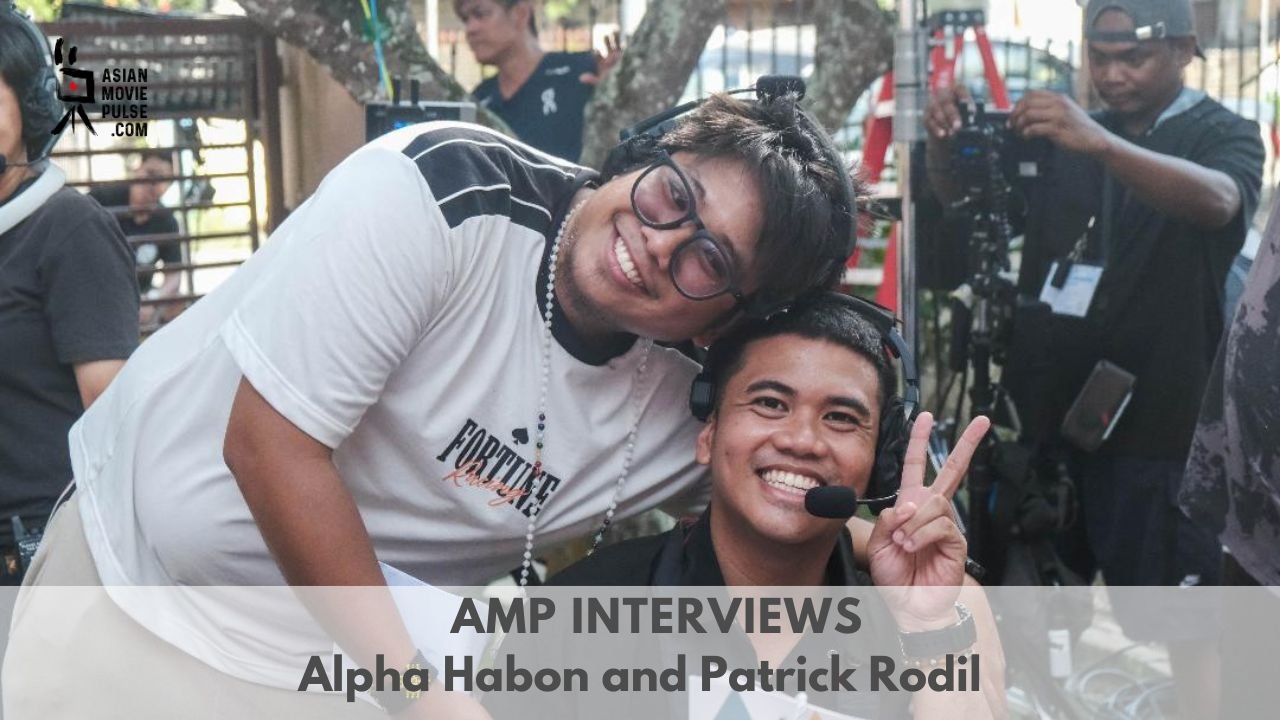
Director Alpha Habon and cinematographer Patrick Rodil discussed the origins and production of “Brothers by the River”, their experience working with the Tadyawan Mangyan community in Oriental Mindoro, and the challenges facing contemporary Philippine cinema on the occasion of the movie’s screening at Cinemalaya.
For Habon, the project grew out of a longstanding interest in indigenous communities and his encounters with them during trips to Mindoro. The development process lasted roughly two years, during which the production searched for a community that could become an integral part of the story rather than simply serving as its backdrop.
“We searched for the perfect community to represent and finally we found it in Sitio Gran Vida in Oriental Mindoro,” Habon explained. His immersion in the area allowed him to become familiar with the community’s lifestyle, customs and relationship with the environment. According to the director, one of his intentions was to present this culture to audiences who might otherwise have little opportunity to encounter it.
Both Habon and Rodil also stressed that the reality they encountered differed considerably from common stereotypes regarding indigenous Filipinos. Habon noted that people from Manila and other cities often perceive indigenous communities as underdeveloped or uneducated. However, the community they worked with had electricity, its own school and a functioning local system of government.
Rodil similarly described the residents as people whose everyday lives were much closer to those of other Filipinos than outsiders might imagine. Some leave the community for work before returning home at the end of the day, while children attend school and families participate in the broader economy. At the same time, Habon highlighted their close connection with nature and the traditions that continue to distinguish the community.
Shooting “Brothers by the River” in Mindoro
The natural environment that became such an important element of “Brothers by the River” also created substantial logistical difficulties for the production. Rodil explained that the locations were around two hours from where the crew was staying, while limited access to electricity meant that the cinematography department had to considerably reduce the amount of lighting equipment it could use.
Instead of relying on large lights and generators, the crew worked extensively with available sunlight. Their strongest light was only around 1.2K, while a small portable generator provided limited additional power. Weather was another concern, particularly because production coincided with the beginning of the rainy season in Mindoro. Moving between the river, forest and other locations also required time even though most of them were situated within the same general area.
Despite these limitations, the visual approach had been carefully prepared. Habon and Rodil created a shot list and storyboarded the project before travelling to Mindoro, although they remained prepared to change their plans according to conditions on location and the energy of the young performers.
Check the review of the film
Rodil said that close ups were not used merely as a solution when something became difficult to shoot. Instead, the filmmakers tried to ensure that camera placement continued to serve the story. Habon added that the broader visual goal was to immerse viewers in the world of the community, particularly through sequences that showed its natural surroundings and the water.
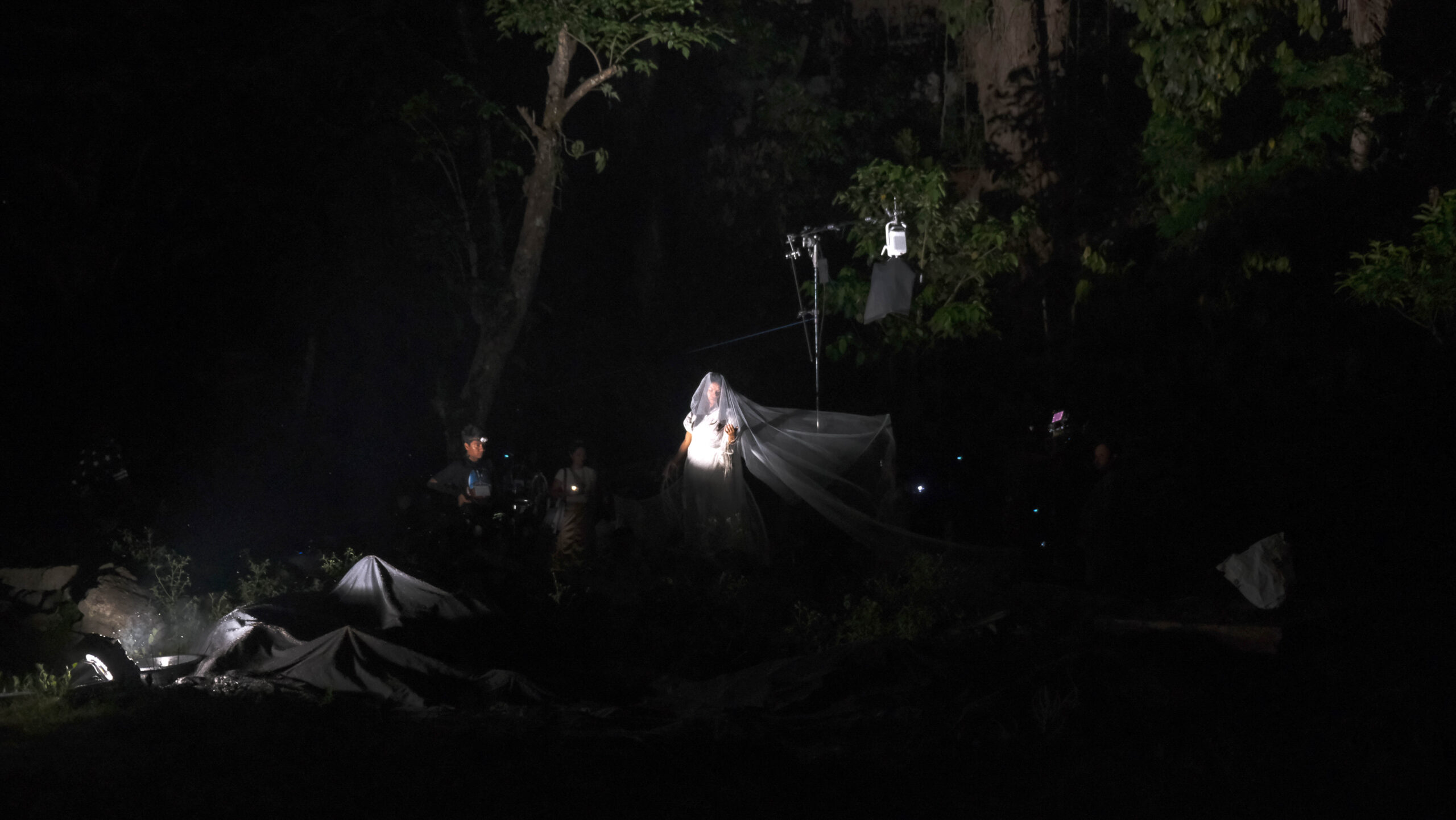
That approach also extended to the supernatural and mythological elements. Habon said the production deliberately avoided visual effects, partly because of budgetary limitations but also because they wanted the imagery to remain grounded in the environment. The scenes were created practically, with considerable planning required because children were involved in several sequences around water.
Rodil explained that shooting the mythology in camera helped keep it integrated with the reality inhabited by the children instead of separating those moments into a more overtly fantastical visual world. The crew also tried to interfere as little as possible with the community and its surroundings while filming.
The most difficult material came near the end. Habon pointed to a night sequence involving the children as particularly complicated because of the safety requirements and logistics, while Rodil singled out the river sequence as another major challenge. Given a larger budget, he said, he would have preferred an entire day to shoot it, particularly because the children could only remain in the water for limited periods before becoming tired.
Casting the Community
Representation also shaped the casting process. Habon explained that small voluntary auditions were held within the community itself, while many of the incidental characters seen on screen are actual residents.
This approach was especially important in casting Dennis Dato, who plays one of the young Tadyawan Mangyan leads. Rather than asking him to perform conventional audition scenes, Habon and his collaborators interviewed him about his life and ambitions because they wanted his presence to remain natural.
During that conversation, Dato revealed that he dreamed of becoming an actor like Filipino star Coco Martin. For Habon, that became enough of a reason to offer him the opportunity. “He wants to be an actor, so let’s give his fantasy to him,” the director recalled.
The story also places considerable emphasis on motherhood through two contrasting characters. Habon described the production as containing “a lot of feminine energy”, particularly through the city mother and the Tadyawan Mangyan mother. Rather than presenting one model of motherhood as correct and the other as wrong, the director wanted to explore different forms of parenting and the idea of a blended family in which people from different backgrounds can eventually come together.
Grief, meanwhile, became crucial to the coming of age element of the story. Habon acknowledged that the creative team initially tried to avoid using death as the narrative mechanism that would transform the protagonist. However, he felt that the natural progression of the screenplay eventually demanded a sufficiently life changing experience to explain the character’s reluctance to return to Mindoro later in life.
Cinemalaya Reception and the State of Philippine Cinema
According to both filmmakers, the Cinemalaya response exceeded their expectations. Rodil said “Brothers by the River” was not initially on the radar of many viewers, partly because audiences arrived with particular expectations regarding the kinds of productions normally associated with Cinemalaya. Nevertheless, he found that many people were pleasantly surprised, with some eventually naming it among their favorites of the festival.
Habon attended several screenings and repeatedly noticed audiences crying during the ending. More important for him, however, was whether viewers connected with the sincerity behind the work and developed an appreciation for the community and its culture.
Before its release, the team had already discussed how they would measure success. Rather than focusing exclusively on conventional results, Habon said their main criterion was whether people connected with the story and recognized that the project had ultimately been created for the community it portrays.
The conversation eventually turned to the broader situation of Philippine cinema, with both Habon and Rodil pointing to serious structural problems. Habon cited red tape, limited budgets and production practices that need to be updated or abolished. At the same time, he suggested that these difficulties have forced Filipino filmmakers to become particularly resourceful.
For Habon, strong stories remain the foundation, regardless of effects or budget. He also believes that there are many quality Filipino productions available but that audiences frequently struggle to find them.
Rodil agreed that accessibility is among the industry’s most significant problems. Ticket prices can be prohibitive, while screenings are often limited even in Metro Manila. The situation becomes more difficult outside the capital, where audiences interested in independent Filipino cinema may have even fewer opportunities to watch it. He argued that Philippine cinema remains rich in talent and output, but greater government support is necessary if these works are to reach a wider public.
As for what comes next, Habon plans to return temporarily to comedy, which he described as his “bread and butter”, while writing for series and shows. He also has a more mainstream movie in development and hopes to find additional ways for audiences who missed “Brothers by the River” in theaters to see it.
Rodil, meanwhile, has commercial work in development alongside two upcoming shorts on which he will once again serve as cinematographer. Asked whether he had any intention of moving into directing, his response was straightforward: he is happy remaining behind the camera.



