
As a longtime Methodist, I can attest that—at least from a distance—it is not the most dramatic of the world’s religious operations. Very little incense, not much speaking in tongues, and sulfur and brimstone are barely in evidence. There are bishops, but they don’t get special hats. Methodist Central Hall, in London, has a magnificent organ, for playing the great Wesleyan hymns (“Love Divine, All Loves Excelling”; “Come, Thou Long Expected Jesus”), but the contrast between its sternness and the ornate Westminster Abbey, across the street, is instructive. Methodism’s adherents have spanned the political spectrum, though perhaps they share a certain earnestness: Nelson Mandela, Ulysses S. Grant, Hillary Clinton, George W. Bush, Walter Mondale, Scout Finch (and Harper Lee), Beyoncé.
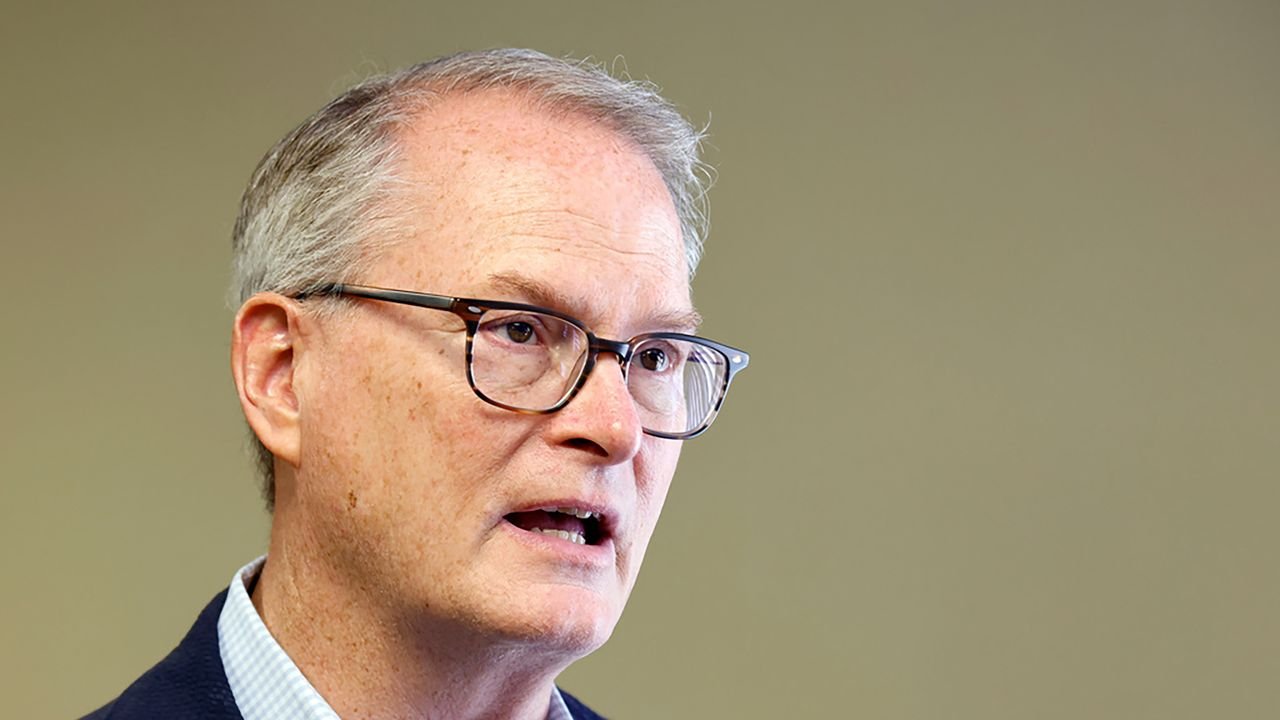
Among them is the most earnest and upright of all Americans, Superman, who was raised in a Methodist household in Smallville, Kansas, by his adoptive parents, Jonathan and Martha Kent. This is significant because, earlier this month, Kansas’s current most prominent Methodist, the Reverend Adam Hamilton, won the Democratic primary for the U.S. Senate. He is now aiming to become, in November’s election, the first Democrat that Kansas has sent to the Senate since 1932, the political equivalent of leaping Wichita’s Epic Center—at twenty-two stories, the tallest building in the state—in a single bound. It’s a hard task, but not impossible. Indeed, the Cook Political Report recently moved the Kansas Senate race from “Solid Republican” to “Likely Republican”—and that’s in part because there’s something interesting happening in American politics this cycle.
While many observers are focussed on the emergence of the Democratic Socialists of America (who boast a total membership of just over a hundred thousand), a more important trend in the Democratic Party may be the resurgence of the once dominant and long-dormant mainline Protestant tradition. In Texas, Democratic Senate candidate James Talarico—a progressive Presbyterian seminarian who supports reproductive and L.B.G.T.Q. rights and the separation of church and state, condemns Christian nationalism, and has a slight edge in the polls over his Republican challenger—has gained widespread attention. (If he wins in November, he will be the first Democrat elected to the Senate from Texas in nearly forty years.) The Religious News Service reported earlier this month that there are at least twelve pastors, seminarians, and former clergy who have run for federal office on the Democratic ballot this year, and that seven had made it through their primaries. (In Iowa’s Second District, the Reverend Lindsay James, a state representative and a Presbyterian, beat the Reverend Clint Twedt-Ball, a Methodist, to win the primary for an open House seat.) By contrast, according to the Religious News Service, seven clergy have run in G.O.P. primaries, and just three of them, all evangelicals, won. Among the issues on the ballot in 2026, then, is what Christianity will mean in American politics in the years to come. And since nearly two-thirds of American adults, which is to say roughly a hundred and seventy million people, identify as Christian, it’s a fateful question, one at least as important as what will happen with the D.S.A.
There was a time not that long ago when “mainline Protestant” was white America’s religious default; in 1960, slightly more than half the population was Methodist, Lutheran, Episcopalian, Congregationalist, or Reformed or American Baptist, or belonged to some other part of this tradition. (Roughly a quarter of the country was Roman Catholic.) These denominations defined the mainstream in American life; nearly every President from the turn of the century to 1960 came out of these churches. And, as the suburbs grew in the nineteen-fifties, the churches grew with them.



