
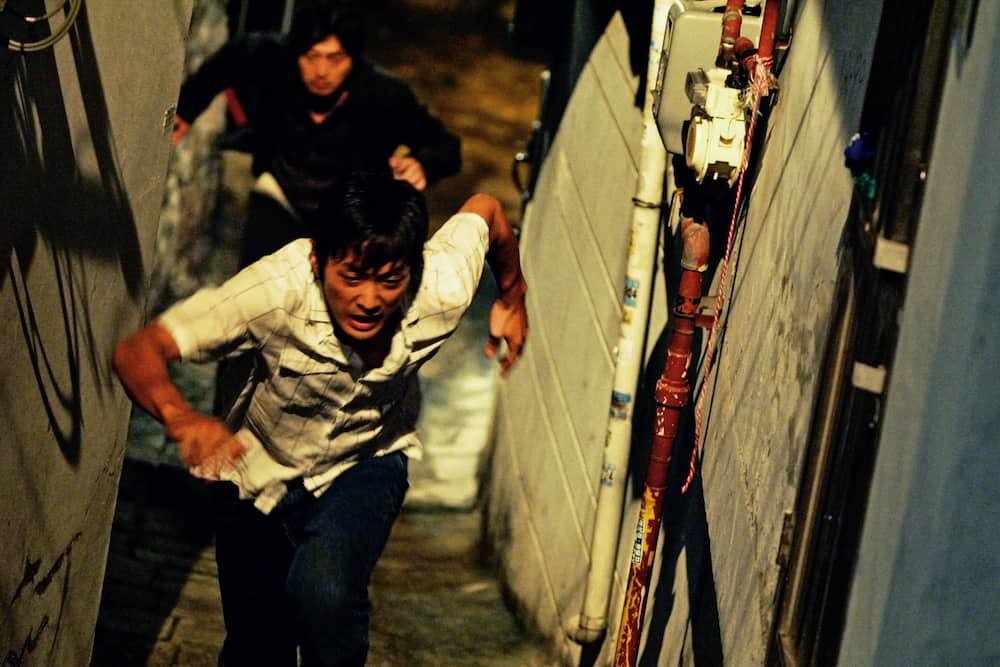
South Korean cinema has become synonymous with genre blending, but action has played a particularly important role in the industry’s international rise. From the blockbuster ambitions of the late 1990s to contemporary Netflix productions, action in Korea has rarely existed in isolation. Crime thrillers incorporate melodrama, zombie movies become vehicles for social commentary, historical epics turn into martial arts showcases, and gangster stories frequently alternate between black comedy and astonishing brutality.
In many ways, “Shiri” provided the blueprint. The Korean New Wave really kicked off from the late 1990s onwards, when South Korean blockbusters, financed partly or largely by conglomerates, began gaining exposure in the West. Kang Je-gyu’s production took inspiration from both Hollywood genre cinema and Hong Kong aesthetics while combining action with melodrama and specifically Korean political concerns. In the years that followed, filmmakers including Kim Jee-woon, Ryoo Seung-wan, Na Hong-jin and Park Hoon-jung pushed these tendencies in radically different directions.
The result is a national action cinema in which choreography is only one component. Ryoo Seung-wan has repeatedly emphasized physicality, humor and spectacular set pieces, Kim Jee-woon has connected violence with psychology and highly stylized imagery, Na Hong-jin has embraced desperation and almost unbearable tension, while Park Hoon-jung has increasingly built worlds revolving around assassins, secret organizations and extreme violence. More recently, the success of “The Roundup” franchise, female-centered productions such as “Ballerina” and “Kill Boksoon”, high-concept works such as “Spiritwalker”, and hybrids including “Project Wolf Hunting” demonstrate how much room still exists for Korean filmmakers to reinterpret the genre.
Shiri (1999) by Kang Je-gyu
Arguably the first major hit of the Korean New Wave, Kang Je-gyu’s “Shiri” was a massive financial and critical success domestically and one of the first South Korean productions many Western audiences encountered. As the two Koreas prepare for a football match intended to encourage reunification talks, South Korean intelligence officers Yu Jong-won and Lee Jang-gil hunt an undercover North Korean operative while a terrorist plot involving the synthetic explosive CTX unfolds. The treatment takes inspiration from Hollywood features and Hong Kong cinema aesthetics extensively, while also offering a tremendous showcase for two genres that Korean cinema does particularly well, action and melodrama. Technically, the production follows the rulebook set by its Hollywood and Hong Kong counterparts, with chase sequences and John Woo-esque all-guns-blazing bullet ballet. Even in hindsight, it feels deserving of its “First Korean Blockbuster” label.
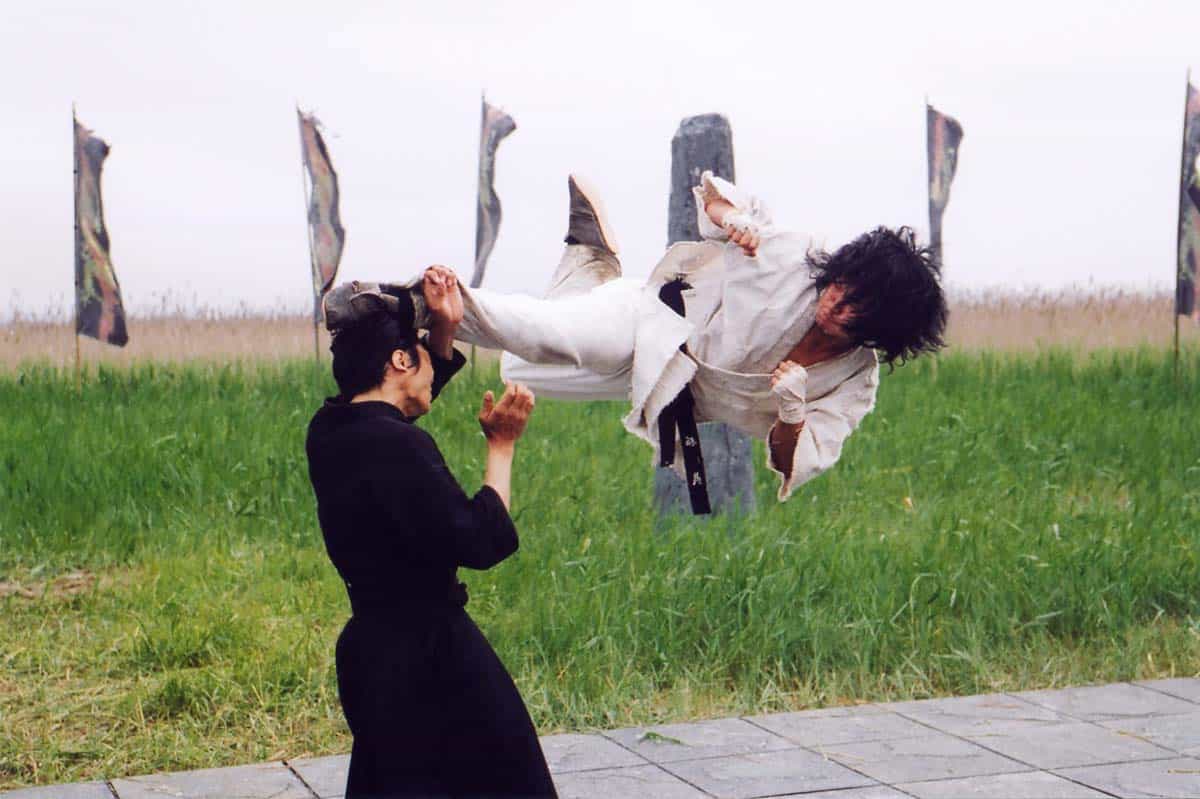
“When fact becomes legend, print the legend.” The story of Masutatsu Oyama is certainly one of those. A Korean fighter who developed his own form of karate and fought a bull certainly has a tale to tell, although historical fighters frequently have their stories woven into the fabric of legends and reinterpreted for different generations. “Fighter in the Wind” is an adaptation of an acclaimed manga rather than a straightforward biopic, so a fair amount of dramatic licence and elaboration is to be expected. Bae-dal, played by Yang Dong-geun, heads to Japan with dreams of becoming a fighter pilot, only to see this ideal crushed and to experience discrimination against Koreans first hand. His encounters with Kato and other fighters eventually push him towards an intense period of training and the development of the martial arts style that would make him famous. The production is consequently as much about transformation as fighting, charting Bae-dal’s movement from vulnerable outsider to formidable karate practitioner, while the increasingly elaborate martial arts sequences provide the main spectacle

Kim Jee-woon’s “A Bittersweet Life” revolves around Sun-woo, a gangland enforcer employed by Mr Kang who is ordered to watch his boss’s girlfriend Hee-soo and kill her if she is having an affair. Instead, in a moment of uncharacteristic kindness, Sun-woo allows her and her lover to live, initiating a chain of events that ultimately results in betrayal and bloodshed. There is real depth to Kim’s mise-en-scene, from the elaborate nightclubs to Sun-woo’s sparse apartment, while the action sequences are clearly shown and remain in tune with his emotional state. During the opening sequences, his moves are crisp and swift, whereas his later fighting carries a far more desperate edge. The camerawork is showy and flashy but never to the detriment of the story, while the elements of noir are present but constantly played with. Lee Byung-hun is excellent as a man finding himself at odds with himself and unable to understand his own actions.
The Host (2006) by Bong Joon-ho

Bong Joon-ho takes the monster movie and fills it with action, family drama, black comedy and political satire in “The Host”. After toxic chemicals are dumped into the Han River, a mutated creature eventually emerges and abducts Hyun-seo, the young daughter of Gang-du, forcing her dysfunctional family into a desperate search. The monster is also declared the carrier of a deadly virus, turning the family into fugitives as they attempt to rescue the girl. What makes the production stand apart is the variety of elements that appeal to different audiences, from the graphics and blood to the comedic relief of the family and their dedication to one another. The enormous commercial success was accompanied by considerable critical recognition, while Ko Ah-seong’s performance as Hyun-seo also earned her Best New Actress.
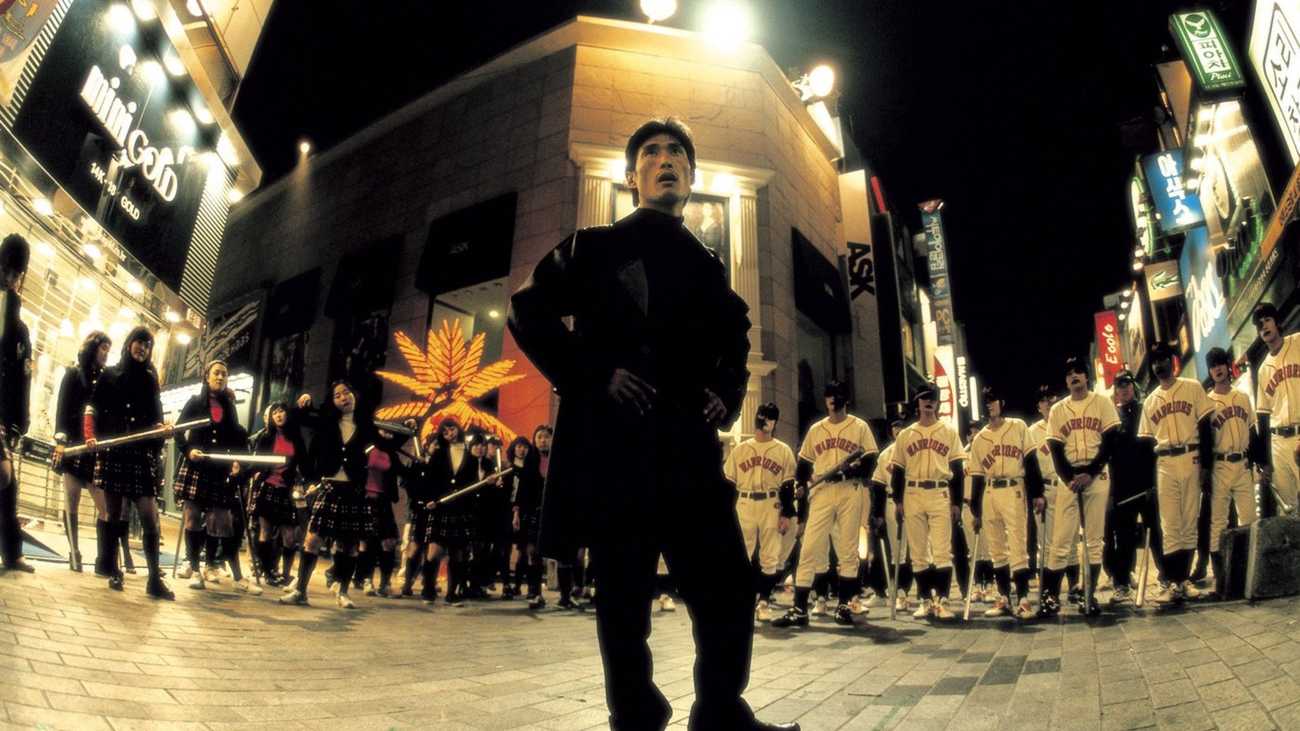
Ryoo Seung-wan may now be one of the biggest names in Korean action cinema, but it was five features into his career that he made “The City of Violence”, the only project on which he worked as director, writer, producer and actor. Detective Tae-soo returns to his hometown after an old friend is murdered and joins Seok-hwan in investigating a conspiracy involving a casino development and their former companion Pil-ho. The story admittedly does not have the freshest of plots and borrows heavily from Hong Kong and Hollywood cinema, but the amount of swagger and pizzazz Ryoo infuses it with is next to none. Once the action begins, the production completely switches gears, with Jung Doo-hong’s choreography setting fights in a water canal, amid a dance battle and eventually inside a restaurant. Any storytelling shortcomings are soon forgotten once the action starts, making this an important milestone for Korean action cinema.
The Chaser (2008) by Na Hong-jin
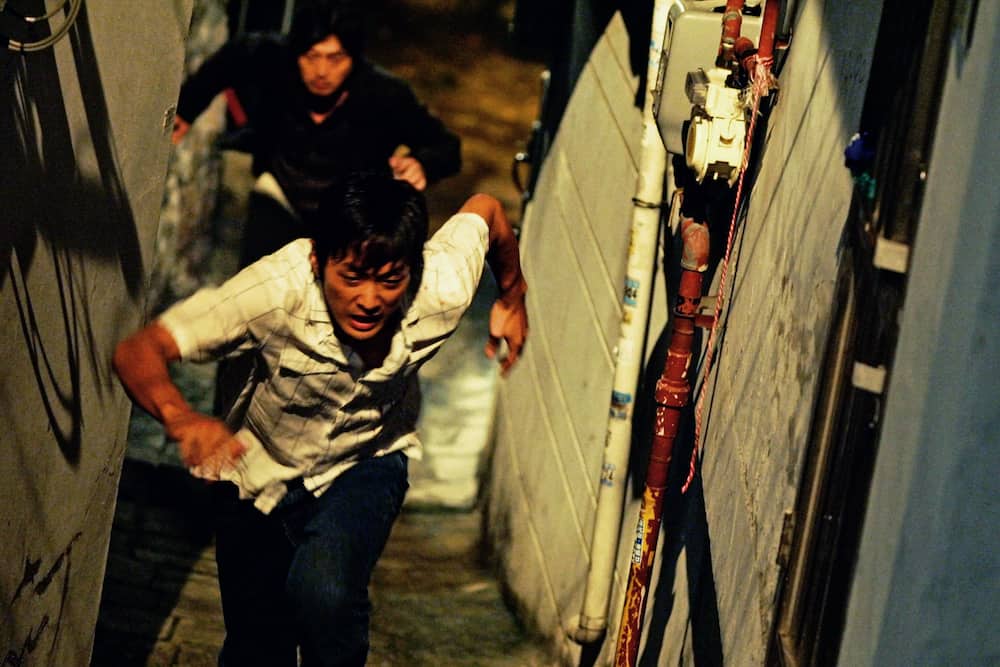
Amazing script, great direction, two opponents that give a true acting recital, action, comedy, drama and agony can all be found in Na Hong-jin’s “The Chaser”. Eom Joong-ho, an ex-cop who operates a prostitution ring, realizes that several of his women have disappeared after meeting the same customer and starts searching for the man responsible. Na Hong-jin gave a clear sample of his quality as a filmmaker with his debut, artfully directing and writing an utterly agonizing thriller based on an actual serial killer case. He presents just enough indications of what is about to come to maintain tension throughout, while the violent episodes can be genuinely shocking. Kim Yoon-seok is magnificent as the antihero Joong-ho, while Ha Jung-woo portrays a bloodthirsty, impenitent psychopath in one of the most chilling renditions of an evil character. The finale remains one of the most shattering sequences in the genre.

Sandwiched between the bleak “A Bittersweet Life” and “I Saw the Devil”, Kim Jee-woon’s “The Good, the Bad, the Weird” is an action comedy love letter to the spaghetti western. Set during the Japanese occupation of Manchuria in 1939, the story follows three men competing for a mysterious treasure map while bandits and the Japanese Imperial Army join the pursuit. Jee-woon balances his tributes to 1960s westerns with his own cinematic DNA, combining the comedic flair of his earliest work with the stylish violence of his later outings. The action scenes are fast-paced thrill rides filled with Jackie Chan-esque physical gags, while Song Kang-ho’s erratic Tae-goo becomes the real driving force. Despite an overlong runtime and occasionally convoluted plot, the final Mad Max-style chase demonstrates why the highs here are very high.
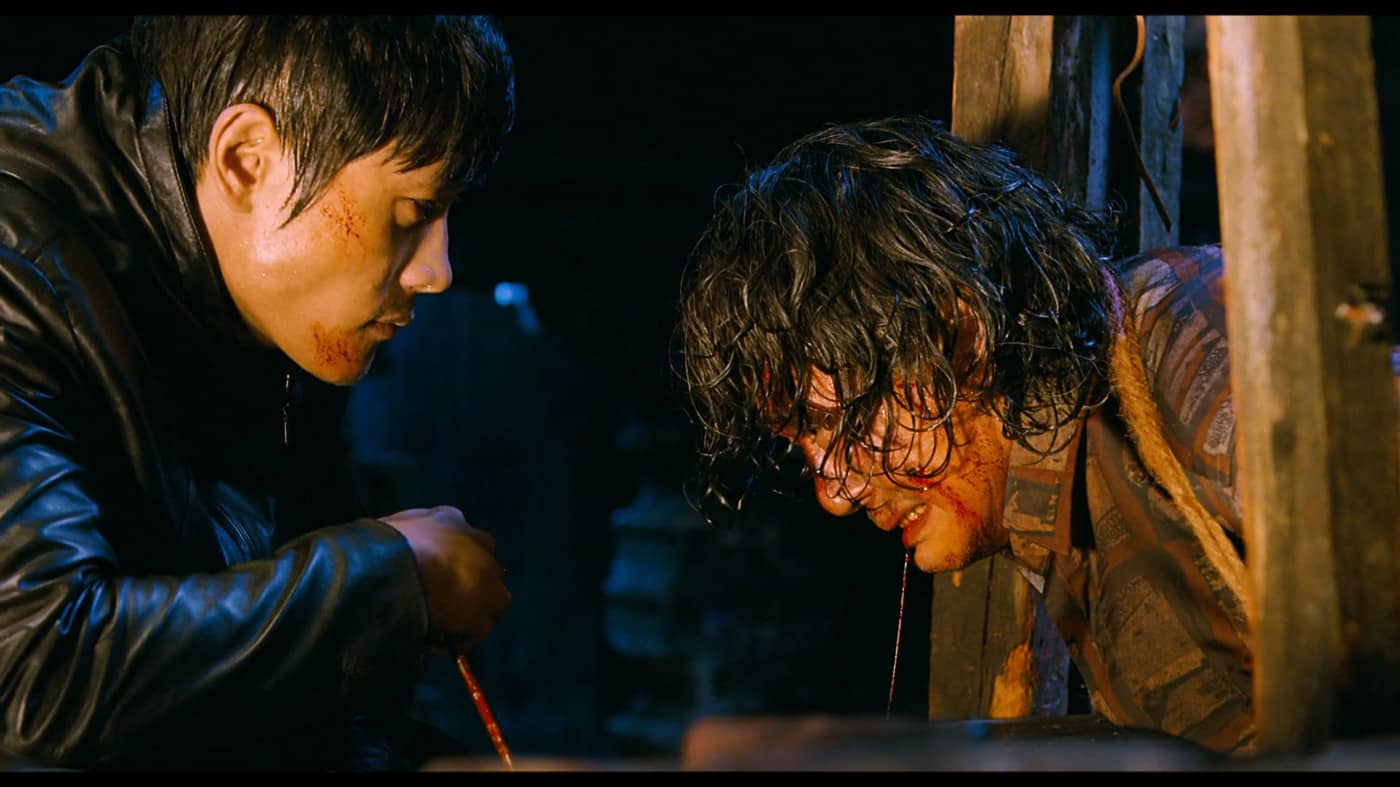
“I Saw the Devil” is one of the best samples of revenge-themed violent action thrillers to come out of South Korea. After sadistic murderer Kyung-chul kills special agent Soo-hyun’s fiancée, Soo-hyun quickly identifies him but chooses not to kill or arrest him. Instead, he initiates an increasingly vicious game of capture, torture and release, with the roles of hunter and hunted changing constantly. Kim Jee-woon presents a grotesque work where revenge drives almost everything occurring on screen and gradually erases the borders between good and evil. The graphic depiction of violent and sadistic scenes is intense and frequent, while Lee Mo-gae’s cinematography does not shy away from the grotesqueness and Nam Na-young’s editing maintains the frantic pace. Lee Byung-hun and Choi Min-sik give a true acting recital in one of the most impressive one-on-one duels in Korean cinema.
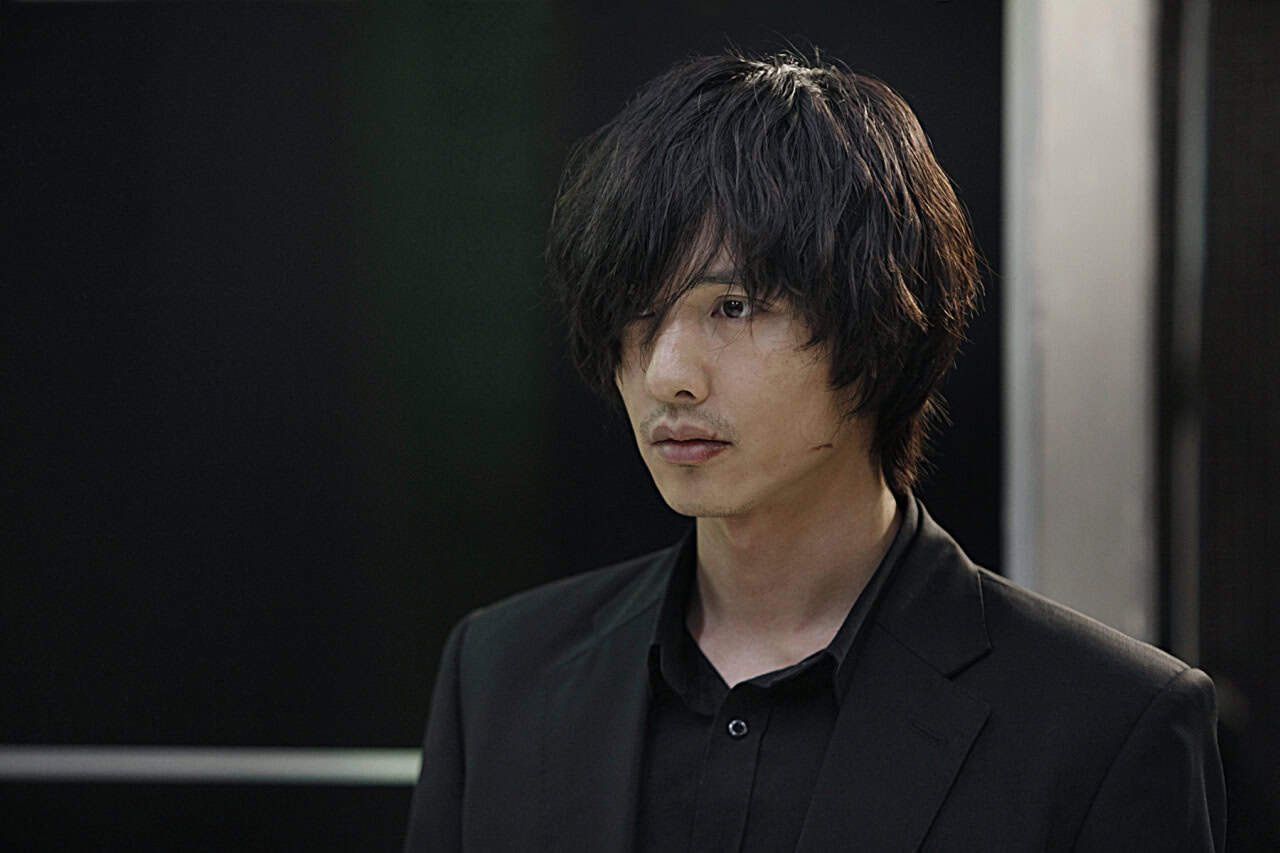
An ex-special agent, Cha Tae-sik, has almost completely withdrawn from society, with his only meaningful connection being his young neighbor So-mi. When the girl’s mother becomes involved with a drug-trafficking organization and both mother and daughter are kidnapped, Tae-sik is drawn back into the violent world he had abandoned. There is nothing especially unique about the central plot, which bears similarities to “Man on Fire”, but Won Bin’s transformation into an action protagonist gives “The Man from Nowhere” much of its impact. The hand-to-hand fighting has something of the “Bourne” series in its DNA, yet the camera allows the audience to follow the choreography rather than hiding it behind excessive shaky movement. The final fight in particular is a standout, while Won communicates a remarkable amount with very little dialogue.
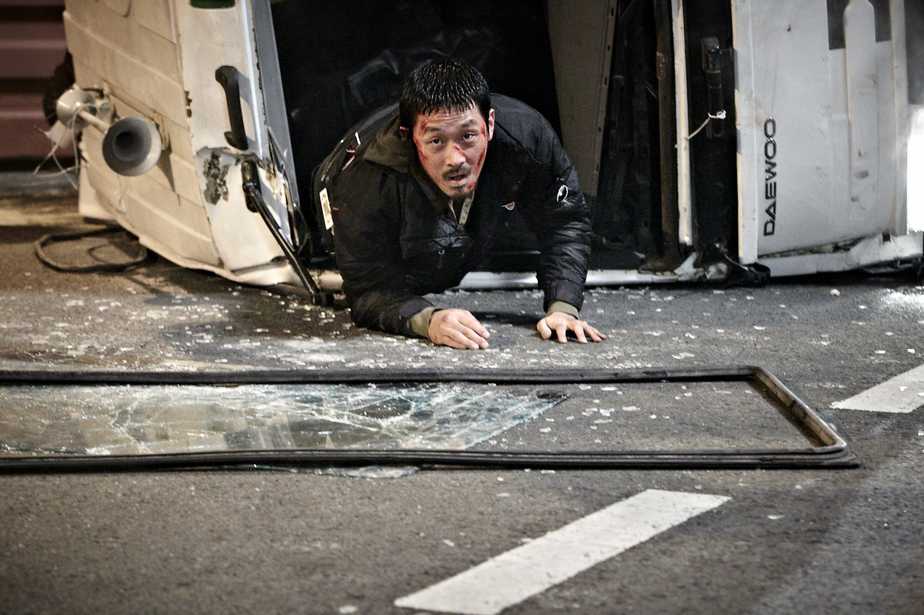
Following “The Chaser”, Na Hong-jin returned with another story built around desperate characters, violence and relentless pursuit. Gu-nam is an impoverished ethnic Korean living in China whose gambling debts leave him at the mercy of the local mafia. Desperate for money and troubled by the disappearance of his wife in South Korea, he accepts an offer to travel there and assassinate a man. The mission rapidly disintegrates as different criminal factions become involved. Na maintains most of the elements that made an impression in his debut, incorporating great characters, desperation, agony and impressive fighting scenes. Lee Sung-je’s cinematography artfully presents both China and Korea, while Kim Sun-min’s editing allows the pace to slow down or accelerate depending on the presence of action. Gu-nam’s transformation from a beaten-down individual to a bloodthirsty murderer is among the movie’s strongest elements.
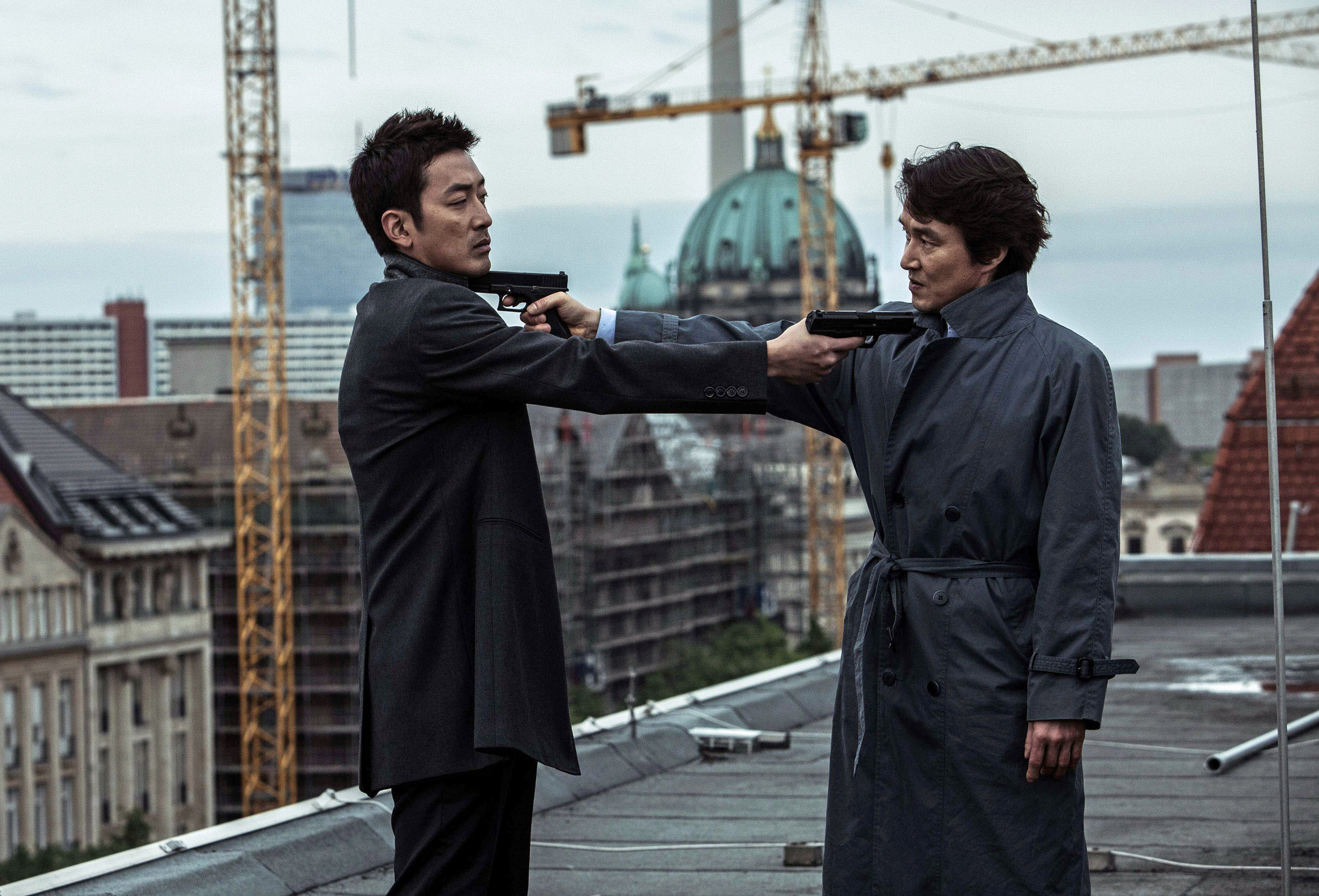
“The Berlin File” was a significant box-office success in South Korea, eventually reaching 7.17 million admissions. Pyo Jong-seong, a North Korean spy living in Berlin with his translator wife, becomes involved in an arms deal with Russians, Middle Eastern terrorists and other intelligence agencies and gradually realizes that his own country may have set him up. Ryoo Seung-wan wanted something similar to “Bourne”, and that is essentially what he accomplished. With a relatively large budget, he shot extensively in Berlin and Riga and incorporated impressive gunplay and one-on-one combat, with action choreographer Jung Doo-hong doing an astonishing job. Choi Young-hwan’s cinematography is at a similar level, particularly in the elaborate panoramic images and the final action sequence. The script eventually becomes overly complicated, but as a gun-driven action production, it remains one of Ryoo’s most ambitious early blockbusters.
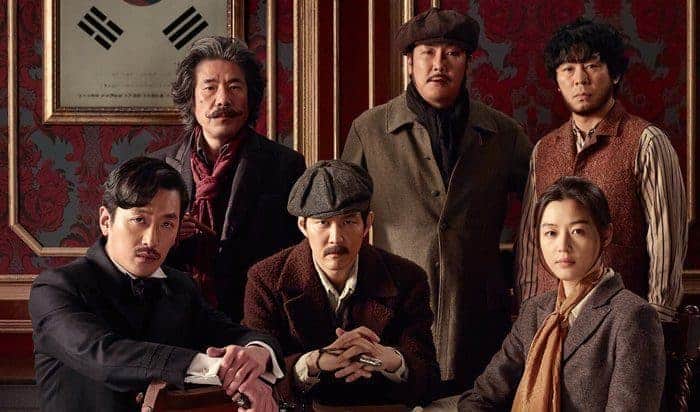
“Assassination” was the highest-grossing South Korean movie of 2015 and is set during the Japanese occupation of Korea in the 1930s. A sniper, a gun smuggler and an explosives specialist are tasked with killing the governor of Gyeongseong and a pro-Japanese Korean businessman, only for betrayals, contract killers and mistaken identities to complicate the mission. Choi Dong-hoon tries to infuse a genuine action production with historical depth through conspiracies and questions of patriotism versus profit, although character development sometimes suffers beneath the abundance of plot. In terms of pace and aesthetics, “Assassination” moves rapidly, occasionally resembling a music video, and includes women fighters, unexpected humor, martial arts, flashbacks and numerous elaborate set pieces. Kim Woo-hyung’s cinematography and Shin Min-kyung’s editing are masterful, particularly during the spectacular wedding sequence.
Veteran (2015) by Ryoo Seung-wan
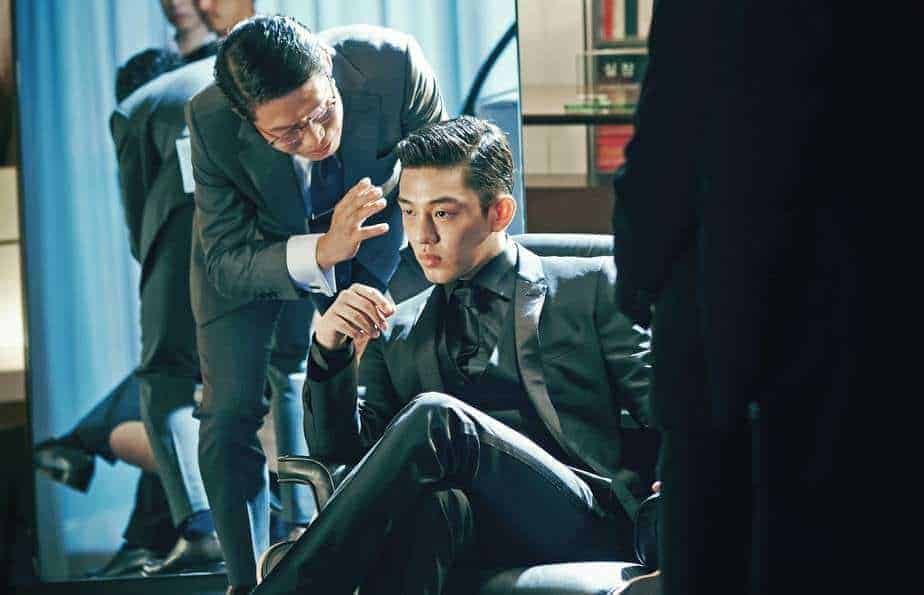
To call Ryoo Seung-wan’s “Veteran” a wall-to-wall success would be no understatement. The action comedy became one of the highest-grossing domestic movies in South Korean history and earned Ryoo the Blue Dragon Award for Best Director. Veteran policeman Seo Do-cheol first encounters contemptible corporate heir Jo Tae-oh at a television party, but his interest becomes an investigation after a truck driver is nearly killed following a dispute over unpaid wages. Ryoo depicts a deliberately uncomplicated clash between corporate power and ordinary workers, with Hwang Jung-min providing the charisma and Yoo Ah-in creating an extraordinarily hateful antagonist. Another astute aspect is the frenetically choreographed action, with Jung Doo-hong giving the fights dance-like fluidity while the swift editing and visceral sound emphasize every impact. “Veteran” remains a pacy and exciting example of Ryoo’s ability to combine action, comedy and social anger.

Yeon Sang-ho transformed the zombie genre into one of the most internationally successful Korean blockbusters with “Train to Busan”, which exceeded 11.5 million admissions domestically. The story traps a group of passengers aboard a train during a rapidly spreading zombie outbreak, with the confined setting making the creatures’ speed and relentlessness particularly onerous. Yet humans are frequently scarier than the infected, and Yeon uses their behavior to comment on ambition, socioeconomic inequality and self-preservation. Humor derives primarily from the human characters and prevents the tension from becoming monotonous, while the drama ensures the production never becomes merely a succession of action scenes. Yeon’s animation background is also apparent in the exaggerated movement of the zombies and several spectacular effects sequences. Using the train as the primary location proved inspired, with the constricted frame and Yang Jin-mo’s editing continually reinforcing the claustrophobia.
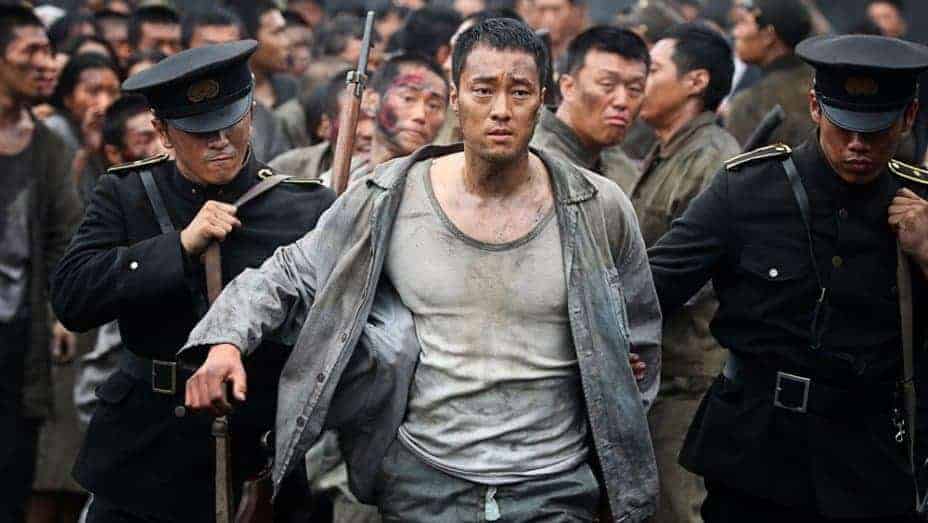
Ryoo Seung-wan’s “The Battleship Island” takes a real historical setting and uses it as the basis for a largely fictional action adventure. During the Japanese occupation, Korean prisoners are transported to Hashima Island and forced to work in brutal coal mines before a group begins planning a mass escape. Among the most enjoyable elements is the massive sense of scale and grandeur, with the dirty, oppressive mining environment giving way to a spectacular prison-break finale. The sprawling sets allow extensive stunt work and choreography, and Ryoo increasingly pushes the proceedings toward sensationalistic action. At the same time, the number of characters and subplots creates an excess of melodrama, a recurring tension within mainstream Korean action cinema where emotional material frequently competes with spectacle. Still, as a large-scale action experience, the climactic escape demonstrates the director’s exceptional command of movement and crowds.
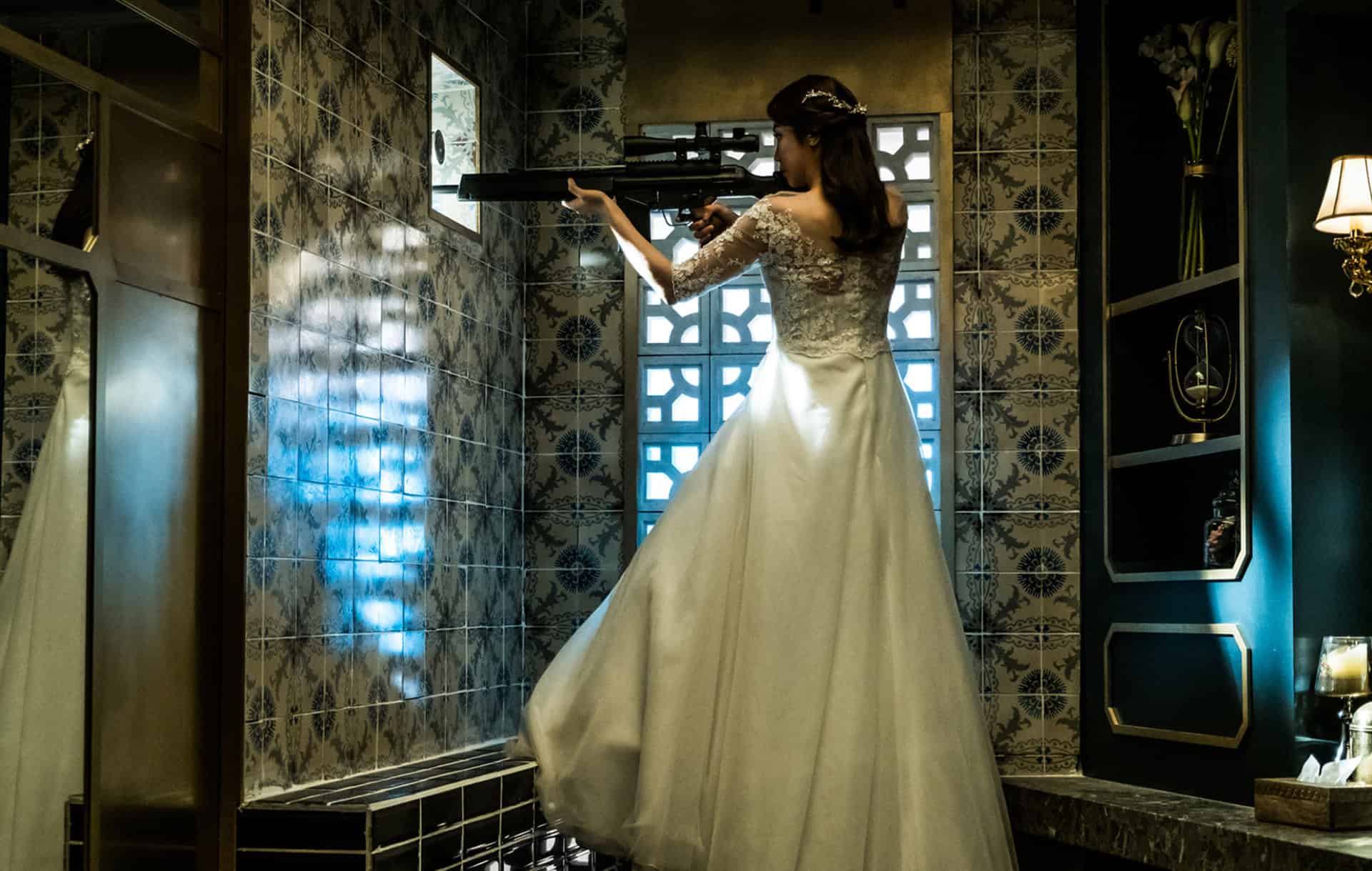
“The Villainess” begins with an extremely impressive action sequence in which an unknown assailant attacks swarms of enemies from a first-person perspective, immediately invoking video-game aesthetics before revealing Kim Ok-bin’s Sook-hee. Violence, martial arts, street fighting, guns and knives combine with Park Jung-hun’s cinematography, Heo Sung-mee’s editing and Koo Ja-wan’s sound to create one of the most elaborate openings in contemporary action cinema. The later chases involve cars, buses and motorcycles and draw on influences ranging from “The Raid” to “A Bittersweet Life”. However, the rhythm falls considerably when the narrative concentrates on Sook-hee’s tragic past and romantic melodrama. Jeong Byeong-gil wisely interrupts these passages with well-placed action, including sequences that border on the style of 1970s Japanese exploitation. The result may be uneven, but the action sequences are definitely among the most striking aspects of the production.
Believer (2018) by Lee Hae-young
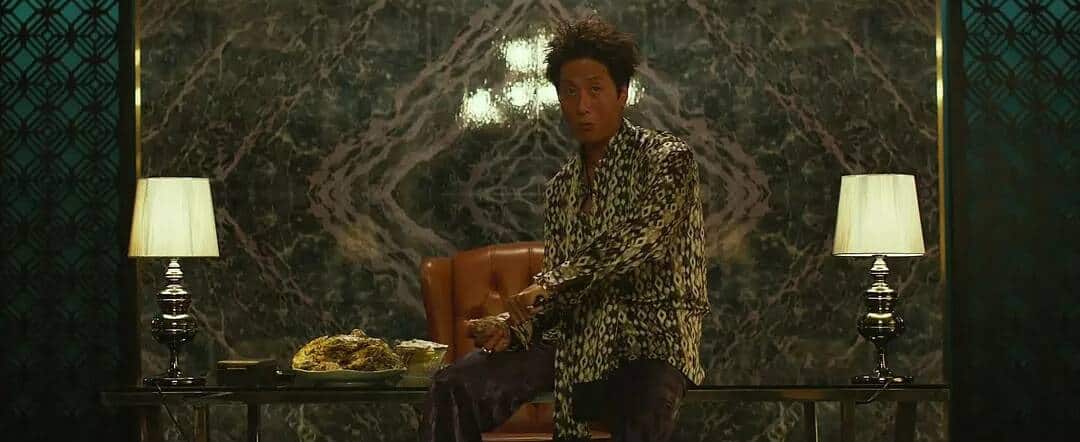
Lee Hae-young adapts Johnnie To’s “Drug War” into the aesthetics of the Korean crime action thriller with “Believer”. Detective Won-ho has spent years pursuing an elusive drug-cartel boss known as Mr Lee, but an explosion provides him with Rock, a low-ranking member who can help him climb through the organization. The narrative is structured almost like an RPG, introducing increasingly dangerous opponents as Won-ho approaches the “final boss”. Character development and shifting identities become as important as the action, while Yang Jin-mo’s quick editing keeps the constant changes in locations and personas tense and energetic. Kim Tae-kyung’s polished cinematography and the production design give the movie a sleek appearance, with explosions and an intense woman-on-woman fight among its strongest action moments. Crucially, Lee largely avoids the melodramatic excess that so frequently accompanies Korean blockbusters, allowing the noirish crime machinery to dominate.
Rampant (2018) by Kim Sung-hoon

Kim Sung-hoon’s “Rampant” takes the zombie outbreak into the Joseon era, combining palace intrigue, martial arts and hordes of infected creatures. A disgraced prince returns to a kingdom threatened not only by political conspiracy but also by a spreading plague whose victims have effectively become demons. The outbreak gradually moves from the outer regions toward the capital, providing the story with a useful escalation of scale, while the action often takes on a wuxia flavor through jumping, sword fighting and wirework. Action choreographer Kim Tae-kang takes advantage of infected characters who are unusually athletic, resulting in sequences that differ considerably from the traditional shambling-zombie model. The political intrigue occasionally weighs the story down, but once the undead descend on the palace, the combination of period imagery, swordplay and horror demonstrates again how Korean cinema can revitalize familiar genres simply by forcing them into each other’s territory.
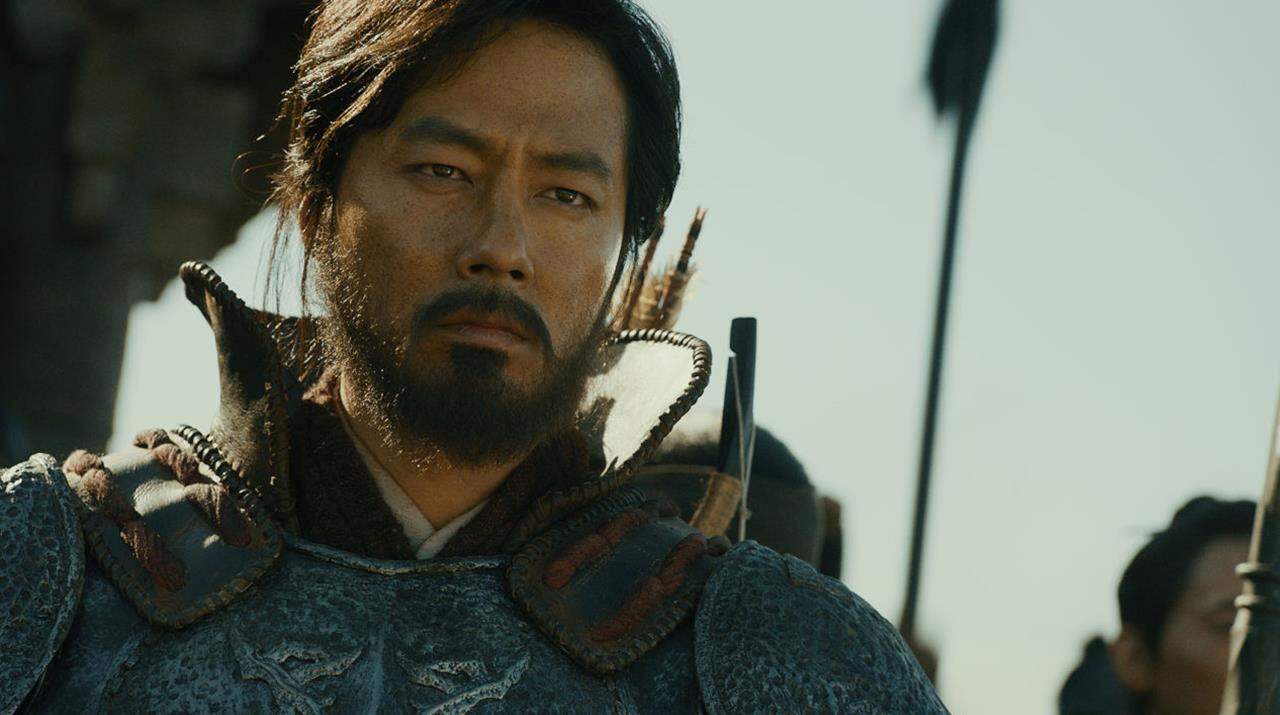
When looked at within a historical action film context, “The Great Battle” has a to to like. This is in large part due to the massive-scale ground battles liberally peppered throughout the film. These provide a jaw-dropping scale full of large-scale combat techniques that showcase the horse-drawn fighters, archers, walled buttresses and ground-based troops being utilized. With these forces utilizing all manner of swords and broad pole weaponry in battle, the carnage on display brings about the kind of brutality usually associated with this kind of combat. There are soldiers that get decapitated, their limbs ripped off, their stomachs or chest sliced open and most impressively, dragged along the ground until being speared by a comrade going the opposite direction. It’s a rather impressive tactic and contributes greatly to the action within here as the numerous battles provide even more to enjoy.
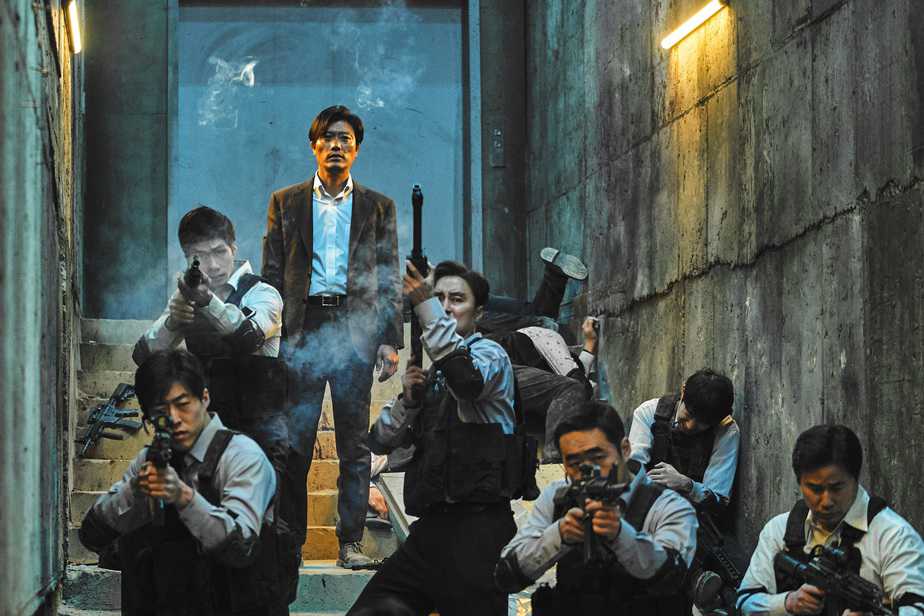
Park Hoon-jung initially disguises “The Witch: Part 1. The Subversion” as a story about an apparently ordinary high-school girl before gradually revealing a world of secret laboratories, genetically enhanced children and extremely violent assassins. Ja-yoon lives quietly with her adoptive parents until appearing on a televised competition draws the attention of people connected to a mysterious past she cannot remember. Park deliberately holds back the action for a large part of the runtime, allowing the revelation of Ja-yoon’s abilities to fundamentally alter both the story and its rhythm. When the violence finally erupts, impossible speed, strength and precision transform the climactic sequences into almost superheroic combat, but without losing the cruelty characteristic of the director’s work. The secret-organization mythology would become increasingly central to Park’s subsequent output, eventually extending through the sequel, “The Tyrant” and “Tristes Tropiques”.
Ashfall (2019) by Lee Hae-jun and Kim Byung-seo
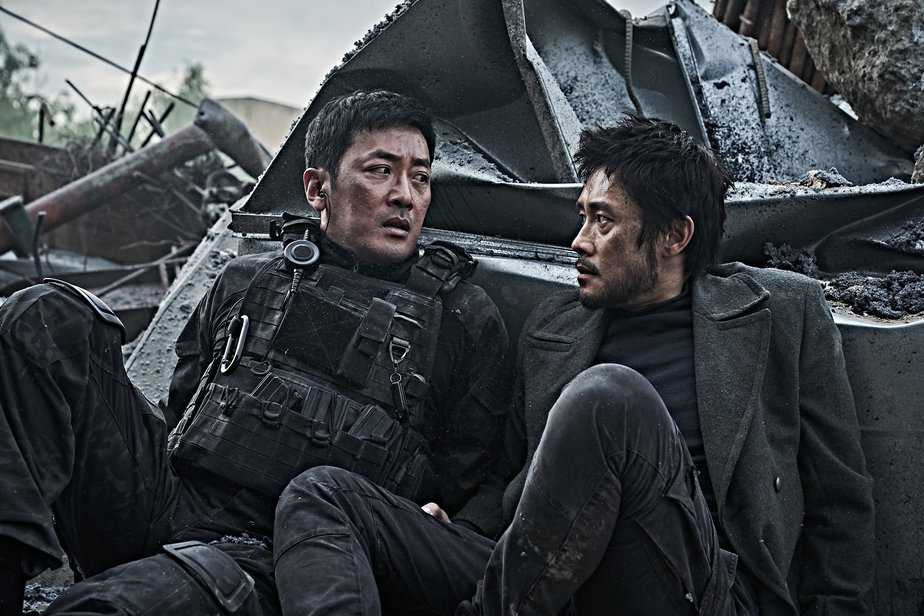
“Ashfall” combines the Korean disaster blockbuster with espionage and military action while bringing Lee Byung-hun and Ha Jung-woo together on screen. A catastrophic eruption of Mount Baekdu threatens the Korean Peninsula, forcing a bomb-disposal specialist into a desperate mission involving nuclear weapons and a North Korean operative who may be the only person capable of helping the team complete its objective. The presence of two filmmakers associated with very different productions, “Cold Eyes” and “Castaway on the Moon”, contributes to a combination of spectacle, humor and character drama. The enormous earthquakes and volcanic destruction provide the blockbuster scale, but much of the entertainment comes from the uneasy relationship between the protagonists. The formula proved commercially effective, with the production becoming one of the major Korean box-office successes of its year, demonstrating that disaster cinema had firmly joined crime and historical stories as a vehicle for Korean action.
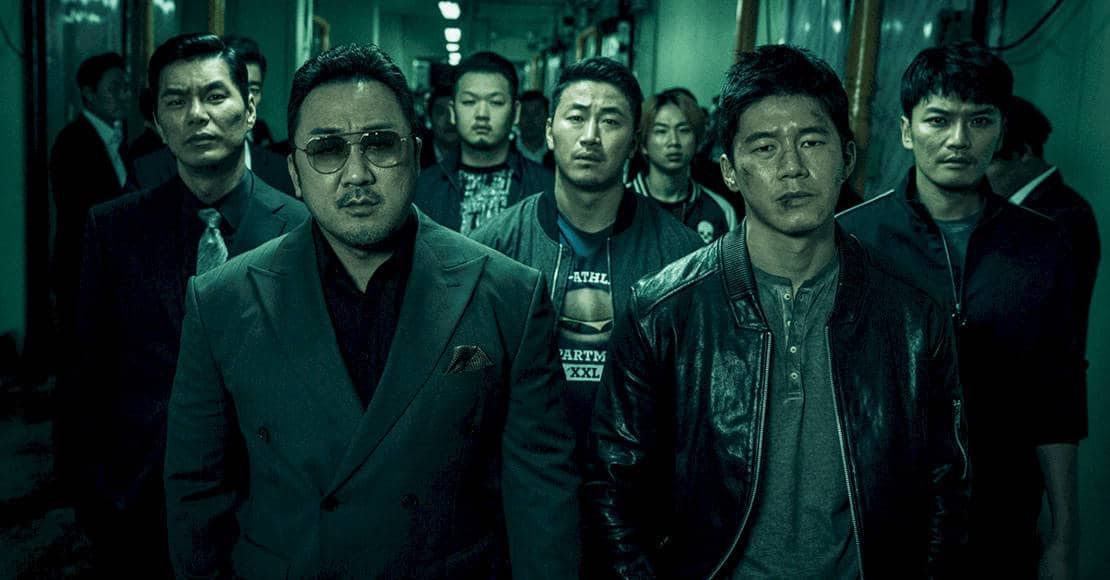
Based on an apparently true story, Lee Won-tae’s “The Gangster, the Cop, the Devil” creates a revenge story that crosses the line of morality more than once. Crime boss Jang Dong-su survives an attack by a serial killer and enters an uneasy alliance with detective Jung Tae-seok, with both men determined to reach the murderer first. Most of the movie’s momentum is fueled by Ma Dong-seok’s brutality, rawness and pure physical presence, while Kim Mu-yeol’s arrogant detective acts as his opposite. These two alpha males interact particularly well together, hero and antihero at close quarters. Tooth pulling and ugly beatings spice up the atmosphere, while the later action and pointed jokes hit the right spots. The backstreets of Seoul become a confusing labyrinth during the final chase, and the result is above all a testimony to the physical power Ma Dong-seok brings to Korean action cinema.
#Alive (2020) by Cho Il-hyung
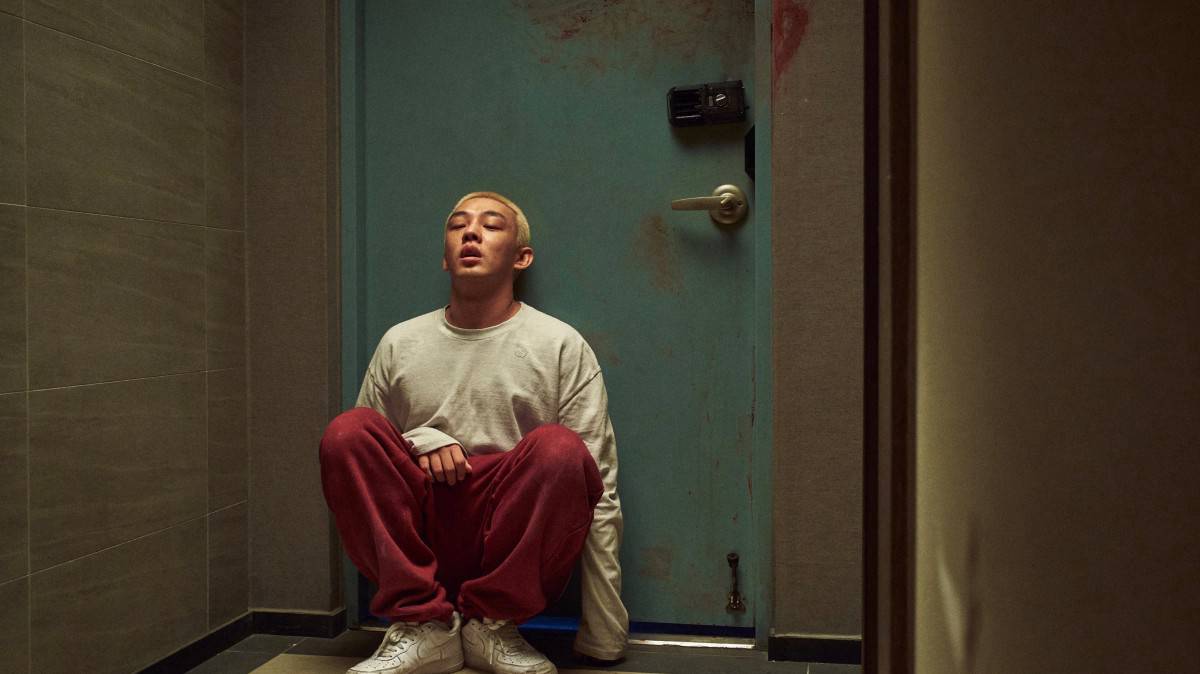
Cho Il-hyung’s “#Alive” brings the Korean zombie cycle into an apartment complex, where gamer Oh Joon-woo becomes trapped alone as an infection overwhelms Seoul. His isolation initially turns the story into a survival drama built around food, communication technology and loneliness before he discovers another survivor, Kim Yoo-bin, living across the courtyard. Unlike “Train to Busan”, the production does not reach deeply into class allegory or social criticism, instead prioritizing immediacy and surface-level entertainment. That simplicity is also part of its appeal. The confined locations create clear spatial limitations, and the eventual movement outside the apartments gives the action an effective burst of momentum. Released amid the Covid era, “#Alive” also became an important domestic box-office title at a moment when Korean theaters badly needed audiences, making its survival narrative unexpectedly appropriate for the circumstances of its release.
Deliver Us from Evil (2020) by Hong Won-chan
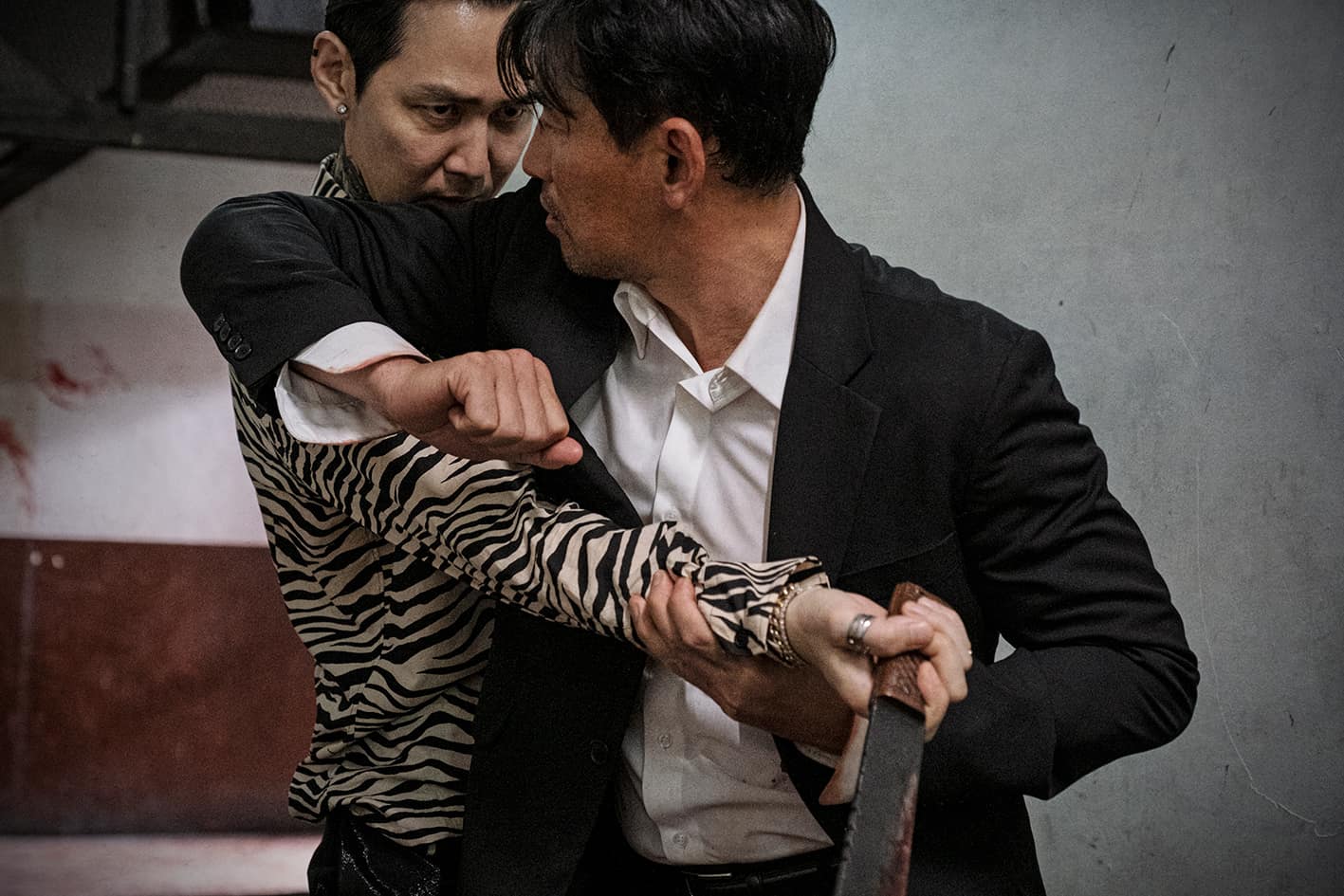
Hong Won-chan builds “Deliver Us from Evil” around two relentless men moving toward an inevitable confrontation. Hwang Jung-min plays In-nam, a contract killer preparing to retire who is drawn to Thailand by the kidnapping of a young girl, while Lee Jung-jae is Ray, an extravagantly dressed killer pursuing him for revenge. The premise allows the production to move across countries and through a succession of fights, shootings and chases, with the action frequently carrying a brutal efficiency. What truly lifts the material is the contrast between Hwang’s exhausted, increasingly desperate protagonist and Lee’s flamboyant embodiment of violence. The cinematography and editing occasionally experiment with speed and freeze-frame-like movement, lending certain clashes an unusually stylized texture. Rather than overloading its action with mythology, the movie concentrates on pursuit, physical punishment and two charismatic performers, resulting in one of the leaner Korean action thrillers of the period.
Night in Paradise (2020) by Park Hoon-jung
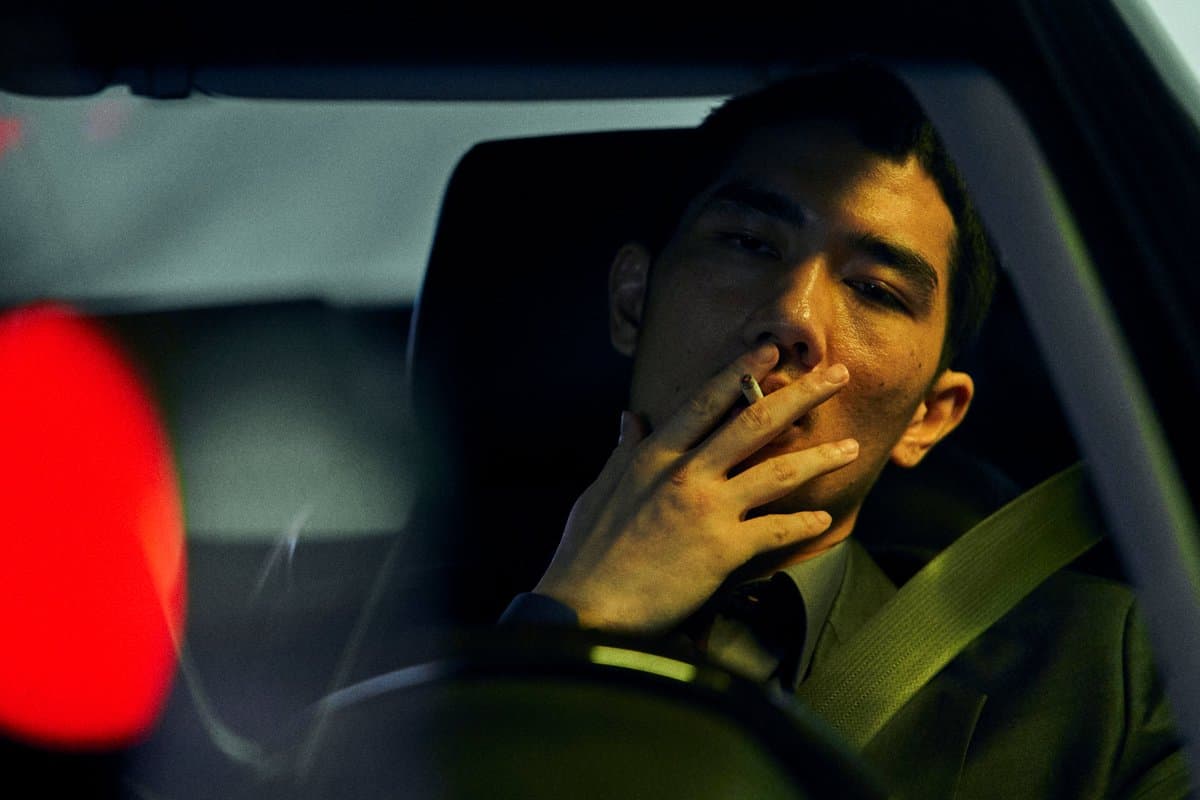
With “Night in Paradise”, Park Hoon-jung returned to the gangster territory of “New World”, although with a more mournful and fatalistic approach. Tae-gu, a mobster whose family is murdered, retaliates against a rival organization before being sent to Jeju Island to hide. There he meets Jae-yeon, a terminally ill young woman whose blunt attitude contrasts with his increasingly desperate circumstances. The picturesque island setting works deliberately against the violence and inevitable tragedy, with criminal betrayals slowly closing in on the protagonists. Park’s familiar interest in hierarchies, loyalty and merciless professional killers remains present, but the action is less constant than in several of his later works, arriving instead in sudden bursts of extreme brutality. The result is as much a gangster tragedy as an action production and demonstrates how readily the Korean crime genre allows violence, melodrama and existential despair to occupy the same space.
Peninsula (2020) by Yeon Sang-ho
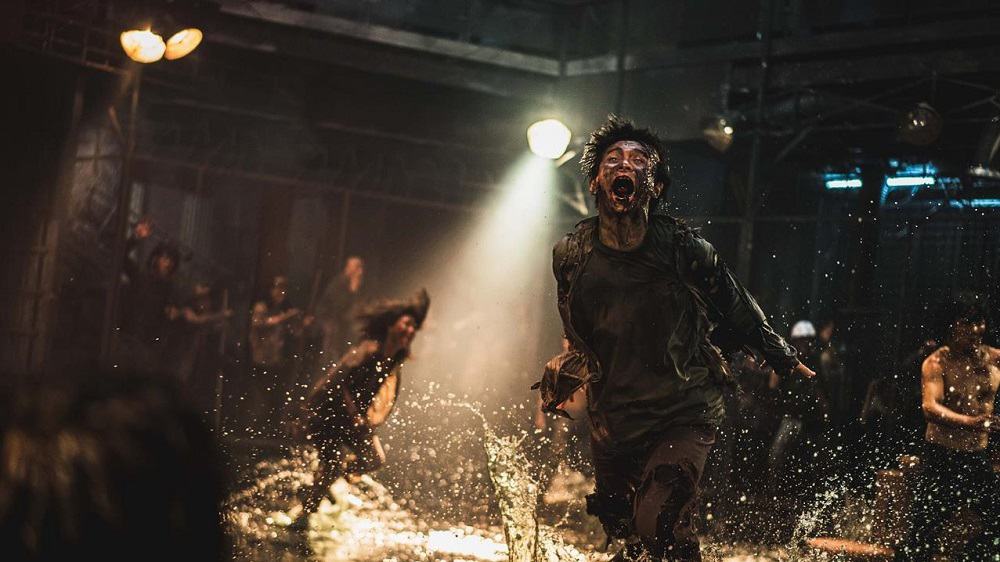
Four years after the events of “Train to Busan”, Yeon Sang-ho expands his zombie world from the claustrophobic confines of a train to an entire devastated peninsula. Former soldier Jung-seok is sent back into South Korea as part of a mission to retrieve a truck filled with money, only to encounter survivors, violent militia groups and enormous numbers of infected. The change in scale fundamentally changes the action, with car chases, gunfights and post-apocalyptic imagery replacing much of the original’s enclosed terror. Consequently, the production often resembles a comic-book “Mad Max” variation more than a conventional horror movie. The conspicuous CGI and unnecessary subplots weaken some of the spectacle, and the sequel does not carry the impact of “Train to Busan”, but taken on its own terms it remains an enjoyable action-heavy extension of Yeon’s world.
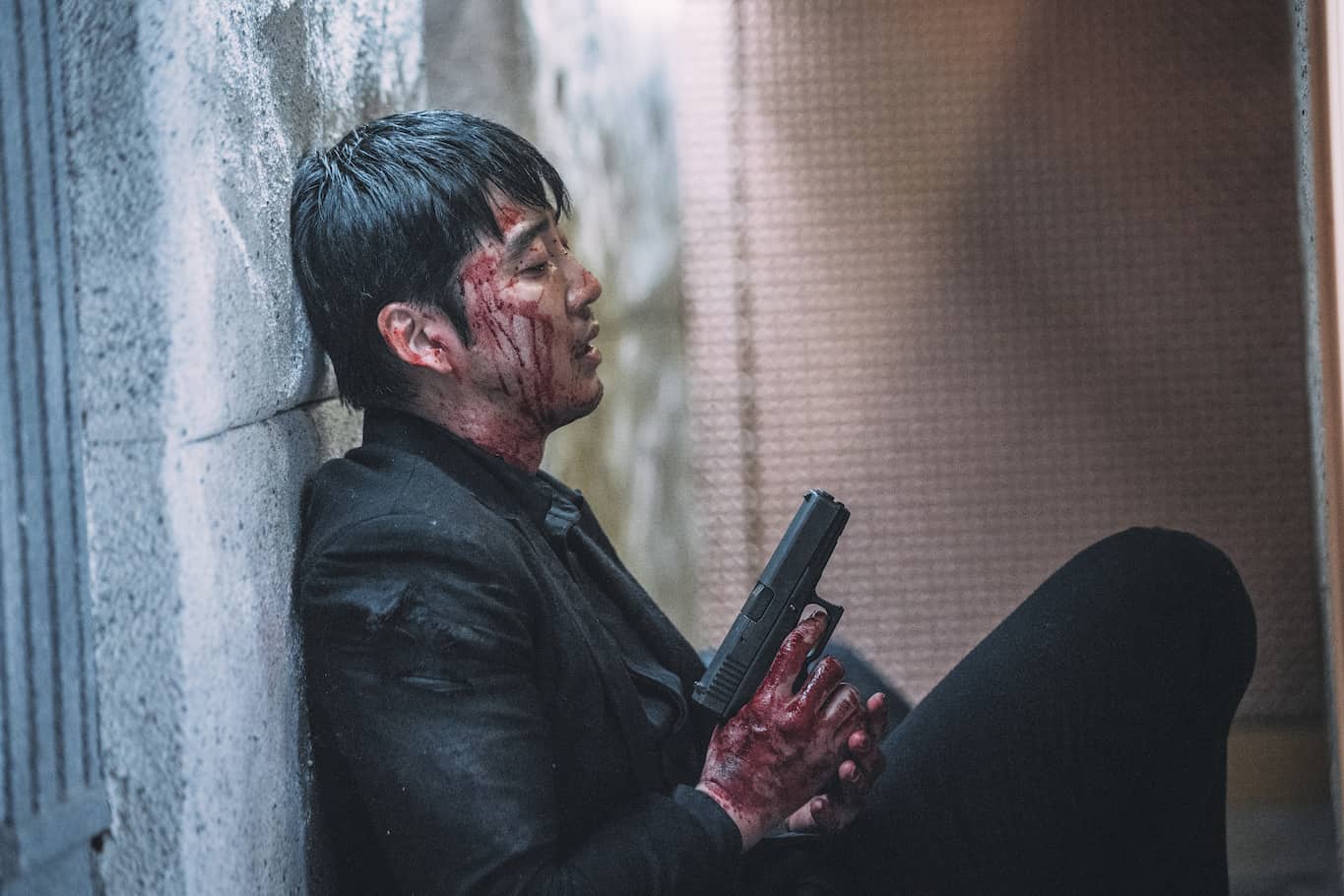
The body-swap concept has been used repeatedly in Asian cinema, usually in romance and comedy, but Yoon Jae-keun places it inside an action thriller in “Spiritwalker”. A man wakes after a car accident with no memory and soon discovers that every twelve hours he moves into a different body while government agents and criminals pursue him. The dilemma puts a fresh spin on both memory loss and body swapping, while identity becomes a key theme as the protagonist follows fragments of emotions and memories to discover his true self. “Spiritwalker” comes to life as soon as the action starts. Hand-to-hand combat, gunfights, car chases and foot chases are all present, while flowing camera movements and minimal edits highlight the stunt work. Korean cinema seems to be on a mission to reinvent itself within the action genre, and “Spiritwalker” successfully registers its name among the more interesting recent examples.
Choi Jae-hoon’s feature debut “The Swordsman” takes place during the turbulent transition from the Ming to the Qing dynasty. Tae-yul, a former royal swordsman gradually losing his sight, lives quietly with his daughter until she is kidnapped by men working for the powerful slave trader Gurutai, forcing him to pick up his sword again. Despite the complicated historical background, the confrontation between Tae-yul and Gurutai and the relationship between father and daughter provide the story with a solid foundation. Choi also uses Tae-yul’s deteriorating sight as a fitting metaphor for a period in which orientation and security could disappear instantly. Jang Hyuk and Joe Taslim are particularly effective, but it is the action choreography where “The Swordsman” truly shines, making each fight a visual feast of speed and elegance reminiscent of the “Rurouni Kenshin” productions.
Time to Hunt (2020) by Yoon Sung-hyun
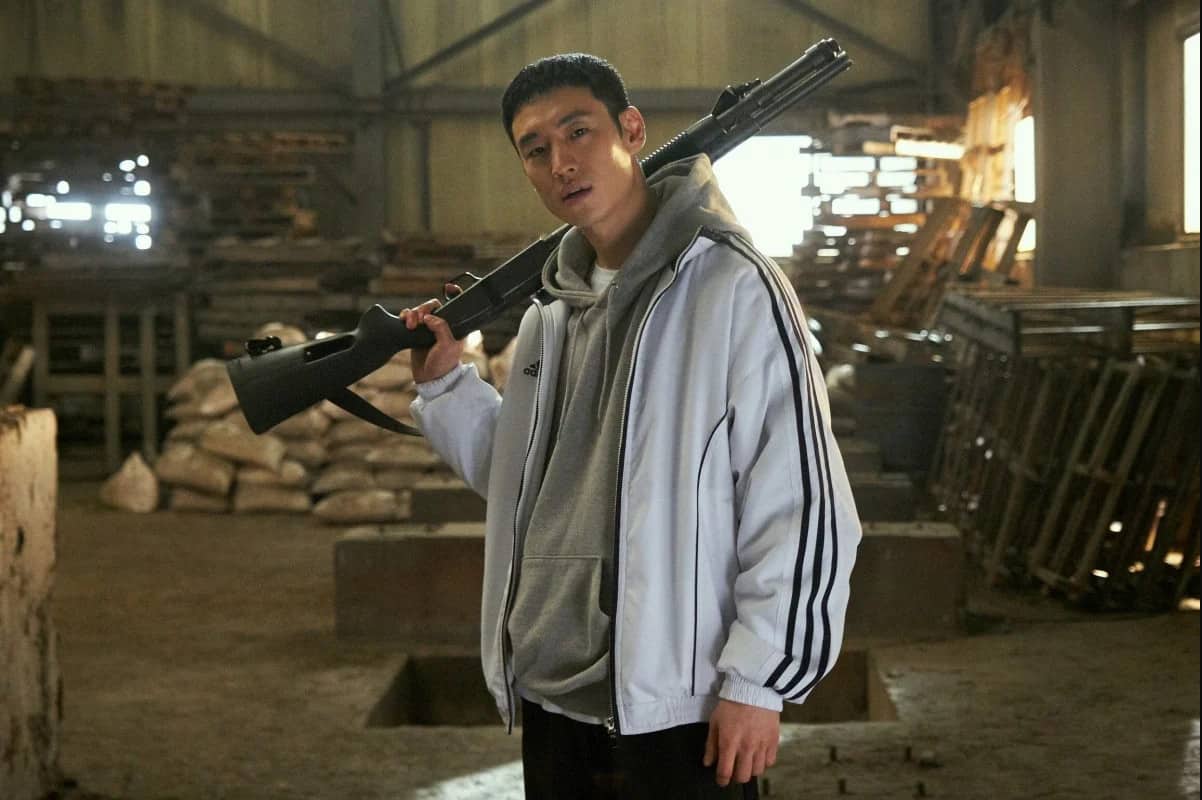
Yoon Sung-hyun’s “Time to Hunt” imagines a retro-dystopian Korea in which four young friends attempt a robbery before becoming prey for the frightening assassin Han. The filmmaker described the dystopian world not as a prediction but as a visualization of the desperation, powerlessness and anxiety experienced by the contemporary young Korean generation. Although conceived as pure genre, the story inevitably reflects the dark side of capitalism, while its aesthetics merge Korean emotions with Yoon’s love of westerns, “Alien”, “Terminator” and “Mad Max”. Guns, relatively unusual as the primary language of Korean action, are everywhere, but Yoon deliberately trained the young protagonists only enough for them to handle weapons safely so their discomfort would remain visible. Han, by contrast, moves with the confidence of a professional, turning the increasingly brutal chase into the movie’s central source of suspense.
Escape from Mogadishu (2021) by Ryoo Seung-wan

Ryoo Seung-wan again combines political circumstances with crowd-pleasing action in “Escape from Mogadishu”. Set during the Somali Civil War in 1991, the story follows diplomats from the rival South and North Korean embassies who are forced to cooperate when Mogadishu descends into violence and their respective governments cannot reach them. Ryoo spends considerable time establishing the distrust between the two delegations before transforming the second half into a survival and escape narrative. The climactic convoy through the city is the obvious action centerpiece, using cars reinforced with books and other improvised protection as gunfire erupts around them. Yet the spectacle works because the relationships have already been established, allowing the action to become an extension of the uneasy political cooperation rather than an isolated set piece. Once again, Ryoo proves particularly adept at making large-scale mainstream entertainment without abandoning specifically Korean historical and political concerns.
Shark: The Beginning (2021) by Chae Yeo-jun
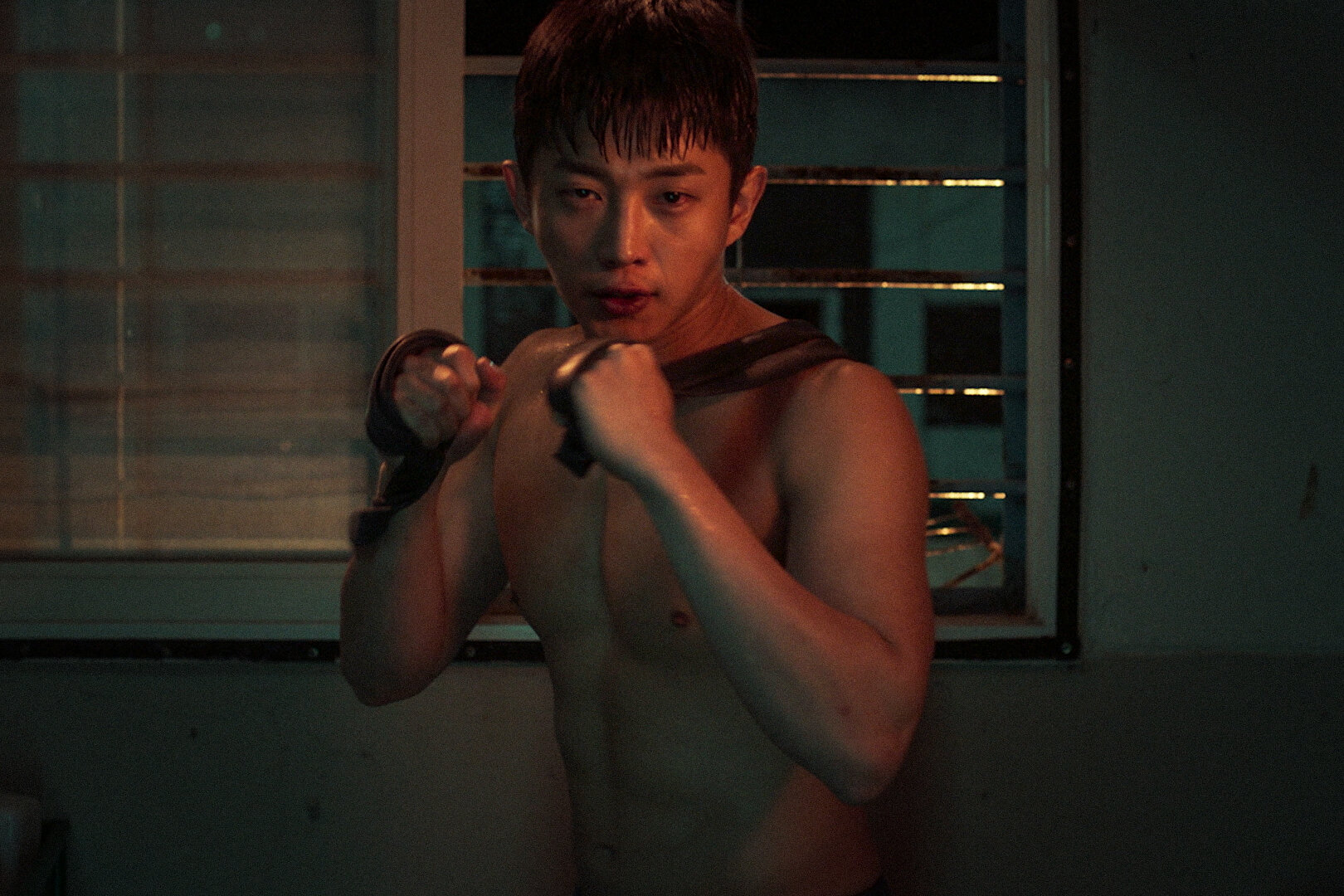
Based on a webtoon, Chae Yeo-jun’s “Shark: The Beginning” follows Cha Woo-sol, a teenager severely bullied at school who ends up in juvenile prison after finally fighting back. There he encounters Jung Do-hyun, a former mixed martial arts champion whose guidance gradually transforms the frightened young man into someone capable of defending himself. The familiar training narrative provides the framework, but the prison environment gives the material considerably more brutality than a conventional sports drama. Action develops directly from Woo-sol’s psychological transformation, with fighting becoming both a means of survival and a route toward recovering his dignity. The production relies more on hand-to-hand combat than blockbuster spectacle, illustrating another strand of Korean action cinema in which webtoon adaptations and youth narratives provide opportunities for tightly focused martial arts choreography rather than enormous set pieces.
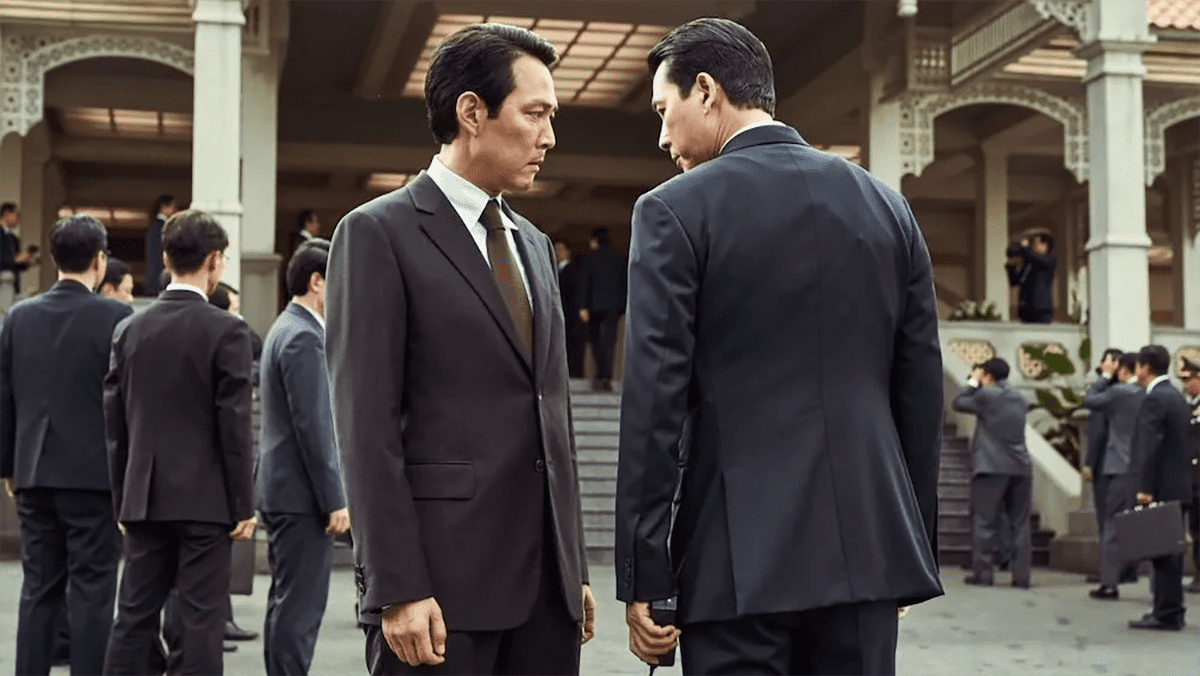
Lee Jung-jae’s directorial debut “Hunt” turns the political paranoia of 1980s South Korea into an extremely fast espionage thriller. Intelligence officers Park Pyong-ho and Kim Jung-do are placed in charge of separate units investigating a North Korean mole inside their own agency, with each eventually suspecting the other. Assassinations, torture, explosions, surveillance and double-crosses pile up at a remarkable rate, while real historical circumstances repeatedly intrude upon the fictional conspiracy. The sheer density of information can become overwhelming, but Lee deliberately maintains a breathless pace that rarely allows the audience or his characters to feel secure. The physical action works alongside political intrigue rather than replacing it, and the constant suspicion between Lee Jung-jae and Jung Woo-sung provides the emotional spine. “Hunt” is consequently a particularly ambitious example of the Korean tendency to make political history function as blockbuster machinery.
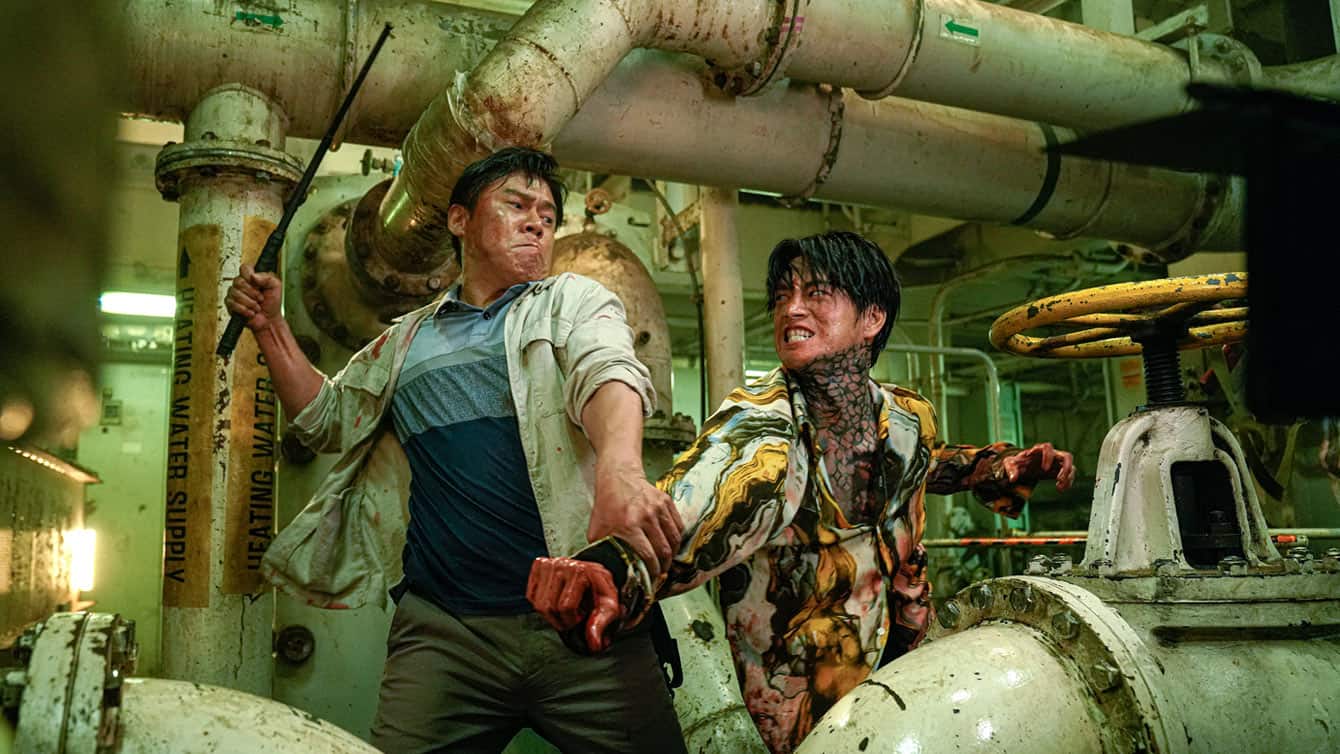
Kim Hong-sun’s movies are always intensely thrilling and, more often than not, quite violent, and “Project Wolf Hunting” takes this tendency to an extreme. Told through multiple perspectives aboard a cargo ship travelling from Manila to Busan, the story initially concerns dangerous criminals who have spent considerable time planning their escape during transport. However, lies and corruption gradually reveal secrets dating back to Imperial Japan’s occupation of the Philippines during World War II, while the body count escalates dramatically. The production begins as an ominous slow burn, with Hong-sun introducing the guards and inmates and continually suggesting that plans are unfolding in the background. Once things pick up, though, they do not stop until the final seconds. “Project Wolf Hunting” starts as an eerie slow-burn movie, transitions into a sleek action thriller and finally becomes a dreadful horror romp, highlighting Korean cinema’s willingness to blend genres and subvert expectations.
Special Delivery (2022) by Park Dae-min

Park Dae-min’s “Special Delivery” combines fast-paced action with drama and a central performance by Park So-dam. Eun-ha is a highly skilled driver whose job is to deliver anything the regular postal service cannot, including criminals. One assignment leaves her protecting a young boy while corrupt police and gangsters pursue them, shifting the story from car-centered action into a variation on the reluctant-protector narrative. Park has spoken about his admiration for Takeshi Kitano and Bong Joon-ho as well as his desire to make Hollywood-like blockbusters, and “Special Delivery” clearly moves toward that goal. The driving sequences are the main attraction, but the relationship between Eun-ha and the child gives the pursuit an emotional center. In broader terms, the production also belongs to the increasing number of Korean genre movies that place women in action roles previously reserved almost exclusively for men.
The Killer (2022) by Choi Jae-hoon

Choi Jae-hoon has positioned himself as one of the newer hopes of action-based Korean cinema, moving from the historical spectacle of “The Swordsman” to horror with “The Hypnosis” and then straight action with “The Killer”. Bang-ui, played by Jang Hyuk, is a semi-retired mob assassin whose attempt at a peaceful life is interrupted when he is asked to babysit his wife’s friend’s teenage daughter and becomes entangled in a prostitution ring. Once the improbable arrangement is accepted, the script essentially propels the action from one choreographed sequence to another. The fights and shootouts are refreshing in their creativity, particularly in their elaborately brutal methods of disposing of expendable villains. Choi’s directing is sure-handed, while Jang Hyuk has the presence and timing necessary for the material. Ultimately, “The Killer” is a stylish, fun, intense, lean and occasionally mean action flick.
The Roundup (2022) by Lee Sang-yong

“The Roundup” takes the successful formula of “The Outlaws” and doubles up on almost everything that made its predecessor work. Detective Ma Seok-do travels to Vietnam to repatriate a suspect but discovers that Korean tourists have been disappearing, leading him toward ruthless kidnapper Kang Hae-sang. The humor is more frequent, while the action is both more violent and more accomplished. Particularly notable is the use of small, congested spaces, including a Ho Chi Minh City apartment, an elevator and a Seoul public bus. Naturally, there are also numerous crowd-pleasing one-punch knockouts performed in the way only Ma Dong-seok can. Son Suk-ku’s terrifying Kang Hae-sang provides an excellent antagonist, while Kim Sun-min’s precise editing keeps the narrative moving at a brisk 106 minutes. It is evident why “The Roundup” became the biggest Korean movie of 2022 and consolidated Ma Dong-seok’s hard-man superstardom.
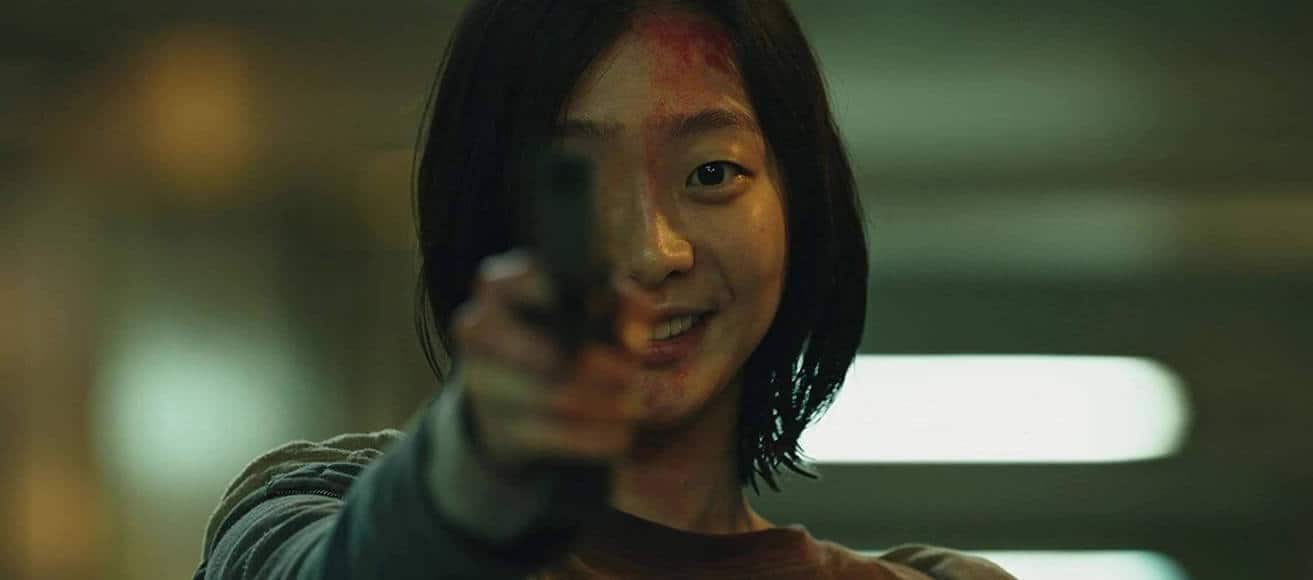
Park Hoon-jung expands the mythology of “The Witch” with another young woman emerging from a secret laboratory and being pursued by multiple groups determined either to control or eliminate her. The narrative follows much of the blueprint established in the first installment, patiently setting up factions, assassins and mysterious relationships before allowing the supernatural action to dominate the final act. The absence of Kim Da-mi’s Ja-yoon for much of the story is noticeable, and the proliferation of characters makes the plot messier, but the action remains the primary reason to watch. Superhuman speed, strength and regeneration are combined with Park’s increasingly graphic approach to violence, resulting in a finale where combatants are thrown through walls, dismembered and attacked from seemingly impossible angles. “The Witch: Part 2” may largely function as connective tissue in a larger mythology, but the action itself is magnificent.
Ballerina (2023) by Lee Chung-hyun

Netflix seems to follow a very specific recipe for its Korean movie content, with many titles being action-oriented, visually impressive and built around at least one star. “Ballerina” ticks all these boxes, with Jeon Jong-seo playing former bodyguard Ok-joo, who embarks on a relentless revenge mission after her friend Min-hee is found dead. The script does not always make sense and offers limited character development, but Jeon is convincing as a goddess of revenge, her cold eyes and overall demeanor fitting the narrative. Visually, the approach is stylized, polished and brutal, with Cho Young-jik’s cinematography among the strongest aspects. Although the action takes too long to properly begin, once it does it becomes almost nonstop. The combination of visuals, editing, music and choreography frequently results in something resembling a savage music video, an approach Korean cinema has been excelling at for years.
Kill Boksoon (2023) by Byun Sung-hyun

Byun Sung-hyun’s “Kill Boksoon” places veteran actress Jeon Do-yeon at the center of a professional-assassin world while contrasting killing for hire with the problems of being a single mother. The movie opens with a tongue-in-cheek confrontation in which Gil Boksoon gives a Japanese yakuza a katana before simply pulling out a gun, immediately establishing the combination of movie references, black humor and stylized violence. Boksoon is virtually unbeatable professionally but has far less control over her relationship with her teenage daughter, while internal rules at the organization employing her eventually place her in conflict with her colleagues. Slow motion, imagined versions of possible fights and elaborate choreography give the action a highly designed quality. The production can become overstuffed and uneven, but Jeon Do-yeon’s commanding presence demonstrates that Korean action’s recent shift toward female protagonists is much more than a temporary novelty.
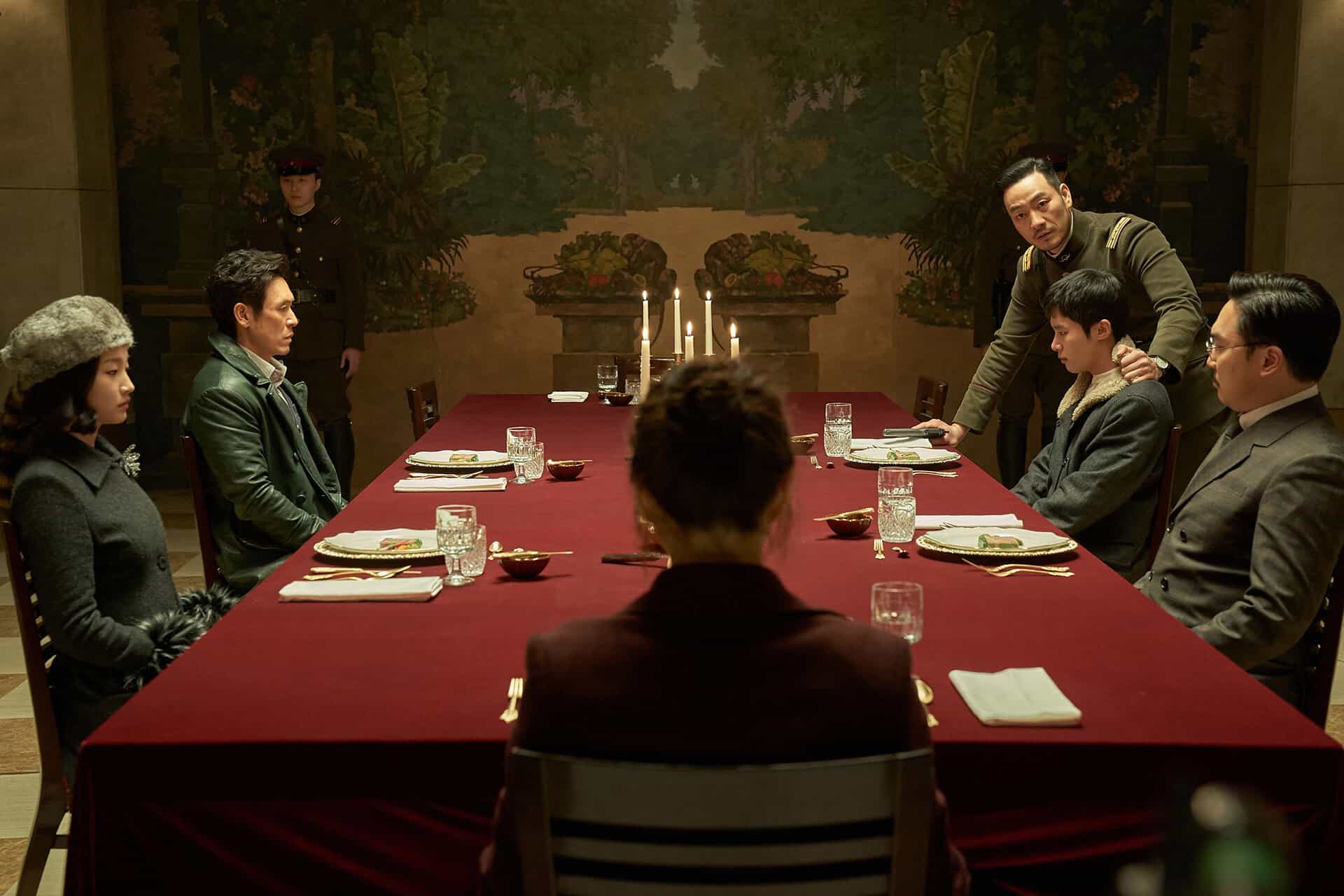
After “Believer”, Lee Hae-young returned with “Phantom”, a historical spy thriller set in Korea under Japanese occupation in 1933. Five suspects believed to include a resistance operative code-named Phantom are imprisoned in a remote hotel and forced to identify the spy among them. What initially unfolds as a confined game of suspicion gradually expands into action, with Lee drawing on American noir, espionage thrillers and the aesthetics of “The Handmaiden”. The almost bicolor imagery, raincoats, cigarettes, coded messages and old cinemas establish an elegant period atmosphere before gunplay and physical confrontation increasingly take over. Particularly significant is the focus on combative female characters, placing “Phantom” alongside “Special Delivery” and “Kill Boksoon” within the wave of new Korean genre cinema centered on powerful women.
Smugglers (2023) by Ryoo Seung-wan
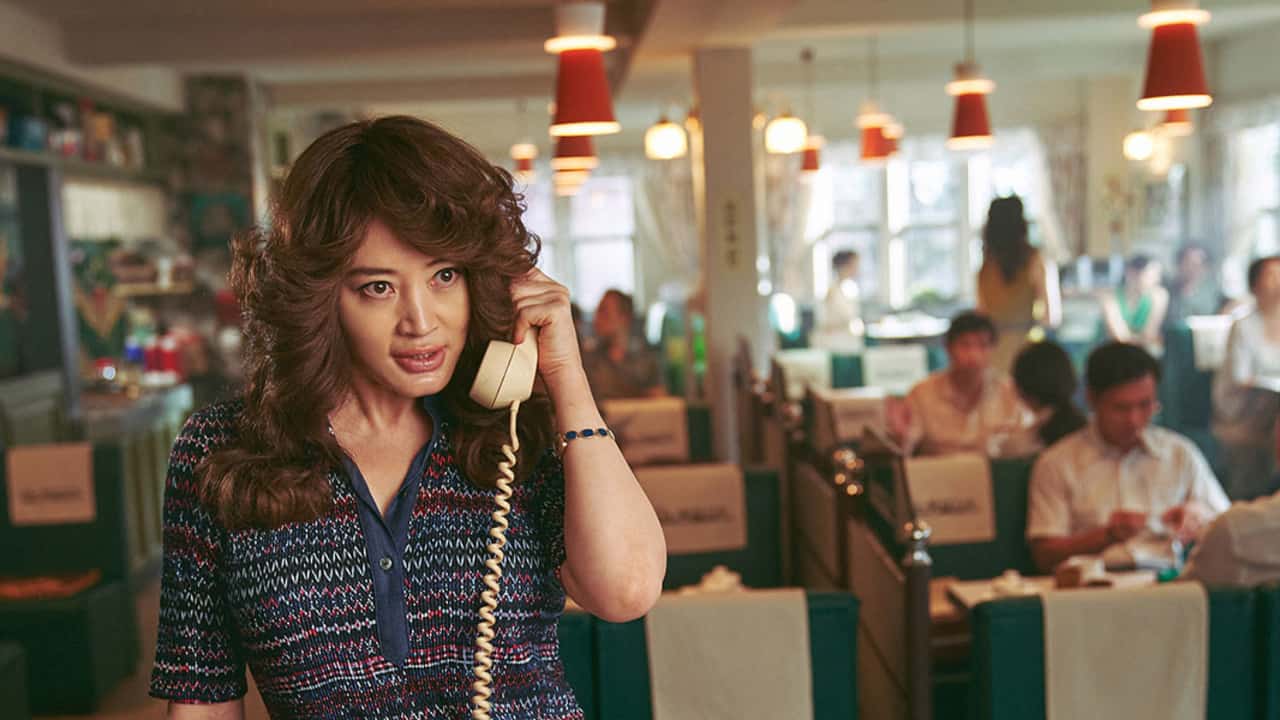
Ryoo Seung-wan’s “Smugglers” is a bright and playful crime production that also takes an insightful look at economic desperation and Korea’s fascination with Western goods. In a coastal town during the 1970s, female divers whose traditional livelihood has been destroyed begin retrieving contraband thrown into the sea, only for their growing smuggling business to draw gangsters, customs officers and betrayals into the equation. Going against the law is presented less as criminal ambition than as a pragmatic response to poverty. Ryoo moves easily between humor, betrayal, underwater danger and physical action, with the female ensemble giving this crime story a notably different energy from his male-centered “Veteran” productions. The underwater sequences provide their own form of choreography while the later fights remind viewers of Ryoo’s credentials as one of South Korea’s foremost action directors.
The Childe (2023) by Park Hoon-jung
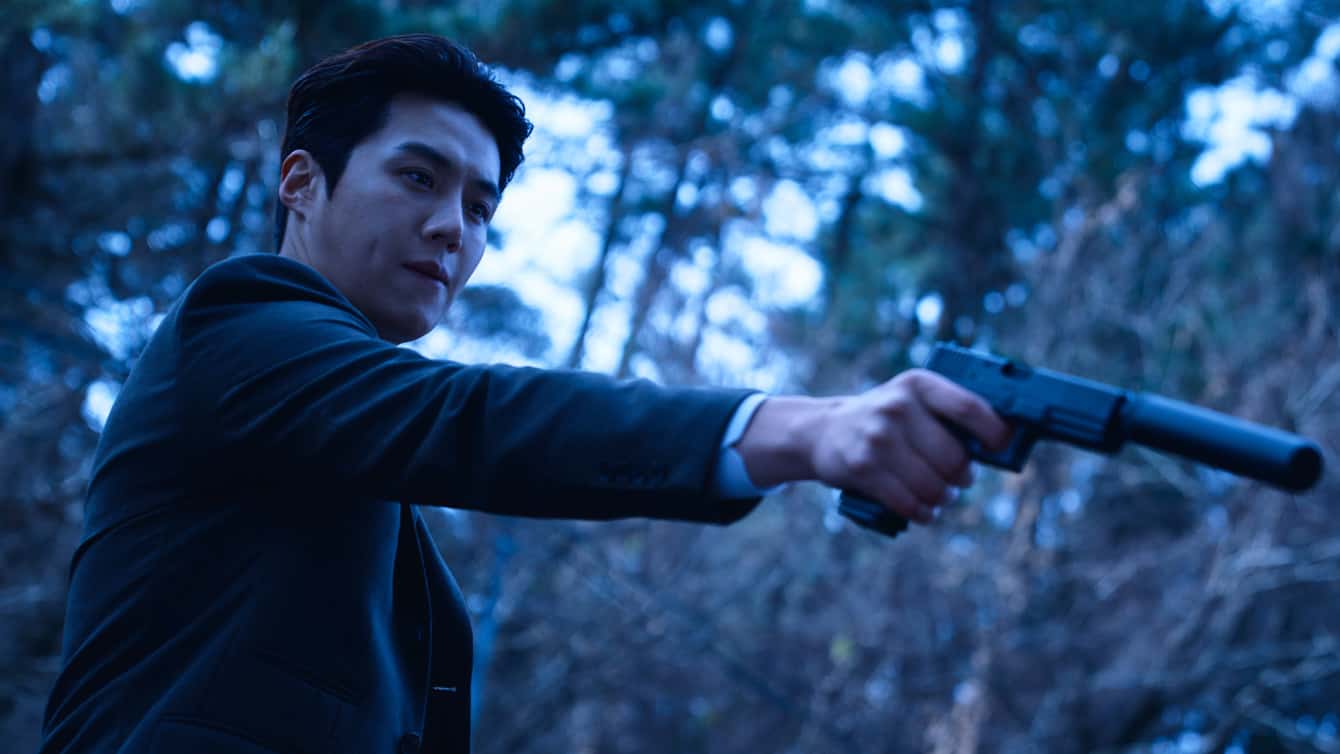
Park Hoon-jung’s “The Childe” begins with Marco, a struggling boxer in the Philippines who travels to South Korea after being contacted by the wealthy family of the father he has never known. Almost immediately, a smiling assassin begins following him, while several other parties reveal competing interests in his existence. Park builds the movie around pursuit, gradually shifting from road-movie tension and dark comedy into gunfights and increasingly elaborate action. Kim Seon-ho’s mysterious Nobleman is the obvious attraction, remaining cheerfully polite even as he kills people and turning what could have been a conventional assassin into an eccentric presence. The movie may not be particularly dense thematically, but it ranks comfortably within Park’s filmography as an action production, and the final all-guns-blazing confrontation is among the director’s strongest recent set pieces.

Seven years after the events of the previous chapter, Ma Seok-do now works with the Metropolitan Investigation Unit and discovers a new drug called Hiper circulating through a network involving Japanese yakuza and a corrupt Korean detective. The plot is a familiar good-versus-evil scenario, but the emphasis is heavy on comedy with exciting action added to please audiences. Ma Dong-seok once again shines as the oversized one-punch knockout detective, while Munetaka Aoki brings a katana and considerable menace as yakuza killer Riki. The supporting characters are thin and the constant one-punch jokes eventually become repetitive, but hardcore fans will find plenty to enjoy in watching Ma throw his fists around and send enemies flying. Commercially, the formula remained remarkably potent, with the production rapidly accumulating more than US$70 million during its original run.
Badland Hunters (2024) by Heo Myeong-haeng
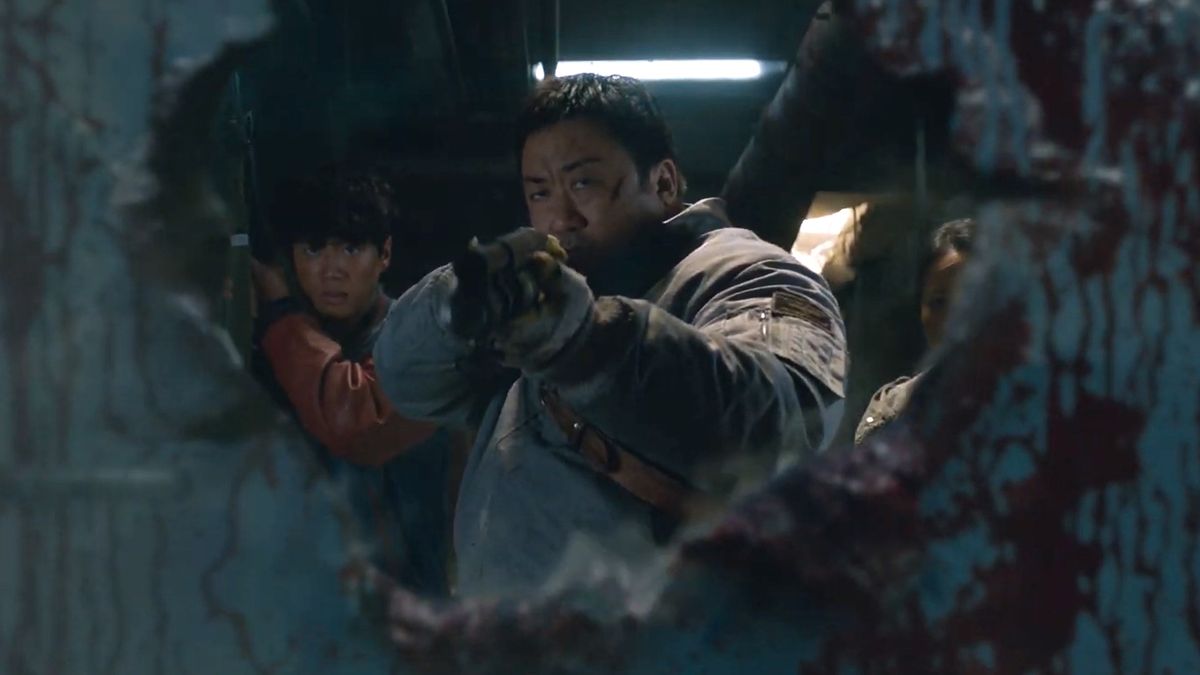
Martial arts coordinator Heo Myeong-haeng made his feature directorial debut with “Badland Hunters”, a post-apocalyptic action story set in a Seoul devastated by an earthquake. Ma Dong-seok plays Nam-san, a hunter who sets out to rescue a young woman taken to an apartment complex controlled by a scientist conducting disturbing experiments. The story is deliberately uncomplicated and character development remains secondary to allowing Ma to smash, shoot and carve his way through successive opponents. That simplicity makes the production closer to an extended action showcase than the socially detailed “Concrete Utopia”, with which it shares its devastated setting. Heo’s experience as a martial arts coordinator is obvious whenever the physical action begins, while Ma’s enormous screen presence once again turns blunt-force violence into entertainment. The movie is less accomplished than Heo’s subsequent “The Roundup: Punishment”, but it provides a revealing bridge between his career as choreographer and director.
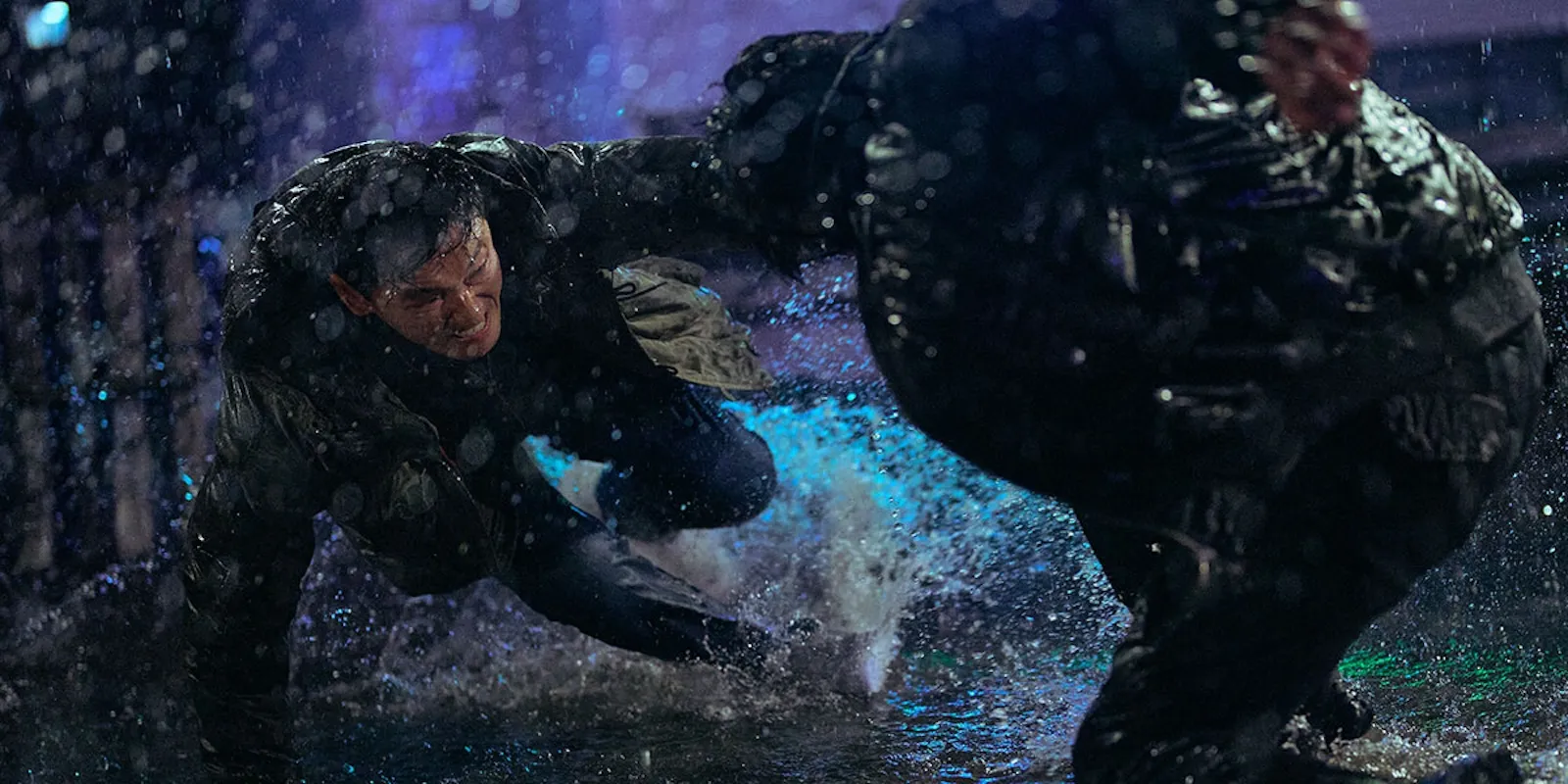
Nine years after “Veteran”, Ryoo Seung-wan returned to detective Seo Do-cheol with “I, the Executioner”. This time, Seo investigates Haechi, a serial killer and vigilante whose murders of criminals have gained a social-media following, while young MMA-trained officer Park Sun-woo joins his unit. The sequel quickly abandons the light-hearted mood of its opening and becomes a much darker action thriller. Ryoo knows how to create crowd-pleasing big action capers, and the action sequences are the stars here. The rooftop fight in pouring rain is a highlight, using the wet environment as combatants grapple and slide into each other, while a parkour-style chase ends with a violent tumble down concrete steps. Hwang Jung-min remains charismatic, and his chemistry with Jung Hae-in gives the plot its central dynamic. Despite predictability, the amazingly choreographed action makes the sequel worthwhile.

Ma Seok-do’s fourth case takes him into illegal online gambling and cryptocurrency, with IT entrepreneur Chang Dong-chul and knife-wielding killer Baek Chang-gi becoming his latest targets. Heo Myeong-haeng, who had worked as martial arts coordinator on the previous installments, takes over directing duties and delivers a much better beast than the immediate predecessor. The comedy mostly lands, but “Punishment” excels because the franchise once again has a formidable villain capable of providing Ma with a genuine physical challenge. Kim Mu-yeol brings an icy coolness to Chang-gi and excels with the choreography. Considering Heo’s background, the proficiency in the action comes as no surprise. The hand-to-hand combat is arguably the best the series had offered to that point, while the apartment clash and first-class-aircraft-cabin finale make excellent use of confined spaces. “Punishment” is bigger, harder and heavier than “No Way Out”.
Uprising (2024) by Kim Sang-man

Written by Park Chan-wook and Shin Cheol, Kim Sang-man’s “Uprising” uses the Japanese invasions of Joseon to tell the years-spanning story of nobleman Jong-ryeo and his slave Cheon-yeong, childhood friends who eventually find themselves on opposite sides of social and military conflict. The narrative is episodic and makes pointed observations about aristocratic privilege, slavery and the absurdity of a ruling class protected by the people it oppresses. When the political and melodramatic material begins to weaken, however, the action becomes increasingly impressive. Sword fights and large-scale clashes are executed at a superior level, with the confrontation between Cheon-yeong and Japanese commander Genshin and the climactic three-way duel standing out. Ju Sung-rim’s cinematography frequently places the camera extremely close to the fighters, at one point mounting it on the swords themselves, turning historical conflict into immediate physical spectacle.
Hi-Five (2025) by Kang Hyoung-chul
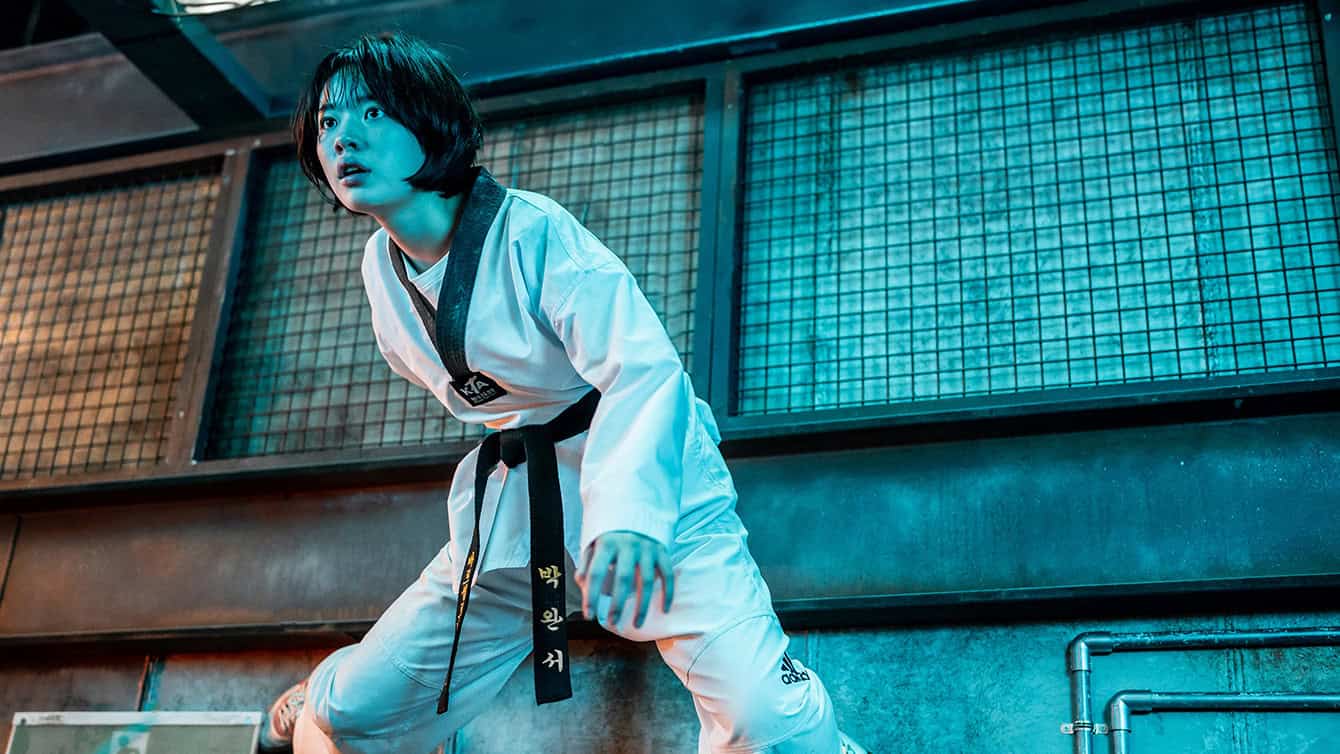
Kang Hyoung-chul’s “Hi-Five” takes Korean action into the superhero genre with a group of ordinary people who receive organs from the same mysterious donor and subsequently discover that they have acquired superhuman abilities. The recipients come from radically different backgrounds and personalities, forcing them to become an improvised team when another transplant recipient begins pursuing his own far more dangerous ambitions. Rather than following the grim template of many contemporary superhero productions, Kang emphasizes eccentric characters, jokes, kinetic action and the chemistry of an ensemble that includes Lee Jae-in, Ahn Jae-hong, Ra Mi-ran and Kim Hee-won. The resulting mixture proves that South Korean cinema can approach superheroes on its own terms, combining spectacular abilities with the kind of broad comedy and character dynamics that have long characterized Korean mainstream cinema.
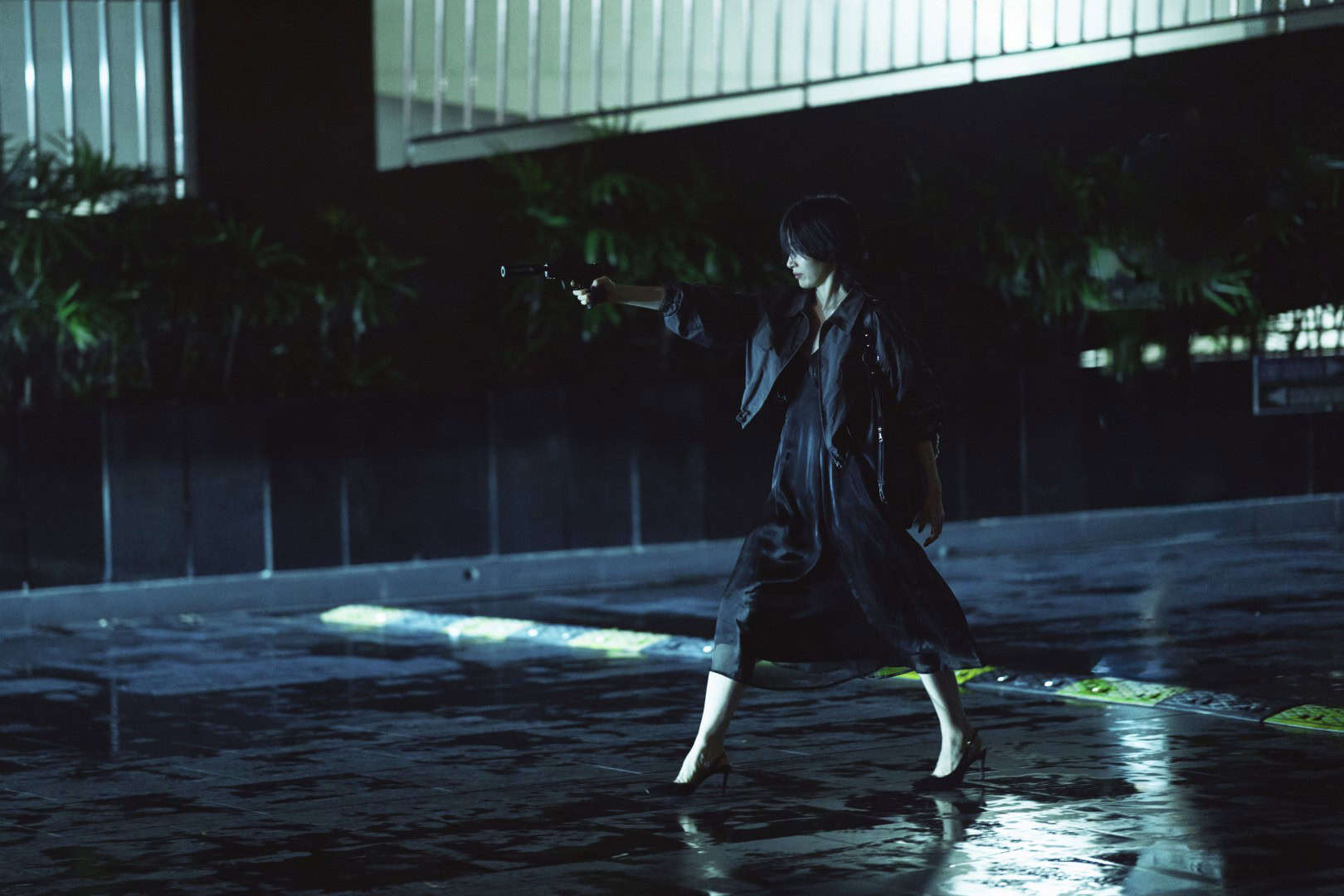
Action cinema in South Korea may be less common than it once was, but Park Hoon-jung remains one of the directors most consistently committed to it. “Tristes Tropiques” follows a group of young assassins after their feared Master dies, creating a power vacuum in which the mute Roo gradually realizes that virtually everyone around him could be involved. Since “The Witch: Part 1. The Subversion”, Park has been infatuated with secret organizations and assassins, and after a brief but bloody introduction, this story again takes its time establishing crosses, double-crosses and plots designed to derail other plots. Once the action starts, however, it becomes Park’s bloodiest work to date, thanks to excessive guns, knives and machetes. The elevator encounter, police-van fight and climactic battle with the masked Noh fighters are particularly impressive, while neo-noir lighting, slow motion, seamless editing and a striking score reinforce the spectacle. Narratively, Park may not offer much new, but the gorgeous cinematography, eccentric characters and superior action make “Tristes Tropiques” another strong genre presentation.
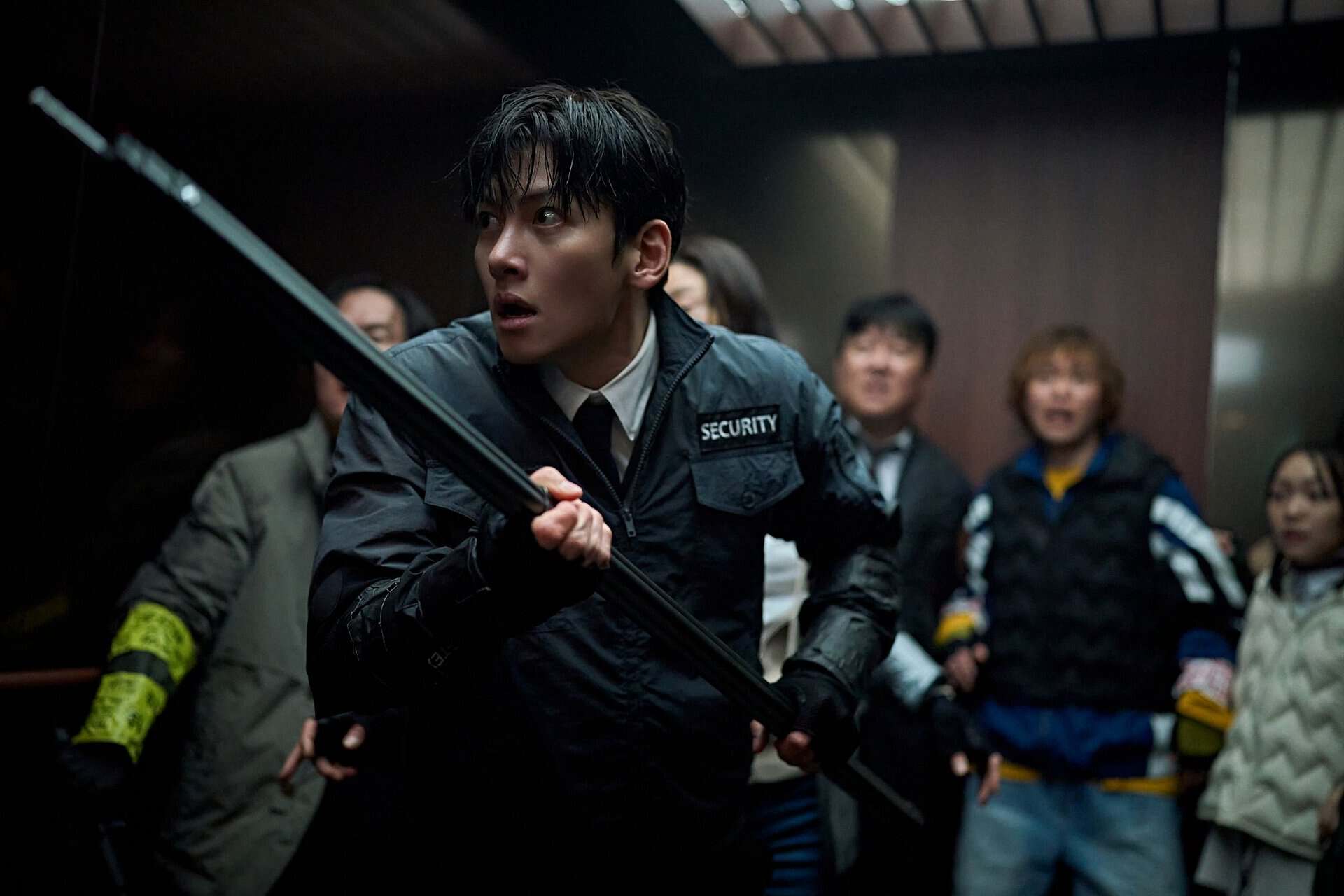
Few contemporary Korean filmmakers have made the zombie genre work as commercially and globally as Yeon Sang-ho. With “Train to Busan”, he turned a high-concept survival thriller into one of Korean cinema’s most exportable genre landmarks, while “Peninsula” expanded that world into more overtly action-driven spectacle. “Colony” marks his return to the infected-body narrative, but it is not simply another exercise in mass panic. Professor Kwon Se-jeong becomes trapped inside a Seoul high-rise after a rapidly mutating infection erupts during a biotechnology conference, with the survivors confronting creatures that crawl on all fours, react to sound, imitate voices and share information as a coordinated network. Yeon uses the genre to stage a contemporary anxiety about networks, data, shared signals and collective intelligence, while the action becomes increasingly intense as the survivors move through the building. There are impressively staged set pieces throughout, and the second half becomes both faster and more fluid, with the evolving infected and their hive-mind behavior providing the main variation on the familiar Korean zombie formula.



