
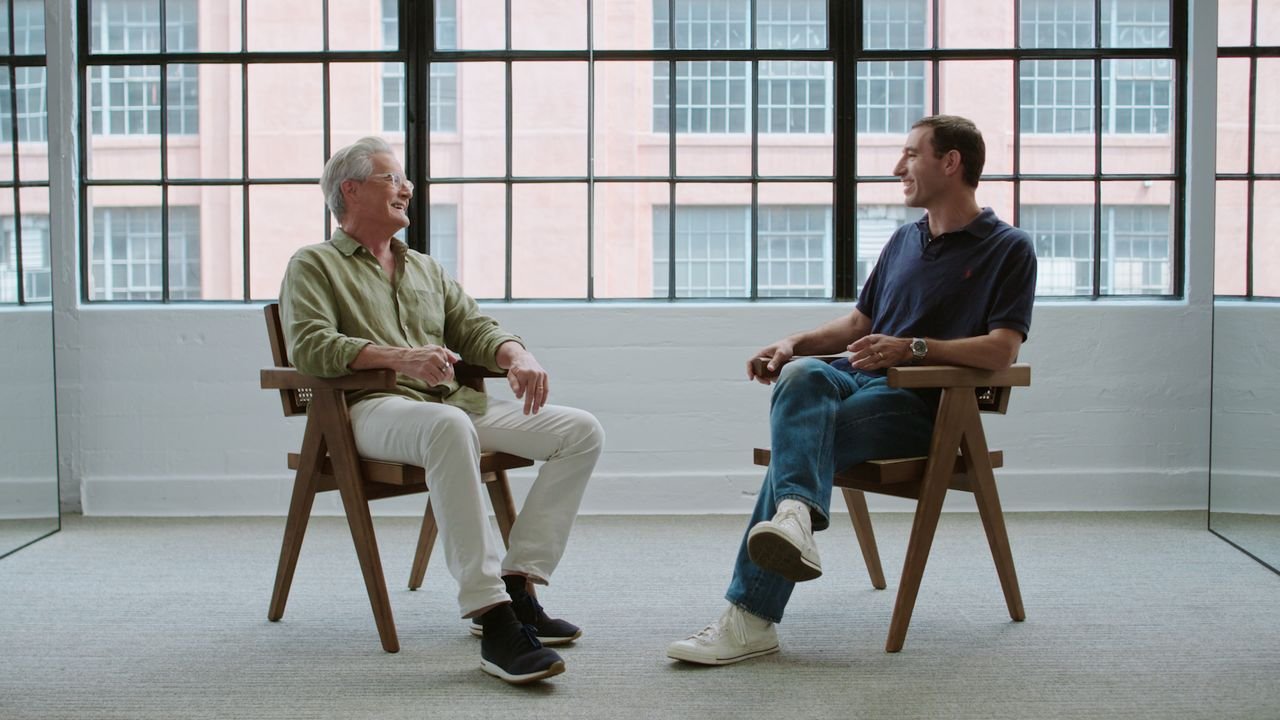
Do you feel like you ever figured it out?
A version of him. Yeah, I think so. But there’s always problems. Either he’s a murderer or impotent. There’s always things. It’s like, “Oh, he has another problem besides that.” The romantic hero, he’s perfect, but maybe he’s got some other sort of major issue he’s kind of getting through.
When you watch Timothée Chalamet now in Dune, do you see yourself?
I don’t, really, but when I watched the movies, I was very nostalgic. I felt like I was revisiting something. The scene where he puts his hand in the pain box, it was almost word for word, because it’s from the book. I’m like, “Oh God, I remember that day and I remember working with Siân Phillips and I remember the costume and then how the camera moved and the choices I made walking in.” I mean, everything came kind of flooding back in a very unexpected way. And then I was like, “Oh, that would have been a great scene. I wish we’d done that scene in the tent. That would have been really good.” You know what I mean? Or you see something and you’re like, “Oh, I love that scene. That would have been fun to shoot.” But I didn’t really feel like I was watching the movie. I was always kind of in the movie too, a little bit. It was a weird sensation.
And it was really fun to see some of the scale of things. When you see the worms in a desert, and I know it’s a lot of CGI and stuff, but I was like, “Wow.” And like, “God, they really move fast, don’t they?” We had a slice of a worm on the side of a boxcar on a railroad kind of chugging along that I was running after like this with the hook. It was very lo-fi in some odd way. But it was my Dune, and it was full of those wonderful memories.
Did you ever have a conversation with David Lynch about these new Dune movies?
No. No, he didn’t want to see them. He was not interested. I don’t know if he ever saw any of the other things that I did. And part of that I think is, and particularly with Twin Peaks, the character of Cooper, I was Cooper for David. I mean, I was “Kale,” which he used to call me, but I was Cooper. So whenever he’d see me, I’d be Kale sometimes, but sometimes he would see me when I’d go visit and say, “Coop, how you doing?”
It’s very… Lynchian.
I go to visit him and you’re in that environment. And it was a wonderful environment because he talked about the artist’s life. David was someone who created something every day. So he got up and he made something, or music, or he wrote, or he painted, or he was always creating. I didn’t really know the extent of that until after he was gone and I went to visit to check in on the house and everyone. And they were cataloging his archive. And there was a massive, massive amount of stuff—drawings and paintings and little things on matchbook covers that he had done. There was no material or medium that he wouldn’t create with or use somehow.
And do you know what he saw in you?
I never really asked him. We had a friendship. He casts based on meetings and conversations and something about me, my personality, maybe because we shared the same look. We grew up kind of in the Northwest. We have similarity in that way. He understood that I could take the audience into this world that he had created, which he recognized as being something challenging. And they would go with me because I come across, I’m a regular guy from Yakima, which is a good part of who I am. But I also had this other side, which was sort of drawn to this darkness. He’s pretty smart and he sensed it. And I think that combination is why he cast me, I think.



