
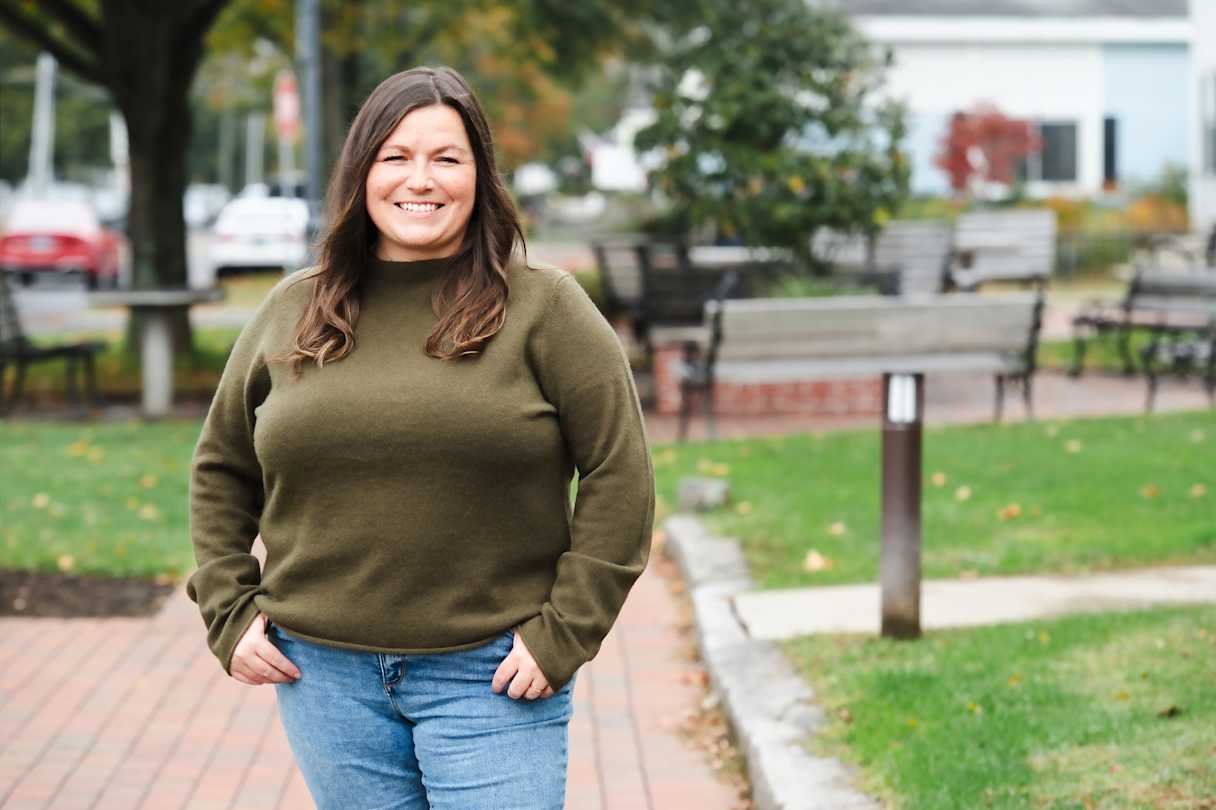
I’ve been a dog lover for as long as I can remember, which is what led me to become a dog trainer after graduating from the University of New Haven. I met my husband when I was 19, and we have two beautiful children. For the past 15 years, I have been fortunate to own a dog training business, and a cancer diagnosis was never something on my radar, especially since I was only 37. Looking back, there were signs that something wasn’t quite right, but with two young children and a business to run, the symptoms were easily written off as stress.
In May of 2024, it finally got to the point where I went to the emergency department because I was experiencing night sweats, fevers, and was generally just exhausted. They thought it might be an infection, and it wasn’t until I started experiencing sharp pains in my diaphragm that my primary care doctor sent me for a CT scan.
When the scan revealed a mass, I was immediately sent by ambulance to Smilow Cancer Hospital, and things started to move very quickly. My husband was home with our children, so when I heard the words “metastatic kidney cancer,” I was alone. Everything from there was a blur. I had just been at my primary care doctor for a routine checkup, and now I found myself trying to absorb a life-changing diagnosis and having conversations about surgery and cancer treatment options.
Thankfully, Michael Hurwitz, MD, an associate professor of internal medicine at Yale School of Medicine, was there with me from the beginning. He was a calming presence amid the chaos and talked through all the options with me. He was confident that surgery would be the best course of action, and the sooner the better. I left Smilow Cancer Hospital on a Friday, and my surgery was scheduled for that Tuesday. There wasn’t even time for me to meet the surgeon beforehand, and I remember feeling incredibly anxious and unsure of what to expect.
On Monday, Memorial Day, I received a call from Patrick Kenney, MD, a Yale Medicine urologic oncologist who would be performing my surgery. Hearing from him was a huge relief. He took the time to explain what would happen and to walk me through what to expect, and it helped calm some of my fear.
During surgery he removed a 5-inch tumor along with my left kidney, and we learned the cancer was more aggressive than initially believed. The plan had always been for me to start immunotherapy after surgery, but with this new information, Dr. Hurwitz recommended we pursue a clinical trial through Yale Cancer Center.
I was given a month to recover before starting a dual-immunotherapy treatment of Opdivo (nivolumab) in combination with Yervoy (ipilimumab). I completed four cycles with the combination and now receive Opdivo monthly. The goal is stay on it for as long as it keeps working. My first scan showed a 50% reduction in growth and then I remained stable for a while. Recently, we saw another reduction, so it’s working as planned. If that changes, we come up with a new plan.
I didn’t have much time to process while it was happening, but I have since joined some online support groups and found a lot of comfort in talking with other people who have been through this experience. It’s given me a chance to reflect and come to terms with this new normal. Fatigue has been the most difficult symptom to handle, especially with a young family. My children are 8 and 10, so they knew something was happening, and we’ve tried to be as upfront as possible with them. They’ve come to treatments with me and even met Dr. Hurwitz. We talk about my scans and the results, but we keep it age-appropriate and don’t overwhelm them with the heavier details of what stage IV cancer can mean.
Staying positive is important, but you also have to allow yourself to grieve the situation that you are in and go through all the emotions. I never would have expected to be where I am today thinking back to when I was first diagnosed. In talking with Dr. Hurwitz, he helped me to understand that I am my own individual person going through this journey and what happens is based on my own story, not anyone else’s. That has helped me to focus on the positives and has given me so much hope.



