
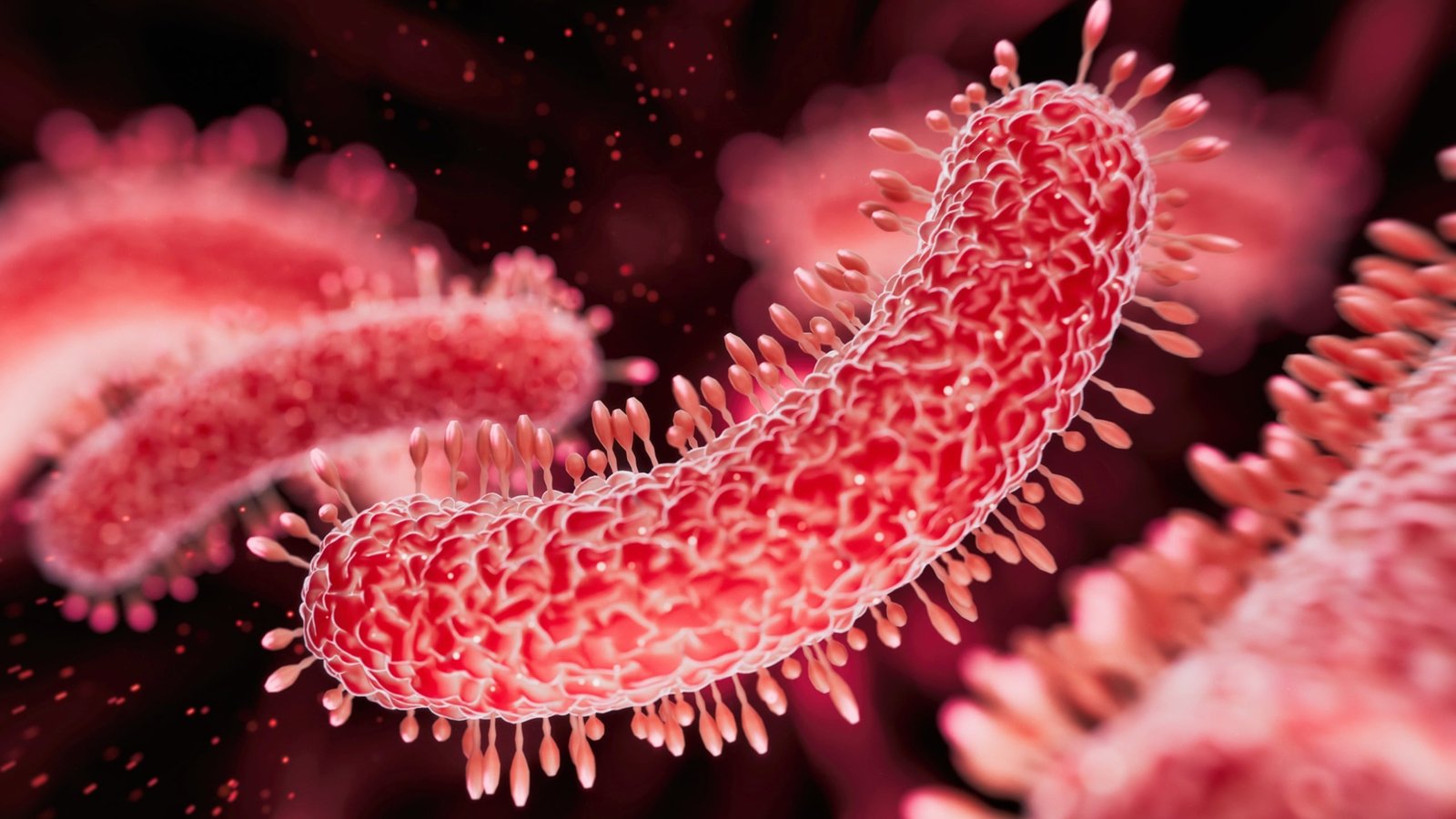
A gut pathogen that causes diarrhea and vomiting is morphing into a dangerous and difficult-to-treat sexually transmitted infection (STI).
In the United States, roughly 450,000 people acquire shigellosis each year, which can lead to dysentery.
Historically, this highly contagious bug has mostly been spread through contaminated food or water during travel, and among young children in day care.
But since the turn of the century or so, Shigella bacteria have emerged as a sexually transmitted infection as well.
Shigella infections can make anyone sick, but they are now considered ‘endemic‘ in some communities of gay, bisexual and other men who have sex with men (GBMSM).
Several of the strains transmitted in these communities have grown resistant to multiple antibiotics.
Some are now superbugs, on the brink of becoming untreatable.
A recent analysis from the US CDC found that among nearly 17,000 Shigella isolates, versions that were extensively drug-resistant (XDR) rose from 2011 to 2023.
In 2011, isolates that were resistant to five commonly used antibiotics made up 0 percent of the samples. By 2023, they made up 8.5 percent.
The vast majority of these drug-resistant versions had infected adult men, many of whom had not traveled internationally in recent months.
Molecular biologist Shangxin Yang says hospital workers at the University of California, Los Angeles (UCLA) are now seeing roughly one case of extensively drug-resistant Shigella a month.
In 2022, by comparison, they saw just one case all year.
“It’s almost like an explosion of this pathogen in the community,” Yang told CIDRAP News at the University of Minnesota.
Sexually transmissible shigellosis was first reported in 1974, but it represented a minority of cases at the time.
Now, emerging evidence suggests that sexual contact is a major route of transmission.
It’s difficult to verify this information, however, as patients and clinicians may not realize that Shigella can be sexually transmitted, and sexual history may not be recorded.
That said, according to US CDC data, more than a third of patients with extensively drug-resistant shigellosis were hospitalized, and nearly half of those with known HIV status had HIV.
“Together, it’s a very concerning pattern of XDR Shigella strains that are being seen among vulnerable populations,” epidemiologist Naeemah Logan from the CDC told CIDRAP News.
“This is by no means unique to the US, but really part of a broader global pattern.”
Geneticist Kate Baker from the University of Cambridge, senior author of a recent study in The Lancet Infectious Diseases, has identified a similar surge in the United Kingdom.
“Many men who have sex with men are unaware of the serious and increasing risk posed by sexually transmitted Shigella,” said Baker in a July press release.
“This disease has gone from being relatively treatable with off-the-shelf drugs to being close to untreatable over the course of the last decade or so.”
In March, the UK Health Security Agency (UKHSA) warned that while most cases of Shigella resolve without treatment, more severe cases do require treatment, and “the options available are becoming limited.”
In 2025, 86 percent of Shigella sonnei samples and 94 percent of Shigella flexneri samples tested by UKHSA researchers showed resistance to antibiotics.
These are the two most commonly spread strains through sexual contact among GBMSM in England.
In previous research by Baker and others, up to a third of patients with sexually transmitted Shigella were hospitalized for an average of four to five days.
“This isn’t just one form of sexually transmissible diarrhea,” says Baker.
“This is multiple overlapping variants emerging that are all quickly becoming resistant to the drugs we use to treat them. It’s highly likely that if you contracted your Shigella through sex, you require different treatment to someone who contracted it through travel.”
No one knows why that is, but Baker’s 2026 study points to ‘bystander resistance’ as one driver.
This means that an antibiotic meant for one pathogen may not be the right drug or dose for another present pathogen, thereby breeding resistance as a side effect.
In response to the recent study, Alicia Calvo-Villamañán, a researcher at the Gulbenkian Institute for Molecular Medicine in Lisbon, Portugal, pointed out an intriguing association.
“When the UK’s national treatment guidelines stopped recommending the use of [azithromycin] to treat gonorrhea infections,” they wrote, “the emergence of azithromycin resistance in Shigella slowed down.”
That doesn’t mean one is causing the other, but it suggests that treating other STIs may be a risk factor for drug-resistant Shigella infections, which aren’t often screened as STIs.
The California Department of Public Health says that the best way to prevent Shigella infection from sex is to not have sex with someone who has had diarrhea in the last two weeks.
Using barriers during oral and anal sex is also advised, as is washing up before and after sex.
To minimize transmission, anyone who suspects they may have Shigella should get tested and seek treatment if necessary.
“Clinicians should be asking patients with dysentery about sexual transmission and giving advice accordingly,” said Daniel Richardson, a consultant in sexual health at University Hospitals Sussex in July.
“They need to know that sexually transmitted Shigella has more antimicrobial resistance than other forms of the disease, and that patients may need checking for other sexually transmissible illnesses.”
This article was fact-checked by Rebecca Dyer and edited by Rebecca Dyer. While we pride ourselves on our process, we are only human. If you spot a mistake, please let us know.



