
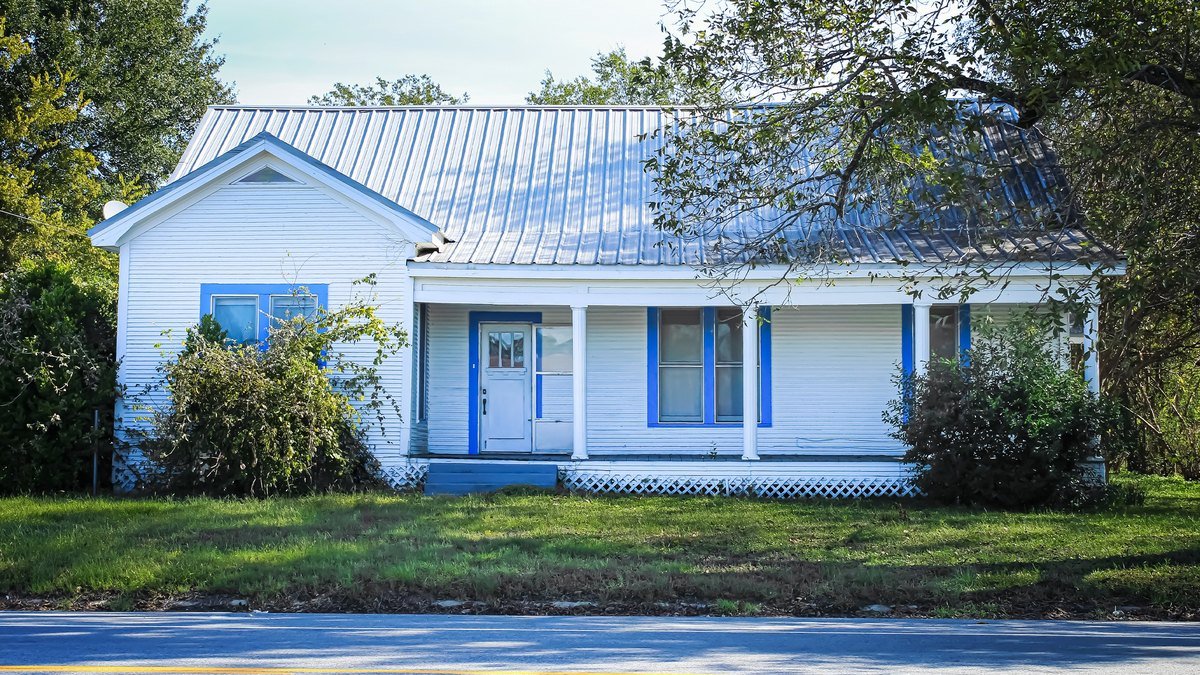
While starter homes are increasingly hard to come by nationally, a handful of affordable markets— overwhelmingly concentrated in the Midwest—offer first-time buyers a healthy and diverse selection of entry-level properties.
So what exactly is considered a starter home? Realtor.com® economists define this type of real estate as a dwelling listed at or below 80% of its metro’s median list price for a specific time period.
The typical starter home is relatively small and modest in features, representing the first rung on the property ladder that offers budget-conscious first-time buyers an entry point into homeownership.
At the national level, the share of starter homes has shrunk from 38.1% to 36.2% of active inventory over the past seven years, even as the median price surged from $260,000 to $340,000, according to a new Realtor.com report.
In other words, there are roughly 21,000 fewer starter homes available now than there were in 2019, and they are more than 30% more expensive than before.
To identify local starter-home trends, Realtor.com researchers analyzed listing data across the 8,300 ZIP codes in the 100 largest U.S. metros, revealing where shoppers can still find entry-level properties in well-balanced neighborhoods.
Across the U.S., 3 out of 5 ZIP codes are mixed, offering a blend of homes priced below the market median sitting alongside more expensive listings fit for trade-up buyers. Meanwhile, more than 18% of the neighborhoods in the 100 largest metros are starter-home-dominant.
In 81 of those 100 metros, neighborhoods offering both no-frills starter homes and more upscale options make up the majority of the market.
“The takeaway here is that most starter-priced homes aren’t found in a clearly ‘starter’ ZIP code, but sit in mixed or even trade-up-leaning areas,” says Realtor.com senior economist Hannah Jones.
The Midwest advantage
Budget-friendly Midwest and Rust Belt metros stand out from the data set for having the nation’s highest overall shares of starter homes this year, with Toledo, OH, in the lead with 42.1% of the inventory, followed by St. Louis (40.7%) and Detroit (39.8%).
“All three of these metros have seen below-average price growth since 2019 and have a large, resilient base of entry-level inventory,” say Jones. “Toledo boasted the highest share of starter homes in 2019 as well, but Detroit and St. Louis have both moved up in the rankings.”
However, a metro’s share of starter homes tells only part of the story. For buyers, it is equally important having listings within their budget spread across multiple neighborhoods with desirable characteristics, such as low crime rates, high-quality schools, and walkable streets.
Seeking the best combination of high starter-home shares and neighborhood variety, two markets rise above the fray: Kansas City and St. Louis. According to Jones, the duo have more entry-level homes than the national average, at 37.7% and 40.7%, respectively, along with an above-average selection of starter-dominant ZIP codes.
In Kansas City, buyers have 39 neighborhoods to choose from, while in St. Louis there are 36.
“Kansas City is a unique market with outskirt areas still fairly close in with great prices,” Rosemary Rieke Male, a real estate agent at Better Homes and Gardens Real Estate Kansas City Homes, tells Realtor.com. “We have highways circling the whole metro to make it easy to get anywhere but still such a central U.S. location.”
The median price of a Kansas City starter home stood at $312,000 in August. According to Rieke Male, what that modest budget can realistically buy depends on the location. In Johnson County, that sum is enough for a two- to three-bedroom home, sometimes with a garage.
Within the city proper, a budget buyer’s best bet would be to look for one of the older, smaller bungalows dotting the city’s historic neighborhoods like Brookside Park and Waldo.
However, heading north, shoppers can stretch their dollar a bit further.
Equity and growth in St. Louis
In St. Louis, across-the-board housing affordability is the metro’s distinguishing feature and greatest selling point.
“The really unique thing about St. Louis is that you’re able to buy a starter home at a reasonable price and actually use the equity to upgrade your house over time,” AJ Graham, an agent at ReeceNichols, tells Realtor.com. “In some other parts of the country, and even parts of Kansas and Missouri, that’s become difficult, especially coming out of COVID when people were paying way over asking.”
With a median asking price of $231,000 for the typical starter home, Graham says entry-level buyers can get a better-than-expected property.
“It may be mildly updated, have good bones, and be structurally sound,” he notes. “It can be a house where you’re able to start raising a family.”
One of the city’s in-demand areas is the neighborhood of St. Louis Hills, which sits 10 miles from downtown.
“You have the local coffee shop, dining on the corner, local shopping, and just cool local things that enhance your overall quality of life,” says Graham.
In St. Louis County, shoppers looking for desirable school districts should expect to spend more on a starter home, or compromise on size and finishes.
Looking ahead, St. Louis’ starter-home inventory is poised to expand.
Ron Kitchens, managing partner of Greater St. Louis, a local economic-development organization, tells Realtor.com that new construction is planned on the north side of the city to replace homes lost to a tornado last year.
The city of St. Louis has already allocated $120 million toward recovery and neighborhood rebuilding.
Strategies for buyers
Two additional Midwestern hubs, Toledo and Akron, offer similar advantages to entry-level buyers, but on a smaller scale.
Both boast the highest starter-home shares in the U.S., at 42.1% and 39.3%, respectively, but have fewer starter-dominated ZIP codes.
“Buyers in these metros are likely to find ample affordable inventory, but the geographic spread is much tighter within the metro,” says Jones.
Despite a national market that has grown increasingly more challenging for entry-level buyers, pockets of affordability remain, particularly in the Midwest, provided that shoppers have their priorities straight.
“One mistake is falling in love with the aesthetics instead of the actual house,” notes Graham. “Buyers want something modern, new, and fancy. They want the upgraded house where they don’t have to do anything except back the moving truck in.”
The problem with those homes, according to the agent, is that they are priced at the top of the market for the area and may not have as much room to grow from an equity standpoint.
“I really love when first-time buyers purchase what I call ‘grandma and grandpa’s house,’ where the structure is great, the mechanicals are fine, and everything has been well maintained,” he adds. “It might just be ugly to look at. That can give buyers an opportunity to make cosmetic improvements over time and add value.”



