
The Department of Justice has a warning for health care executives: Don’t be another Theranos.
As the Trump administration continues its fight against Medicare and Medicaid fraud, it is also expanding its investigations into corporate wrongdoing, DOJ officials announced this month.
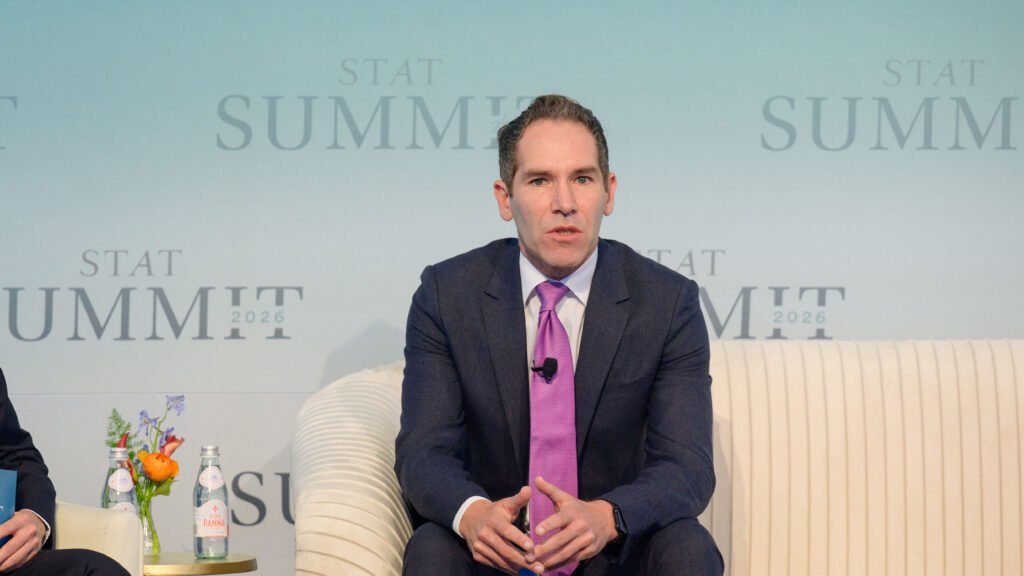
A key part of that plan is making it easier for companies themselves to report potential criminal activity, and encouraging whistleblowing, Jacob Foster, deputy assistant attorney general in the National Fraud Enforcement division, said Thursday at the STAT Summit in Boston. Foster oversees the unit that investigates health care fraud.
“There’s nothing more that we want to know when a compliance failure occurs than to hear about the great efforts to remediate it, and reward that,” he said.
Going forward, companies in the health care sector looking to file voluntary self-disclosures will find a one-stop shop at the DOJ, Foster said. They previously would’ve had to navigate a separate process at the Department of Health and Human Services, but that is now being consolidated under the health care fraud section at the DOJ.
“What do you do? Who do you call? That is a question that industry should not have to ask,” Foster said.
Under the new policy, companies that report potential criminal misconduct can reap the benefits — such as a limited cap on financial damages — from both agencies at once.
The health care fraud section at the DOJ brings a range of expertise under one roof to handle issues like the emerging field of digital health technology, Foster said. DOJ will make use of data analytics and artificial intelligence algorithms to try and suss out instances of corporate wrongdoing, like providers billing for unneeded services, companies fabricating patient records, or health tech companies adding redundant diagnoses.
The department will also design new programs that “appropriately incentivize” whistleblowers to report fraud, according to an Oct. 1 memo from Assistant Attorney General Colin M. McDonald. Health care investigators also look at social media, news reports, and other sources of information to learn about companies possibly breaking the law, Foster said.
Prosecutors will place extra emphasis on schemes involving health care, controlled substances, and violations of the federal Food, Drug, and Cosmetic Act, the McDonald memo said. They will also place “great weight” on factors like whether corporate executives knew about or tried to conceal fraud, ran a scheme for over three years or across various states, or affected taxpayer-funded programs, new guidance said.
“No one, irrespective of party, likes the government being ripped off by wrongdoers,” Foster said Thursday. “These cases not only involve the theft of all of our tax dollars, [but] involve the theft from a program, a trust fund — Medicare — that could run out.”



