
Published October 15, 2026 06:20AM
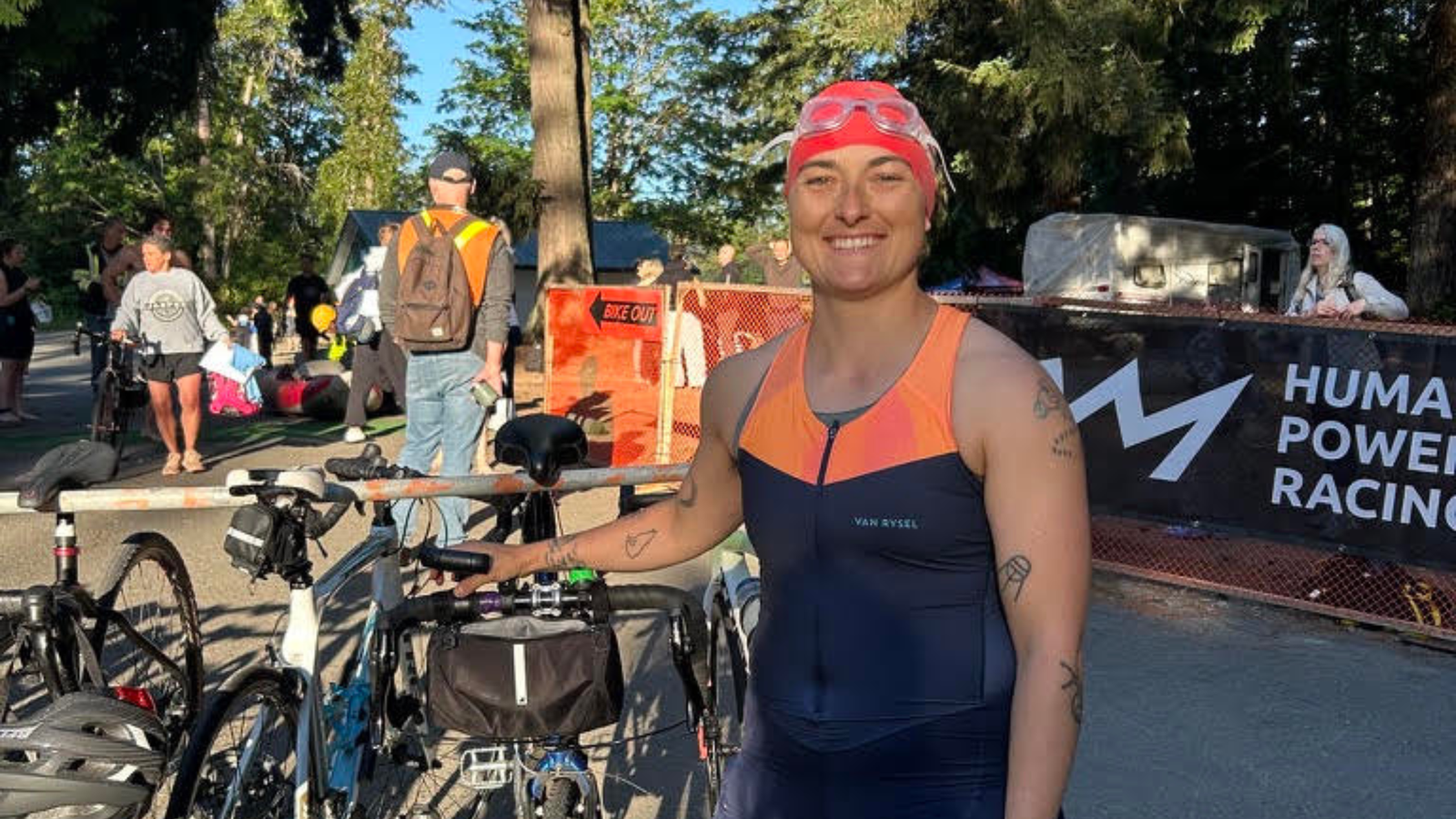
For this article, a novice age-group triathlete shared, in her own words, her experience racing the Olympic-distance Cowichan Challenge Triathlon. Despite multiple setbacks, she received encouragement from volunteers and fellow racers to keep going, and has tried to apply that same perseverance to other areas of her life.
It was a perfect early summer morning. The forecast wasn’t too hot, the water was warm, and there was no hint of wind. I had fueled and hydrated the day before. I was well rested and ready. I had done the exact same race one year earlier, which was my first ever triathlon.
This time, I assumed I would be faster. I had to be. Any other outcome would feel like failure.
A slow start
But within a few minutes of the race start, the rest of the swimmers were barely visible. I had recently done two private lessons with a swimming coach, during which I learned that my technique was broken. There was no time to properly address it before the race.
The swim took 53 minutes, so I was eager to make up some time on the ride. But after five minutes on my bike, just as I was finding my rhythm, my derailleur seized up, and I couldn’t move the pedals. This was defeat.
I tearfully walked my bike back toward transition. I assumed there was no helping this situation. I hadn’t taken my bike for a tune-up before the race. I had failed.
After 25 minutes of walking, a race volunteer spotted me and ran over. He tinkered with my bike for a couple minutes, and I secretly hoped he would confirm my fears – that the bike was broken and it was time to give up. An easy out.
But when he fixed my bike with a couple turns of an Allen key, my guts twisted with dread. He encouraged me to get back on the bike. I told him I had given up, but he told me I might as well keep going since there were still a couple hours until the cut-off time. I had already spent the money, trained, and showed up to the race — I had nothing to lose.
I was alone for most of the ride. I kept apologizing to the volunteers along the race course because I felt guilty that they had to wait for me. I didn’t think I would even start the run, but I kept my focus on the moment, on each corner and hill, until I was back at transition.
Keep going anyway
My sister, who had completed the sprint distance and was already finished, was waiting for me. I updated her on my situation and asked if she and my mom were OK with waiting until I finished. She said yes and encouraged me.
Then a race worker advised me that the race cut-off was in 52 minutes. He said there was no way I would make it in time and suggested I drop out. I told him I wanted to try, and I accepted that I would complete part of the run without support.
I started the run before I could change my mind. I had a hard time seeing the direction markers on the course. After a couple wrong turns, I was overwhelmed with the urge to give up. I cursed out loud, turned on my heel, and started walking back toward transition. But I immediately met the eyes of an athlete walking back to his vehicle, finisher medal hanging from his neck. He told me to keep going. I told him about my broken bike, the bad swim, not making the cut-off time, and running in the wrong direction. He encouraged me to go anyway, so I did.
I did most of the trail run alone. The race volunteers were supportive and stayed past the cut-off even though they didn’t have to. I was overwhelmed with gratitude, and this time saying thank you was easier than saying sorry.
I shouted curses on the run, stumbling over tree roots in my fatigue, fueled by frustration and determination. When I was 1 kilometer from the end, I almost passed out at a hydration station. I regrouped and kept moving.
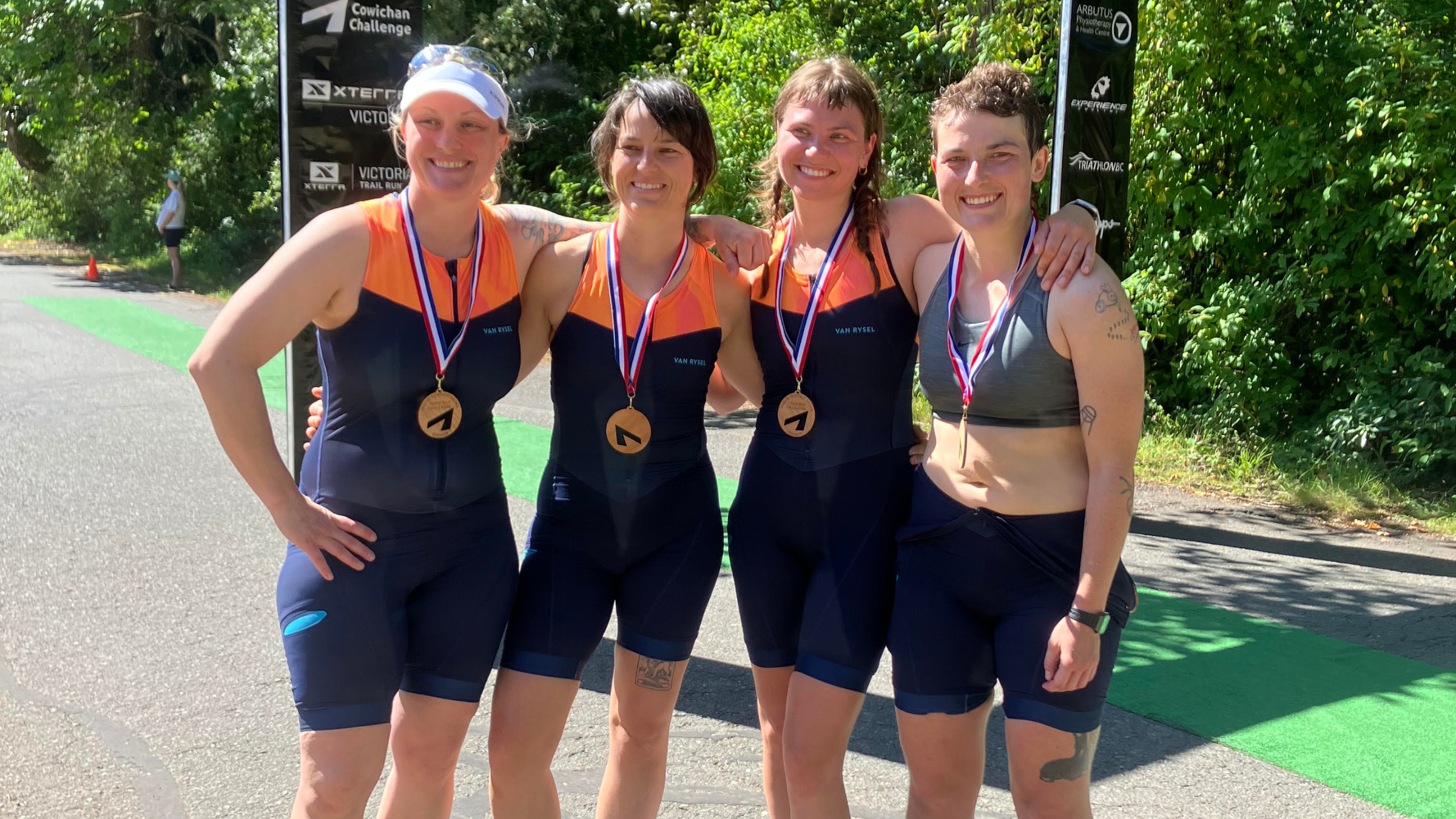
Four hours and 15 minutes that felt like an eternity were suddenly coming to an end. I saw the finish line arch. I heard the applause as by now the awards ceremony was well underway. My sister saw me approaching, turned to a group of people behind her, and told them I was coming. And finally, after hours of exhaustion and frustration, wanting to give up the whole time, I crossed the finish line in front of a cheering crowd. And it was all worth it. I wouldn’t change a thing.
A focus on following through
I’m not good at this. I don’t feel like I’m good at much. Genetic vision loss has greatly impacted the last few years of my life. I’m struggling to start a new career while managing chronic mental health issues and an acquired disability.
My confidence has taken a hit, and I think about giving up all the time. Things could be a lot worse – I have a support system and free healthcare in Canada. I am privileged with a great quality of life and generally good health aside from my eye disease.
But I feel behind. And by challenging myself to do things like triathlon, I expose myself to people who are incredibly fit. Self-criticism and body dysmorphia usually tag along.
The three months that have passed since that race have been difficult, and I feel out of touch with the person who persevered that day. I’m trying to let some light in and keep going – keep adapting to vision loss, keep building my career, and keep pushing myself.
I used to care a lot more about being good at things. Now I care about following through. Life is hard, and persisting when you don’t feel like enough is a feat of strength. I faced my fear of being slow that day and finished to a crowd of cheers. Of course I want to be faster. I want to finish in the pack. I want to be good at triathlon. But we can learn so much by being bad at things and doing them anyway.
Walking my bike back to the car, finisher medal around my neck, I turned to my sister and said, “Winning is cool, but losing is where it’s at.”
Do things you’re bad at. Challenge yourself. It’s OK if you don’t feel like a triathlete. How many things would you do if you weren’t afraid of failure?



