
Published October 13, 2026 03:28PM
How we reported: Editors from Triathlete, alongside other media outlets and tri industry reps have sent counters to Kailua-Kona, Hawaii, to count bikes and bike components at the Ironman World Championship for decades. This year, former pro and tri bike expert T.J. Tollakson assisted in counting power meters, while managing editor Abby Levene counted wheelsets.
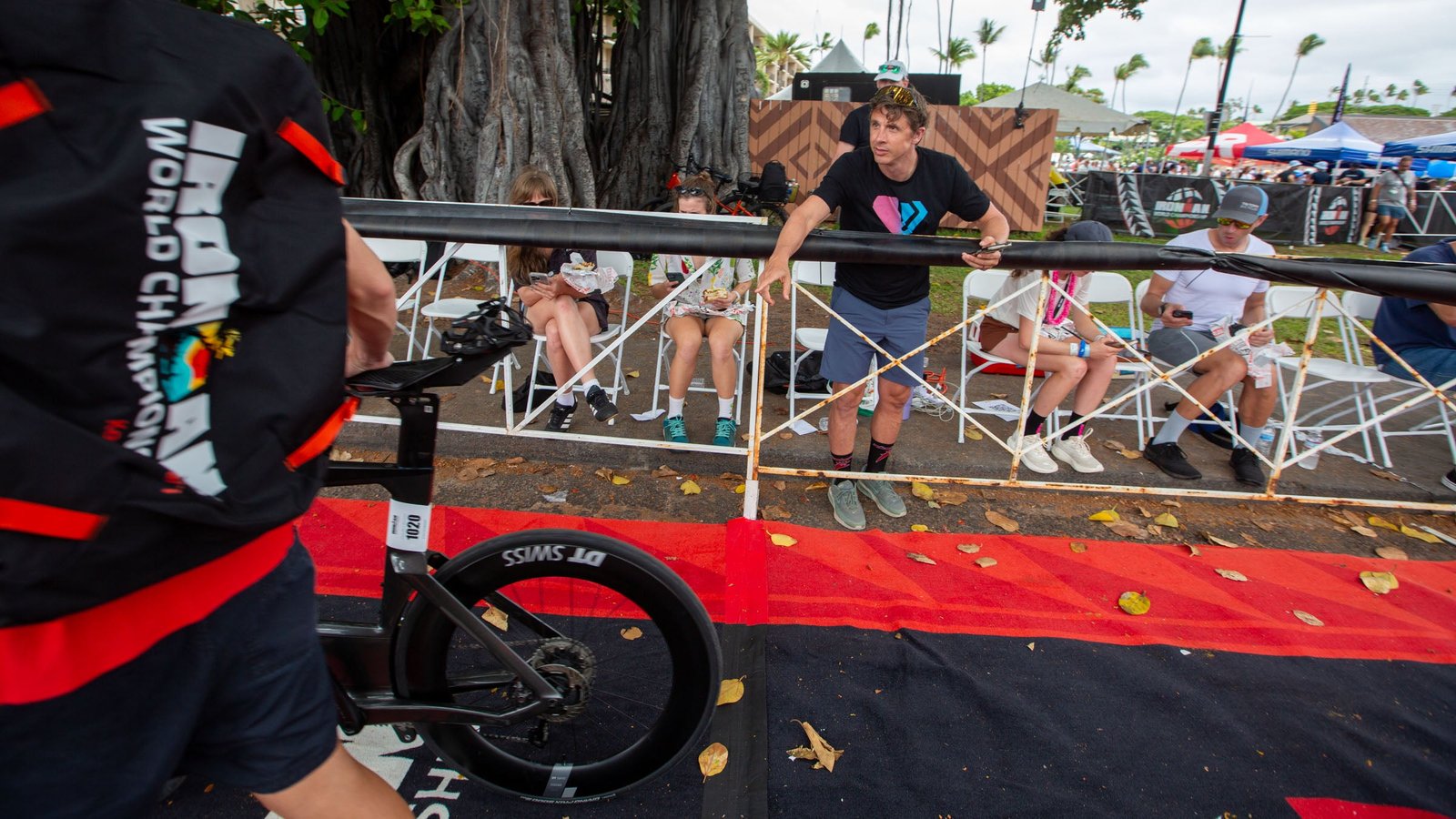
I worked the first shift of the bike count at the 2026 Hawaii Ironman World Championship, and I’ve been part of the bike count at the world champs going back to 2006. You see a lot of trends come and go in that time, and some that stick. Sure, the winning bike brand is the headline grabber, but the most interesting stuff lies way beneath the surface.
My job this year was counting power meters as racers walked from Palani to the Kona pier, where the transition area and bike racks live for the Ironman World Championships. Fifteen years ago, the gold standard, an SRM crank-based power meter, cost about $3,400 and was an elite luxury item. Today, power meters are abundant and affordable, and the vast majority of the 2,000-plus bikes we counted on the pier had one. In fact, many brands sell power meters as a part of a moderately affordable complete bike — something nearly unthinkable less than a decade ago. This means the power meters blend gracefully into the overall bike’s design, making the count much harder than ever. There are also more brands than ever, and left-side-only meters make it tricky to spot them from the drive side (difficult, but not impossible for someone who has spent most of their life racing and working on tri bikes).
After hours of wiping the sweat from my brow, swatting buzzing fruit flies, and dodging “Banyan tree fruit droppings” (probably poop, but oh well), I’ve been able to sit down and truly dive deep into the depth of data. Here’s what I’ve learned.
The Hawaii Ironman World Championship bike count in Kona – 2010 to 2026
Canyon won the Ironman World Championship bike count for the second time in Kona history (the Nice events notwithstanding). For most of the time I’ve been counting, Cervélo owned the Kona pier with a quarter of all bikes in the Ironman World Championship transition area. Canyon had four bikes in 2010. This year it had 509. What exactly does that mean? And how did the German brand get there?
Canyon bought the pier; somebody else paid for it
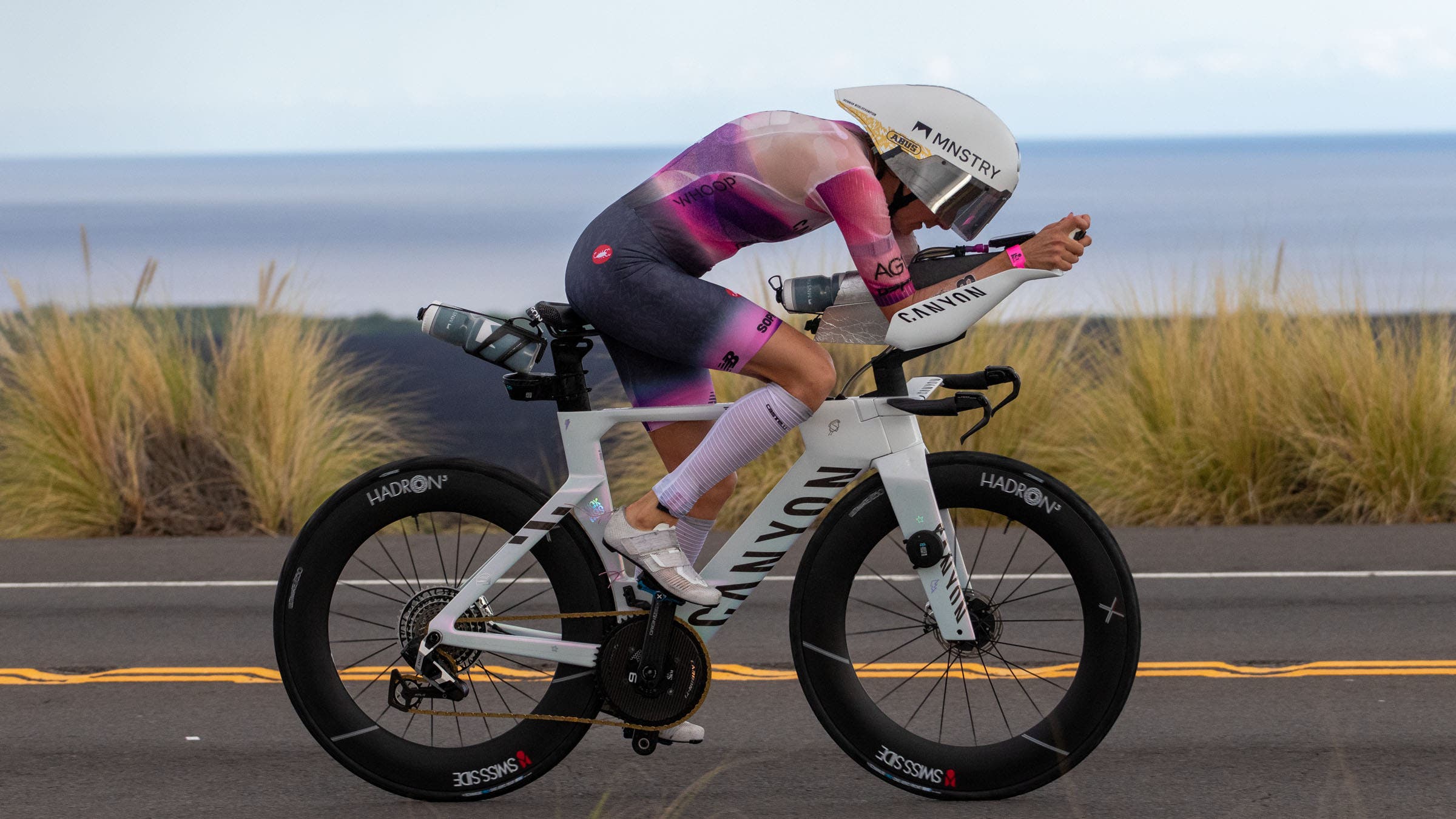
Canyon is the story of this count: 509 bikes, 22.5% of everything that came through transition, and 122 more than Cervélo. That’s not a fluke year either; they were at the top of the 2024 Kona list with the men (483) and were right there with the women in 2025. (As a somewhat interesting side note, Canyon had a bigger in-person brand team in Kona than we’ve seen in years, so they’re paying attention.)
How Canyon got here matters, but there’s more to it than “they make great bikes.” Canyon sells direct-to-consumer (DTC), so there’s no brick-and-mortar shop margin built into the price, and they’ve been aggressive with discounts on top of that.
They also spend (very) big where world-championship-caliber triathletes can see it (the triathletes who roll their bikes out onto the Kona pier in October): pro sponsorships, age-group activations, and a presence in Kona race week that is hard to miss. That combination gobbled up market share. It is also expensive, and it hasn’t necessarily been profitable.
Follow the money and it lines up with the chart above:
Canyon already had good forward momentum before the big money showed up — and it’s likely that was what made it an attractive investment. With TSG as a minority investor, it went from 18 bikes in 2013 to 179 in 2019 (8.1% of the pier), but the first big jump was in 2017 (39 to 102).
Then GBL and LeBron came in in 2020, and it went to 15.5% in 2022 and 21% in 2024 after the start of the COVID pandemic. That’s the steepest part of the line, and it starts right after the checks cleared.
Now let’s look at the other side of the ledger:
| Revenue | Net result | GBL’s value on its Canyon stake (year end) | |
| 2023 | €791M ($885M USD) | -€14M ($15.6M USD) | €460M ($515M USD) |
| 2024 | €792M ($886M USD) | -€38M ($42.5M USD) | €261M ($292.3M USD) |
| 2025 | €738M ($826M USD) | Loss (3rd straight year, amount not disclosed) | €267M ($298.8M USD) after raising its stake to 52.35% |
GBL wrote its Canyon stake down 43% in one year, from €460M to €261M ($514.9M to $292M USD). According to GBL’s own numbers that takes the whole company from roughly €925M to around €525M ($1B to $587.6M USD), and it slipped again in 2025, even after GBL bought more of it.
Revenue fell 6-7% in 2025, EBITDA was down 34%, and in January 2026 Canyon announced up to 320 job cuts. The stated target is €1B (roughly $1.1B USD) in revenue by 2028.
So here’s my read. The market share on the pier is real; I counted it. But it was bought with private equity money (and a little bit of LeBron’s) at a loss. That works as long as the owners keep believing. The question for the next few counts is whether Canyon can hold 20%+ of Kona when the discounting has to stop and the books have to balance.
It’s also very important to note that Canyon makes more than just triathlon bikes — they have a popular road line, a gravel line, and a mountain bike line — and it’s unclear how much of their total sales come from triathlon. Canyon even sells e-bikes and commuter bikes. Cervelo, on the other hand, mostly sells tri, road, and some gravel (plus one e-bike model). Similarly, Canyon sponsors athletes from each of their racing-related categories, and specifically stakes in road cycling teams like CANYON//SRAM, Alpecin-Premier Tech, and Movistar.
OEM sales matter, and DT Swiss is the real winner
DT Swiss was the number-one wheel brand on the pier: We counted 421 DT wheelsets (23.2%), with Zipp second at 327, and HED third at 149.
DT got there largely because of Canyon. Canyon specs race-day DT wheels on a lot of its tri bikes, so every Canyon that rolls onto the pier is very likely a DT wheelset too. That’s the power of OEM. Zipp sells to the athlete who chooses Zipp (whether aftermarket or on a few stock-ish completes). DT sells to Canyon, and Canyon sells 509 bikes.
And here’s the kicker. Canyon lost €38M ($42.5M USD) in 2024. DT Swiss is privately held, so we don’t see their books, but I’d bet they made money on every one of those wheels. Canyon took the risk and the losses to grow market share; DT Swiss got paid.
If you’re asking who really won the Kona bike count, I think it’s DT Swiss.
The praying mantis cockpit won
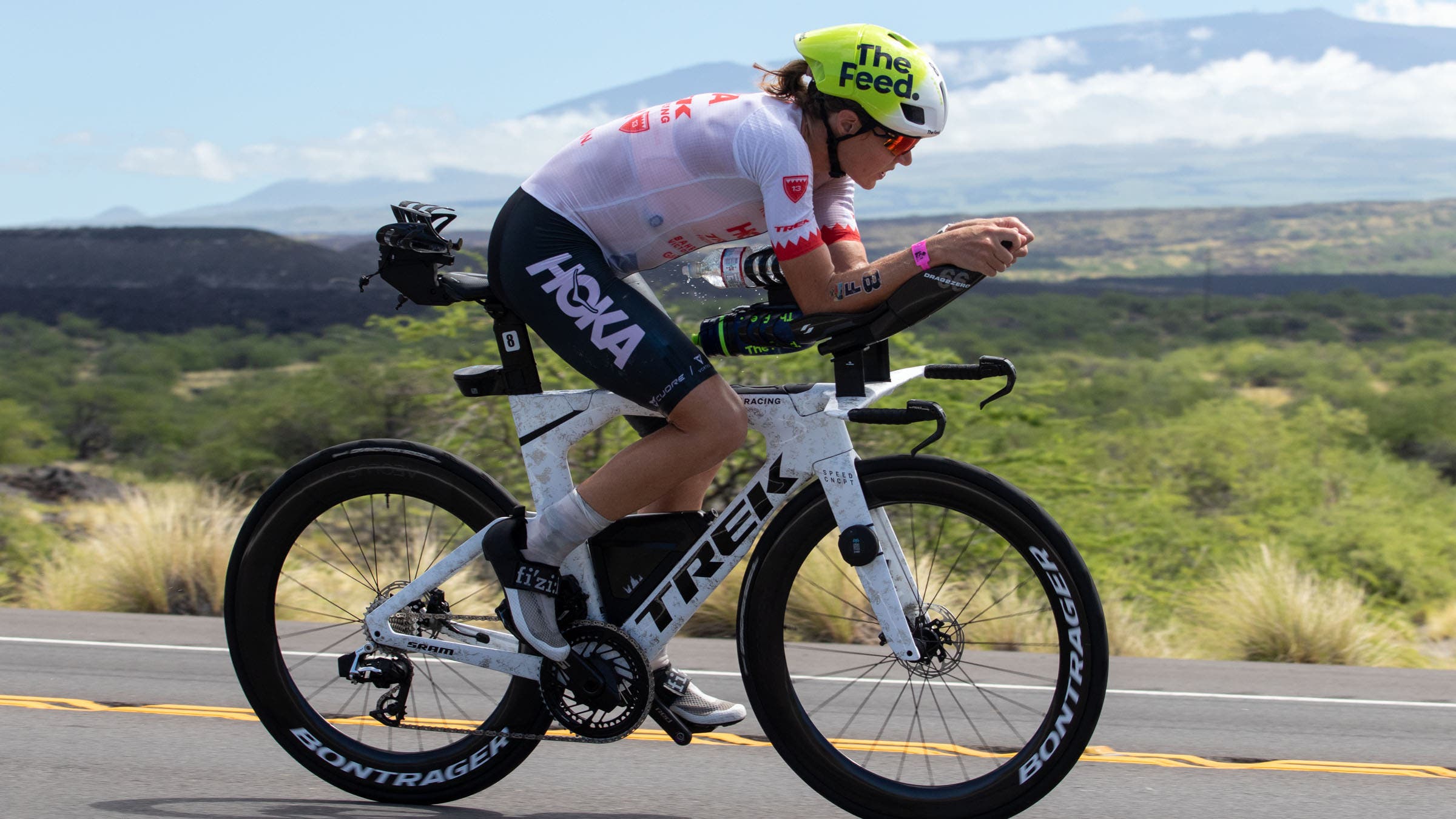
Eighteen years ago, hands up high and angled toward the sky was a radical position. People laughed at it. Now it’s the default for both the pros and for the age-groupers. Walk down the rack and you’ll see extensions tilted up, pads stacked, elbows narrow, bike after bike.
What’s changed recently is how people get there: Profile Design was still the number-one aerobar on the pier (497, 23.3%). Canyon’s integrated cockpit was second (284, 13.3%), then Bontrager (169) — both directly due to the fact that they come OEM on the first and third most popular brands on the pier. FastTT (125) was fourth with its custom 3D-printed extensions built to your arms, and that’s the direction everything is heading. Custom 3D-printed, carbon-integrated cockpits with hydration built right into the front end. The position stuck, but also the hardware got a lot more personal.
Hydration is aero
Bottles everywhere, and storage everywhere: behind the saddle, between the arms, inside the frame. The bike that just has two cages on the downtube is basically gone.
The biggest jump this year was integrated rear hydration, storage built into the frame or seatpost by the bike company itself. It was 5.9% of rear setups in 2025 and 19.7% this year (307). EZ Gains was the number-one rear setup at 353 (22.7%), then Profile Design (280) and X-Lab (266).
Up front, “Other” was the biggest category at 558, which indicates mostly custom, 3D-printed, and integrated systems that don’t fit any one brand. (2025 was a women’s-only race, so it’s not a perfect comparison, but the trend is obvious standing on the pier.)
The brands have figured out that the bottle can be part of the aero package, instead of a penalty on top of it. Hang the fuel where it’s out of the wind, fill the gap between your arms, and you’re actually faster. The average bike splits keep getting faster, and this is a big part of why.
Time to allow disc wheels in Kona
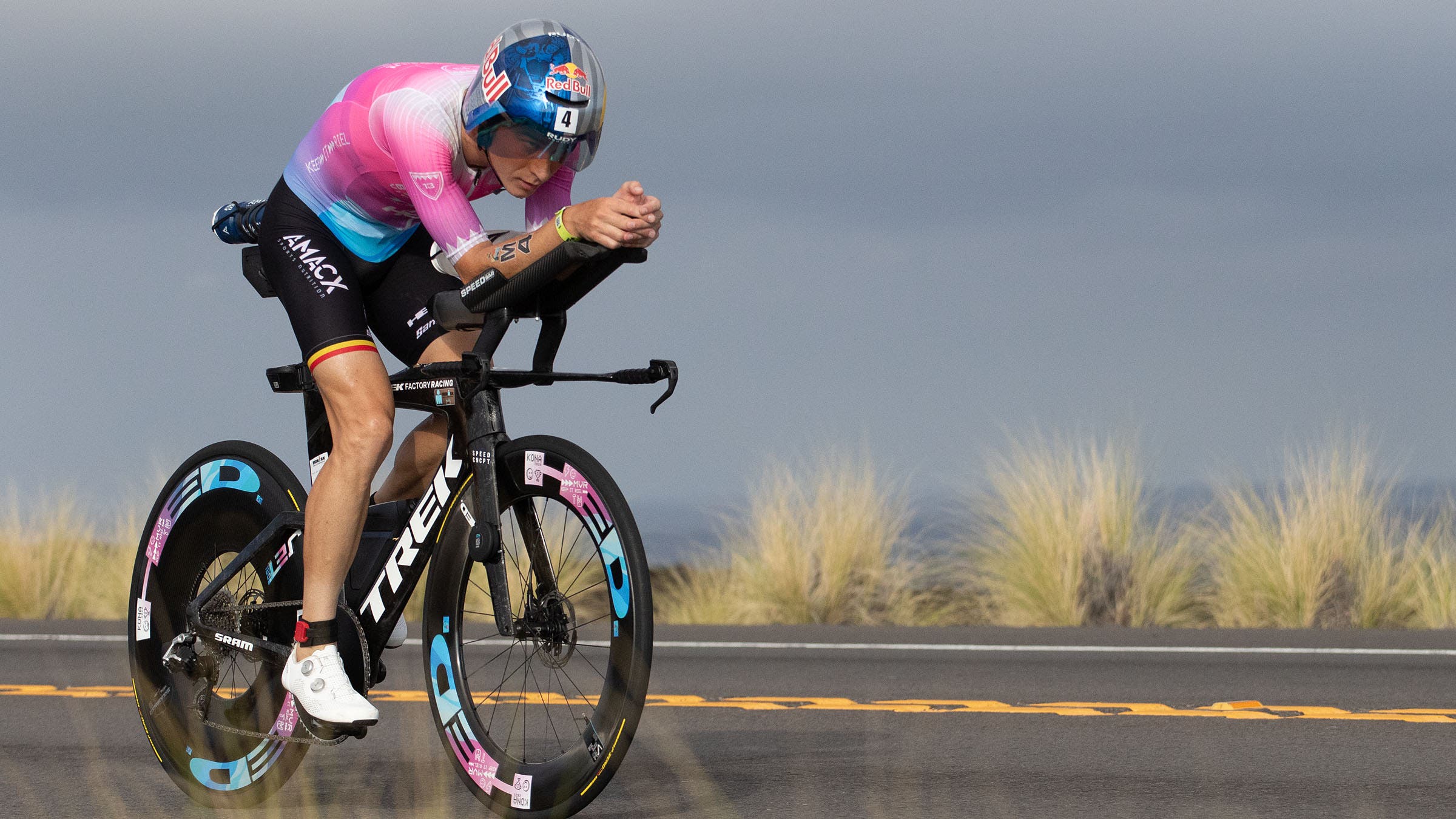
We did see one age-group athlete attempt to check in a bike with a disc wheel cover, but he was forced to remove the cover before racking his bike. Kona still bans disc wheels because of the wind. Fine.
But look at what the fastest folks rode: Marten Van Riel (BEL), Frederic Funk (DEU), and Lisa Perterer (AUT) all had the HED Jet 180 out back; men’s winner Vincent Luis (FRA) rode an Evolve Charger Trispoke, and Norwegians Gustav Iden and Kristian Blummenfelt rode a Cadex prototype. The Jet 180 is a disc with a few holes in it. The Evolve and Cadex rears are the same deep-carbon idea but with a fat carbon tri-spoke.
These wheels exist because of the Kona rule, and they’re essentially discs made for Kona. It’s actually a wonder that these deep-dish configurations — or the arguably more aggressive double tri-spoke setup that athletes like Nick Thompson (AUS), Cam Wurf (AUS), Solveig Løvseth (NOR), and Regan Hollioake (AUS) all rode — aren’t completely ubiquitous in the pro bike racks, but of course everyone has varying degrees of handling skills in the gusty Big Island crosswinds.
If the wheel companies have already engineered their way around the ban, what is the ban doing? Athletes are buying a Kona-only wheel to ride the one race on the calendar that won’t let them use the wheel they already own? It’s time to allow discs — if nothing else than for the pros.
Rim brakes are officially dead
There were still plenty of rim brake bikes on the pier, but the number is dwindling fast. Zipp, ENVE, and DT Swiss don’t even make rim brake aero wheels anymore. If you see a rim brake bike in Kona now, it’s either at least five years old or the athlete is going for a retro vibe. I don’t expect to be counting many of them in a few more years.
SRAM bought the right power meter company
This was my station at the 2026 count, so I’ll spend a few minutes here.
We saw 1,486 power meters for all bikes counted; that’s about 66% of the field. Last year it was 900 power meters on 1,529 bikes, about 59%. Remember: 15 years ago an SRM power meter was a $3,400 luxury item.
Quarq was number-one by a mile with 532 (35.8% of all power meters). Then Assioma (353), Garmin (201), Shimano (111), and 4iiii (102). Back in 2010 we counted 51 Quarqs. In 2011 it was 119 and in 2012 it was 191. Now it’s 532.
Here’s the number that jumped out at me. There were 776 SRAM cranksets on the pier, and 532 Quarqs. Not every Quarq is on a SRAM crank, but nearly all the modern ones are. That means SRAM is selling roughly 68.6% of its cranksets with a power meter built in. When SRAM bought Quarq in 2011, that’s precisely what they were buying.
Shimano is the opposite story: 1,004 Shimano cranksets, and only 111 Shimano power meters. That’s 11.1%. Shimano has struggled to make a power meter that is affordable and that people trust, so Shimano riders go to Assioma and Garmin pedals or a left-side crank arm meter instead. (Which also makes counting harder!) For example, we had 489 Assioma pedals but 353 Assioma power meters, so we have a data discrepancy. Left-side meters and power pedals are a lot easier to miss than a big Quarq spider.
SRAM is gaining ground on Shimano

In 2009 SRAM had 16.4% of the pier, Campagnolo still had 6.1%, and Shimano had literally everything else. SRAM climbed to about a quarter by 2013, then slid back when Shimano’s Di2 took over the tri world (Shimano peaked at 83.8% in 2016), but SRAM has been climbing ever since.
This year it was 913 SRAM groupsets to Shimano’s 1,511. Campagnolo had two. Two!
The reason is simple. SRAM has new wireless 12- and 13-speed options built for tri bikes. Shimano still doesn’t have a 12-speed tri groupset. If you want a 12-speed Dura-Ace on a tri bike, you are running 11-speed bar-end shifters with wires, adapters, and firmware updates to make it work. It works, but it’s a workaround. SRAM is the one making it easy right now, and if Shimano doesn’t answer soon, I think SRAM passes 40% next year.
2026 Ironman World Championship bike count at a glance
Below are the top three brands in each category for the 2026 Ironman World Championship bike count:
| Category | #1 | #2 | #3 |
| Bikes | Canyon 509 (22.5%) | Cervélo 387 (17.1%) | Trek 311 (13.7%) |
| Groupsets | Shimano 1,511 (62.3% | SRAM 913 (37.6%) | Campagnolo 2 (.08%) |
| Cranks | Shimano 1,004 (45.0%) | SRAM 913 (37.6%) | Rotor 236 (10.58%) |
| Powermeters (1,486) | Quarq 532 (35.8%) | Assioma 353 (23.76%) | Garmin 201 (13.53%) |
| Wheels | DT Swiss 421 (23.2%) | Zipp 327 (17.99%) | HED 149 (8.2%) |
| Aerobars | Profile Design 497 (23.3%) | Canyon 284 (13.3%) | Bontrager 169 (7.94%) |
| Rear hydration | EZ Gains 353 (22.7%) | Integrated 307 (19.7%) | Profile Design 280 (17.97%) |
| Front hydration | Other 558 (32.25%) | Profile Design 342 (19.77%) | X-Lab 210 (12.14%) |
| Pedals | Shimano 611 (28.6%) | Look 511 (23.9%) | Assioma 489 (28.6%) |
| Saddles | ISM 449 (28.84%) | Selle Italia 248 (15.93%) | Fizik 245 (15.74%) |



