
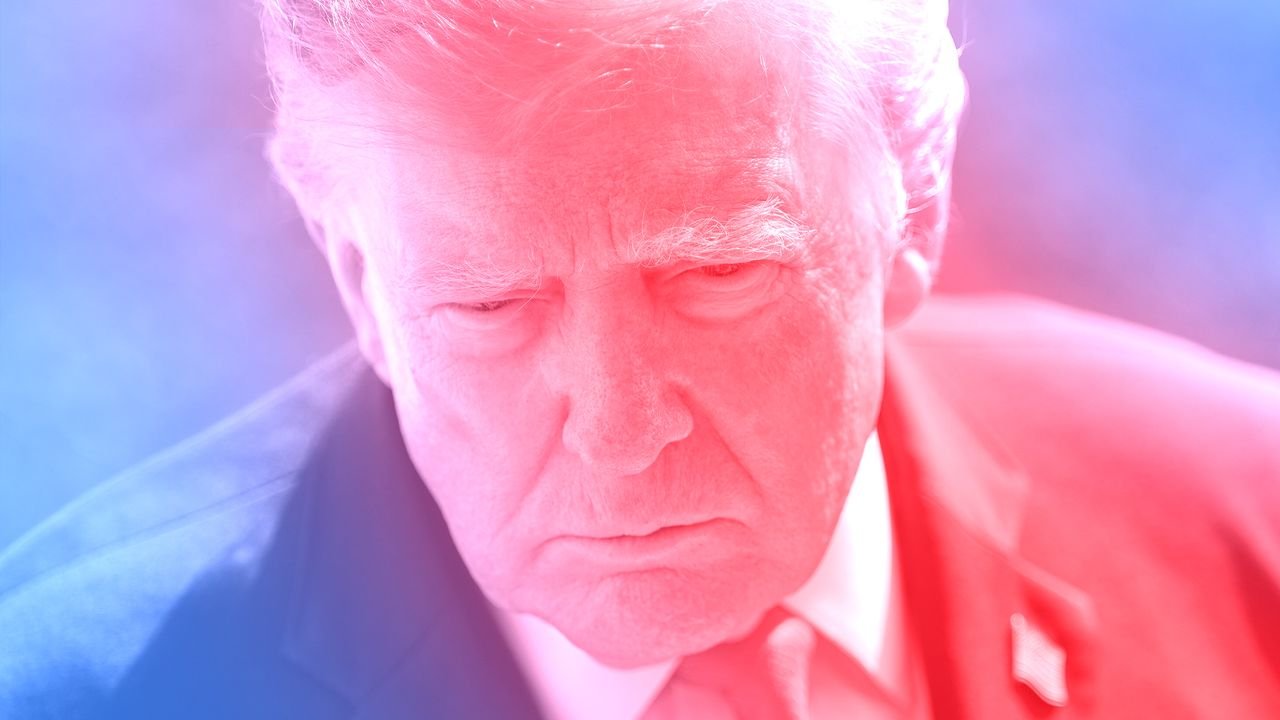
This is not the first time Trump has tried to break with Ukraine. Who, after all, can forget the Oval Office confrontation with Zelensky in February of last year, when Trump and Vice-President J. D. Vance pushed him to cave in to their demands for Ukrainian territorial concessions as Trump ranted, “You don’t have the cards!”
But timing is everything, in war as in midterm elections, and the moment is particularly risky as Trump’s envoys are again privately pressing Kyiv to agree to a deal that looks more like a surrender on Russia’s terms than a compromise, while Russia, having failed to achieve a battlefield victory despite an estimated 1.4 million casualties, has dramatically escalated its drone and missile attacks on Ukraine.
“The moment of greatest danger is now, in the near term,” Daniel Fried, a former senior U.S. diplomat in Europe, told me. He had just returned from meetings with security officials in Poland and Romania and was more concerned than ever not only about Ukraine’s situation but about an accelerated and intensified campaign of probing attacks by Russia against European allies as well. “That’s what bothers me: Putin knows this, and he will take advantage of it,” Fried said. “The short-term risk is right now.”
One question is whether there is anyone in Washington who can or will do anything about it, given Trump’s expansive views of his own powers and his indifference to what Congress thinks—even when it’s controlled by his own party. “It’s a bitter, forceful reminder that Trump’s worst instincts to believe Putin and to care about what Putin says just keep winning out,” Chris Coons, the senator from Delaware, said. When we spoke on Thursday, Coons, who is in line to become the next chairman of the Foreign Relations Committee if Democrats take the Senate, recalled how much effort had gone into persuading Trump to sign a tough new Russia-sanctions bill, which was passed by a huge bipartisan congressional majority only a month ago and named in honor of the late Lindsey Graham, the one Republican senator with Trump’s ear who consistently pushed him to back Kyiv.
Now Trump has in effect blown up what had been his own Ukraine strategy, repeating a pattern that has recurred with depressing familiarity over the past decade, in which he will take some tentative step to aid Kyiv only to speak with Putin and revert to his default setting of tilting toward Moscow. “Is this a break that can be fixed with our European allies?” Coons asked me, before answering his own question. “Not as long as Trump is President.” He expects more weeks like this to come as Trump enters the lame-duck phase of his Presidency. “The damage he can do in the next two years is being underestimated,” he added.
Trump has pivoted to Putin so many times before that it should hardly astonish anyone that he did it again. Back in 2016, I attended Trump’s first-ever foreign-policy speech, at the Mayflower Hotel in Washington, where the Russian Ambassador sat in the front row while the candidate plugged “improved relations with Russia” as one of his main goals. (Trump also said in that speech that the U.S. should become more “unpredictable” as a nation. Promises kept!) Anyone who watched Trump’s 2018 Helsinki press conference, or the 2019 impeachment proceedings of the President for attempting to blackmail Zelensky, could have foreseen something like what happened this week. Ever since he came back to office last year, he’s been trying, on and off, to force Zelensky to accept “a settlement that could have been written in the Kremlin,” as his former national-security adviser John Bolton once put it. So, no, it’s not a surprise.
But these crises that Trump provokes with such regularity always manage to reveal something new, and this one has been no exception, showing a President so politically cornered by the consequences of his war in the Middle East that he turned to Putin to help him out with less than three weeks to go before the midterm elections.



