
Sometime during pandemic lockdowns, Andrew Sullivan, director of I Don’t Want to Drink You Blood Anymore, started to feel like a vampire.
“We’d be on Zoom calls with our cameras off because we didn’t want to see our own reflections. We didn’t want the food we had; we wanted what we couldn’t have. We weren’t sure if it was 10 a.m., Wednesday, or May, or whether it was night or day,” he recalls. “We were told to be afraid of other people, even the ones we knew. It was hard to feel human. Most days, it felt like we’d all become reluctant vampires.”
Sullivan pours those feelings into I Don’t Want to Drink Your Blood Anymore, his solo debut as a writer-director after previously co-writing and co-directing 2017’s Bokeh with creative partner Geoffrey Orthwein. The film premieres Tuesday at the 35th annual Philadelphia Film Festival, and Sullivan has history with the city and even the screen on which his film will play.
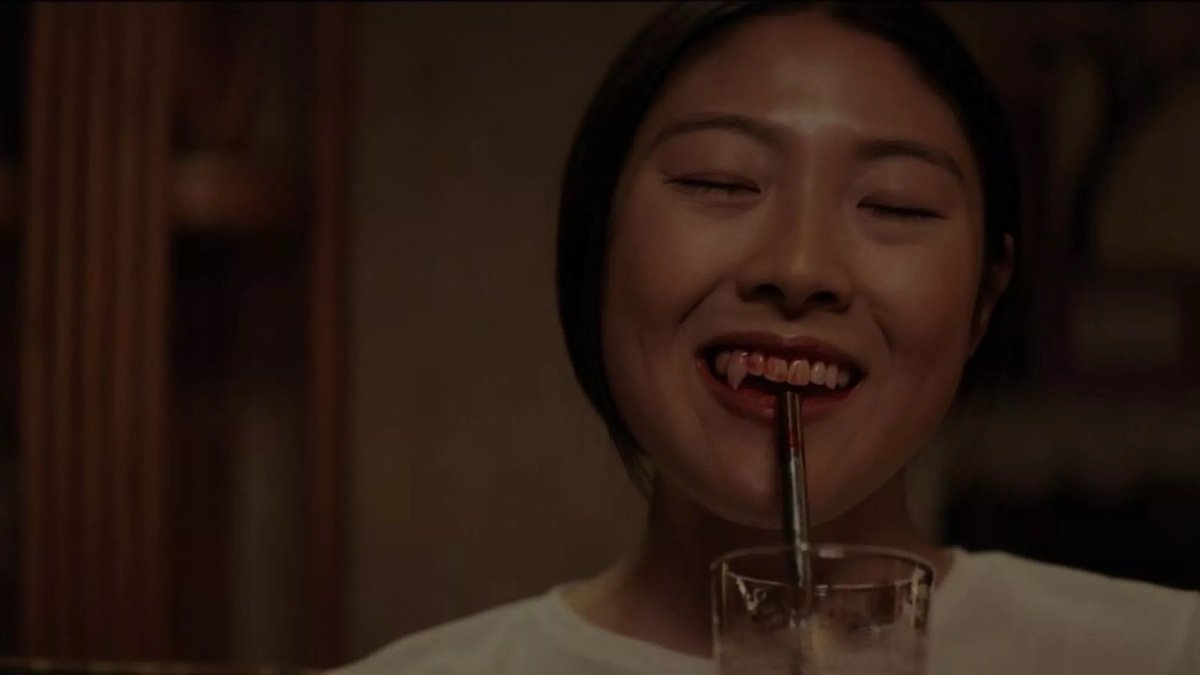
I Don’t Want to Drink Your Blood Anymore is largely about history — or history passing you by. The film follows decades in the life of Eiko, a vampire afraid to leave her family home. The nights and even decades begin to blur together — especially in a spectacular Halloween sequence brilliantly assembled by Sullivan and Orthwein, who edited and produced I Don’t Want to Drink Your Blood Anymore.
Ahead of the film’s premiere, we asked Sullivan, who is based in the Philly area, about imprisonment, casting vampires, and filming in the land of the Salem witch trials.
Andrew Sullivan on I Don’t Want to Drink Your Blood Anymore
MovieMaker: How did you become a moviemaker and why did you want this story to be your debut?
Andrew Sullivan: I’ve always wanted to make movies. It wasn’t the first, second, or even third thing I did in my career, but I found my way back.
MovieMaker: This is almost a single-location film but the three distinct acts — and the very long timeline — make it feel much bigger. How did you write toward that sensation?
Andrew Sullivan: There are many stories about reluctant vampires, but few of them show that reluctance, and that stunted growth, across decades. This is a 50-year coming-of-age film about a single-fanged vampire named Eiko. She doesn’t feel like a full vampire, and she’s no longer human. She’s stuck, and she stays stuck for a lifetime. She believes inaction is kindness, but her thirst is endless, and even though she tries to remove herself from the world, the world won’t leave her alone. Writing about a quiet, uncomfortable struggle was a often a quiet, uncomfortable struggle.
MovieMaker: It was fascinating that Eiko’s grandparents were in the internment camps, but she has imprisoned herself, in a way. What did you want to say with that story point?
Andrew Sullivan: Eiko’s grandparents were taken from their home and put in an internment camp. That’s the defining tragedy in her family, and it taught her that home is the one thing you can’t let anyone take from you, so Eiko believe that she needs to stay in her forever home forever.
No one locks Eiko in. Fear does. A home is meant to be a place of safety and comfort, but day by day, year by year, decade by decade, hers becomes a comfortable prison. It feels less like home and more like a reminder of what she is and who she isn’t.
MovieMaker: It feels like there’s a great metaphor in this film for throwing your life away. Was that something you wanted to examine?
Andrew Sullivan: Yes, though I’d say it less as throwing your life away and more as letting it slip away. Eiko never makes one big decision to waste her life. She makes a small decision every day not to live it, and she tells herself it’s the kind choice, that if she stays inside, no one gets hurt, but eternity comes at a cost. That idea came straight out of the pandemic. We were all losing time, and some days it was hard to tell whether we were protecting ourselves or just hiding from ourselves.
MovieMaker: Where did you film this?
MovieMaker: We filmed in Ipswich, Massachusetts. Most of the film takes place in one house, so we needed a house with real character, and we found one with rooms, floors, and furniture dating back to the Salem witch trials era. You can feel that history on screen. One of our producers is from the area, and his connections helped us build the right crew. Massachusetts is also very film-friendly, and its incentives make a real difference for an independent film. But mostly I’m grateful to the family who owned the house. I still can’t believe they let us shoot there.
MovieMaker: How did you cast your leads?
Andrew Sullivan: The story centers on a Japanese-American woman, Eiko. Through auditions and a lot of Zoom conversations, it became clear that Miki Ishikawa was the right choice. Miki is in all but two scenes, often alone and without dialogue, so we needed someone who was comfortable being uncomfortable and willing to play failure more than success. Miki made Eiko; she took the role well beyond the page.
Sierra McCormick’s character, Jessica, takes over the second act, and Sierra owned it. Within moments of our first conversation, I knew she was Jessica. She’s young, but she’s been acting a long time, and she’s an amazing mix of confident and adaptive. I learned a lot watching her work.
Nick Sagar plays Douglas, Eiko’s mentor, and he walks a fine line between charming and broken. Douglas knocks Eiko down with a word or a look, yet he wants to matter again, and he likes having a student even when he doesn’t like the student. Nick built that character layer by layer, and it was a joy to watch. Nick loves collaboration and it is one of the many reasons that everyone loved working with him.
MovieMaker: Do you have any Philly connections, or thoughts on the Philadelphia Film Festival?
MovieMaker: I love Philadelphia. Each neighborhood has its own look and feel, and I’ve outlined movies and written screenplays in cafes all over the city. The festival matters a great deal to me. When I was 22, I worked at Allied Advertising, which handled Philadelphia marketing for most of the studios, and I ran press and word-of-mouth screenings in the same theaters the festival uses today. That’s where I learned how a room full of strangers reacts to a movie.
The theater where we’re premiering I Don’t Want to Drink Your Blood Anymore is special to me. I saw RRR there the first time and the fourth time, and last year I saw one of my favorite films, In the Mood for Love, on that screen. And for the other 50 weeks of the year that aren’t festival focused, the programmers there show films that are evocative and provocative and that matter to a lot of us. Getting to premiere there means a lot.
You can learn more about the Philadelphia Film Festival here and read more of our film festival coverage here.
I Don’t Want to Drink Your Blood Anymore world premieres at 9 p.m. tonight.
Miki Ishikawa in I Don’t Want to Drink Your Blood Anymore, directed by Andrew Sullivan. Courtesy of the Philadelphia Film Festival



