
Published October 20, 2026 01:38PM
Sunglasses and triathletes go hand in hand. With not one but two sports calling for a good pair, and after so much time spent nitpicking over the perfect goggles, we can’t settle for less when it comes to shading our eyes through the bulk of our training and racing.
It’s not just about UV protection and keeping bugs and debris out, because, let’s be honest: style matters, too. And today’s saturated performance sunglasses market offers a nearly unlimited selection of styles, with many pairs more high-tech and often higher-priced than ever before.
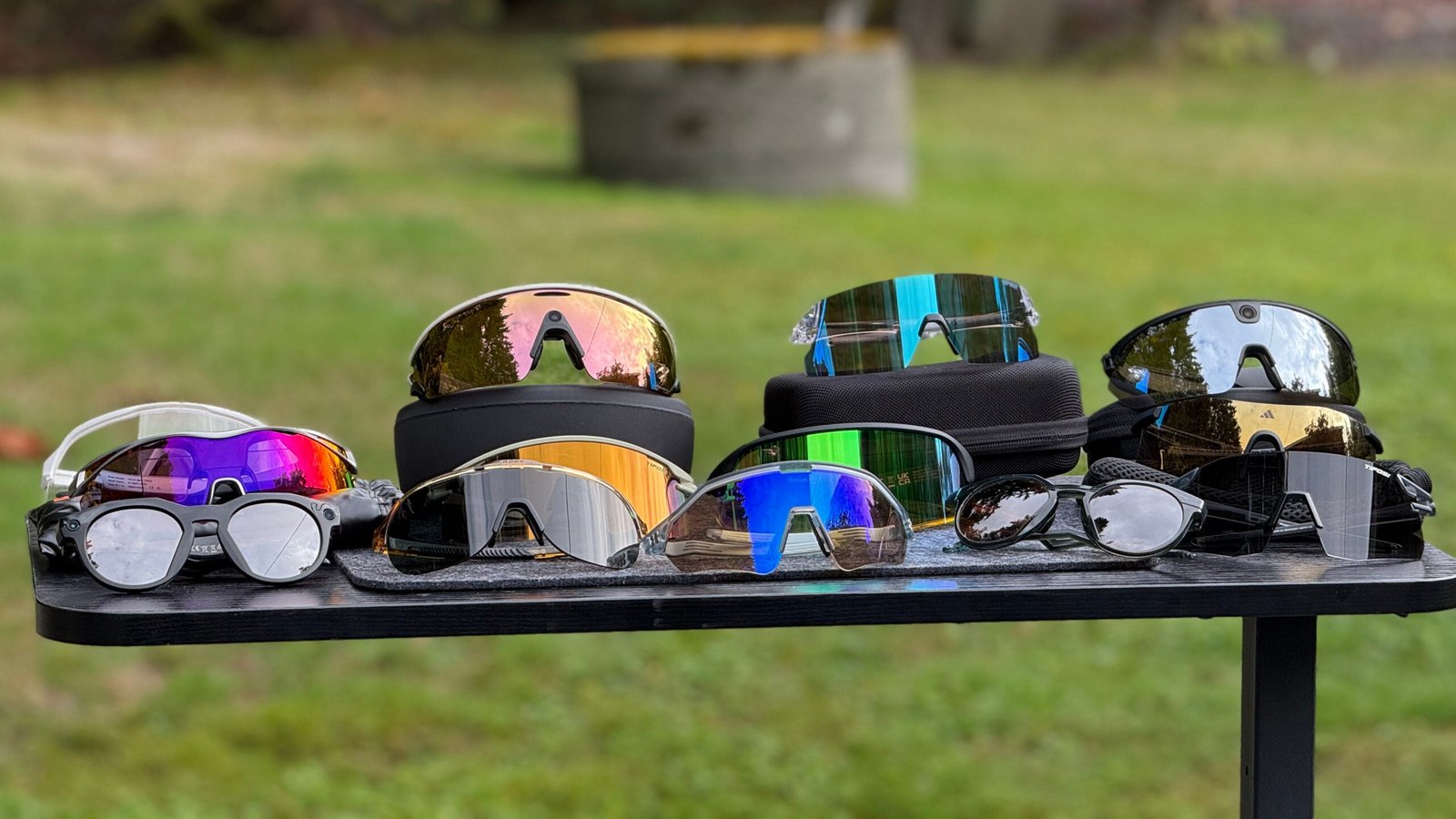
We wanted to get a clearer, less-tinted picture of the triathlon-worthy sunglasses landscape in 2026, so we combed the internet to see what was on the cutting edge and spent the summer testing a wide range of pairs while running and cycling across different terrains and climates.
Along the way, we explored the latest tech, picked out standout features, and figured out what felt worth the money – and what wasn’t quite there yet. From light-shifting photochromic lenses and video-recording AI smart glasses to everyday pairs that won’t break the bank, here’s our roundup of the best sunglasses for triathletes in 2026.
Light-shifting/photochromic sunglasses
In the Pacific Northwest where I live, it can be raining one minute and sunny the next. A ride might take you from wide-open roads into dense, dark forests, sometimes around a single corner. For that reason, I’ve found light-shifting lenses incredibly useful. But even if you don’t live where I do, these glasses are practical in plenty of other changing light conditions, such as an early-morning long ride that starts before the sun comes up and ends well into the day.
One of the biggest drawbacks of traditional photochromic sunglasses is that the lenses don’t always adjust as quickly as the light changes. Their tint range also has limits, and they don’t always get as clear or as dark as you’d like. Most rely on UV light to darken, which means they may not respond as you’d expect behind a UV-blocking windshield in your car or when you’re testing them by a window before heading outside.
That’s a perfect segue into where we’ll start, as the first pair on our list looks to address these issues by taking a different approach: tint you control with a swipe.
Povec C1
One of the most intriguing pairs on this entire list comes from a new brand called Povec. Rather than waiting for the lenses to react to changing light, these glasses allow you to swipe an interface on the temple to change the tint in about a second.
Sure enough, I was surprised by just how quickly, and how dramatically, the tint changed. It started shifting as soon as we swiped the temple, so naturally, we spent the next several days playing with it back and forth. The electrochromic tech, as it’s called, worked so well that the glasses quickly became a showpiece for impressing friends.
These glasses ironically shone in dimmer conditions, especially when we went off-road or deep into the forests and needed to change the tint quickly. When mountain biking, being able to change the tint almost immediately as we rounded a corner into a dense forest descent felt invaluable.
At the same time, we were slightly less impressed with the optical quality in harsher light. There are subtle but apparent reflections, and the clarity is just a little off. It’s nothing dramatic, but it is noticeable, especially compared with the crystal-clear optics of some other glasses on this list.
SunGod Velans 2
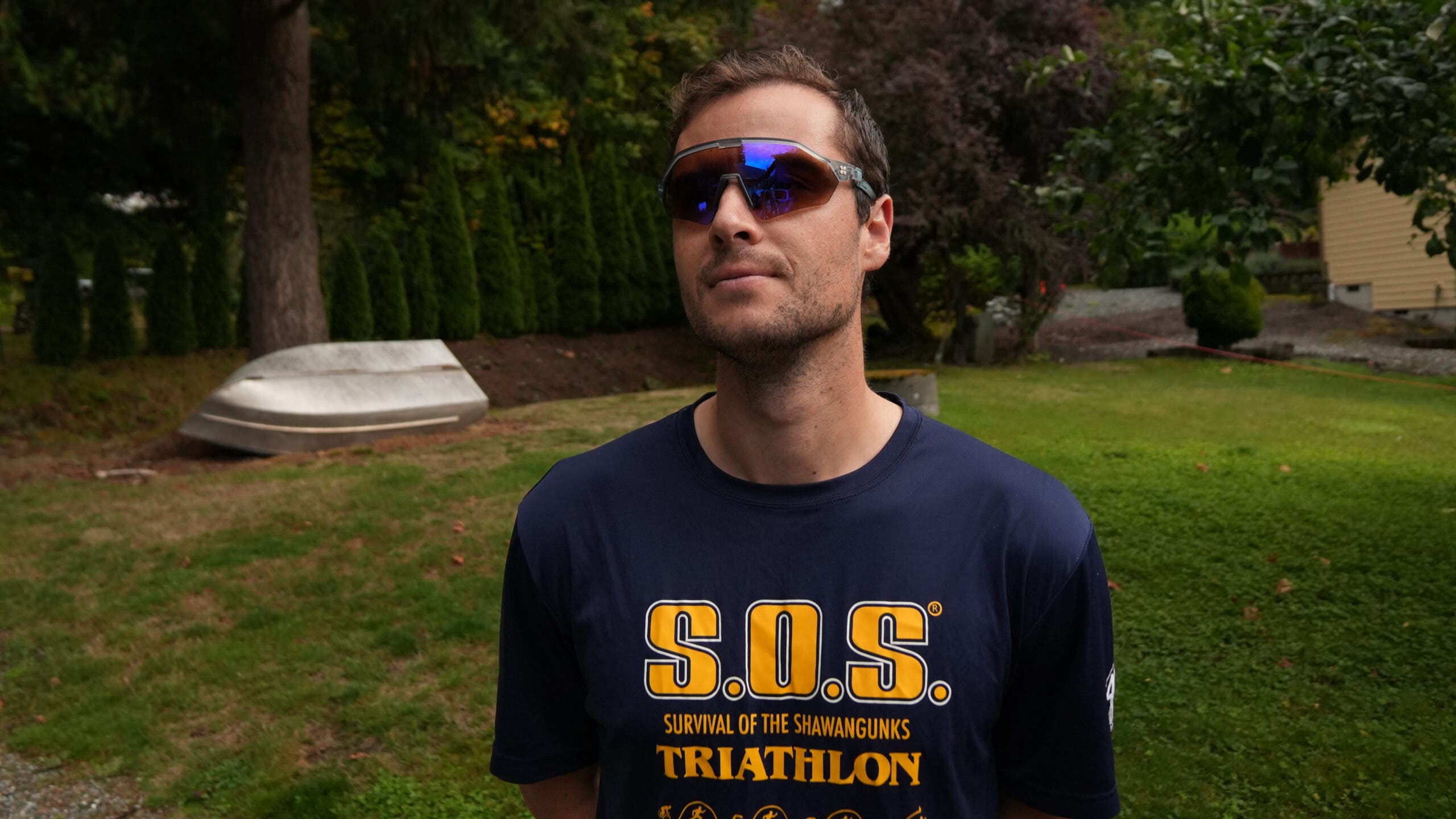
Our favorite everyday pair of photochromic sunglasses, especially for spring and fall days in the PNW forests, was the SunGod Velans 2.
This ultralight pair offered some of the best optical clarity, field of view, and comfort of any glasses on this list, even before the added bonus of photochromic lenses. They shifted from light to dark quickly enough for our normal riding, although they couldn’t match the on-demand tint changes of the Povecs.
SunGod has become increasingly visible in triathlon thanks to athletes such as Hayden Wilde and Chelsea Sodaro donning them, but also because of a few appealing extras not often found elsewhere in the market. An array of customization options, an emphasis on durability, repairability, and recycled packaging, and a lifetime guarantee that includes repairs for accidental breakage make the higher price easier to digest. Furthermore, features such as replacement lenses and screwless hinges make the price more logical and suggest this pair will likely last you for the long term rather than just a couple of seasons.
Tifosi Rail XC
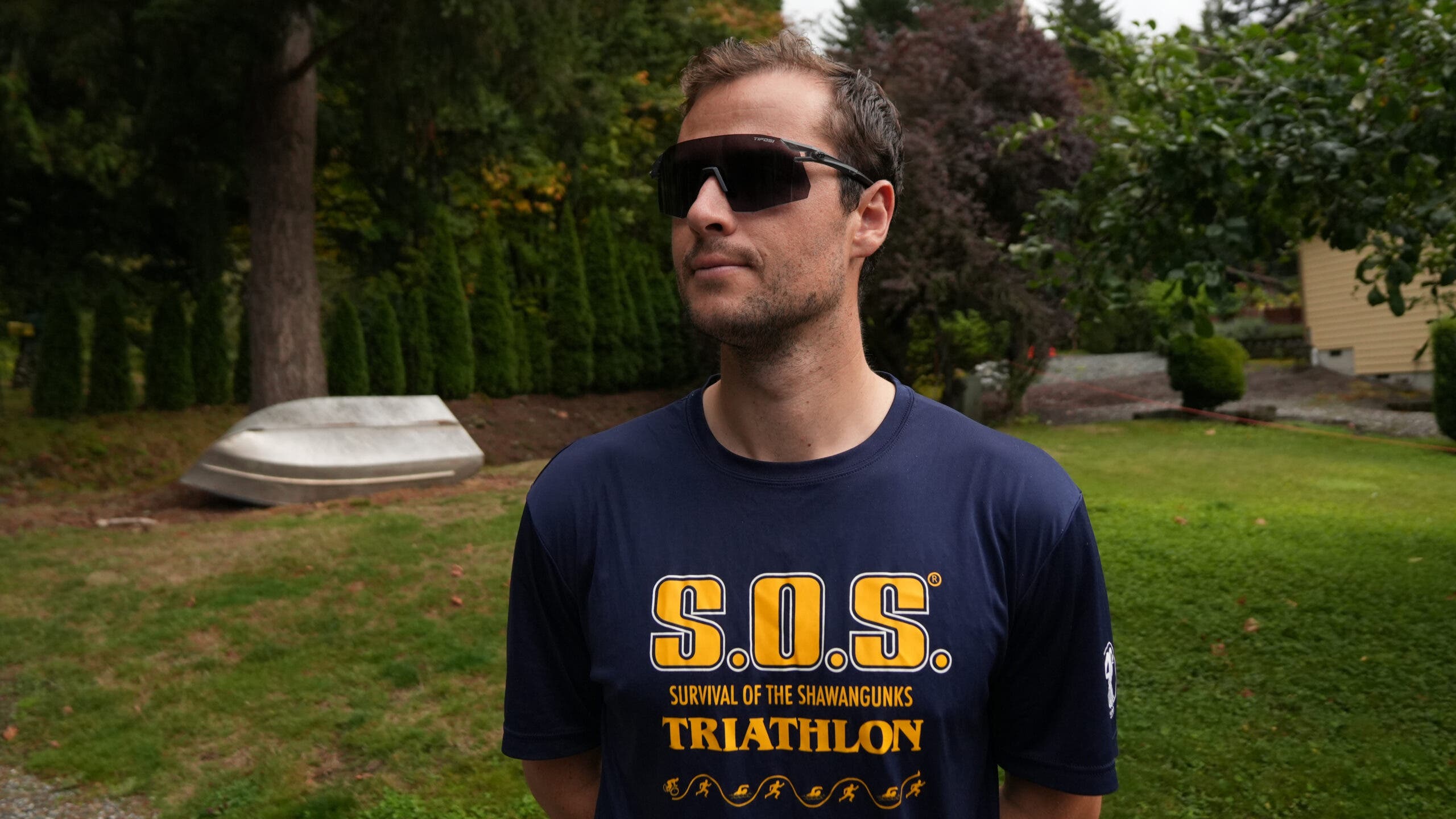
Tifosi consistently makes it into our roundups for offering quality sunglasses at some of the best prices, and its light-shifting options are no exception.
We tried the Rail XC with Clarion Blue “Fototec” lenses, which offer a stated light-transmission range of 12% to 46%.
Compared with the SunGods, these felt like only a small step down in optical quality and fit during our testing. We did notice more glare from sunlight at certain angles and slightly more fogging during humid runs. At 31 grams, they were also a little heavier.
But beyond that, there’s little else to nitpick. They’re comfortable, clear, and transition smoothly and quickly, with nose pads and temple tips that adjust on the fly, offering plenty of room to dial in comfort.
Tech-enhanced sunglasses
Oakley Meta Vanguard
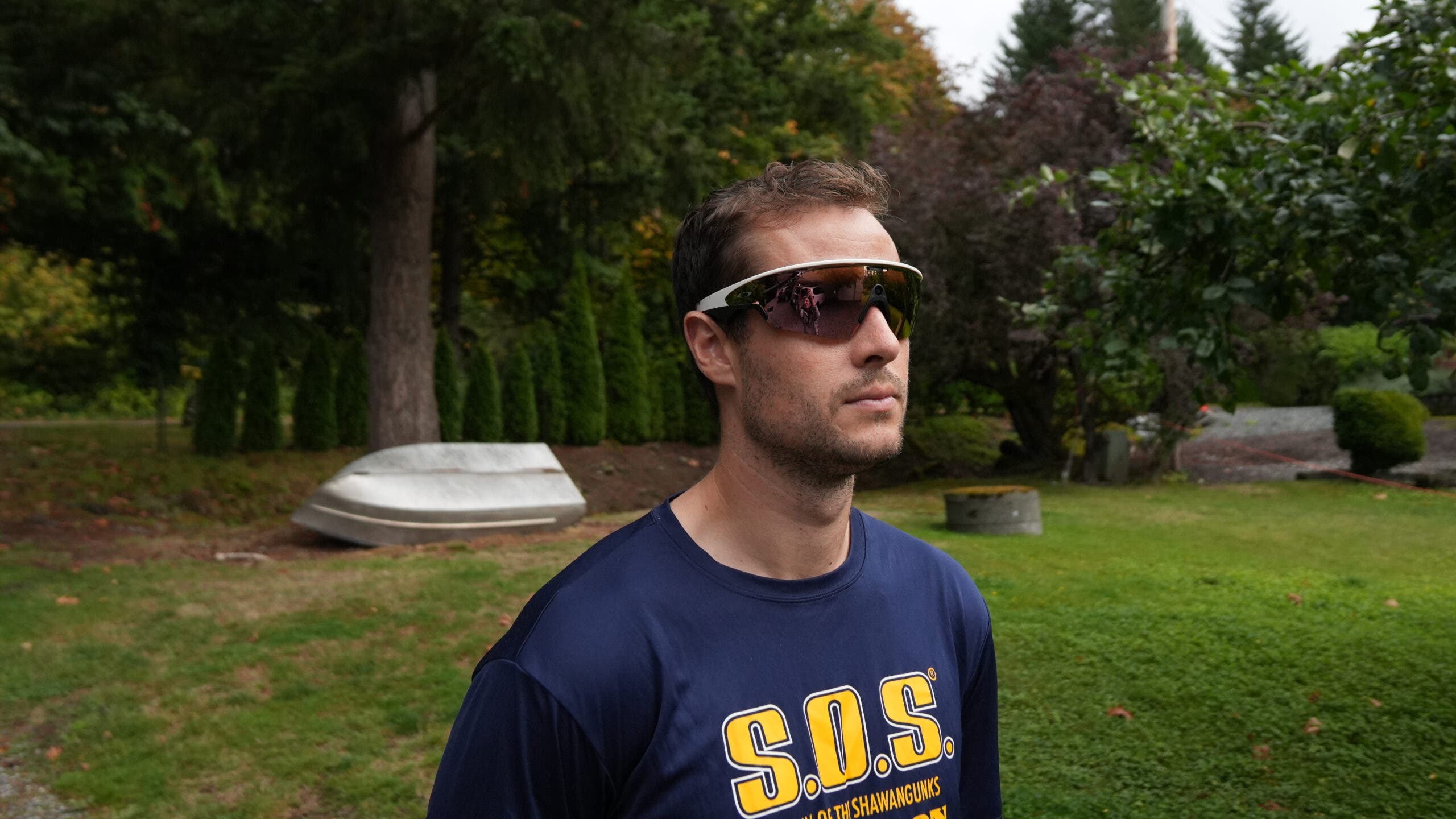
Perhaps the most controversial pair on this list, these smart glasses have divided opinions about where this technology belongs in triathlon. From Ironman banning their use at its events to T100 welcoming them through a partnership, it’s a hot topic.
After training and racing in them twice, my own mixed opinion comes down to something simpler: I thoroughly enjoy wearing them and appreciate their practicality, but I’m still struggling with the bulky styling of the Vanguard. Enough so that I often intentionally leave them behind so I’m not the guy with the video sunglasses when running or cycling with friends.
That functionality, on the other hand, is hard to argue with. Being able to capture hands-free video and photos, listen to music, take phone calls, and ask Meta questions — among many other features — makes these glasses useful in ways a regular pair simply can’t match.
The Oakley Prizm lenses offered the clarity we expected, although the bulkier frame slightly restricted the field of view. Even after keeping them in their case and using only a microfiber cloth to clean them, I also noticed tiny scratches under close inspection after a few months of use. They weren’t noticeable while wearing the glasses, but they were there.
At 66 grams, you’ll notice the weight, too. If you have one of the lightweight alternatives on this list sitting next to them, you might think twice before grabbing these for an everyday session.
Where these really earned their place is in documenting your triathlon experiences. At SOS Triathlon and Escape from Alcatraz, capturing moments before, during, and after the race felt almost effortless. I could quickly tell Meta to take a photo or record a video, then download the footage to my phone through the app afterward, and I was set. Compared with previously having to bring GoPros, set up shots, and worry about batteries and SD cards, it makes it all too easy.
On the way to the SOS check-in tent, I even asked Meta to help me remember the different stages of this unique multi-stage race (read more about the SOS here).
Like it or not, smart glasses are likely to become an increasingly familiar sight around triathletes. After using them, I can understand the appeal.
Read a full Oakley Meta Vanguard review here.
BleeqUp Rover
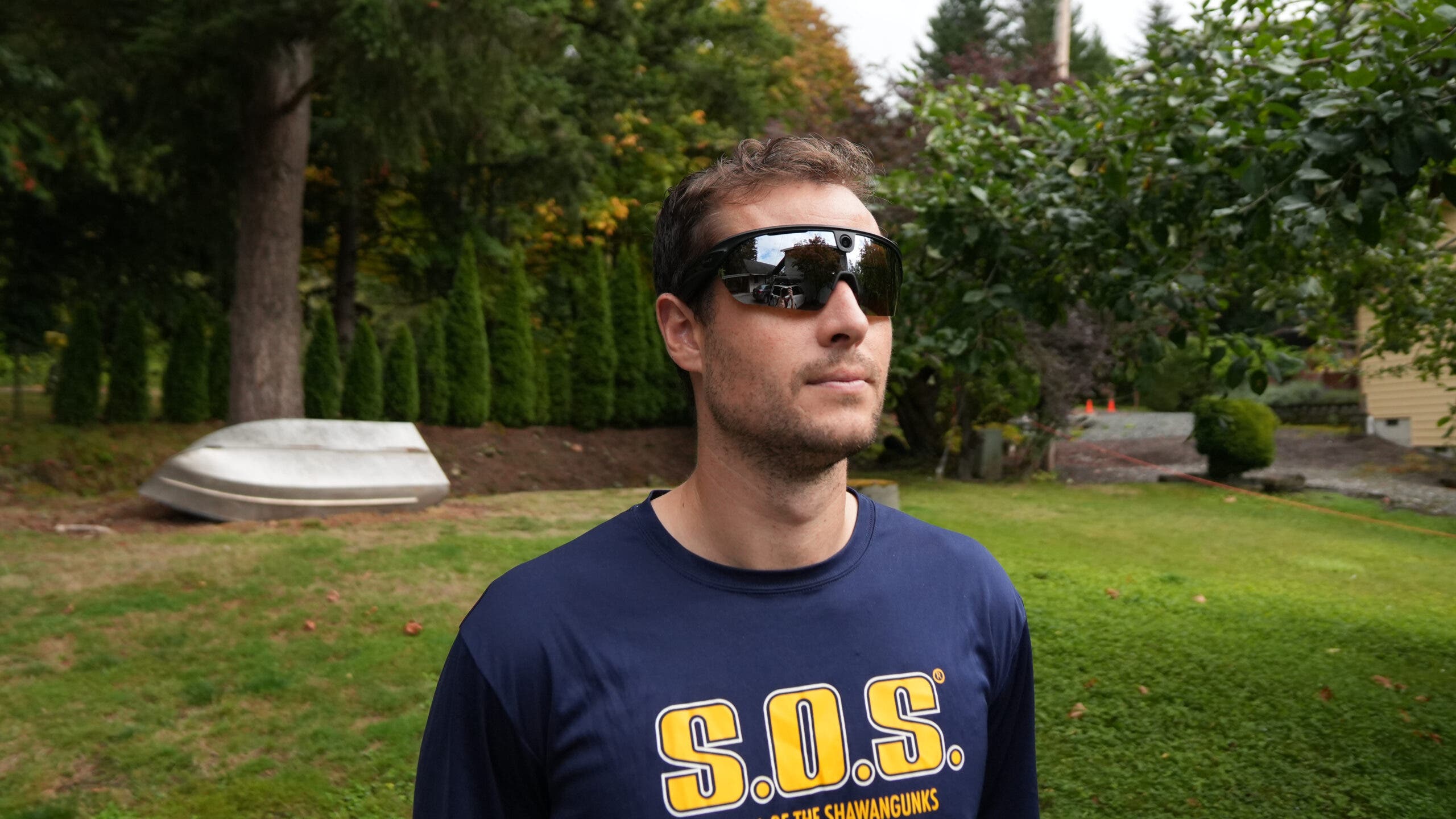
The award for the most pleasantly surprising sunglasses on this entire list goes to this Oakley Meta rival, which packed in enough features to put the Vanguard on the ropes.
I’ll admit I went into testing the Rover sunglasses with the preconceived notion that these wouldn’t compete with the powerhouse name above. But I was taken aback by both the quality and functionality.
The first things I noticed were the weight, more than 10 grams lighter than the Vanguard, and the lenses. I hadn’t expected optics this good from a brand I had never heard of.
Then it only got better. The Rovers offer both landscape and portrait recording, plus a tiltable camera that helps you adjust the shot. The video resolution was also better than I expected at 3K and 60 fps – all capabilities the Vanguard doesn’t offer.
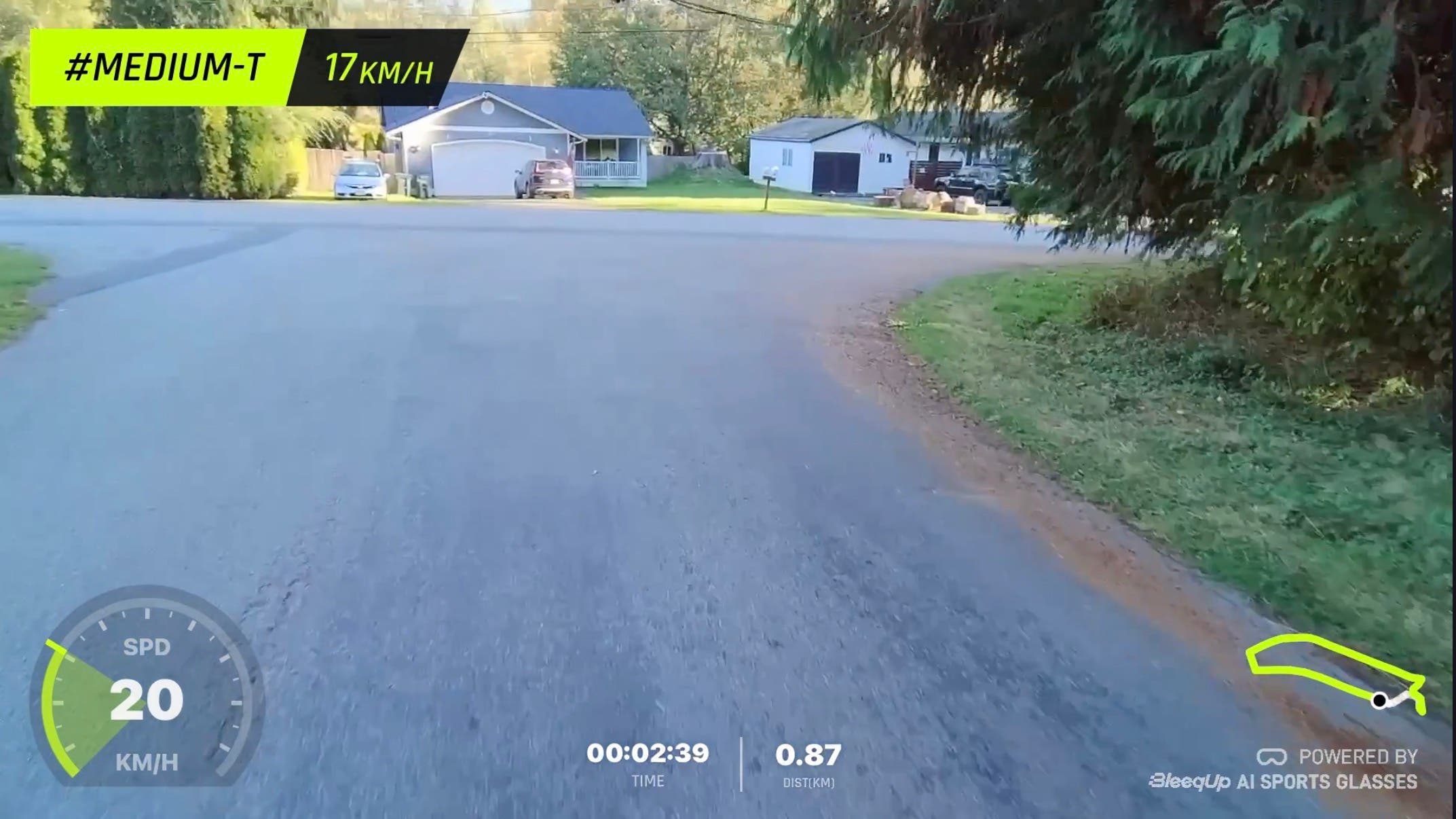
One of the standout features was the intercom function, which lets the glasses act like a walkie-talkie with fellow cyclists using the BleeqUp app. Being able to talk to each other more easily is something I’ve always wanted on small group rides, and hearing everyone clearly through the sunglasses themselves takes away the hassle of phone calls or dealing with headphones.
They’re marketed as AI sunglasses, with tools for quickly editing captured footage and adding ride-data overlays. If you’re feeling extra AI-adventurous, you can also generate a third-person view of your ride using mapping data and an uploaded photo of yourself and your bike. The results were interesting, to say the least.
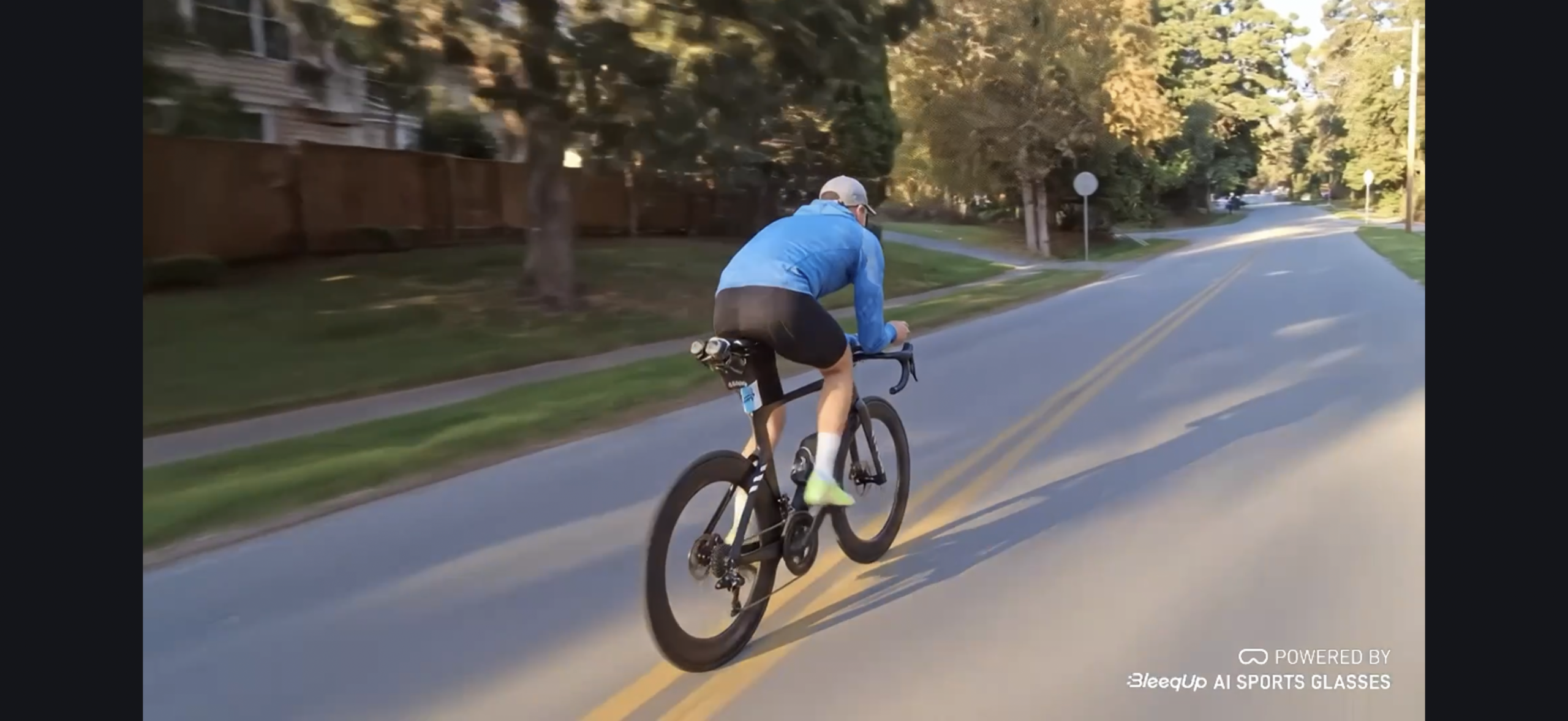
Where the Rovers fell slightly behind the Vanguards was in the polish. The interface, AI assistant, and connectivity didn’t feel as refined as Meta’s. The feedback sounds weren’t as distinct, and connecting the glasses could be a little confusing, with frequent requests to reconnect to their Wi-Fi.
The Vanguard also comes with a charging case, which simplifies things, while the Rover uses a magnetic USB charger. Finally, having to say “Hey Bleeker” to activate the assistant just felt super weird.
One final gripe: The temples could rub against the lenses when folded, which felt like a small but frustrating design oversight.
Cybersight Zenith Pro HUD
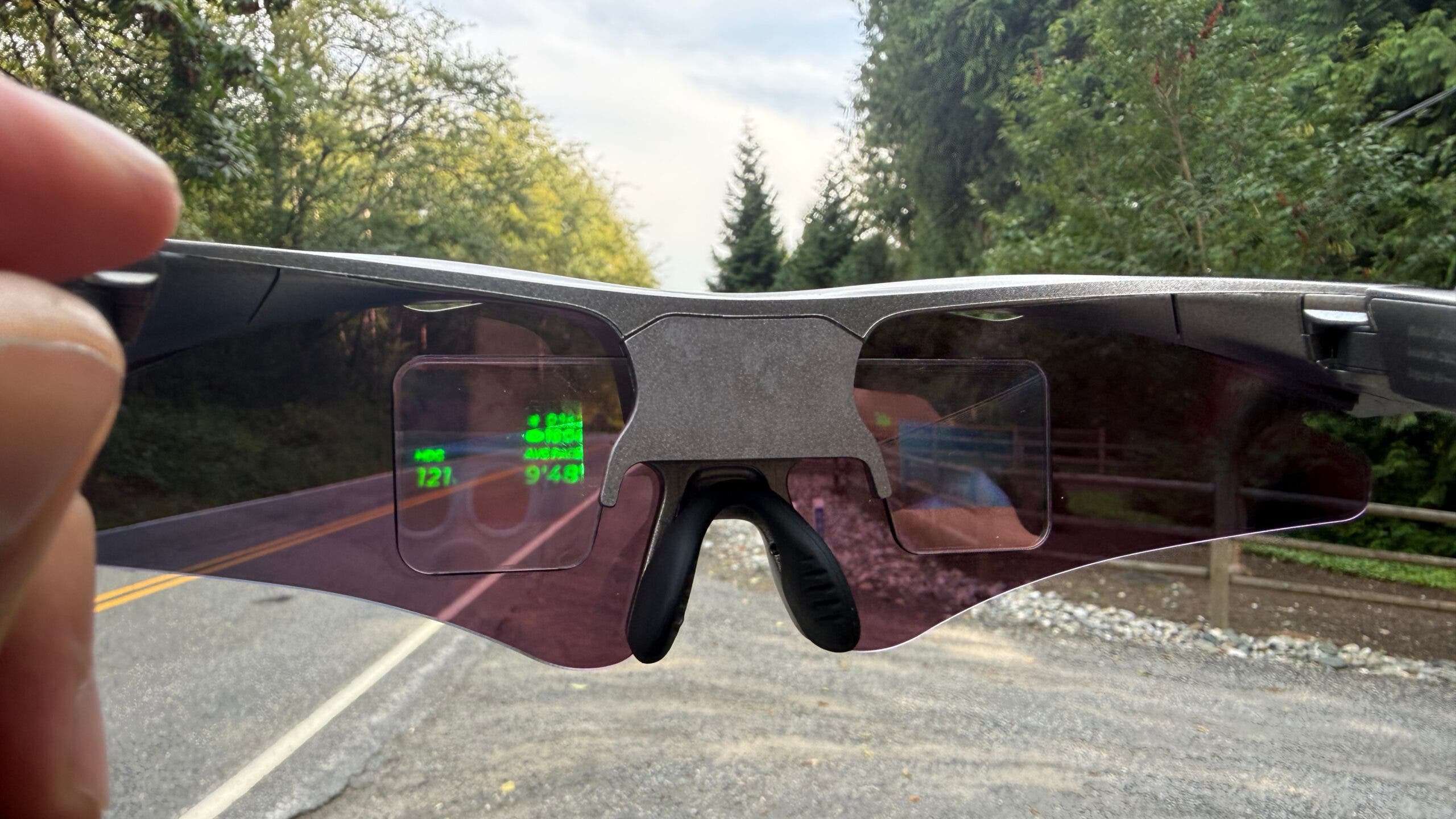
In contrast to the pleasant surprise of the BleeqUp Rovers, these heads-up display sunglasses fell well short of my expectations.
I was excited to see whether technology similar to what we’ve enjoyed in Form’s smart swim goggles could bring the same benefit to running and cycling. Unfortunately, I was disappointed from the moment I unboxed them.
The idea is great, but the execution wasn’t there. The fit was the least comfortable of any glasses on this list, sitting unusually high on my face, and the secondary inner lens that houses the HUD projection compromised the view.
The bright green data displayed on the inner lenses is intended to keep cyclists from having to look down at their bike computer so they can focus on what’s ahead. In practice, however, I found the view even more distracting, sometimes struggling to adjust my focus from what I was reading on the glasses back to the road.
It was less of an issue while running, and thankfully, you can adjust the brightness and make some changes to the display position to keep the data less intrusive, but that was little consolation.
The app also felt unfinished, and we experienced several issues trying to connect our devices. Top it off with the worst-sounding built-in speakers and most robotic voice assistants I’ve heard in a while, and I’ll sadly be leaving HUD glasses out of my periphery for a while.
Everyday sunglasses for cycling and running
Roka
If I had the budget and could choose just one everyday pair to wear everyday or bring on a trip, like our recent all-in Ironman World Championship coverage, I’d choose the Oslo 2.0.
The blend of aesthetics, lens quality, and fit is hard to beat. Grippy temple tips and a very grippy nosepiece (which comes in various sizes) help it transition easily from casual use to training. Although it doesn’t look like it’s meant for running, it performs as well as a pair designed specifically for the sport.
For cycling, though, I prefer a little more lens coverage. That’s where I’d reach for Roka’s San Remo Air, which offers a similarly understated cafe style, but with more coverage and a vented lens for hot days.
Both were pairs I could happily wear all day, and all night if I had to. They also had some of the fewest fogging issues while running in the heat and humidity of a Washington summer and felt among the most premium of the bunch — from the finish of the frames to the cases they came in.
Adidas Kaphiros
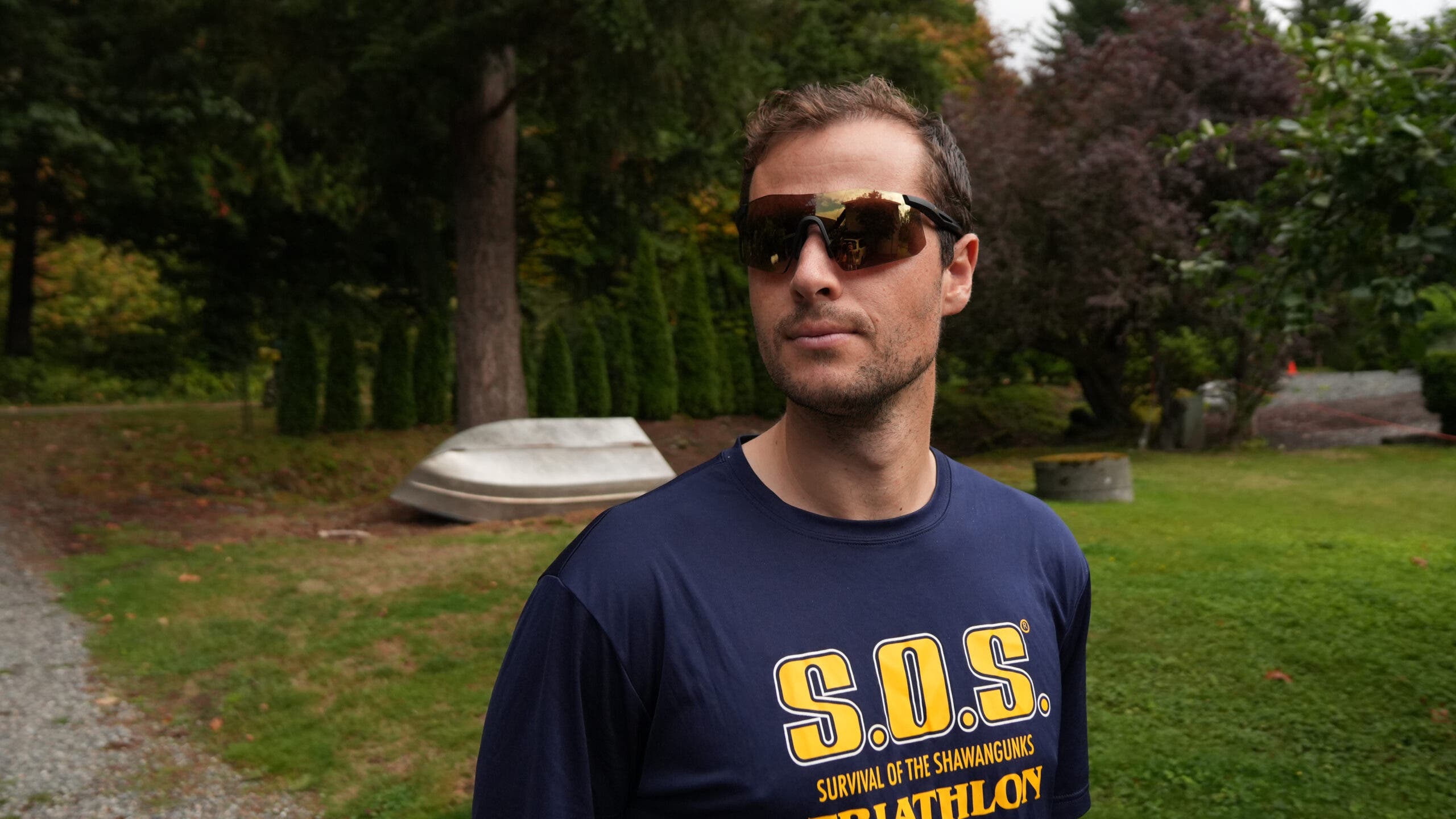
Our favorite mid-priced everyday pair was the Adidas Kaphiros, which came surprisingly close to the Rokas in overall performance. It also became the pair my wife consistently stole – sorry, “borrowed” – before we headed out for a ride together.
These are truly glasses you forget you’re wearing. They almost feel like they float above your ears. If pressure around your ears is something that regularly bothers you — as it has for me in the past — this is the pair I’d recommend.
The lenses offer generous coverage for cycling protection, and the optical quality impressed me. Small openings in the temples let air through while riding, although the glasses tended to fog during hot, humid runs — likely due to the size of the lenses.
Tifosi
Tifosi makes this list for a second time, beating out plenty of other running and cycling sunglasses as our favorite budget everyday pair.
The Vogel XC is lightweight, has proved durable enough to survive a couple of seasons with me, and offers a rimless, vented design that’s hard to beat at this price.
The lens tint we tested hit a useful middle ground for the varied conditions we wore it in. And the size and shape don’t scream “I’m a triathlete” every time you wear them out in public.



