
Published October 19, 2026 06:00AM
For this story, Triathlete spoke with the two organizers of the Kids Tri for Champions and one parent of a participant to understand what it takes to put on an adaptive triathlon for kids.
This whole swim-bike-run experience is supposed to be fun, but chasing PRs and podium finishes can make that easy to forget. If you’re overdue for a reminder, consider helping with an adaptive triathlon for kids.
An adaptive triathlon is not your typical race, and to find out why, as well as learn what it takes to successfully organize one, we spoke with Erik Wanberg, Mayo Clinic Alix School of Medicine student and the co-founder of Kids Tri for Champions: Adaptive Triathlon, and his co-organizer, Kevin Webb.
Filling an equity gap for children living with disabilities
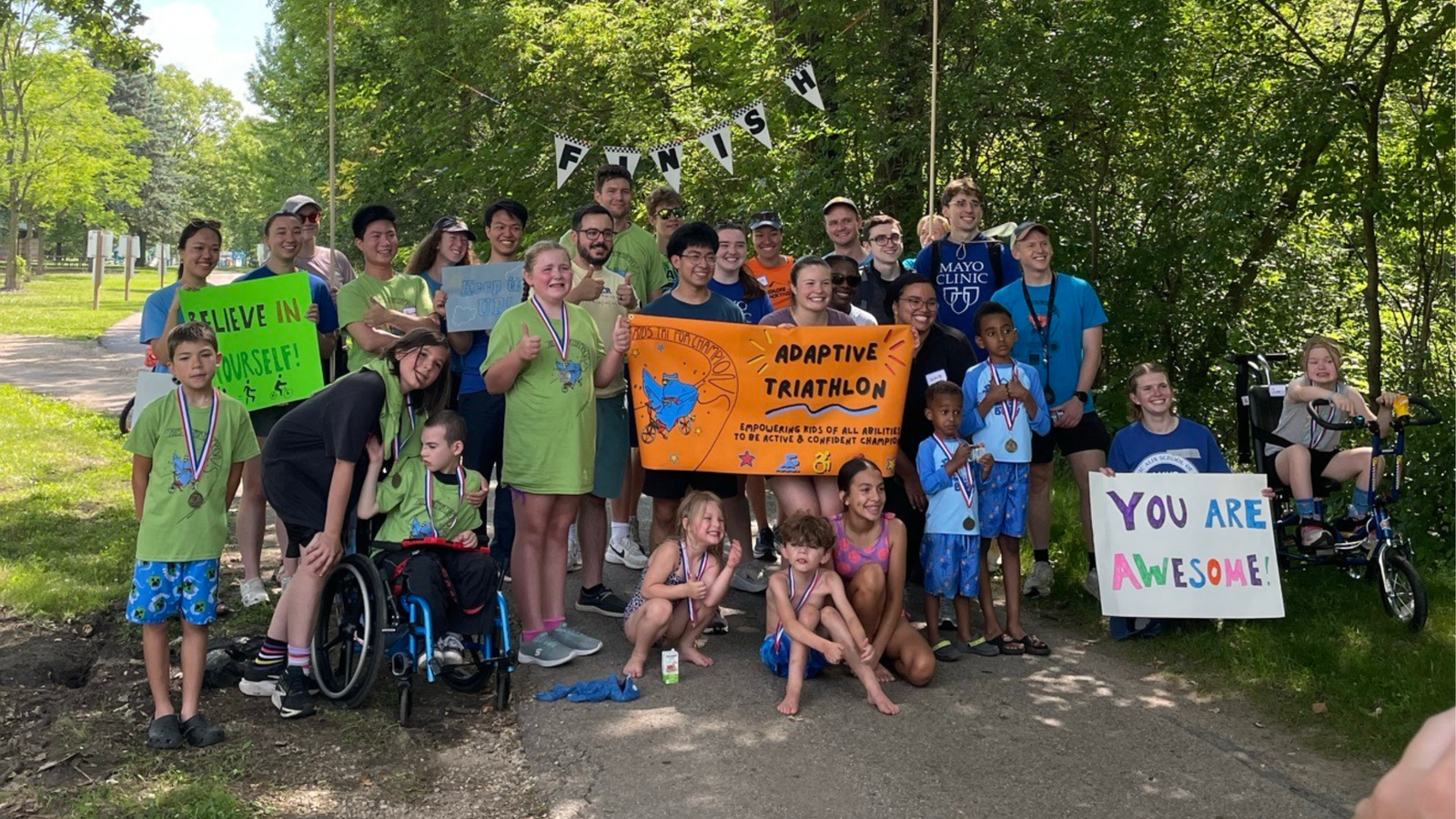
In 2024, Wanberg and several other Mayo Clinic medical students founded the first annual Kids Tri for Champions, an adaptive triathlon for children with developmental, intellectual, or physical special needs in grades kindergarten through 12th.
The race was part of the students’ second year of medical school, during which they’re provided with a variety of volunteer opportunities that they can receive school credit for. While they can choose to give back through existing community events and community service, Wanberg and the other students decided to create a new event, bringing their own interest in triathlon to children with disabilities when they realized the sport was inaccessible to them.
Nearly a dozen participants of all ability levels swam, biked, and ran their way to the finish line of the inclusive event at Soldier’s Field Park in Rochester, Minnesota.
“We started this race in an effort to fill an equity gap for children with disabilities in Southern Minnesota,” Wanberg says. “There are excellent resources here for adaptive physical education in our schools and fun after-school activities in our communities, but no real chance for the kids to participate in an actual competition that allows them to have that community race experience.”
Nearly one in five children in Minnesota and 3 million children across the U.S. live with a special health need or impairment. What’s more, physical activity levels are 4.5 times lower for disabled children. And for 1.5 million public primary and secondary school students with a physical disability, athletic competitions remain inaccessible.
“So we set out to create the first adaptive triathlon in this region where kids on the entire spectrum of intellectual and physical disabilities could swim, bike, and run,” Wanberg explains. Rather than emphasize competition, the Kids Tri for Champions focuses on inclusive recreation and self-achievement.
Now in its third year, the triathlon was held on July 11. Webb estimates that over 25 children between the ages of 4 and 18 years old participated.
“Over the past few years, our adaptive triathlon has accommodated children with capabilities ranging from Down syndrome to physical disabilities,” Webb says, “including hearing-impaired athletes and wheelchair users.”
The do’s of organizing a kids adaptive triathlon
“Adaptive events allow all kids to feel a strong sense of accomplishment,” says Anna Strand, whose daughter Ella is a Kids Tri for Champions’ finisher. “It gives them a chance to connect with friends and to work through a challenge in a way that raises their heart rate and also exposes them to a whole community that is supporting them and cheering them on.”
Inspired to offer an adaptive triathlon for children in your own community? Wanberg and Webb have some invaluable tips for organizing an inclusive event that is fun and safe for kids of all abilities.
1. Do set a date and a rain date, especially if your event will take place during thunderstorm season.
2. Do start planning early. For the Kids Tri for Champions in July, planning usually begins in January or February. Wanberg suggests sending out a Google form/survey that includes a direct question about each participant’s functional/ability level and event needs, including any specific accommodations that they will require during the event, such as an adaptive bike. The form should also include a section where participants can request that an athlete buddy partner with them for the entire race if they don’t want to bring their own. For Kids Tri for Champions, a link to the form is included in a promotional PDF for the event, which sponsors and supporters share on their websites and social media accounts.
3. Do establish a financial support system once you have a sense of how many participants to expect. Webb estimates that the Kids Tri for Champions costs about $400 to $500 annually for finisher medals, shirts, juice, and snacks, most of which is covered by donations from local nonprofits.
4. Do find a pool for the swim and plan your course around that. Kids Tri for Champions books the Soldier’s Field lap pool through Rochester Parks & Recreation, which provides a few lifeguards as well.
5. Do make sure that the course is in a contained environment that is publicly available, legal for the race, and straightforward. Wanberg suggests walking the course you’re considering to ensure there are no bumps, craters, or cracks that might make it hard or unsafe for adaptive bikes or individuals with poor balance.
6. Do put a team of volunteers together. Webb starts by emailing Mayo Clinic medical students.
“We get about 10 medical students, as well as people from the nonprofits We Bike Rochester and EA Therapeutic Health for a total of around 25 volunteers,” Webb says.
7. Do get help borrowing adaptive bikes (which can otherwise be expensive) by building a relationship with a local bike company or non-profit that can help with e-bikes, handcycles, tandems, recumbents, and upright bikes with training wheels. For the Kids Tri for Champions, EA Therapeutic Health brings a trailer of their physical therapy bikes to the race.
8. Do assign a buddy to swim with the athlete and run alongside them while they bike and run if it’s requested in the survey.
“Make sure that a couple of the buddies you recruit can run fast,” Webb advises. “Two years ago, a kid with an electric bike requested a buddy, so I ran with him, but he was doing 5:30 miles! So the next year, I recruited a couple high school cross-country runners just in case we had anyone on a fast bike.”
9. Do be flexible while putting safety first! Some of your participants may not be swimmers, which is why it’s crucial to have lifeguards on duty and floaties available. Have helmets available and insist that every athlete wear one while cycling.
“On race morning, mark the course, put out cones, and position volunteers at key points to keep athletes on the right path, but be ready to let them do their own thing, as long as it’s legal and safe,” Webb says. “One year, we marked the course to go clockwise, but the kid who finished the swim first began biking the other way and that’s what everybody else did. So we went counter-clockwise that day. It’s organized chaos and you have to embrace it.”
The don’ts of organizing a kids adaptive triathlon
1. Don’t charge money. Keep the event free for families to offer a truly accessible triathlon.
2. Don’t limit the event to participants based on their abilities. Tailor the course to children with special needs but realize that part of what makes an adaptive triathlon so memorable for them is the opportunity to participate in an event with their siblings and peers of all abilities.
“This year there were two kids that were just planning on going to the pool that day,” Webb says. “They saw the triathlon and wanted to participate even though they hadn’t signed up, so we let them. That experience exposed them to people who have abilities that are different from their own, which is so cool!”
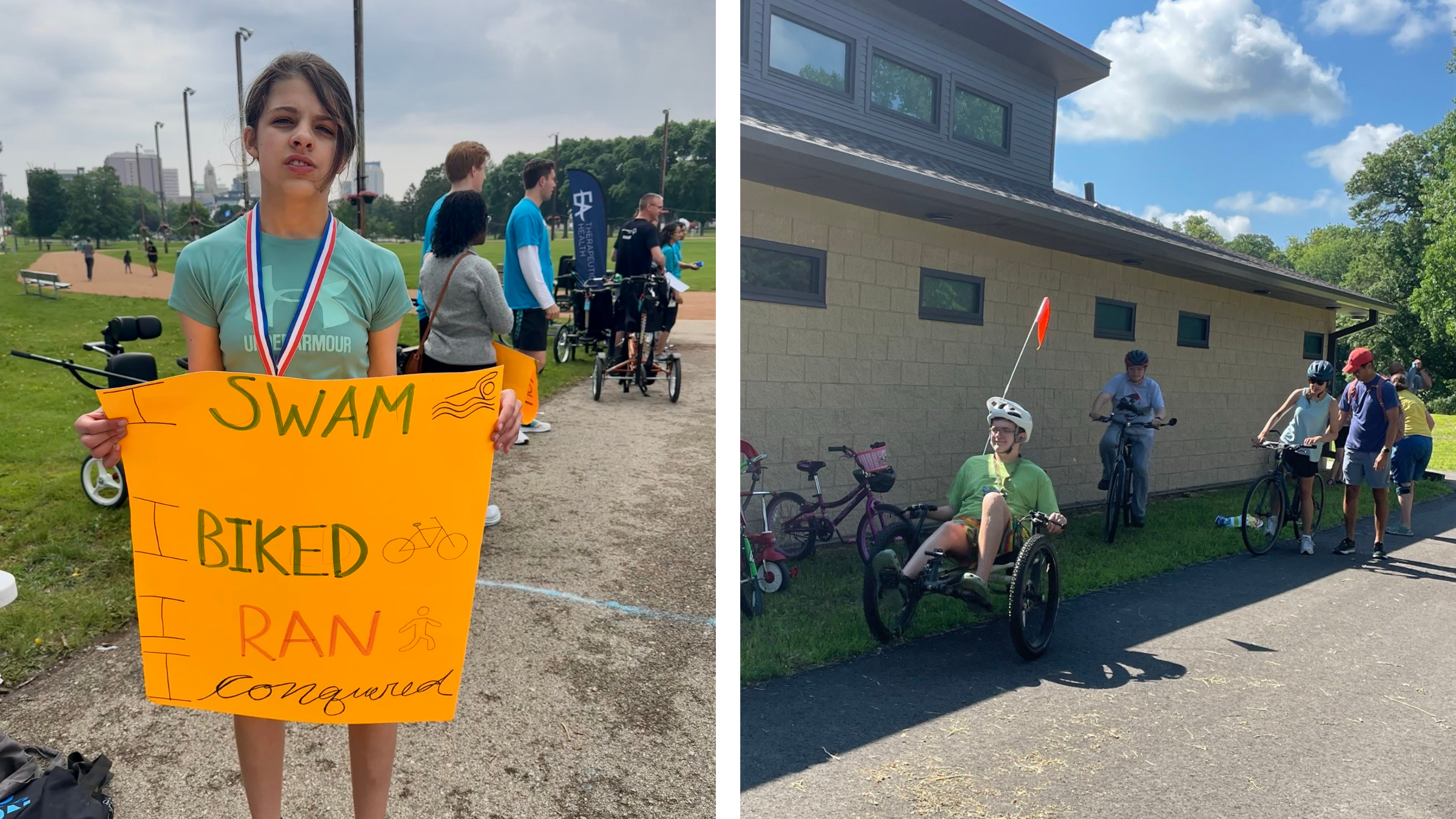
3. Don’t have a set distance … or order. Start the race in the pool but leave it up to each child to decide how far they feel comfortable swimming, whether that’s one lap or several. When the participant finishes swimming, their buddy can help them transition to the bike.
“In our triathlon, the kids bike on a trail around the pool, and their buddy runs alongside them,” Webb says. “What’s important is that each kid has a buddy with them and can choose for themselves if they want to bike or run a couple laps or turn around.”
4. Don’t underestimate the flexibility needed.
“There will be kids with varying intellectual and physical disabilities,” Wanberg says. “As such, there will be unforeseen obstacles on race day. Be ready to change things on the fly, typically at an individual participant level, if necessary to keep the race safe and fun.”
“We’ve had kids that swim, bike one lap, and jump back in the water instead of running,” Webb says. “Two years ago, I was a buddy for an athlete with Down syndrome who was maybe 10 years old. We were running along the trail and passed a public group doing yoga. He decided that he wanted to join them and the group was cool with it, so we took a yoga break.”
5. Don’t forget how much of an impact an adaptive triathlon can have on the kids – and you!
“Ella ran hard and she was tired, but seeing people cheer for her put a smile on her face,” Strand says. “The most meaningful part was seeing her sense of accomplishment as she finished the race!”
A few years ago, Webb remembers there was a teen at the finish line when he saw his friend starting the run. He just turned around and went with the other kid.
“It’s the opposite of the races I participate in, where it’s all about being competitive,” says Webb, who was part of the University of California, Davis’ Triathlon Club and now competes in trail races. “An adaptive kids triathlon is all about giving these children a sense of belonging in our communities. No matter what their pace or how far they go, I guarantee that they’re having more fun than we do at our races. It’s an awesome reminder to not take being able to run, bike, or swim for granted. It can reframe your perspective on sport.”



