
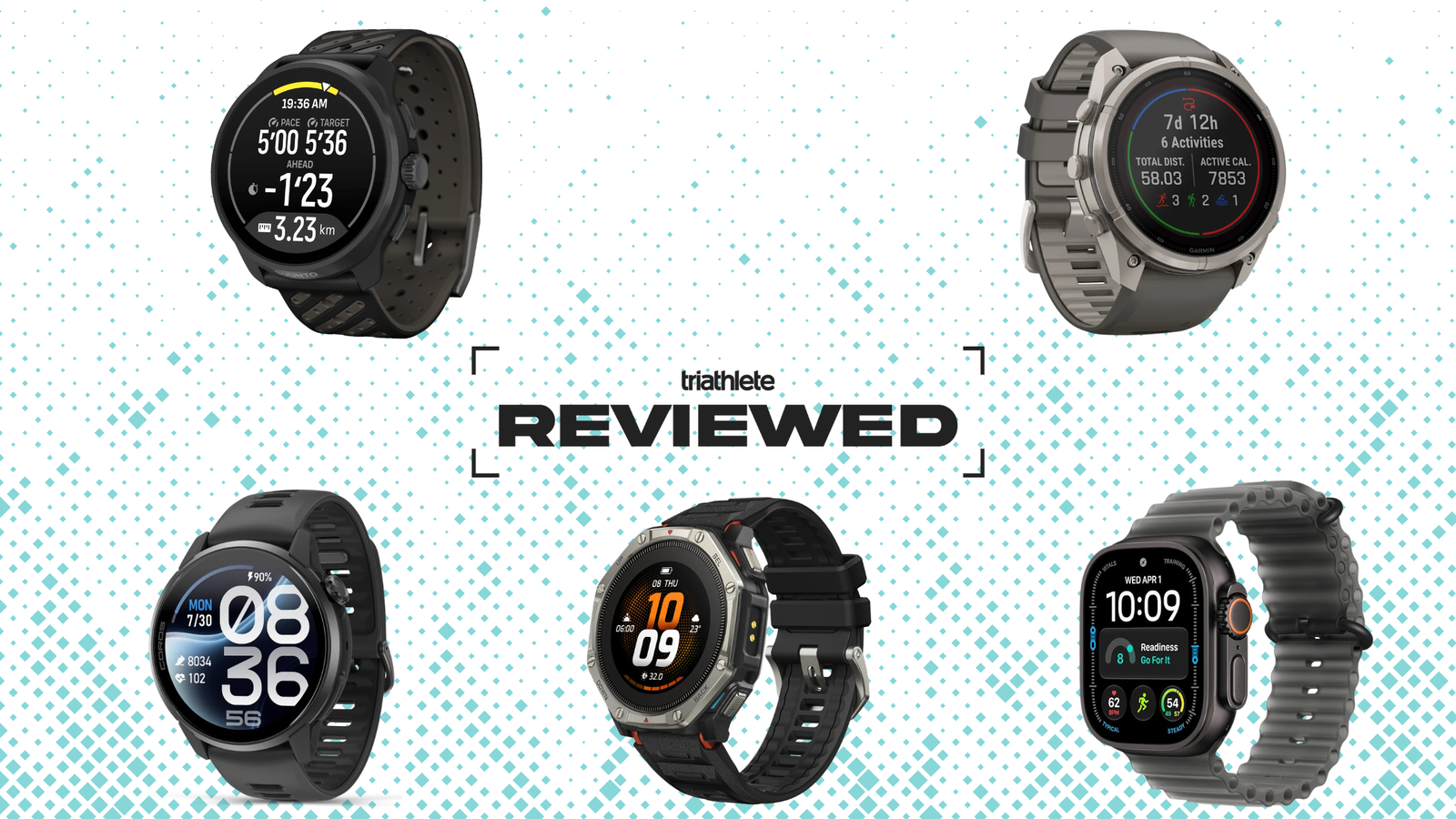
Updated October 16, 2026 10:39AM
Best Triathlon Smartwatches
How we reported this: Editor-in-chief Chris Foster has spent hundreds of hours using these watches for training, everyday wear, and nighttime metrics. Foster has independently tested nearly every smartwatch/GPS watch that’s been released in the last eight years, and draws on a decade of making a living as a pro triathlete to inform his impressions. The brands provide all watches on loan.
If you’re a triathlete in the market for a smartwatch or GPS watch, the options just keep getting better. Some of the best triathlon watches in 2026 are getting cheaper, and high-end features that used to cost over $800 are coming down into the $400 range.
What is the only differentiator between a good GPS watch for triathletes and a great one in 2026? It boils down to which is easiest to use, which has those sneaky features you didn’t know you needed, and what you’re (actually) going to do with it.
Below we’ve got brand-new, editor-tested smartwatches and GPS watches from Suunto, Apple, Coros, Amazfit, and Garmin that have all been released in fall 2026. Our editors spend hours training and sleeping with these watches to see what works as advertised, what provides the most accurate (and useful) information, and if it’s intuitive or not.
We review these through the lens of a triathlete who trains multiple times per week, wants to know how their body is reacting to their training, and relies on the data and information for important training and racing decisions. Read on for our expert impressions.
We’ve also included a “Where does it stand?” section for each watch to help you understand where it fits in today’s smartwatch universe. And if you want to dig deeper, we’ve got links to longer reviews for most of the watches below.
Looking for an older smartwatch? We don’t miss much, so check out our previous roundups for quick looks and deep dives on watches from previous years, like the Garmin Fenix 8 or the Suunto Race S – take a look at the 2024 roundup for more.
We’ve also got watches from 2023, like the Polar Pacer, Coros Apex 2 Pro, Garmin Forerunner 965, Suunto 9 Peak Pro, Apple Watch Ultra 1, and Garmin Enduro 2. Or watches from 2022, like the Timex R300, Wahoo Rival, Apple Watch Series 7, Garmin Instinct 2 Solar, Polar Grit X Pro, Suunto 9 Peak, Coros Vertix 2, and Garmin Fenix 7X Solar. Or our 2020 buyer’s guide with reviews of the Coros Pace 2, Apple Watch SE, Garmin Forerunner 745, Fitbit Sense, Polar Vantage V2, and Suunto 7.
Triathlete‘s 2026 GPS smartwatch guide – The ratings, explained
| Overall Rating | A combination of the features, functions, specs, and other ratings below – from the perspective of a multisport athlete. On a scale of 1-5. |
| Overall Value | This rating looks at the sum of the functions, battery life, and usability compared to other smartwatches and compares it all with the price. On a scale of 1-5. |
| GPS Accuracy | A rating on how accurate the GPS accuracy is for mileage. On a scale of 1-5. |
| Heart-Rate Accuracy | A rating for how accurate the on-wrist optical heart-rate monitor is. On a scale of 1-5. |
| Ease of Use | A rating based on how easy it is to navigate the menus, set up the watch, and use daily. On a scale of 1-5. |
| Sports Functions | This rating indicates the breadth and usefulness of tri-related sports functions. On a scale of 1-5. |
| Lifestyle Functions | This rating focuses on daily-use functions like music, smartphone notifications, convenience, and more. On a scale of 1-5. |
| Durability | This rating takes into account the watch’s construction, materials, and moving parts (or the lack thereof). On a scale of 1-5. |
Suunto Race 3S review
| TL;DR | The tried-and-true Race series makes an odd pivot to a smaller size with less battery life on the Race 3S for more money than last year’s Race 2. |
| Overall Rating | ★★ |
| Overall Value | ★ |
| GPS Accuracy | ★★★ |
| HR Accuracy | ★★★★ |
| Ease of Use | ★★★★ |
| Sports Functions | ★★★★ |
| Lifestyle Functions | ★★★★ |
| Durability | ★★★★ |
| Touchscreen | Yes |
| Screen Type | AMOLED, 466×466 |
| Running With Power | Yes |
| LED Flashlight | No |
| Tri Mode | Yes |
| Music Control | Yes, and offline MP3 storage |
| Superpower | Super-bright offline mapping with digital dial for zooming, weighing less than 60g |
| Kryptonite | Battery life is still substantially less than the competition – including Suunto’s own Race 2 |
The Suunto Race 3S is the little cousin of a slightly larger (but cheaper) Race 2. The Race 3S has a 1.32-inch AMOLED touchscreen that maxes out at 2,000 nits, with 45 hours of multi-band GPS and 64GB of offline mapping and music storage. Like the Race 2, it has sapphire crystal glass, but unlike the Race 2, it weighs in at around 56g compared to the Race 2’s beefy 76g.
The specs are pretty much what you’d expect for a watch in the $400-600 price range, and in real-life testing, the Race 3S also felt nearly identical to the brand-new $400 Suunto Run 2, which was just released about a month ago: They look nearly the same, they feel, weigh, and perform pretty much exactly the same, but the Run 2 only has 24 hours of multi-band GPS and 10 days of advertised daily use (though we found less than that, closer to right days). That said, the Run 2 is $200 cheaper than the Race 3S, so you’re basically paying $200 for a little more battery life, but materially not much else.
Where does the Suunto Race 3S stand?
While the Race 3S is a fine smartwatch out of context, once you put it up against other smartwatches in the $400-600 range, it struggles a little bit to find its place. First, the elephant in the room is that the Suunto Race 2 has more battery life (and a bigger screen, for better or for worse) for less money. In some ways, the Race 3S is more like a Race 2S, especially given that it’s almost unfair to compare the Race 3S to the original Race S that was released two years ago. But even then, if this was a Race 2S (which it’s not), you’d really have to want a slightly smaller watch to spend less money on an arguably better watch in the Race 2.
The next problem for the Race 3S is also competition from the $400 Run 2, which still isn’t my favorite watch of the year, simply because of the biggest issue Suunto has here: the presence of the $450 Coros Pace 4 Pro. The Pace 4 Pro costs (way) less than the Race 3S, has a bigger screen, weighs slightly less, and has about the same battery life.
The other competition in this price range – watches like the Garmin Forerunner 570 ($550) or the $500 Polar Vantage M3 don’t really overpower the Race 3S, but they’re also not obviously a worse choice. That said, if you put the Race 3S up against Suunto’s own $600 Vertical 2 – with much more battery life, a bigger screen, and an awesome LED flashlight, it’s not even a fair fight. I’d easily spend another $100 for that watch, but it’s the same price.
That said, I’m not sure exactly who the Suunto Race 3S is for. It faces stiff competition from older Suunto watches, like the Race 2 or the Vertical 2, and it struggles mightily against watches like the Coros Pace 4 Pro, or even the $250 Coros Pace 4 (if size/weight truly is your goal and you really need a smaller, ultra-lightweight watch with just enough features and onboard mapping).
Suunto Run 3S specs
- Weight: 56g
- Listed Everyday Battery Life: 12 days
- Listed GPS Battery Life (Multi-Band, All On): 38 hours
- Approximate “Tri Battery Life”* With Daily Multisport Use: 6-9 days
- Bezel Size: 46 x 46 x 11.4 mm
- Screen Size: 33.5mm
Coros Pace 4 Pro review
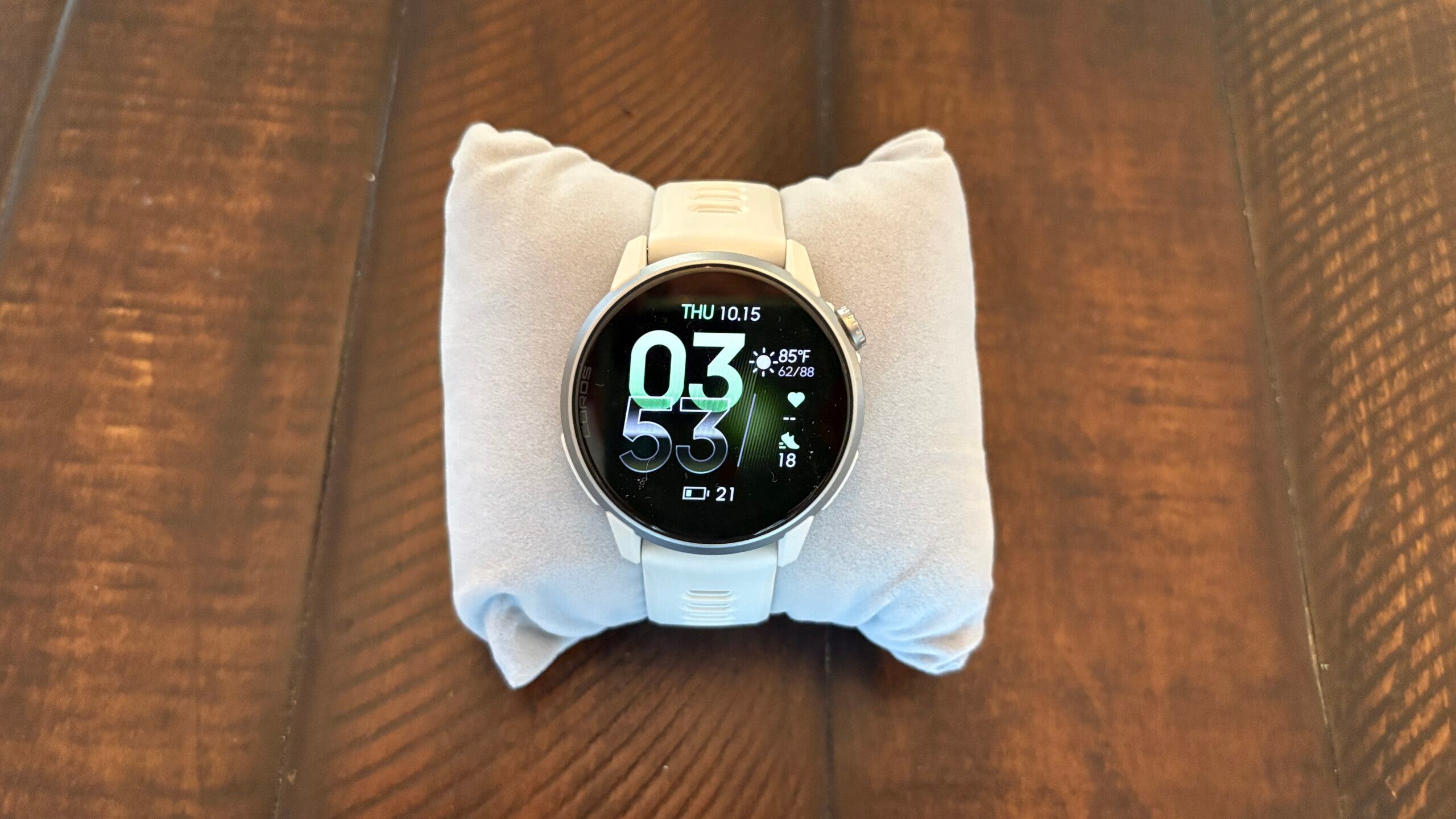
| TL;DR | A big update to a beloved line includes a big, super-bright touchscreen, strong battery life, and robust (and fast) offline mapping. |
| Overall Rating | ★★★★★ |
| Overall Value | ★★★★ |
| GPS Accuracy | ★★★★ |
| HR Accuracy | ★★★★ |
| Ease of Use | ★★★★ |
| Sports Functions | ★★★★ |
| Lifestyle Functions | ★★★ |
| Durability | ★★★★ |
| Touchscreen | Yes |
| Screen Type | AMOLED, 466×466 |
| Running With Power | Yes |
| LED Flashlight | No |
| Tri Mode | Yes |
| Music Control | Yes, and offline MP3 storage |
| Superpower | Low profile, light weight, and heaps of battery |
| Kryptonite | Subjectively speaking, its styling is still a little sporty for daily wear |
The Coros Pace 4 Pro is the latest in one of my favorite lines of endurance-focused smartwatches. Beginning with the almost-too-cheap Pace 2, Coros has taken chunks out of the smartwatch market with a super lightweight and entirely capable offering that doesn’t break the bank. Released less than a year ago, the Pace 4 was arguably one of the best smartwatches for the money, and it was hard to imagine what could come next.
But here we are with the Pace 4 Pro, boasting a big, bright 37.3mm screen with a blinding 3,500nits. This is a big deal because in bright sunlight, if you’re actually using the 32GB of onboard navigation, you need a big screen to see it all, and it needs to be bright enough to see in direct sunlight. Pair those features with the digital dial (essential for zooming navigation on the go, in my opinion), and you’ve already got a best-in-class watch for routing and mapping. All for $450.
Past that, at 51g plus a super-thin side profile, the Pace 4 Pro disappears on one’s wrist in a way that very few watches with these features do. For those of us with small wrists (or those of us who struggle to remove a wetsuit quickly over their watch), this is a big deal.
If there’s room to complain, the only caveat with the Pace 4 Pro is that the styling is still extremely sporty, and the design doesn’t really lend itself to all-day wear. The titanium case and sapphire glass do help with durability, but I still maintain that the aesthetic isn’t quite there on the mid-to-lower end of the Coros line.
All in all, the Coros Pace 4 Pro is a strong contender for the best watch of the year, especially in the highly competitive $400-600 price range (more on that below), and you’d have a hard time feeling limited with this watch.
Where does the Coros Pace 4 Pro stand?
First it’s worth noting that the $400-600 price range is by far the most competitive in sport-focused smartwatches. For $450 you can get pretty much everything you used to find on a $1,000 watch — and in many cases these less-expensive models are better than the top of the pile just a few years ago.
The $450 Coros Pace 4 Pro most squarely competes with the Garmin Forerunner 570 ($550), the Polar Vantage M3 ($500), the Coros Apex 2 ($480), the Suunto Race 2 ($500), and the Suunto Vertical 2 ($600). You could also include the new Suunto Run 2 ($350), but I don’t think that’s a fair fight.
To my mind, only the Suunto Race 2 and the Suunto Vertical 2 truly compete because the Forerunner 570 costs more and has way less battery (and a smaller screen), the Polar has a host of issues, and the Apex 2’s screen isn’t even in the same league as the Pace 4 Pro.
When squared up against the Suunto Race 2, you’re spending $50 more for a watch with slightly worse battery life, a similarly sized screen (though not as bright as the Pace 4 Pro), but arguably better styling. The Race 2 is also heavier (by a bit) and bulkier.
When up against the Vertical 2, the Suunto easily wins on battery life and the not-to-be-ignored LED flashlight (early morning transitions anyone?) with a similarly sized screen, but it’s a chunker to be sure and costs $100 more — it also lacks a digital dial, which hurts its nav use more than you’d think.
To me, it’s a toss-up between the three, but if money is an object and style is not, the fantastic Coros Pace 4 Pro is the winner.
Coros Pace 4 Pro specs
- Weight: 51g
- Listed Everyday Battery Life: 21 days
- Listed GPS Battery Life (Multi-Band, All On): 40 hours
- Approximate “Tri Battery Life”* With Daily Multisport Use: 14-18 days
- Bezel Size: 47.6 x 47.6 x 11.8 mm
- Screen Size: 37.3mm
Apple Watch Ultra 4 review
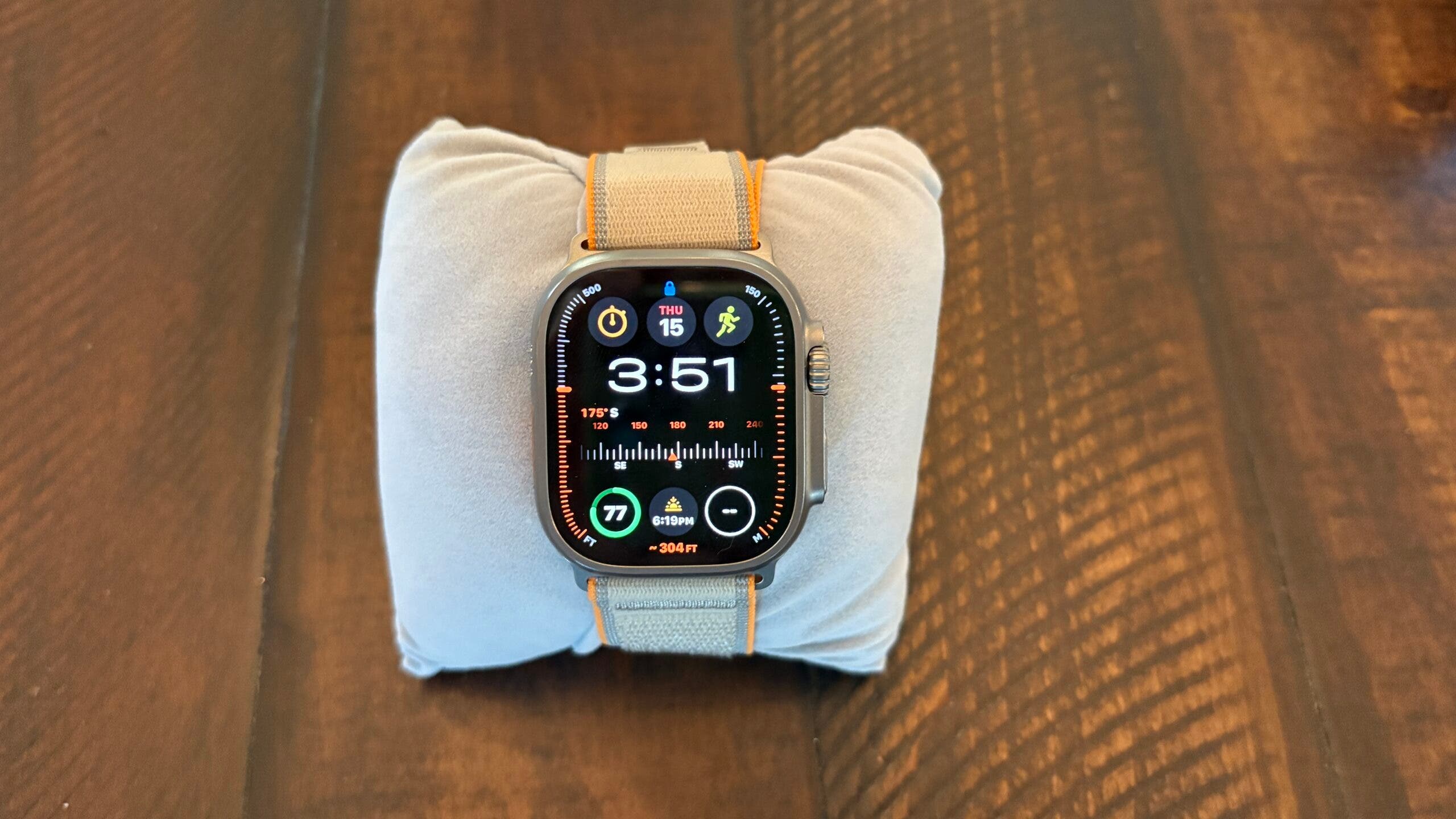
| TL;DR | Some of the most accurate sleep/recovery metrics we’ve seen with a not-insignificant jump in battery life and charging speed |
| Overall Rating | ★★★★ |
| Overall Value | ★★★ |
| GPS Accuracy | ★★★★ |
| HR Accuracy | ★★★★★ |
| Ease of Use | ★★★★★ |
| Sports Functions | ★★★ |
| Lifestyle Functions | ★★★★★ |
| Durability | ★★★★ |
| Touchscreen | Yes |
| Screen Type | AMOLED, 422×514 |
| Running With Power | Yes |
| LED Flashlight | No |
| Tri Mode | Yes |
| Music Control | Yes, and offline MP3 storage |
| Superpower | Incredible heart-rate/HRV sensitivity for sleep/recovery, best-in-class iPhone lifestyle connectivity |
| Kryptonite | Battery is better, but still not in the ballpark of other watches in our roundup; anyone who owns a not-iPhone |
When the first Apple Watch Ultra was released back in 2022, the big tagline (for triathletes, anyway) was: The First Apple Watch That Can Do An Ironman. It was notable because Apple’s previous smartwatches were so heavy on lifestyle features and light on battery power that you literally couldn’t complete a 10-15-hour Ironman wearing one — even if you felt the sports features were robust enough to be helpful, which they weren’t at the time.
In the years since, Apple has consistently produced one of the prettiest, brightest, fastest, and most feature-packed smartwatches for 80% of the population, but even the Ultra line struggled to stand out — especially as the Ultra line made minor changes from version to version: The Ultra 2 brightened the screen, which was nice; the 3 added satellite emergency SOS and a sweeter screen, but almost nothing else. To the latter upgrades, I still maintain that relying on any smartwatch for SOS/satellite comms in the backcountry over a dedicated device like an inReach or even your phone is a very narrow use case and feels extremely reckless, but that’s just me.
But now enter the Ultra 4, which in my opinion is the most relevant upgrade for triathletes since the first version leapt above the Watch Series line. The Ultra 4 has all of the above upgrades but adds some of the most sensitive and accurate heart-rate sensing/physio tracking that I’ve ever used (this is good news for triathletes).
After testing a load of smartwatches this year with sleep tracking that ranges from “good enough” to “seriously I’ve been awake for hours,” only the Ultra 4’s “Overnight Vitals” syncs up with my true sleep cycles and accurately flagged a bad infection that was developing in my leg. I wasn’t even experiencing fever or any outward effects, but the thoughtful (and easy-to-use) combination of very accurate heart rate, accurate sleep cycles, respiratory rate, wrist temperature, and HRV detected the rise and fall of the infection.
I was similarly impressed with the readiness app that helped guide my activity based on vitals and previous activities. Sure, almost every other endurance-focused smartwatch has these features, but none are as accurate and easy to digest.
The last note may seem minor, but it’s not: With the slight increase in battery life, you can now make it through two sleeps before recharging, which means you’re less likely to have to charge overnight or miss/delay a workout while it charges. Yes, 2-3 days is still like 1/8th of most endurance-focused smartwatches, but giving yourself two nights (and a speedier charger that gives you 18 hours in only 15 minutes), it’s finally usable for daily multisport wear and training.
Where does the Apple Watch Ultra 4 stand?
So when you look at the $800-$1,000 price range, you’re looking at smartwatches that do everything and last forever. Up against the $1,000 Garmin Fenix 9, for instance, you’ve got satellite/SOS comms (like the Ultra 4), an AMOLED touchscreen, and pretty much everything else a smartwatch can do — including things like offline voice commands, hands-free calling, an LED flashlight, and more. Most crucially, you’re also getting two weeks or more of battery life to the Ultra 4’s 2-3 days.
That said, if you’re an iPhone user, there is a host of connectivity and lifestyle features that are truly enhanced by the Ultra 4. You can respond to texts, Slacks, sync up everyday mapping and navigation (like when you’re driving around), and way more. No Garmin device (or any other brand) does that with Apple smartphones.
However, if you’re an Android user, the Apple Watch Ultra 4 is wildly overpriced and underpowered because it won’t connect at all with your device (Garmin et al. will). Looking down into the super-competitive $600-ish price range, I’d recommend buyers strongly compare the Ultra 4 to the $600 Suunto Vertical 2 thanks to its LED flashlight and exceptional mapping and battery life. I’d also consider the way overfeatured (almost to a fault) and battery-heavy $650 Amazfit T-Rex Dual Solar.
Apple Watch Ultra 4 specs
- Weight: 61g
- Listed Everyday Battery Life: 50 hours
- Listed GPS Battery Life (Multi-Band, All On): 18 hours
- Approximate “Tri Battery Life”* With Daily Multisport Use: 40-55 hours
- Bezel Size: 49 x 44 x 12 mm
- Screen Size: 50.3mm
Amazfit T-Rex Dual Solar review
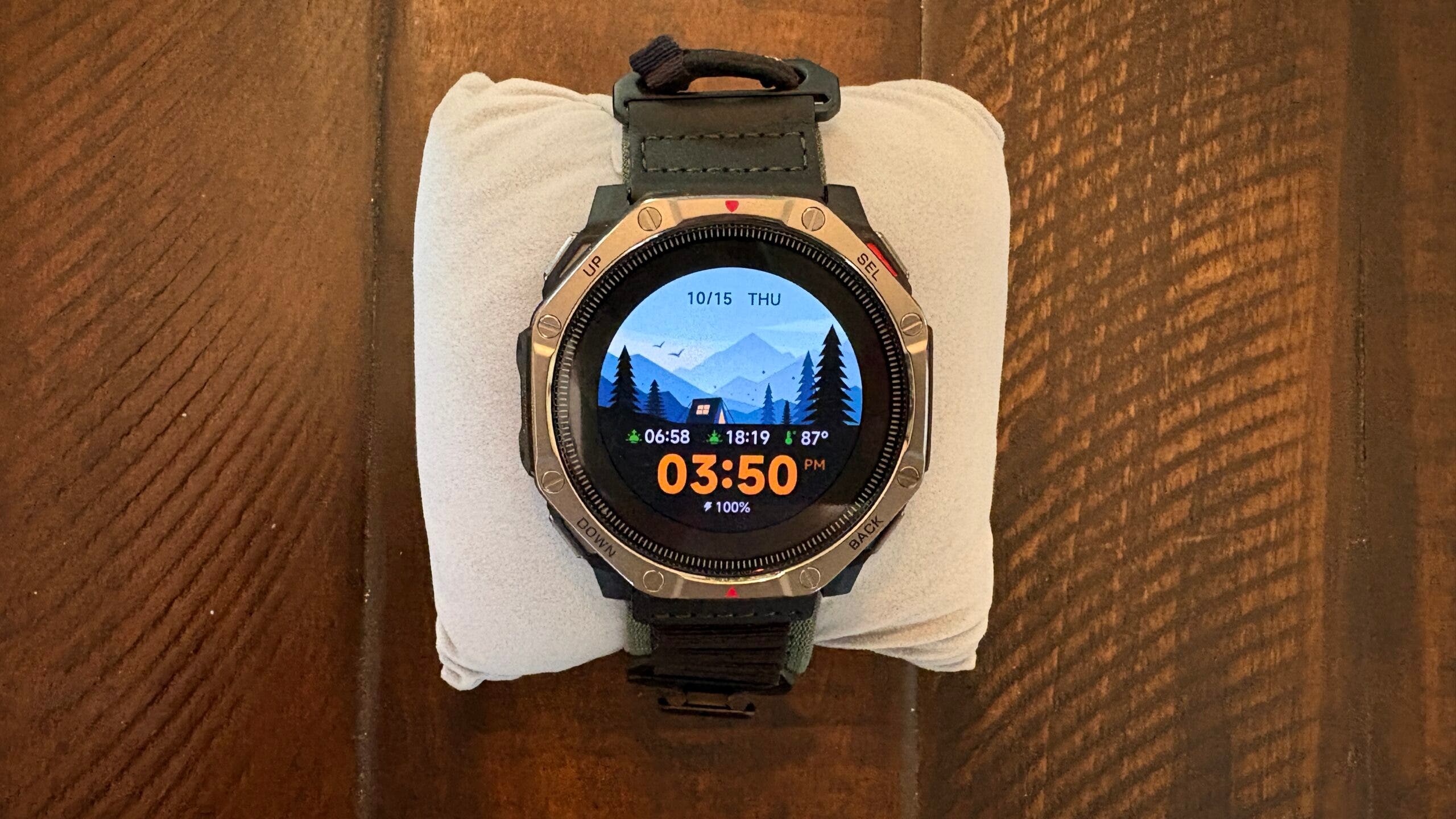
| TL;DR | An overcapable smartwatch with lots of battery and unique charging option |
| Overall Rating | ★★★ |
| Overall Value | ★★★★ |
| GPS Accuracy | ★★★★ |
| HR Accuracy | ★★★★ |
| Ease of Use | ★★ |
| Sports Functions | ★★★★ |
| Lifestyle Functions | ★★★ |
| Durability | ★★★★ |
| Touchscreen | Yes |
| Screen Type | AMOLED, 466×466 |
| Running With Power | Yes |
| LED Flashlight | Yes |
| Tri Mode | Yes |
| Music Control | Yes, and offline MP3 storage |
| Superpower | Piles of battery for an AMOLED, dizzying amount of features |
| Kryptonite | Dizzying amount of features, heavy weight, huge footprint |
Ever since I noticed 2025 UTMB race winner Ruth Croft’s Amazfit T-Rex 3 Pro on her wrist a year ago in Chamonix, France, my interest in China-based Amazfit was rekindled. I did a handful of tests on their early endurance-focused efforts, and I felt them to be so beta that I passed on reviewing their models for a few years. Since the T-Rex 3 Pro, however, I’ve kept my eyes peeled for another model that might be interesting for triathletes.
The T-Rex Dual Solar certainly met those standards, with a built-in LED flashlight (think: early morning transition areas or dawn/dusk patrol runs), a surprisingly fast AMOLED (and very bright) screen, enough battery life to get past my magic two-week benchmark, and an almost-ludicrous amount of features, on the same level as a Garmin Fenix, but for at least 30% less money.
First, let’s talk about the most obvious feature on this watch: the dual-sided solar panels. Yes, it seems goofy to have solar panels on the back of the watch, but there are absolutely situations where you might want to try to top up (or at least drain slower) your battery life. I would say in backpacking, this use case comes up pretty often. In triathlon training/life, probably less so: If you’re taking off your watch, you might as well charge the thing, which is infinitely faster than even the best wrist-top solar panels. That said, it is a neat little gimmick.
More importantly, the T-Rex Dual Solar is $150 more than the surprisingly capable T-Rex 3 Pro, but the former doesn’t have a ton more than the latter. Both have two-week-ish battery life, a speaker and microphone, an LED flashlight, rugged styling/durability, and a nearly nauseating host of features — of which a handful are materially useful.
We’re in a time when very few watches do much more than others — with the exception of LED flashlights (which I think are super helpful for triathletes), voice inputting (a mic), and onboard satellite/SOS comms (which I think aren’t that helpful). The T-Rex Dual Solar does everything in that list, except the last, which I don’t find much of a use case for. So then you have to ask, does it do all of those things well? And, are those things easy to use? In the case of the T-Rex Dual Solar, the answer is kind of. User interface and bus were always a little bit of a problem with the first run of Amazfit watches, and while this round is way better, they’re still not as intuitive as a Garmin, Coros, or Apple — the three major competitors.
All that said, if you love a bottomless hole of features, strong battery, LED flashlight, and voice features/functions but don’t want to spend more than $700 and don’t care about a hefty weight and giant wrist footprint, this is it — unless of course you’re good with the T-Rex 3 Pro.
Where does the Amazfit T-Rex Dual Solar stand?
In the $600-plus price range, which I consider the premium range of smartwatches, there’s some pretty tough competition for the Amazfit T-Rex Dual Solar. First, you have the $800 Apple Watch Ultra 4, which gets blown out of the water by the battery life on the T-Rex Solar (and has no LED flashlight), but crushes the Amazfit when it comes to usability and lifestyle features (though irrelevant if you don’t own an iPhone). The latest Ultra also crushes the T-Rex Dual Solar in terms of 24/7 health metrics and physio measuring/monitoring accuracy; the Ultra 4 also has that standalone satellite/SOS comms, and the Amazfit definitely does not.
Above that, the Garmin Fenix 9 comes in around $1,000 and has pretty much everything that the Ultra 4 does, plus an LED flashlight and enough battery life to put up a fight against the T-Rex Dual Solar (though the Garmin would still lose). The Garmin, however, is far more intuitive and easy to use than the Amazfit, and its host of excellent apps (like Spotify, for instance) make it a clear winner. For a Garmin closer in price, the $750 Forerunner 970 also mirrors the T-Rex Dual Solar’s capabilities with easier interfaces (but less battery).
Looking below that, the $400-600 range is also pretty dangerous — especially Amazfit’s own fully capable $400 Amazfit T-Rex 3 Pro that’s virtually identical to the T-Rex Dual Solar if you’re not making lots of use of the backside solar panel. Other than that, there are super capable LED flashlight-equipped watches like the Suunto Vertical 2 ($600) that offer much easier-to-use functions with better companion apps.
Amazfit T-Rex Dual Solar specs
- Weight: 94g
- Listed Everyday Battery Life: 25 days
- Listed GPS Battery Life (Multi-Band, All On): 41 hours
- Approximate “Tri Battery Life”* With Daily Multisport Use: 18-20 days
- Bezel Size: 51.4 x 51.4 x 16.9 mm
- Screen Size: 44mm
Garmin Fenix 9 Pro Solar review
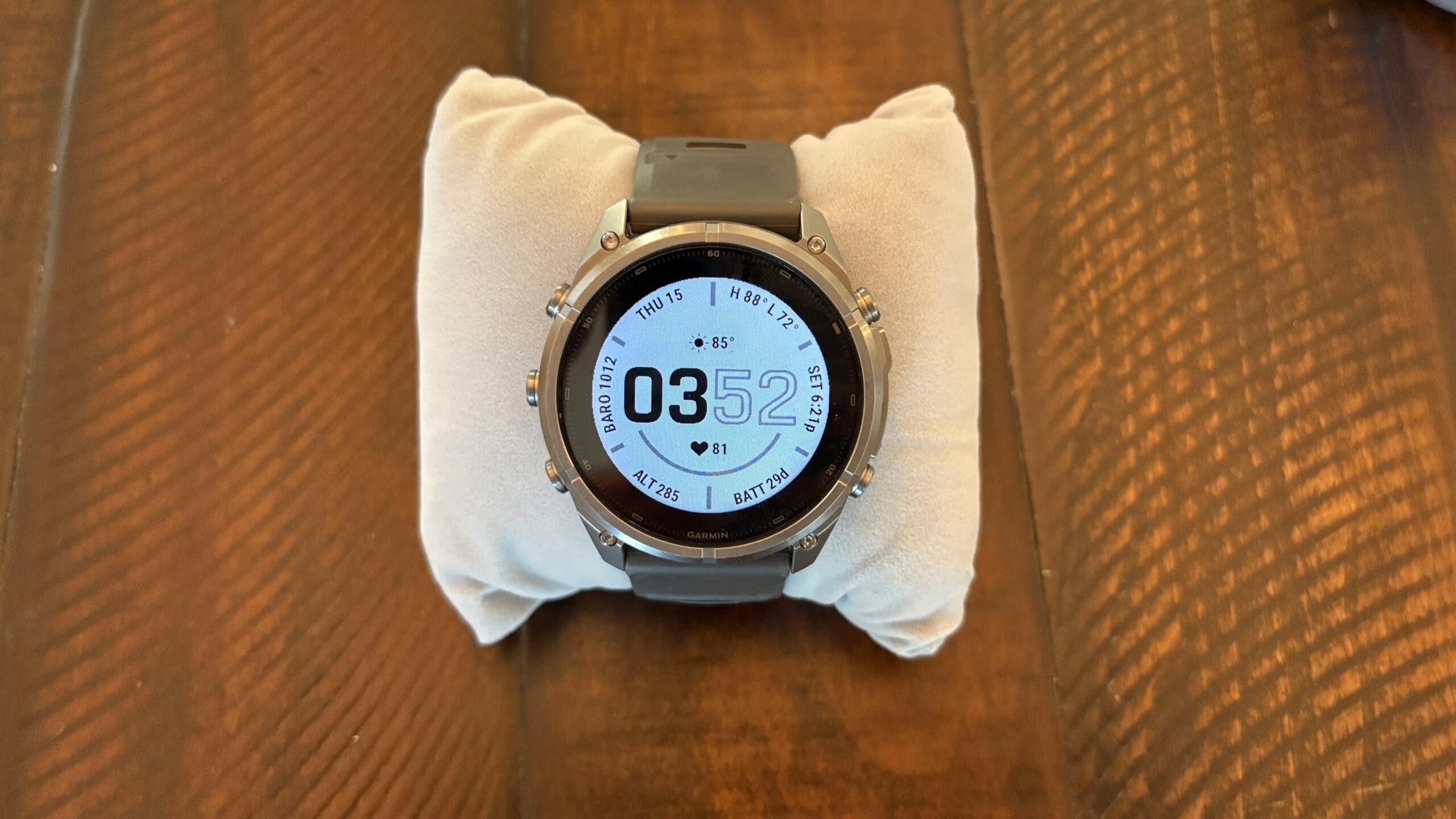
| TL;DR | Off-grid capabilities with LTE and satellite communication, nearly endless battery life, and a big price tag |
| Overall Rating | ★★★ |
| Overall Value | ★★ |
| GPS Accuracy | ★★★★★ |
| HR Accuracy | ★★★★★ |
| Ease of Use | ★★★★ |
| Sports Functions | ★★★★★ |
| Lifestyle Functions | ★★★★ |
| Durability | ★★★★★ |
| Touchscreen | Yes |
| Screen Type | MIP, 280×280 |
| Running With Power | Yes |
| LED Flashlight | Yes |
| Tri Mode | Yes |
| Music Control | Yes, and offline MP3 storage |
| Superpower | Off-grid, standalone communication, battery |
| Kryptonite | Monster price, limited use case, weight/footprint |
There was a time when the Garmin Fenix was pricey, but not out of reach. Less than five years ago you could find a brand-new Fenix 7 for $700. The battery would last close to forever, and there was a chance you’d never use half of the features packed into it. For another $100 or so you could get that all-valuable LED flashlight that used to be unique to the line, but now exists on less-expensive Garmin Instincts, the Suunto Vertical 2, and a few models from Amazfit. You’d get a lot for under $1,000, but you’d still probably not use close to all of it.
Fast forward to today, and the least-expensive Fenix 9 is $1,000. Garmin has added an AMOLED screen to some (and significantly lessened battery life on those models), a speaker/mic, faster map processing, and inReach comm options. If you’re really trying to do an apples-to-apples comparison, the 2022 Fenix 7X Pro Solar ($900 when released) and the 2026 Fenix 9 Pro Solar ($1,300) both have MIP screens and big battery life, but the latter has a mic/speaker (and all that comes with it, like voice control), inReach capabilities built in, and more storage/faster processing. With that in mind (and with the added $8/mo+ cost of the inReach plan), triathletes need to be very thoughtful about how they’re actually going to use the Fenix 9.
Since the inReach capabilities are the newest, shiniest thing across the full Fenix 9 line (and the subscription cost isn’t nothing), triathletes need to think about how often they’d go into an off-grid situation without a smartphone — or actual inReach. If you’re venturing into the rugged backcountry for days on end, you should really arm yourself with a dedicated inReach device, like the $300 Messenger. If you’re not going out for multiple days, most Apple phones now have similar sat features. Barring that, do you really need a no-phone, no-inReach device smartwatch? Probably not.
InReach notwithstanding, the Fenix 9 series feels less novel than it used to be for much more than it used to cost; in the context of the mish-mash featured Fenix 8 line — that had inReach functionality on some models, super-bright MicroLED on others — it feels a little redundant. Of course it has a styling, durability, and construction that Fenix fans will naturally gravitate toward, but at over $1,000 it’s becoming a smaller club than it was.
Where does the Garmin Fenix 9 Pro Solar stand?
If we’re looking solely at the MIP-screened (meaning not AMOLED, to be clear) solar version Fenix 9 Pro Solar that costs $1,300, you’re in rare air. None of the Fenix 8s (which are nearly identical to the rest of the Fenix 9 series in many ways) have an MIP screen, so you have to go up against some of the (discounted to under $800) Fenix 7Xs that don’t have inReach. In other brands, you’d be talking about the super long-in-the-tooth $600 Coros Vertix 2 with MIP and a bananas amount of battery, but no LED flashlight or inReach, but an arguably better digital dial for offline mapping use.
The only other watch that’s worth mentioning here is the $800 Apple Watch Ultra 4 that interestingly has onboard SOS/satellite capabilities but also a highly advanced AMOLED touchscreen and nearly incomparable battery life. Even if you look at the AMOLED versions of the Fenix 9 Series that start at $1,000, the Garmins are still blowing the doors off the battery life of the Ultra 4; the Apple claps back with vastly superior lifestyle features (for iPhone users) and a mic/speaker.
All that said, if you can live without inReach (like 99.9% of triathletes can) and a mic/speaker isn’t meaningful to you, now you’re looking at watches for easily half the price, making the whole value proposition pretty tough to stomach. Even the Amazfit T-Rex Dual Solar mentioned here adds a (not-as-good) mic/speaker and has an LED flashlight for $650.
Garmin Fenix 9 Pro Solar specs
- Weight: 102g
- Listed Everyday Battery Life: 30+ days (more for solar)
- Listed GPS Battery Life (Multi-Band, All On): 54+ hours (more for solar)
- Approximate “Tri Battery Life”* With Daily Multisport Use: 28-35 days
- Bezel Size: 51 x 51 x 16 mm
- Screen Size: 35.6 mm
*Tri Battery Life includes the following settings/uses: Always-on display with the lowest possible brightness for bright daylight use; sleep and all-day heart-rate tracking; HRV tracking; 1-2 workouts/day with max GPS accuracy.



